


The road from Ho Chi Minh City to Can Tho is one of Vietnam’s classic journeys, linking the country’s commercial capital with the relaxed heart of the Mekong Delta.
Whether you are chasing sunrise at Cai Rang Floating Market, continuing onward to Phu Quoc, or simply escaping the urban rush for a weekend, understanding the latest transport options will help you travel smoothly and make the most of your time.
This guide sets out the current ways to get from Ho Chi Minh City to Can Tho, with practical detail on buses, limousines, private cars, tours and flights, along with costs, timing, and tips that matter on the ground.
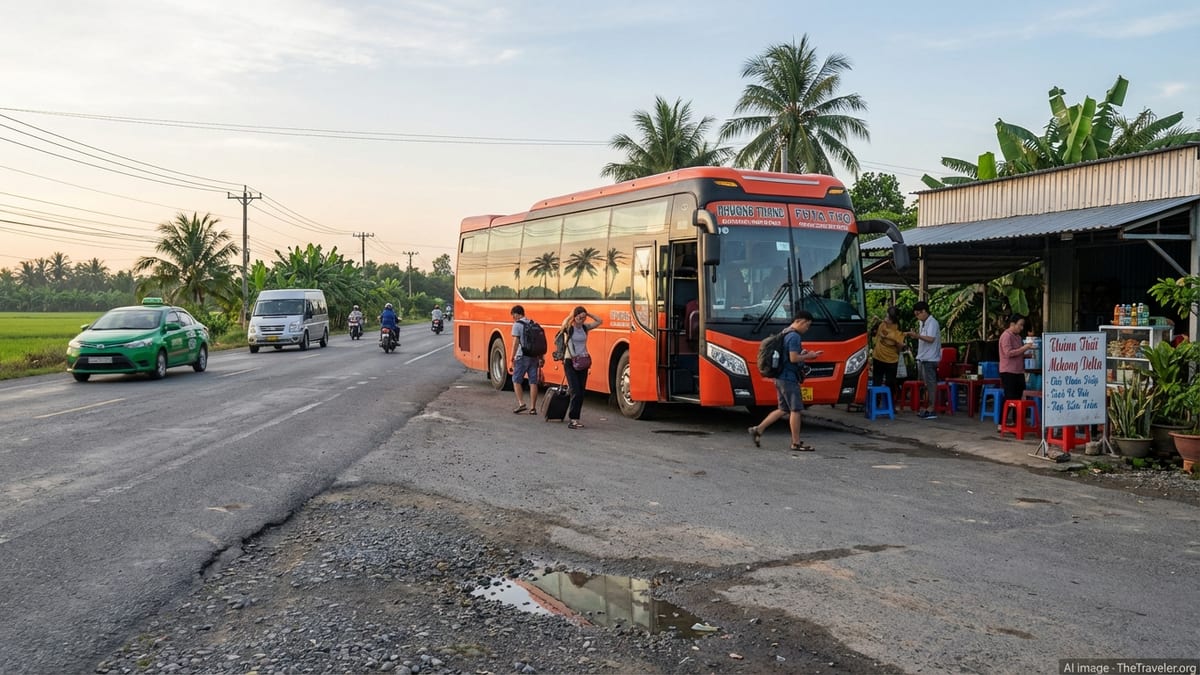
Understanding the Route From Ho Chi Minh City to Can Tho
Ho Chi Minh City sits at the northern edge of the Mekong Delta, while Can Tho lies deeper in the delta on the Hau River. By road, the distance between the two cities is roughly 165 to 175 kilometers depending on your departure point in Ho Chi Minh City and your destination in Can Tho. For most travelers, the journey follows National Highway 1 and the Ho Chi Minh City – Trung Luong – Can Tho expressway network, which has dramatically reduced travel times compared with older routes that relied on small ferries and narrow provincial roads.
In practical terms, that distance translates into a road journey of around three and a half to five hours one way. The wide spread in timings reflects several factors: traffic congestion when leaving Ho Chi Minh City, how many intermediate stops your bus or minivan makes, and whether you are traveling at peak holiday times. Daytime trips in normal conditions usually sit in the four-hour range, while overnight and late-night departures can be faster due to quieter roads.
Can Tho is the largest city in the Mekong Delta and a major transport node in its own right. It has a central bus station with frequent links across the region, a busy riverside quay for boat tours, and an international airport serving a handful of domestic and regional routes. Within Can Tho, the urban area is compact enough that short taxi or ride-hailing trips connect the bus station, hotels, and the Ninh Kieu riverfront efficiently.
When planning your route, it is worth thinking about more than just the door-to-door travel time. This corridor is prone to traffic surges around national holidays such as Tet, Reunification Day, and major long weekends. Streets leading to Mien Tay Bus Station in Ho Chi Minh City can experience heavy congestion at rush hours. Booking ahead, traveling slightly off-peak when possible, and allowing buffer time before onward flights or early-morning tours in Can Tho will give you more breathing space.
Traveling by Bus: The Most Popular and Budget-Friendly Option
For most travelers, the bus remains the most straightforward and economical way to get from Ho Chi Minh City to Can Tho. Long-distance buses to the Mekong Delta depart primarily from Mien Tay Bus Station in Binh Tan District. From the city center districts such as District 1 or District 3, reaching Mien Tay by taxi or ride-hailing app typically takes 30 to 60 minutes depending on traffic, so build that extra time into your schedule.
Several large private companies operate on the Ho Chi Minh City – Can Tho route with high frequency throughout the day and night. Well-known names include Phuong Trang (often branded as Futa Bus Lines), Thanh Buoi, and Mai Linh. These companies use a mix of standard coaches, sleeper buses with reclining bunks, and newer “limousine” style minivans with larger seats. Fares generally range from the budget end of roughly 150,000 to 250,000 Vietnamese dong per person, depending on the operator and seat type, which makes the bus a cost-effective choice even for solo travelers.
One of the advantages of these established operators is the combination of frequent departures and relatively reliable travel times. Buses between Ho Chi Minh City and Can Tho typically leave every 30 to 60 minutes during the day, with additional night services. The actual journey time is often between three and a half and four and a half hours, though it can stretch longer at peak times. Many companies provide free or low-cost shuttle transfers between their ticket offices and main tourist areas in both cities, which can save you the cost and hassle of arranging separate taxis.
Booking tickets has become simpler in recent years. In addition to purchasing at the bus station counter, travelers can reserve seats through official company offices in central Ho Chi Minh City, via local travel agencies, or through widely used Vietnamese booking platforms and mobile apps. E-tickets on your phone are widely accepted; you simply show the confirmation at the company’s ticket counter or office before boarding to receive a boarding slip or seat assignment. For major holiday dates and weekend mornings, reserving at least a day in advance is strongly recommended.
Limousine Vans and Premium Road Transfers
Alongside standard buses, a newer category of “limousine” minivans has emerged on the Ho Chi Minh City to Can Tho route, catering to travelers who prefer more comfort and slightly faster door-to-door times. These services generally use 9 to 19 seat vehicles refitted with wide leather chairs that recline more generously than regular bus seats. Onboard amenities often include charging ports, reading lights, complimentary bottled water, and sometimes Wi-Fi, though connectivity can be patchy as you move through rural stretches of the delta.
Limousine services typically pick up passengers from designated offices or central meeting points in Ho Chi Minh City, especially around District 1 and Phu Nhuan, and may also offer neighborhood pick-up and drop-off for an additional fee. In Can Tho, they tend to drop passengers closer to the central districts, minimizing the need for onward local transport. Because the vehicles are smaller and make fewer roadside stops, travel times can be slightly shorter than those of large coaches, especially during off-peak hours.
Prices for limousine vans sit above standard buses but remain accessible for many travelers, often in the range of 250,000 to 400,000 Vietnamese dong per seat depending on the operator, departure time, and exact service level. For couples, small groups, or travelers on tight schedules, the added comfort and more personalized service can justify the modest price increase, especially on a route that involves several hours of continuous sitting.
Booking limousine services usually requires a bit more planning. While some companies maintain desks at Mien Tay Bus Station, many work mainly through phone hotlines, websites, or smartphone messaging apps. Travel agencies in popular districts of Ho Chi Minh City can also reserve seats and arrange hotel pick-up, often bundling the service with tours or onward tickets in the Mekong Delta. As with standard buses, these services sell out quickly at holiday peaks, so advance reservations are prudent during busy seasons.
Private Car, Taxi and Ride-Hailing Options
For travelers seeking maximum flexibility, privacy, and control over departure times, arranging a private car with driver or taking a long-distance taxi is another viable way to cover the distance between Ho Chi Minh City and Can Tho. This option is particularly attractive for families with children, groups of three or four friends, or visitors carrying bulky luggage or photography equipment who prefer not to share space with dozens of other passengers.
Several channels exist for booking a private transfer. Many hotels in Ho Chi Minh City collaborate with trusted drivers or local car services and can quote a fixed price for a one-way or round-trip journey. Local travel agencies and tour operators also arrange private transfers, sometimes including sightseeing stops en route, such as pagodas or fruit orchards in the provinces of Tien Giang or Vinh Long. In some cases, ride-hailing platforms with multi-hour rental functions can be used to hire a driver and car for the entire trip, although the exact availability and policies can change and should be verified in the app.
The cost of a private car transfer between Ho Chi Minh City and Can Tho typically sits in the range of several million Vietnamese dong per vehicle, not per person, often equating to the cost of three or four limousine seats. While this is significantly more than a bus ticket, it can be economical when split among a small group. You gain the ability to choose your exact departure time, request short stops for food or photographs, and travel directly between your hotel in Ho Chi Minh City and your accommodation in Can Tho without changing vehicles.
Travelers considering a regular metered taxi for the full journey should agree firmly on the method of charging in advance. Some taxi companies will quote a flat fare for intercity travel, which can be more predictable than relying on the meter for a long highway route. Always clarify whether tolls and fuel are included in the price and avoid unlicensed taxis. While ride-hailing cars are widely used within large Vietnamese cities, not all drivers are willing to undertake interprovincial journeys, and the acceptance of such trips can depend on regional regulations at the time of travel.
Flights Between Ho Chi Minh City and Can Tho
Can Tho is served by Can Tho International Airport, located a short drive from the city center. Historically, the airport has offered a mix of domestic services linking the Mekong Delta with cities such as Hanoi, Hai Phong, Phu Quoc and Con Dao, as well as occasional regional international flights. For several years there were no regular direct flights linking Ho Chi Minh City’s Tan Son Nhat International Airport and Can Tho, making road transport the only realistic option for most travelers.
Airline schedules are reviewed periodically, and in recent years some carriers have explored limited or trial services on short domestic routes. At the time of writing, major Vietnamese airlines list Ho Chi Minh City and Can Tho as paired destinations within their booking systems, though availability can fluctuate and flights might be seasonal, infrequent, or oriented toward specific travel periods rather than daily service. Timetables and route maps can change rapidly in response to demand, operational considerations, and airport capacity.
In practice, because the road journey between the two cities is relatively short, flying is rarely the most efficient or cost-effective way to travel between Ho Chi Minh City and Can Tho. By the time you factor in travel to and from the airports, check-in times, security screening, and potential delays, the overall time can rival or even exceed that of a direct bus or private car. Airfares on short domestic sectors are often higher than bus or limousine seats, especially when taxes and luggage charges are included.
However, for travelers who are connecting through Ho Chi Minh City from international long-haul flights and plan to continue on elsewhere after a stay in Can Tho, it can be worth checking current domestic flight schedules. Sometimes a multi-leg ticket that includes a Ho Chi Minh City to Can Tho flight may align with your overall itinerary, particularly around peak travel dates when road services are congested. Always verify current schedules, fares and operational status with the airline or a reputable agent before planning around a flight on this route.
Organized Tours and Multi-Day Mekong Itineraries
Another popular way to travel between Ho Chi Minh City and Can Tho is to join an organized tour that incorporates the transfer into a broader Mekong Delta itinerary. Many tour operators offer overnight or multi-day trips that start in Ho Chi Minh City and include guided visits to attractions such as Vinh Trang Pagoda near My Tho, boat rides through coconut groves and canals, visits to local workshops, and a dawn excursion to Cai Rang Floating Market just outside Can Tho.
On these packages, road transport is usually arranged in modern coaches or minivans, and pick-up is provided from central hotels or designated meeting points in Ho Chi Minh City. Travelers sleep in Can Tho or nearby riverfront towns, then return to Ho Chi Minh City by road at the end of the tour or continue on to other Mekong destinations. While tour prices are higher than a simple bus ticket, they bundle transport, accommodation, some meals, and guiding, which can provide good value and remove logistical complexity for first-time visitors.
For those continuing farther into the Mekong region or crossing into Cambodia, specialized tour companies offer extended programs that use Can Tho as a stepping stone toward destinations such as Chau Doc, Phnom Penh, or the islands of Phu Quoc and Con Dao. In some itineraries, travelers join boat segments or river cruises linking different stretches of the delta, but the primary connecting leg between Ho Chi Minh City and Can Tho still usually takes place by road due to limited regular passenger boat services.
When choosing an organized tour, pay attention to the ratio between time spent on the bus and actual time at destinations, as well as group size and included activities. Day trips from Ho Chi Minh City that attempt to visit Can Tho and return in a single day often involve very early starts and late returns, with much of the time spent traveling. For a more relaxed experience and a better appreciation of Can Tho itself, an overnight or two-night itinerary is usually a more rewarding choice.
Travel Times, Costs and Practical Tips
When comparing transport options between Ho Chi Minh City and Can Tho, it is helpful to balance budget, comfort, and schedule. Standard bus tickets are typically the most affordable, often costing little more than a budget meal in a mid-range restaurant, and they offer departures almost around the clock. Limousine vans provide a step up in comfort for a modestly higher fare, while private cars and taxis deliver the greatest flexibility at a noticeably higher cost, though still manageable for small groups.
Most travelers should expect to spend around three and a half to five hours on the road, depending on traffic. Departing early in the morning or later in the evening can help avoid the worst of Ho Chi Minh City’s congestion, particularly on weekdays. If you need to reach Can Tho in time for a sunrise boat trip on the floating market, consider traveling down the previous afternoon or evening and spending the night in the city, as same-day pre-dawn transfers from Ho Chi Minh City are impractical for catching the best early-morning light on the river.
Regardless of your chosen mode of transport, there are a few simple steps that can make the journey more comfortable. Carry some small bills in Vietnamese dong for snacks and drinks at rest stops, as not all highway cafés accept cards. Pack a light jacket or scarf, as air conditioning on buses and vans is often set quite cool. If you are prone to motion sickness, consider taking medication or requesting a seat closer to the front of the vehicle, as roads can include sections of frequent lane changes and occasional bumps.
Safety and reliability are key considerations. Choosing reputable bus and limousine companies, or arranging a private car through your hotel or a trusted agency, helps reduce the risk of breakdowns, unsafe driving, or unexpected detours. Local travel forums and recent traveler reviews can be useful when deciding among operators. Finally, keep important items such as passports, electronics, and wallets with you in a small daypack rather than in the cargo hold, and label your larger bags clearly in case they are stored with other passengers’ luggage.
The Takeaway
The journey from Ho Chi Minh City to Can Tho is more than a transfer between two points on a map. It is the gateway from Vietnam’s high-energy southern metropolis into the lush, river-threaded world of the Mekong Delta. For most travelers, the most sensible way to cover this ground is by road, using the region’s extensive network of buses, limousine vans, or private cars. These options combine high frequency, reasonable comfort, and competitive pricing, making them suitable for a wide range of budgets and travel styles.
Although Can Tho has an international airport and airlines periodically adjust domestic routes, flying between Ho Chi Minh City and Can Tho remains uncommon and rarely offers a clear advantage over ground transport. Organized tours and multi-day itineraries, meanwhile, can turn the transfer into part of the experience, stitching together pagodas, canals, orchards and floating markets in a single, curated flow.
Whichever mode you choose, allow yourself time to decompress as you move from the dense traffic and skyline of Ho Chi Minh City toward the slower rhythms of Can Tho’s riverside life. Planning ahead, traveling outside peak traffic hours where possible, and choosing reliable operators will help ensure that your journey is not only efficient, but also a smooth and memorable prelude to your exploration of the Mekong Delta.
FAQ
Q1. How long does it take to travel from Ho Chi Minh City to Can Tho by bus?
The bus journey usually takes between three and a half and five hours, depending on traffic conditions, the number of intermediate stops, and whether you travel during peak holiday periods or quieter times of day.
Q2. Where do buses to Can Tho depart from in Ho Chi Minh City?
Most long-distance buses to Can Tho depart from Mien Tay Bus Station in Binh Tan District. Some private companies also operate pick-up points or shuttle services from central areas such as District 1.
Q3. How much does a bus ticket from Ho Chi Minh City to Can Tho cost?
Standard bus tickets typically range from about 150,000 to 250,000 Vietnamese dong per person, with prices varying slightly by company, seat type, and time of travel.
Q4. Are there direct flights between Ho Chi Minh City and Can Tho?
Schedules and routes can change, but in practice the short distance and efficient road connections mean that most travelers do not use flights on this route. Before planning around air travel, you should check current timetables and availability with airlines or reputable agents.
Q5. What is a limousine van service, and is it worth the extra cost?
Limousine vans are refitted minivans with larger reclining seats, more legroom, and added comforts such as charging ports and bottled water. They cost more than standard buses but offer a more comfortable and sometimes slightly faster journey, which many travelers find worthwhile on a route of several hours.
Q6. Can I use ride-hailing apps to travel from Ho Chi Minh City to Can Tho?
Ride-hailing apps are widely used within major Vietnamese cities and sometimes support longer intercity trips. However, availability for this specific route can vary, and not all drivers accept long-distance bookings, so it is best to check directly in the app and confirm fares, or arrange a private car through a hotel or agency.
Q7. Is it safe to travel by bus between Ho Chi Minh City and Can Tho at night?
Night buses operate frequently and are commonly used by locals and travelers. Choosing reputable companies, keeping valuables with you, and arriving at bus stations with time to spare generally makes night travel safe and straightforward for most visitors.
Q8. How far is Can Tho’s airport from the city center?
Can Tho International Airport lies a short drive from central Can Tho, and taxis or ride-hailing cars typically cover the distance in around 15 to 30 minutes depending on traffic and your exact hotel location.
Q9. Do organized tours from Ho Chi Minh City include transport to Can Tho?
Yes, many overnight and multi-day tours that feature Can Tho include round-trip road transport by coach or minivan, along with accommodation and guided activities in the Mekong Delta as part of a bundled package.
Q10. When is the best time of day to travel from Ho Chi Minh City to Can Tho?
Early morning and later evening departures can help you avoid the heaviest city traffic. If you plan to visit the Cai Rang Floating Market at dawn, traveling to Can Tho the afternoon or evening before and staying overnight is usually the most practical and relaxing approach.