


New York’s John F. Kennedy International Airport is in the middle of a major transformation, and nowhere is that more visible than in its food scene. While you will still find the usual chains, each terminal now offers a mix of sit-down restaurants, bars, and grab-and-go counters that can turn a rushed connection into a decent meal. This guide walks you through the best restaurants and food courts at JFK by terminal, so you can plan where to eat whether you have ten minutes before boarding or a long layover to fill.
Get the latest updates straight to your inbox!
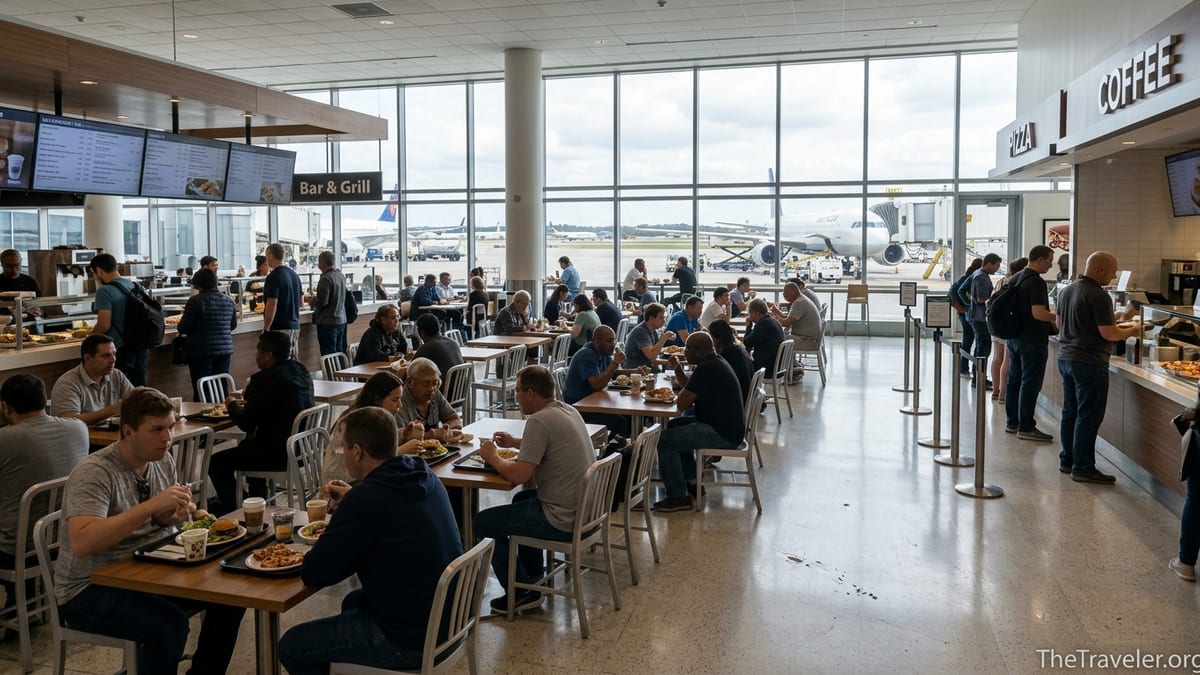
How JFK’s Dining Layout Really Works
The first thing to know is that JFK does not have one giant central food court that serves all terminals. Each terminal is effectively its own island once you are through security, with its own mix of restaurants, coffee bars, and quick-service counters. The official airport dining guide and most airline apps confirm this, and they are worth checking on the day you travel because specific outlets can change or close with little notice.
Active passenger terminals at JFK today are primarily Terminals 1, 4, 5, 7, and 8, with a new version of Terminal 6 under construction and the New Terminal One project gradually replacing the older Terminal 1 footprint. That means your best dining options depend heavily on which airline you are flying. For example, most Delta flights use Terminal 4, JetBlue uses Terminal 5, and American Airlines and British Airways operate from Terminal 8.
There are also a few pre-security and landside options worth keeping in mind. A travel plaza off the main airport road offers a basic food court and fuel station, and the TWA Hotel, connected to Terminal 5, has several bars and restaurants that many travelers use during long layovers. These can be helpful if you arrive early and want a meal before going through security, or if your preferred terminal has limited post-security choices at odd hours.
Because JFK is in New York City, prices tend to reflect both the airport premium and the local cost of dining. A quick takeaway sandwich or salad will commonly fall in the 12 to 18 dollar range, and a sit-down entree at a branded restaurant can easily reach 25 to 35 dollars before drinks. Budget a bit extra and expect to pay more for coffee, bottled water, and snacks than you would downtown.
Terminal 4: Flagship Dining and Big-Name Brands
Terminal 4 is JFK’s busiest international hub and also one of its most developed for food. The official terminal map lists dozens of options ranging from fast casual to full-service dining, and new restaurants are still being added as part of broader terminal upgrades. Near the central concourse, you will find recognizable national chains alongside New York names, making this one of the best terminals if you want real choice rather than just one or two counters.
Travelers looking for a proper sit-down meal before a long-haul flight often gravitate to branded bar-and-grill concepts and classic American steakhouses. A typical airport steakhouse here will serve burgers and steaks in the 20 to 40 dollar range, with New York strip or ribeye plates priced at the higher end and bar snacks such as sliders or wings starting around 14 to 18 dollars. Sports-bar chains in Terminal 4 usually feature multiple screens showing live games, a broad beer list, and large portions that can easily be shared if you are traveling with family.
For something faster, Terminal 4’s food courts and clusters of counters offer everything from pizza slices and noodle bowls to salads and sushi. These zones are designed for travelers who want to grab a meal within 10 to 15 minutes and eat at communal tables. It is common to find a New York style pizzeria charging around 5 to 7 dollars per slice or 14 to 20 dollars for a small pie, alongside Asian stir-fry counters where a build-your-own bowl with rice, vegetables, and protein runs roughly 15 to 18 dollars.
Coffee and bakery outlets are spread throughout the concourses, but lines can grow long at peak morning and evening departure banks. If you only have a short time, consider stopping at the first coffee bar you see after security rather than walking to the central food court, because many terminals report the greatest congestion near the main shopping and dining nodes. Grab-and-go refrigerators with prepacked yogurt parfaits, salads, and sandwiches can help you move quickly if you are boarding soon.
Terminal 5: JetBlue Hub With Casual Food Courts
Terminal 5, operated largely by JetBlue, offers a mix of local New York brands and national chains, but its exact line-up has been evolving as new vendors take over from older concessions. Recent airport dining guides highlight more than a dozen places to eat here, with a concentration around the main post-security atrium where passengers naturally congregate before dispersing to their gates. If you like to choose from several cuisines in one place, this terminal’s central cluster functions as its de facto food court.
Breakfast travelers in Terminal 5 will find bagel shops, coffee bars, and bakeries that lean into New York specialties. A classic airport bagel with cream cheese or egg can easily cost 6 to 8 dollars, and specialty coffee drinks typically run between 5 and 8 dollars depending on size and extras. If you have an early flight, it is worth arriving a little ahead of schedule, as queues for both bagels and coffee often form between 6 and 9 in the morning when multiple JetBlue departures leave within short windows.
At lunch and dinner times, Terminal 5’s restaurants expand into burgers, Italian-inspired dishes, and American comfort food. You can order a thin-crust pizza or pasta bowl from Italian counters, expect burgers and fries at grill concepts, and find salads and grain bowls for lighter options. Travelers on shorter domestic routes often opt for these mid-range meals to avoid relying solely on buy-on-board snacks. Plan on 15 to 25 dollars for a main dish with a nonalcoholic drink.
Do note that travelers have recently reported that some areas of the Terminal 5 food court feel crowded and, at times, under capacity for the number of passengers using them. If you have a long layover, it can be more comfortable to take your food to a quieter seating zone near your gate rather than eating in the central atrium. It may also be worth using mobile ordering options where available, as several operators in this terminal have experimented with app-based ordering and gate delivery to ease congestion.
Terminals 1 and the New Terminal One: Limited Legacy vs Big Upgrades
As of mid-2026, JFK’s existing Terminal 1 is in a transition phase, with many airlines preparing to move into the New Terminal One complex that is opening in stages. Current post-security food choices in the older Terminal 1 building are more limited than those in Terminals 4, 5, and 8, with a handful of quick-service counters, a small food court area, and a couple of bars and cafes. Many international travelers passing through here describe the experience as functional but not especially memorable.
The legacy Terminal 1 food court typically features a mix of international fast-food brands, coffee bars, and convenience-style markets selling packaged snacks and drinks. This is the kind of place where you might pick up a burger combo for around 14 to 18 dollars, a grab-and-go salad for 12 to 16 dollars, or a basic espresso drink for about 4 to 6 dollars. Seating can feel tight at peak periods, particularly in the evenings when multiple transatlantic flights depart within a short window.
The more exciting story is what is coming with the New Terminal One, a large-scale redevelopment project that airport authorities describe as a 2.6 million square foot complex with extensive space dedicated to restaurants, duty-free shopping, and lounges. Early announcements indicate a curated line-up of New York and global dining brands, including a fine-dining restaurant and bar concept that aims to provide a proper sit-down meal comparable to what you might find in Manhattan, along with more casual coffee bars, bakeries, and quick-service counters.
For travelers, the practical point is timing. If you are flying through JFK in late 2026 and beyond on carriers assigned to the New Terminal One, expect a much stronger dining offer than what the old Terminal 1 building has provided. There is likely to be a combination of full-service restaurants with entrees in the 30 to 45 dollar range, mid-range brasseries and wine bars, and fast-casual spots serving everything from ramen and sushi to Middle Eastern street food. Until that transition is complete, though, anyone using the current Terminal 1 should plan ahead, eat before reaching the airport if possible, or budget extra time to search out the best of the relatively small number of counters available.
Terminal 8: American’s Revamp and New Food & Wine Options
Terminal 8, home to American Airlines, British Airways, and several partners, has been undergoing a large commercial revamp that includes new shops, lounges, and restaurants. Recent announcements from the Port Authority and the airlines emphasize a shift toward more local and premium dining concepts, with the goal of making Terminal 8 feel like a modern flagship rather than an older outstation. For passengers, that translates to more choices and upgraded environments, particularly in the post-security core.
One notable change is the addition of new wine bar and bistro-style venues that offer a more relaxed sit-down experience than a typical bar-and-grill. These places often serve curated wine lists, small plates such as charcuterie boards or flatbreads, and mains like roast chicken or seafood dishes. Expect prices similar to mid-tier Manhattan wine bars, with glasses of wine in the 12 to 18 dollar range and shared small plates starting around 16 to 22 dollars.
Terminal 8 also now features an outpost of Eataly near one of its main gate areas, bringing Italian market-style dining into the terminal. This kind of space usually combines a cafe, pizzeria, and pasta counter with a small grocery-style market selling Italian products. In practice, that means you can grab an espresso and pastry for roughly 6 to 10 dollars, sit down for a margherita pizza in the 18 to 24 dollar range, or order fresh pasta dishes priced closer to 20 to 30 dollars. For travelers with long layovers, Eataly-style environments can be especially appealing because they offer both quick bites and slower sit-down meals under one roof.
Even if you are not looking for a full restaurant experience, Terminal 8’s upgraded food courts and clusters of counters provide plenty of options for sandwiches, salads, burgers, and international fast food. American’s schedule patterns mean that crowds spike in the early morning and late afternoon banks, so you may want to grab your meal slightly off-peak if you have flexibility. With the ongoing redevelopment, it is a good idea to follow terminal signage when you arrive, as some units open in phases and there may be temporary outlets operating while construction continues.
Terminal 7 and Off-Terminal Options: Smaller but Useful
Terminal 7 is smaller than Terminals 4, 5, and 8 and serves a mix of international and domestic carriers, which often results in fewer dining choices. Typically, you will find a handful of cafes, bars, and fast-food counters after security, enough to secure a meal before flying but without the variety that larger terminals can offer. Prices remain broadly similar to the rest of JFK, so you should expect to pay airport rates even when the choice is limited.
Because there are fewer outlets, Terminal 7 can feel especially crowded at peak departure times, when one or two long-haul flights may board back-to-back. If you are traveling in a premium cabin, lounge access can significantly improve your dining options, since several airline lounges in this terminal serve hot dishes, salads, and desserts that can substitute for a restaurant meal. Economy passengers without lounge access should plan to eat early, before the main boarding rush for their flight begins.
Outside the terminals, the TWA Hotel connected to Terminal 5 has become a destination in its own right, and many travelers treat its bars and restaurants as an extension of the airport dining scene. Inside the restored midcentury building, you will find a lobby bar overlooking the historic flight tubes, a cafe with coffee and snacks, and seasonal food service on the rooftop pool deck facing the runway. Menu prices align with boutique hotel standards: think 18 to 24 dollars for a burger or sandwich, cocktails around 18 to 22 dollars, and desserts near 10 to 14 dollars.
Another off-terminal option is the airport’s roadside travel plaza, which includes a basic food court, coffee counter, and convenience store. This can be useful if you are driving and want to eat before returning a rental car or before dropping off departing passengers. The brands here are typical highway-style chains, and prices, while still carrying an airport premium, can be slightly lower than what you will see airside. Just keep in mind that eating landside means allowing enough time to clear security afterward.
Practical Tips for Eating Well at JFK
With so many moving pieces at JFK, from construction projects to operator changes, one of the most useful steps you can take is to check your terminal’s dining map on the airport or airline website the day before you fly. This lets you confirm which restaurants are currently operating near your gate, what time they open and close, and whether there are any 24-hour options if you have a very early or very late departure. Because concession contracts can shift, relying solely on an old guidebook or blog post may leave you searching for an outlet that has already been replaced.
Time management is critical. At busy terminals like 4, 5, and 8, security lines and passport control can be unpredictable, and popular restaurants can have waits at peak hours. A reasonable strategy is to clear security first and then look for food, aiming to sit down to eat no later than 60 minutes before boarding for domestic flights and 90 minutes before boarding for long-haul international flights. If you are cutting it closer, choose grab-and-go items or prepacked meals from refrigerated cases so you are not stuck waiting for table service.
If you care about healthier options, JFK has gradually expanded its selection of salad bars, plant-forward bowls, and fresh juice kiosks across its major terminals. These outlets typically highlight calorie counts and ingredients and may offer vegetarian, vegan, and gluten-friendly dishes. You can often build a custom bowl with grains, vegetables, and a protein for 14 to 18 dollars, which can be a better value nutritionally than a similar-priced fast-food combo.
Families and budget travelers should also look closely at combo deals and kids’ menus where available. Some sit-down restaurants in Terminals 4, 5, and 8 offer children’s meals that include a small entree, side, and drink for roughly 10 to 14 dollars, which can be more cost-effective than ordering separate a la carte items. Sharing large portions, especially at American-style diners and sports bars, is another way to control costs, as many plates are generous enough for two lighter eaters.
The Takeaway
New York JFK’s dining scene is far more varied than it used to be, but it is also fragmented by terminal and shaped by ongoing construction. Travelers who know where they are flying from and what kind of meal they want can usually find a good option, whether that is a quick coffee and bagel in Terminal 5, a proper steak or sit-down restaurant in Terminal 4, Italian market-style dining in Terminal 8, or a boutique hotel burger at the TWA Hotel.
Because restaurant line-ups and operators change regularly, think of this guide as a framework rather than a fixed checklist. Use it to understand which terminals are strongest for food, how prices generally look, and when it makes sense to eat before or after security. Then, on the day of travel, confirm specific outlets through official maps and signs in the terminal.
With a bit of planning and realistic expectations about pricing and crowds, eating at JFK can be more than just a last-minute grab at the nearest counter. Whether you are starting a vacation, ending a work trip, or connecting between continents, the right restaurant or food court can turn your time at the airport into a small but satisfying part of the journey.
FAQ
Q1. Does JFK have a single main food court that serves all terminals? No. Each terminal at JFK has its own cluster of restaurants and food courts, and you generally cannot move between terminals without exiting security and re-clearing.
Q2. Which JFK terminal has the best overall dining options? Terminal 4 is often considered the strongest for variety, with multiple sit-down restaurants, bars, and fast-casual spots, while Terminal 8 has been rapidly improving thanks to recent upgrades.
Q3. Are there any 24-hour food options at JFK? Availability varies, but major terminals such as 4 and 5 usually have at least one coffee or grab-and-go outlet operating late into the night or around the clock. Check the airport’s current listings close to your travel date.
Q4. How expensive is food at JFK compared with Manhattan? Prices are similar to or slightly higher than mid-range Manhattan spots, with quick meals typically 12 to 18 dollars and sit-down entrees often 25 to 35 dollars or more.
Q5. Can I eat at the TWA Hotel if I am not staying there? Yes. The TWA Hotel’s bars and restaurants are open to non-hotel guests, and many travelers visit for a meal or drink during layovers, though you need to allow time to move between the hotel and your departure terminal.
Q6. What are the best options for a quick breakfast before an early flight? Bagel shops, coffee bars, and bakeries in Terminals 4, 5, and 8 are your best bet. Many open early to serve morning departure banks, offering bagels, pastries, and coffee for takeout.
Q7. Are there good vegetarian or vegan options at JFK? Yes. Most major terminals now feature salad and grain-bowl counters, as well as restaurants with clearly marked vegetarian and vegan dishes, especially in Terminals 4, 5, and 8.
Q8. Can I rely on airline lounges for a full meal instead of a restaurant? In many cases, yes. Premium lounges in Terminals 4, 5, 7, and 8 typically offer hot food, salads, and desserts that can replace a restaurant meal, though quality and variety vary by lounge.
Q9. What should I do if my terminal has limited food options? If possible, eat before you reach the airport or use landside options such as the TWA Hotel or the travel plaza. Once through security, focus on the best available counter and consider grab-and-go items in case lines grow.
Q10. How much extra time should I allow to eat before my flight at JFK? Plan to start looking for food after security at least 60 minutes before boarding a domestic flight and 90 minutes before boarding an international flight, especially in busy terminals like 4, 5, and 8.