


More news on this day
Flight delays have become a defining feature of recent European summers, as strikes, staffing shortages and volatile weather continue to disrupt even the best-planned holidays.
Get the latest news straight to your inbox!
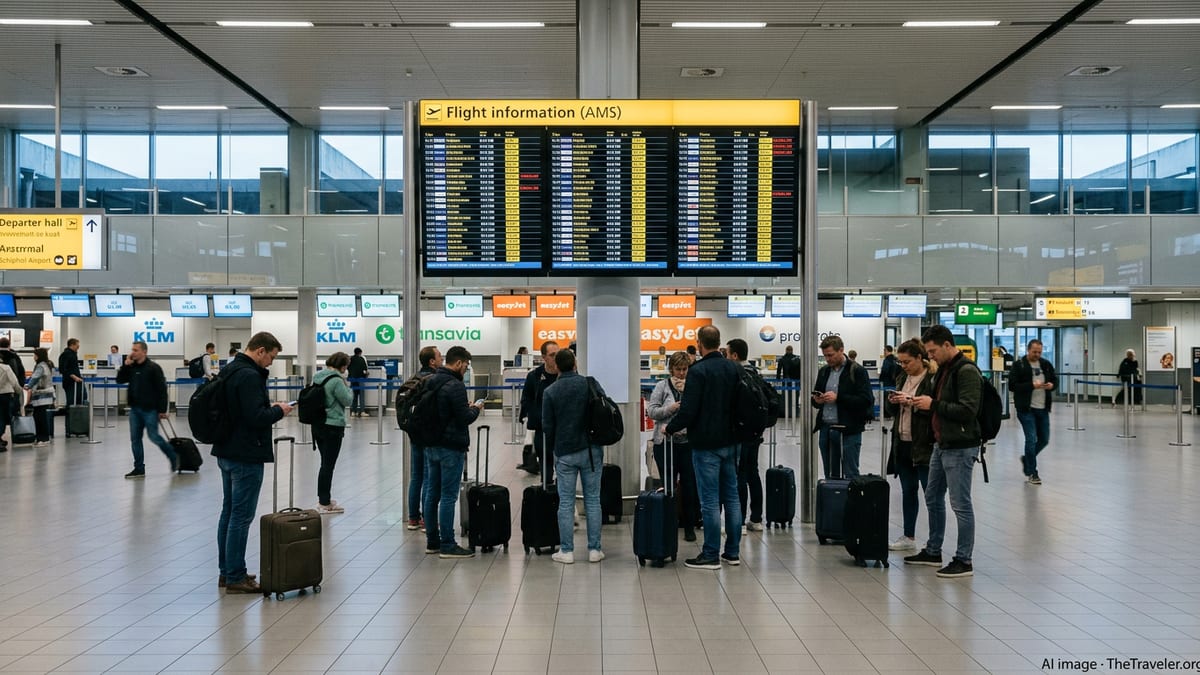
Why European Summer Flights Are Still So Disrupted
Travelers heading to Europe this summer are entering an air travel system that remains highly sensitive to disruption. Network data from European aviation bodies shows that air traffic control capacity issues, staff shortages and industrial action continued to drive significant delay minutes across the region in 2025, with knock-on effects expected again in 2026 as demand remains strong.
Reports from travel and aviation outlets point to a familiar pattern: bottlenecks in key airspace, especially over busy hubs, combine with localized strikes at airports and among air traffic controllers to create long queues on peak travel days. When one piece of the system slows down, delays ripple across the continent, often for days.
Weather has also played a larger role. Recent seasons have brought intense summer storms and heatwaves that force airports to slow operations for safety reasons. While these events may be considered outside an airline’s control, they still leave passengers facing hours in terminals or missed connections that can derail onward plans.
The result is a travel environment in which even on-time departures can be affected by earlier disruption. For passengers, that makes preparation, flexibility and a clear understanding of rights increasingly important parts of planning a European summer trip.
What EU Passenger Rights Mean For Delayed Flights
European rules on air passenger rights remain among the strongest in the world. Regulation 261/2004, often referred to as EU261 or EC261, sets out when airlines must provide care, rerouting or financial compensation to travelers whose flights are delayed or cancelled. The regulation generally applies to any flight departing from an airport in the European Union, as well as flights operated by EU and certain associated carriers arriving into the bloc.
Publicly available guidance from EU institutions explains that passengers may be entitled to compensation when they arrive at their final destination with a delay of at least three hours, provided the disruption was not caused by what regulators consider extraordinary circumstances such as severe weather or air traffic control strikes. The amount typically scales with distance, with short-haul itineraries eligible for a lower sum than long-haul journeys.
In addition to compensation, the rules require airlines to offer assistance when delays reach defined thresholds. That can include meals, refreshments, access to communication and, where an overnight stay is necessary, hotel accommodation and transport between the airport and lodging. For delays of five hours or more, passengers who no longer wish to travel can usually request a refund of the unused portion of the ticket and, where relevant, a return flight to the original point of departure.
Lawmakers in Brussels have recently agreed on updates to strengthen these rights and clarify grey areas such as missed connections and communication obligations. According to recent European Council and Parliament announcements, the political agreement preserves compensation after delays of three hours or more and will require airlines to give clearer, timely information when disruptions occur, although most of the new measures are not expected to take effect before 2027.
Step-by-Step: What To Do When Your Flight Is Delayed
When a delay appears on the departure board, the first priority for travelers is to confirm accurate, up-to-the-minute information. Airline apps, airport displays and text or email alerts can differ, so it is worth checking more than one source. Under existing and forthcoming EU rules, airlines are expected to inform customers as soon as possible when a delay may lead to compensation, but in the immediate moments after disruption, digital tools are often the fastest way to see gate changes and revised departure times.
The next step is to establish whether the delay is likely to cross key thresholds such as three or five hours, or to cause a missed connection. If a long delay seems likely, passengers should approach the airline’s service desk or use the carrier’s digital rebooking tools to explore alternative routes. Many larger airlines now allow same-day changes within their apps, which can be quicker than queuing at a desk during peak disruption.
At the airport, it is important to keep all boarding passes, booking confirmations and receipts related to meals, transport or accommodation purchased during a delay. These documents can be essential when submitting a claim later. Travelers should also document the cause of disruption, where possible, by taking screenshots of airline messages or airport status boards indicating technical issues, staffing problems or weather warnings.
If the delay reaches the point where assistance should be provided, passengers can seek meal vouchers, hotel arrangements or transfers directly from the airline. Where that support is not immediately available and travelers pay out of pocket, itemized receipts make it easier to request reimbursement according to the applicable rules and the airline’s policies.
How To Claim Compensation And When To Escalate
Filing for compensation typically begins with the airline that operated the disrupted flight. Most carriers provide online forms where passengers can submit flight details, a description of the delay or cancellation, and supporting documents. Industry guides recommend being clear but concise, citing the arrival delay at the final destination and the basic cause of disruption as communicated by the airline or airport.
Processing times can vary widely. Some airlines respond within a few weeks, while others take longer during peak seasons when claims surge. If a claim is rejected or no response is received, travelers can escalate through national enforcement bodies in the EU country where the disruption occurred or where the flight was due to depart. These agencies handle complaints relating to passenger rights and may review whether the rules were correctly applied.
For those who prefer not to manage the process themselves, there is a growing ecosystem of claim services and legal-tech platforms that handle EU261 cases in exchange for a fee or a share of any compensation recovered. Consumer organizations advise reading the terms carefully, as commission rates and contract lengths can differ significantly.
It is also important to distinguish between statutory compensation and other support airlines may offer, such as travel vouchers or frequent flyer miles. Accepting a voucher does not always replace the right to cash compensation, but passengers should review any conditions attached before agreeing, to avoid inadvertently settling a claim on less favorable terms.
Planning Ahead To Reduce Summer Disruption Risk
While no itinerary is completely immune to disruption, travel planners say certain strategies can reduce the impact of delays during Europe’s busy summer months. Choosing morning departures where possible can help, as early flights are less exposed to knock-on effects from earlier disruptions. Allowing longer connection times in major hubs can also provide a buffer if the first leg runs late.
Booking on a single ticket rather than separate point-to-point segments is another key step. Under EU rules, compensation and assistance are assessed based on the arrival time at the final ticketed destination. A protected connection on one booking generally gives passengers stronger rights than two unrelated tickets, especially when flights are operated by partner airlines.
Travel insurance tailored to flight disruption can add another layer of protection. Policies can vary, but many offer fixed payouts for long delays, coverage for missed tours or prepaid hotels, and support services for rebooking. Experts often recommend checking that the insurer covers strikes and air traffic control issues, which have featured prominently in recent European summers.
Finally, flexibility can be as valuable as formal rights. Avoiding peak travel days when possible, building spare time before cruises or remote onward journeys, and having a backup plan for the first night’s accommodation can turn a major delay into a manageable inconvenience rather than a ruined holiday.