


Planning a trip to Russia is unlike planning a city break in Western Europe. Distances are vast, infrastructure and rules can be unfamiliar, and current politics and security considerations are serious factors. Yet for travelers who decide to go, Russia offers an unusually rich combination of imperial cities like Moscow and Saint Petersburg, medieval Golden Ring towns, Tatar and Finno Ugric cultures, and some of the world’s most dramatic natural landscapes from Lake Baikal to the Caucasus and Altai. This guide focuses on how to plan a trip built around cities, culture, history and natural wonders, with practical examples of routes, budgets and on the ground logistics.
Get the latest updates straight to your inbox!
Understand the Current Context and Entry Requirements
Before you start sketching routes on a map, you need to understand the current political and security context. As of early 2026, governments including the United States, Canada and many European Union countries maintain strict "do not travel" or "reconsider travel" advisories for Russia because of the ongoing war in Ukraine, the risk of arbitrary law enforcement and limited consular assistance for their citizens. That means your planning should begin not with flight searches, but with a careful reading of your own country’s foreign ministry or State Department guidance, and a realistic conversation about your personal risk tolerance. Policies can change quickly, so you should re check official advice immediately before booking and again before departure.
Visa policy is another decisive factor. Russia requires visas for most non CIS nationals, and in many cases you must apply in person at a consulate or via a visa center, providing an official invitation letter from a hotel or travel agency, proof of travel insurance and sometimes fingerprinting. Turnaround times vary from a few days for expensive express service to several weeks for standard processing, so it is common to start visa applications two months before your trip. Some travelers use licensed Russian tour operators, which for a fee can package invitations, hotel vouchers and airport transfers, removing much of the stress from the process.
Flight options have also changed significantly. Many European carriers no longer serve Russia and Russian airlines are cut off from parts of Western airspace. Travelers who still go often route via hubs such as Istanbul, Dubai, Abu Dhabi or Belgrade, then connect to Aeroflot, Rossiya or other Russian airlines to reach Moscow or Saint Petersburg. This usually adds time and cost. A one way economy ticket from Istanbul to Moscow can vary from around 250 to 450 US dollars depending on season and demand, so flexible dates and early booking matter.
Finally, be prepared for practical restrictions. Major international payment networks may not function, which means you should confirm in advance whether your bank card will work, and if not, plan to bring enough hard currency to exchange into rubles on arrival. Travel insurance that explicitly covers trips to Russia is essential. Given the uncertainty, many travelers sensibly plan flexible or fully refundable bookings whenever possible.
Choosing an Itinerary: Cities, History and Nature on One Trip
Russia’s size makes it impossible to "see it all" in one holiday, so successful trips usually focus on one or two broad regions. A classic two week cultural route combines Moscow, Saint Petersburg and several Golden Ring towns. For example, you might spend four nights in Moscow, three in Saint Petersburg and three across smaller historic cities such as Sergiev Posad, Suzdal and Yaroslavl, plus a night or two in transit. This mix lets you experience imperial architecture, Soviet history, the Orthodox heartland and quieter provincial life without exhausting long distance travel.
Another popular idea is to combine big city culture with one flagship nature destination. A three week journey could begin with a week between Moscow and Saint Petersburg, followed by a flight east to Irkutsk and several days at Lake Baikal, or south to Mineralnye Vody for the Caucasus and Mount Elbrus region. Travelers with more time sometimes add Kazan on the Volga for its Tatar culture and UNESCO listed kremlin, or Karelia for wooden churches and lake landscapes that contrast strongly with brick and stone city centers.
Budget and travel style will also shape the itinerary. If you prefer slow travel, you might base yourself in Moscow and Saint Petersburg for a week each, using day trips to explore satellite towns such as Kolomna, Sergiev Posad, Peterhof or Kronstadt. This reduces packing and unpacking while still delivering a wide range of experiences. If you value the journey as much as the destination, you might instead board a section of the Trans Siberian railway from Moscow to Yekaterinburg or Novosibirsk, breaking the route with overnight stops in cities that most tourists fly over.
Finally, consider your themes. History enthusiasts might prioritize Veliky Novgorod and Pskov, two of the oldest Russian cities, layered with medieval fortifications and churches. Those passionate about religious art might structure days around cathedrals, monasteries and icon museums, from the Trinity Lavra of Saint Sergius to the frescoes of Yaroslavl and the Russian Museum in Saint Petersburg. Nature photographers may center everything on Baikal, Altai or Kamchatka and treat Moscow simply as an entry and exit point.
Moscow and Saint Petersburg: Urban Anchors of a Russia Trip
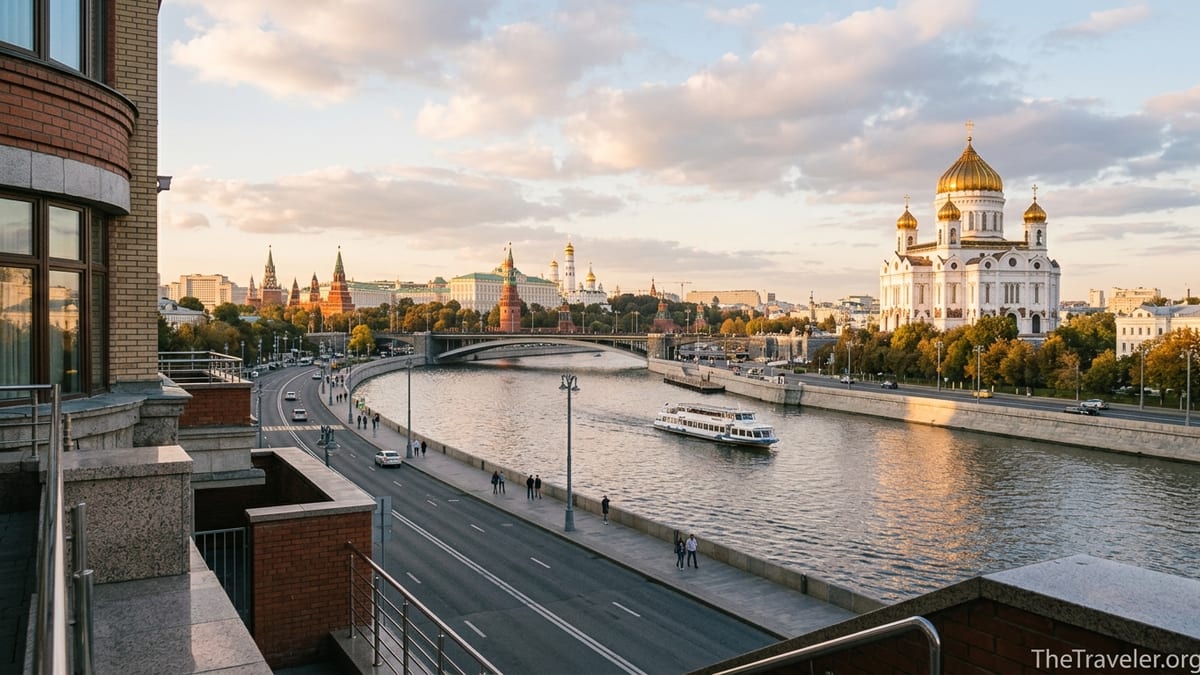
For most travelers interested in cities and culture, Moscow and Saint Petersburg serve as anchors. Moscow offers the political and spiritual core of modern Russia, with the Kremlin and Red Square, the State Tretyakov Gallery for Russian art, and the former KGB headquarters at Lubyanka representing Soviet power. Even everyday infrastructure is part of the experience. The Moscow Metro is one of the world’s most ornate underground systems, with marble halls, mosaics and chandeliers in stations like Komsomolskaya and Mayakovskaya. As of 2025, a single metro ride costs the equivalent of roughly 0.70 US dollars when paid via bank card, making it both practical and a living museum of socialist realist design.
Saint Petersburg, founded by Peter the Great in 1703, feels different in almost every way. Wide canals, baroque facades and neoclassical palaces give the city a European atmosphere. Many visitors spend a full day at the Hermitage Museum inside the Winter Palace, one or two evenings strolling along Nevsky Prospekt, and a day trip out to Peterhof or Tsarskoye Selo to see imperial summer residences. In summer, the "white nights" bring late sunsets and a buzzy street life. In winter you might see frozen canals, snow dusted statues and interiors of palaces and theaters at their most atmospheric.
In both cities, mid range hotels can start around 60 to 100 US dollars per night for a central double room, with prices rising during school holidays, festivals or major business events. Many culturally minded travelers prefer smaller guesthouses or apartments near historic districts, for example around Patriarch Ponds in Moscow or on Vasilievsky Island in Saint Petersburg. Daily costs vary, but you can eat a decent lunch in a self service canteen style stolovaya for under 10 dollars equivalent, or pay more for contemporary Russian or Georgian fusion restaurants with long wine lists and tasting menus.
From these hubs you can explore nearby culture rich areas on day trips. From Moscow, trains take you to Sergiev Posad in about an hour to visit the Trinity Lavra of Saint Sergius, often described as Russia’s spiritual center and part of the Golden Ring. From Saint Petersburg, suburban trains and buses reach the palace parks of Peterhof, where fountains play overlooking the Gulf of Finland, and Pushkin, home of Catherine Palace with its reconstructed Amber Room. Building these excursions into your city stays gives you a broader sense of Russian history without extra domestic flights.
The Golden Ring and Historic Provincial Russia
The Golden Ring is a loosely defined tourist route connecting several ancient towns northeast of Moscow. Cities such as Vladimir, Suzdal, Yaroslavl, Kostroma, Rostov Veliky, Pereslavl Zalessky, Ivanovo and Uglich preserve kremlins, bell towers and clusters of onion domed churches that illustrate the development of early Russian statehood and Orthodox culture. Several historic centers along this route are UNESCO World Heritage Sites, for example the white stone monuments of Vladimir and Suzdal and the old town of Yaroslavl with its riverside churches and merchants’ houses.
Travelers often visit the Golden Ring on organized two or three day tours from Moscow, which bundle minibus transport, local guides and hotel stays. A typical group tour might cost in the range of 300 to 600 US dollars per person depending on the level of accommodation and group size. Independent travelers can reach many towns by regional trains or long distance buses and then walk or use local taxis to get around. Suzdal stands out because it has preserved a low rise village like character, with wooden houses and wide views of monasteries across meadows, giving a tangible feel of old Rus that is rare in the capital.
Beyond architecture, the Golden Ring offers everyday cultural experiences. In Yaroslavl, for example, visitors may attend a performance at the city drama theater, shop for linen and handicrafts at the market, or take a boat ride on the Volga in summer. In Rostov Veliky, you can walk along the lakefront behind the kremlin walls at sunset and listen to church bells that have been ringing in various forms since the 17th century. Local museums often focus on icons, enamel work, textiles or regional history, and homestyle restaurants serve hearty dishes such as borscht, pelmeni and baked river fish.
If you have extra time, it is worth venturing beyond the standard roster. Towns like Veliky Novgorod and Pskov to the northwest are not always listed among the classic Golden Ring but are among the country’s oldest cities, with early stone kremlins, frescoed churches and World Heritage status. Combined with a few days in Saint Petersburg, they give a deep perspective on the long arc of Russian state and church history, from the trading republics of the Middle Ages to the imperial age.
Kazan, Volga Cities and Multiethnic Russia
To experience Russia’s cultural diversity, many travelers look beyond Slavic heartlands to the Volga region, and especially to Kazan, capital of the Republic of Tatarstan. Kazan’s UNESCO listed kremlin combines the white Annunciation Cathedral and the Qol Sharif Mosque within a single fortified complex, symbolizing centuries of coexistence between Orthodox Christianity and Islam. The city center features both Russian and Tatar architecture, from carved wooden houses to Art Nouveau facades. Walking Bauman Street in the evenings, you might hear as much Tatar language as Russian.
Reaching Kazan from Moscow by overnight train is a classic Russian experience. A compartment in a four berth kupe carriage on a modern fast train can cost roughly 60 to 120 US dollars per person depending on season and booking class, and the journey takes about eleven to twelve hours. Many travelers board in Moscow after dinner, share tea and snacks in the compartment while watching forests and villages slide by, and wake up rolling into a different cultural world. Domestic flights connect Kazan to Moscow and Saint Petersburg in about 90 minutes, for prices often similar to or slightly above the train.
Culturally, Kazan is a gateway to understanding Russia as a multiethnic federation rather than a single homogeneous culture. Museums emphasize the history of the Volga Bulgars, the Kazan Khanate and the incorporation of Tatar lands into the Russian Empire. Cafes serve dishes like echpochmak pastries, chak chak honey sweets and various plov style rice dishes alongside more familiar Russian fare. Many itineraries pair Kazan with another Volga city such as Nizhny Novgorod, known for its steep riverbanks and hilltop kremlin, to create a mini route focused on river landscapes, wooden churches on islands and industrial history.
Further along the river, cities like Samara, Saratov and Volgograd offer Soviet memorials, riverside embankments and aviation or space themed museums. Because distances stretch out, these are better suited to longer trips or travelers who are particularly interested in military or Soviet era history. River cruises on the Volga, usually operating with Russian clientele, are another way to move between cities while using the ship as your hotel and dining room, although foreign language guidance may be limited.
Russia’s Natural Wonders: Baikal, Caucasus, Altai and Beyond
Russia’s natural attractions are as compelling as its cities. Lake Baikal in Siberia is one of the most famous: the world’s deepest and among its oldest freshwater lakes, surrounded by forests and low mountains. Many itineraries use the city of Irkutsk as a gateway, with a two hour minibus or taxi ride to Listvyanka on the lakeshore or a longer journey to villages along the Circum Baikal Railway. In summer, travelers hike coastal trails, take boat trips to uninhabited bays and visit wooden churches and old dachas. In winter, Baikal becomes a vast sheet of ice where drivers operate seasonal ice roads, and small groups cross sections of the lake on foot or by hovercraft with local guides.
More remote but spectacular are the volcanoes and geysers of the Kamchatka Peninsula in the Russian Far East, part of a large UNESCO World Heritage site. Access is usually via the regional capital Petropavlovsk Kamchatsky, which itself requires long flights from Moscow or Vladivostok. Once there, many signature experiences such as visiting the Valley of Geysers or certain calderas are possible only by organized helicopter tours, often priced in the high hundreds of dollars for a single day, because there are no roads and the area is strictly regulated. This is a destination for travelers comfortable with high costs, basic infrastructure outside the main town, and rapidly changing weather.
Closer to European Russia, the Caucasus Mountains draw hikers, climbers and skiers. Mount Elbrus in the Kabardino Balkaria region is widely regarded as the highest peak in Europe and attracts guided climbs each summer. Even non climbers can ride cable cars to high viewpoints, walk alpine meadows and visit spa towns like Pyatigorsk or mineral spring resorts that were fashionable in the 19th century. Winter visitors may ski at resorts such as Krasnaya Polyana near Sochi on the Black Sea, combining mountain scenery with a subtropical coastline.
The Altai Republic in southern Siberia offers a different mountain experience, with turquoise rivers, glacial lakes and a mix of Russian and indigenous Altai cultures. Small eco lodges and guesthouses line the Katun River and Chuysky Trakt highway, and multi day rafting and trekking trips operate in summer. Travelers who prefer gentler landscapes may choose Karelia, north of Saint Petersburg, for pine forests, thousands of lakes, and wooden architecture including the famous church ensemble on Kizhi Island. Each of these nature destinations requires substantial planning around transport, permits in certain protected areas, and weather windows, so they are often best tackled with the help of regional tour operators or guides who specialize in specific parks or routes.
Practical Logistics: Transport, Money, Seasons and Costs
Within Russia, the most common long distance transport options are domestic flights, rail and long distance buses. For routes like Moscow to Irkutsk, many travelers take a section of the Trans Siberian railway instead of flying. A four berth kupe compartment on the three day journey can cost anywhere from a few hundred to several hundred US dollars depending on train class and booking conditions, but it includes your transport and accommodation, and gives you the chance to mix with Russian travelers. Shorter rail legs, such as Moscow to Saint Petersburg on high speed Sapsan trains, take about four hours and are often priced competitively with internal flights when booked in advance.
City public transport is generally affordable. In Moscow and Saint Petersburg, metro systems and buses use unified smart cards or contactless payment with fixed fares per ride, which makes it easy for visitors to navigate. Taxis and ride hailing apps exist in most cities and can be inexpensive by Western standards, but foreign bank cards may not work inside local apps, so many visitors rely on hotel front desks to call licensed taxis or pay in cash. In rural areas and nature destinations, you often move by pre arranged minibus, 4x4 vehicle or boat operated by tour companies or lodge owners rather than scheduled public transport.
Money and payments require advance thought. Due to banking sanctions, international cards linked to certain networks may not function reliably across Russia. Many travelers bring euros or US dollars in clean, recent banknotes and exchange them at banks or official currency exchange offices to obtain rubles, then pay for daily expenses in cash. In larger cities, local bank cards issued by Russian banks, and sometimes Chinese payment systems, are widely accepted. It is sensible to carry a mix of payment methods and keep emergency reserves separate from your day to day wallet.
Seasonality has a big impact on both experience and costs. Summer from June to early September brings long days, green parks and easier access to mountain trails and lake cruises, but it is also peak domestic travel season, especially around school holidays in late July and August. Late spring and early autumn can be sweet spots with fewer crowds and colorful foliage, especially in the Golden Ring and along the Volga. Winter appeals to those who want snowbound cityscapes, ice festivals and frozen Baikal, but requires serious cold weather clothing, short daylight hours and flexibility around possible transport disruptions. Accommodation outside the largest cities often operates on a short season, so you should always confirm opening dates directly with properties or agents.
Cultural Etiquette, Language and On the Ground Safety
Many visitors find Russian cities feel safer in everyday terms than they expected, with families walking at night and little visible street crime in central areas. However, the wider political and legal environment remains complex, so personal security is about more than pickpockets. It is wise to carry copies of your passport and visa, comply promptly with any ID checks by police, and avoid photographing government buildings, military facilities or sensitive infrastructure. Demonstrations or public rallies are best avoided altogether, regardless of your views.
Language is another practical concern. In Moscow, Saint Petersburg and major tourist centers, younger people in cafes, hotels and museums often speak at least basic English, and signage on metro systems in these cities usually includes Latin transliteration. In provincial towns and national parks, however, you should expect to rely more on Russian. Carrying a phrasebook or using an offline translation app, and having key addresses printed in Cyrillic for taxi drivers, can make everyday situations far smoother.
Culturally, behavior tends to be more reserved than in many Western countries. Smiling at strangers is not as automatic, but this does not mean people are unfriendly. Basic politeness, such as greeting shop staff, offering a firm handshake when introduced, and removing shoes inside private homes, goes a long way. When visiting churches and monasteries, modest dress is appreciated: women often cover their hair with a scarf and avoid bare shoulders, while men remove hats. In some monasteries, staff may offer wraparound skirts or scarves at the entrance if your clothing is deemed inappropriate.
Food and drink are central to social life. If invited to someone’s home or to a countryside dacha, it is customary to bring a small gift such as sweets, flowers or a specialty from your own country. Toasting rituals at meals can be elaborate, especially with vodka or homemade spirits; if you do not drink alcohol, explain this politely at the beginning of the evening. Tipping practices vary, but in mid range restaurants a tip of around 5 to 10 percent of the bill is common when service is not already included.
The Takeaway
Planning a Russia trip centered on cities, culture, history and natural wonders in 2026 is an exercise in careful weighing of rewards and risks. On one side are world class urban experiences in Moscow and Saint Petersburg, medieval kremlins and onion domes in Golden Ring towns, the multiethnic Volga corridor, and landscapes like Baikal, the Caucasus and Altai that match many of the planet’s great wilderness regions. On the other are serious political and security concerns, shifting visa rules, sanctions that complicate payments, and limited consular assistance for some nationalities.
The most successful itineraries are selective. They link two or three core regions that fit your interests and time frame, accept that you will only scratch the surface of a vast country, and build in buffers for logistics, weather and bureaucracy. Working with reputable local partners, over preparing paperwork, and staying flexible on the ground can help convert a complex destination into a deeply rewarding travel experience.
Ultimately, whether this is the right moment for you to visit Russia is a personal decision informed by official guidance, your circumstances and your appetite for uncertainty. If you choose to go, approaching the journey with humility, curiosity and respect for local realities can turn the challenges of planning into part of the story, and the mix of city lights, monastery bells and wild horizons may stay with you long after you return home.
FAQ
Q1. Is it currently safe to travel to Russia as a tourist?
Safety depends heavily on your nationality, risk tolerance and the regions you plan to visit. Many governments maintain strict warnings due to the war in Ukraine, potential arbitrary law enforcement and limited consular access. You should check your own foreign ministry’s latest advisory, understand that conditions can change quickly, and make a conservative, informed decision.
Q2. How far in advance should I start planning a Russia trip?
For a visa requiring trip that includes long distance rail or flights, starting planning three to six months ahead is sensible. This allows time to secure invitations, submit visa applications, book internal transport at better fares and research regional operators for places like Baikal or the Caucasus. Last minute trips are possible in theory but magnify every logistical risk.
Q3. Do I need a tour operator, or can I travel independently?
Independent travel is feasible in major cities and on well trodden routes like the Golden Ring or Trans Siberian, especially if you speak some Russian or are comfortable with translation apps. For remote nature areas, complex permits, or if you do not want to navigate bureaucracy alone, using a reputable Russian or international tour operator can significantly simplify things, even if you keep some days free for independent exploration.
Q4. How much does a typical two week culture focused trip cost?
Budgets vary, but a mid range traveler combining Moscow, Saint Petersburg and a few Golden Ring towns might expect to spend from a few thousand US dollars per person, including international flights via a third country, visas, mid range hotels, train tickets, city transport, museum entries and meals. Adding remote nature destinations, private guides or business class flights increases costs considerably.
Q5. What is the best season to combine cities and nature in one trip?
Late May to early July and early September are often good compromises. In these windows, cities are lively but not at peak heat, Volga and Golden Ring towns are pleasant for walking, and many mountain and lake areas have accessible trails without winter conditions. Deep winter is atmospheric in cities and at Baikal but requires more specialized clothing and tolerance for very short days.
Q6. Will my credit or debit cards work in Russia?
Due to sanctions and banking restrictions, many foreign issued cards linked to certain networks may not work consistently for payments or cash withdrawals. Travelers often bring sufficient euros or US dollars to exchange into rubles on arrival and rely largely on cash for everyday expenses, using cards only when clearly accepted. You should confirm your bank’s current policies and be prepared with backup options.
Q7. How difficult is it to get around without speaking Russian?
In Moscow, Saint Petersburg and some tourist centers, you can often manage with English in hotels, museums and some restaurants, supported by bilingual signage and translation apps. In provincial towns, on trains and in nature regions, English is far less common, so basic Russian phrases, offline translation tools and having addresses written in Cyrillic are very helpful. Joining English speaking tours for key legs can reduce stress.
Q8. What clothing should I pack for a mixed cities and nature itinerary?
Packing depends on season, but layers are essential. For summer, bring light but conservative city clothes, a waterproof jacket, comfortable walking shoes and sturdier footwear for trails. For shoulder seasons or winter, add thermal layers, a serious insulated coat, hat, gloves and waterproof boots suitable for snow and ice. In all seasons, modest options are useful for church and monastery visits.
Q9. Are there any regions first time visitors should avoid?
Travel advisories often flag areas near the border with Ukraine and some parts of the North Caucasus as higher risk, and access to certain border zones, military areas or closed towns is restricted or requires special permits. Remote wilderness regions can also be risky without experience and proper guides. You should cross check any planned region against current official guidance and local advice before including it in your itinerary.
Q10. How can I find reliable local guides and tour companies?
Reputable providers can be identified through long standing guidebooks, established international tour brands that partner with Russian ground handlers, and word of mouth from experienced travelers. When researching online, look for companies with detailed, realistic itineraries, clear pricing, transparent terms and recent reviews that mention logistics and safety. Avoid offers that seem dramatically cheaper than the norm for complex destinations like Kamchatka or remote sections of Baikal.