


Choosing between Russia and Kazakhstan means choosing between two immense Eurasian worlds that feel familiar on the map yet very different on the ground. Both offer grand cities, epic rail journeys and wild nature, but practical questions about safety, visas, budget and language can tip the balance quickly. This guide compares the two in concrete, real world terms to help you decide which destination fits your travel style better right now.
Get the latest updates straight to your inbox!
Safety, Geopolitics and First Impressions
For many international travelers in 2026, the biggest differentiator between Russia and Kazakhstan is not scenery or culture but geopolitics. Russia is under wide ranging sanctions and is subject to strict travel advisories from Western governments, including “do not travel” guidance from the United States citing security concerns, arbitrary enforcement of local laws and limited consular support. By contrast, Kazakhstan is actively courting international tourism and is regularly promoted in outlets such as National Geographic and major travel magazines as an emerging, relatively stable destination in Central Asia.
On the ground, visitors commonly describe Almaty and Astana in Kazakhstan as feeling similar in safety to medium sized European cities, with familiar precautions such as watching belongings on public transport and using licensed taxis at night. In Russia, many independent travelers still report rewarding trips to Moscow, Saint Petersburg and Siberia, but they also describe additional layers of stress: questions about bank card acceptance due to sanctions, routing flights through third countries, and uncertainty about changing regulations that can shift within months.
If your travel style leans toward low stress logistics and minimizing political risk, Kazakhstan generally aligns better. If you are an experienced traveler willing to accept higher uncertainty and spend more time researching current rules, Russia can still be accessible, but it requires a more deliberate risk assessment and up to the minute information before you book.
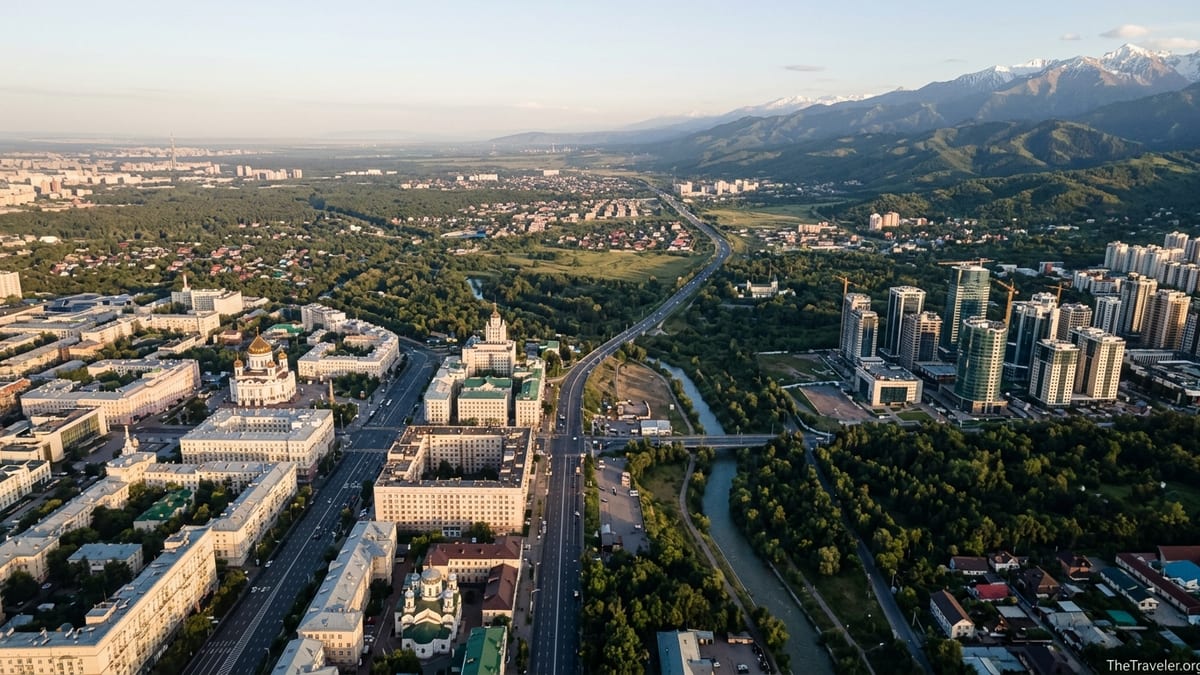
First impressions also differ. Landing in Moscow or Saint Petersburg drops you immediately into dense, historic urban landscapes where onion domes, soviet avenues and glittering shopping streets collide. Arriving in Almaty, you step into a greener, more relaxed city backed by the snow capped Tian Shan mountains, where a 20 minute drive can take you from a sidewalk café to a high alpine ski lift.
Visas, Costs and Ease of Entry
Visas and entry rules are moving targets, so you should always check your own government and the destination’s official sites before booking. Broadly, Kazakhstan has been liberalizing entry for many nationalities, including periods of visa free stays for citizens of the European Union and several other countries, and relatively straightforward e visa or embassy processes where visas are still required. Russia, by comparison, continues to apply more complex visa procedures for many visitors, often requiring invitations, consular visits and detailed forms.
Costs on the ground are another major factor in choosing where you will feel most comfortable. In both countries, daily budgets are lower than in Western Europe, but Kazakhstan currently tends to feel cheaper for key items like accommodation and food in major cities. In Almaty, mid range hotel rooms in well rated business hotels or modern guesthouses can often be found in the range that budget travelers associate with a simple hostel bed in Western capitals, while a filling café meal of plov, salads and tea might match the price of a single drink in London or New York. Russia’s larger cities still offer good value compared with Western Europe, yet sanctions, currency fluctuations and import issues can make some goods and services feel surprisingly expensive or inconsistent in quality.
Transport costs are where both destinations can shine for long distance travelers. In Kazakhstan, a night train from Almaty to Astana can be an affordable way to cross a huge stretch of steppe in relative comfort in a second class sleeper cabin. In Russia, segments of the legendary Trans Siberian Railway, such as Moscow to Kazan or Irkutsk to Vladivostok, remain among the most cost effective ways to cover thousands of kilometers, with the added cultural experience of sharing compartments with local families, businesspeople and soldiers on leave.
If your style favors easy entry, flexible planning and transparent prices, Kazakhstan is usually the more comfortable option in 2026. If you enjoy paperwork, planning months ahead and treating the visa process itself as part of the adventure, Russia may not feel like an obstacle, though you will want to allow extra time and budget for changing administrative requirements.
City Energy: Moscow and Saint Petersburg vs Almaty and Astana
Urban travelers weighing Russia against Kazakhstan are essentially choosing between depth and density on one side and emerging dynamism on the other. Moscow and Saint Petersburg together could occupy weeks of exploration. In Moscow, the contrasts are intense: you can stand in Red Square in the morning, wander the modern business district of Moscow City in the afternoon, then end the evening in a small basement jazz bar along the Boulevard Ring. Saint Petersburg, with its canals, pastel palaces and grand museums, often feels like an open air history book where every block recalls tsars, revolutions or avant garde art movements.
Kazakhstan’s cities feel more manageable and, for some travelers, more livable. Almaty, the former capital, is a leafy city where Soviet era apartment blocks sit beside new glass towers and renovated merchant houses. Visitors often spend a morning at the Green Bazaar sampling dried fruits and local cheeses, then take a cable car to Kok Tobe hill for sweeping city views. In winter, a short taxi ride brings you to Shymbulak ski resort and the high altitude Medeu ice rink, allowing you to sleep downtown and be on the slopes within an hour. Astana, the current capital on the northern steppe, is more of an architectural statement: dramatic towers like Baiterek, tent shaped shopping centers and wide boulevards that can feel futuristic, especially at night when everything is illuminated.
For travelers who love grand museums, opera houses and deep historical neighborhoods, Russia’s main cities offer more layers to peel back. Think of an afternoon wandering the Hermitage in Saint Petersburg or exploring the Tretyakov Gallery in Moscow, followed by performances at the Mariinsky or Bolshoi theaters. Kazakhstan’s cultural offerings are growing but more compact. In Almaty, you might visit the Central State Museum, step into the wooden Ascension Cathedral, then spend your evening in a café listening to local musicians mixing Kazakh folk instruments with contemporary jazz.
If your urban travel style is to dive into culture nonstop with long museum days and world class performing arts, Russia arguably has the stronger draw, provided you are comfortable with current conditions. If you prefer a lighter mix of culture and outdoor time with a city that empties easily into the mountains, Almaty and Astana will likely feel better matched to how you like to spend a week.
Nature and Adventure: Lake Baikal vs Charyn Canyon and the Tian Shan
On a map, both Russia and Kazakhstan look like promise lands for nature lovers, but the type of wilderness experience you get is quite different. Russia offers diversity on a continent spanning scale: dense forests in Karelia, volcanic landscapes on Kamchatka, and the vast, deep waters of Lake Baikal in Siberia. A classic nature focused trip might pair time in Irkutsk with a few nights on Olkhon Island on Lake Baikal, where you can hike along the cliffs, join a local boat excursion and stay in a family run guesthouse with home cooked borscht and smoked fish. In winter, this same lake turns into an otherworldly frozen landscape popular with photographers and ice trekkers.
Kazakhstan’s nature experiences are more concentrated but easier to combine in a relatively short trip. Using Almaty as a base, a traveler can visit Big Almaty Lake in the Ile Alatau National Park, then the Charyn Canyon area a few hours’ drive away, followed by the Kolsai and Kaindy lakes region near the village of Saty. Charyn Canyon, sometimes compared to a smaller Grand Canyon, is known for its Valley of Castles where layered red and orange rock formations line a walking trail down to the river. Travelers routinely book one or two day tours from Almaty that bundle several of these sites, staying in simple village guesthouses or yurts for a night between hikes.
Adventure tourism infrastructure is also at different stages. In Kazakhstan’s southeast, guided trekking, rafting and horseback riding trips are increasingly common, but trails can still feel quiet, and facilities like marked paths and visitor centers may be basic outside the most popular spots. Many visitors report that this adds to the sense of discovery, as long as they are prepared for long drives on rougher roads and occasional last minute changes due to weather or local conditions. In Russia, adventure trip logistics to places like Kamchatka or the Caucasus often require higher budgets and more specialist operators, but reward you with wilderness that can feel completely unpeopled for days at a time.
If your travel style is to pack as many varied landscapes as possible into a 7 to 10 day itinerary, Kazakhstan delivers an impressive mix of high mountains, canyons and steppe out of a single hub. If you dream of committing two or three weeks to one big wilderness focus, such as an extended rail journey to Siberia plus time on Lake Baikal, Russia may better suit your appetite for long form adventures.
Cultural Immersion, Language and Everyday Interactions
Both Russia and Kazakhstan share Soviet history and widespread use of the Russian language, but the cultural experiences they offer today diverge in important ways. In Russia’s European heartland, a visitor’s days might be shaped by icons of Orthodox Christianity, classical music and literature, and contemporary art scenes that explore and critique modern Russian identity. You might visit ancient churches in the Golden Ring towns around Moscow in the morning, then attend a modern dance performance or underground art exhibition in the evening, all while navigating conversations with locals who often have strong opinions about geopolitics and history.
Kazakhstan overlays its Soviet legacy with deep nomadic traditions and a growing revival of Kazakh language and culture. In Almaty or Astana, you may hear Russian and Kazakh spoken side by side, with younger people frequently switching between the two. Outside the cities, you are more likely to encounter yurts in summer pastures, eagle hunting demonstrations and family run roadside cafés serving beshbarmak and kumis. Many visitors describe everyday interactions as warm and curious, particularly in rural regions that see fewer foreign guests.
Language plays a major role in how comfortable you will feel. In both countries, travelers without Russian or Kazakh will rely heavily on translation apps, yet English signage and spoken English tend to be more common in Kazakhstan’s main tourist corridors than in many parts of regional Russia. In Almaty, for example, popular cable car stations, main museums and some metro stops often have English explanations, and hotel staff in mid range properties usually communicate adequately in English. In provincial Russian towns beyond major tourist hubs, you may go entire days with only Russian spoken around you.
If part of your travel style involves deep conversations with locals and understanding nuances of daily life, learning some Russian phrases before visiting either country pays off. But if you prefer a gentler landing where you can navigate restaurants and transport with less linguistic friction, Kazakhstan usually offers a slightly easier path, particularly around Almaty and Astana where service industries have been gearing up for more international guests.
Budget Styles: Backpacker, Mid Range and Comfort Focused
Russia and Kazakhstan can both work for budget backpackers, mid range travelers and those who prioritize comfort, yet the experience in each band varies. In Russia, classic budget strategies revolve around night trains in third class (platskartny) carriages, self catered meals from supermarket kiosks and stays in simple hostels or older Soviet era hotels. For many travelers, these choices provide a strong sense of immersion: sharing sunflower seeds and tea with compartment neighbors on a train out of Moscow or learning to navigate local markets in cities like Kazan or Yekaterinburg.
Kazakhstan’s budget travel landscape is more compact but steadily improving. In Almaty, you can find clean, modern hostels with private pod style bunks and reliable Wi Fi close to the metro, while intercity trains and shared taxis keep costs down when heading to Astana or the southern city of Shymkent. For nature excursions, budget travelers often join small group tours that bundle transport to Charyn Canyon, Kolsai Lakes or Big Almaty Lake, making it cheaper and simpler than trying to rent a car for short periods.
At the mid range level, Kazakhstan arguably offers more consistent comfort for the price in 2026. International chain hotels, new boutique properties and well maintained guesthouses in Almaty and Astana deliver modern rooms with air conditioning and good breakfasts at rates that undercut equivalent offerings in Moscow or Saint Petersburg by a noticeable margin. In Russian cities, sanctions and supply issues can mean that some mid range hotels feel dated or struggle with maintenance, even when prices appear similar to Western European standards.
For travelers who prioritize comfort and are willing to spend more, both countries offer standout experiences: luxury river cruises on the Volga, high end spa resorts in the Caucasus or near Sochi in Russia, and upscale ski in ski out rooms at Shymbulak or designer business hotels in Astana in Kazakhstan. The key question is how much friction you are willing to accept along the way. Comfort seekers who also want smoother logistics and clearer consumer protections will likely feel more at ease planning a Kazakhstan itinerary right now.
The Takeaway
Deciding between Russia and Kazakhstan in 2026 is less about which country is objectively “better” and more about which aligns with your risk tolerance, logistical patience and favorite ways to explore. Russia offers unrivaled depth in classic culture, monumental cities and continent wide rail journeys, but it comes bundled with significant geopolitical complications, complex visas and a need for constant monitoring of current conditions and advisories.
Kazakhstan, on the other hand, positions itself as an open, emerging destination where you can combine a lively city like Almaty with canyons, alpine lakes and open steppe in a single trip of one to two weeks. Entry tends to be easier, prices feel accessible across travel styles, and English friendly services are expanding year by year, especially along the main tourist routes.
If your ideal trip is museum heavy, historically dense and you are ready to accept higher uncertainty, Russia can still be compelling provided you do careful, up to the minute research. If you want a trip that blends urban cafés and mountain trails, operates on a clearer budget and fits a wider range of comfort levels, Kazakhstan is likely to suit your current travel style better. In both cases, thoughtful planning and honest self assessment about what you enjoy most on the road will lead to a more satisfying journey.
FAQ
Q1. Is it currently safe to travel to Russia for tourism?
Conditions can change quickly, and many Western governments maintain strict travel advisories for Russia that you should read carefully before booking. If you decide to go, plan for limited consular support, complex routing and the possibility of sudden regulatory changes.
Q2. Is Kazakhstan considered a safe destination for first time visitors?
Major cities like Almaty and Astana are generally perceived as relatively safe for visitors who follow normal urban precautions, such as using licensed taxis, avoiding poorly lit areas late at night and keeping valuables secure in markets and on public transport.
Q3. Which destination is cheaper for everyday expenses, Russia or Kazakhstan?
Both are usually cheaper than Western Europe for food and local transport, but travelers often find that Kazakhstan currently offers more predictable value for mid range hotels and organized day trips, especially around Almaty.
Q4. Do I need to learn Russian to travel in Kazakhstan?
Basic Russian phrases are very helpful, but you can usually get by in main tourist areas with English, gestures and translation apps. In rural regions, knowing some Russian or Kazakh will make interactions smoother.
Q5. Can I visit Moscow, Saint Petersburg and Lake Baikal in a single trip?
It is possible but distances are vast. Many travelers focus on Moscow and Saint Petersburg for one trip, then plan a separate journey that combines Siberia and Lake Baikal with segments of the Trans Siberian Railway.
Q6. How many days do I need to see the main highlights around Almaty?
A week is a comfortable minimum: allow two or three days in Almaty itself and surrounding spots like Kok Tobe and Medeu, plus several days for Charyn Canyon, Kolsai Lakes and Big Almaty Lake, either via organized tours or a private driver.
Q7. Which country is better for winter activities?
Both offer strong winter options, but in different styles. Russia has extensive cross country ski networks and dramatic frozen landscapes around Lake Baikal, while Kazakhstan’s Almaty region is ideal for more compact trips that mix downhill skiing at Shymbulak with city time.
Q8. Is it easy to travel independently, or do I need tours?
In Russian and Kazakh cities, independent travel using public transport and taxis is straightforward with some preparation. For remote nature areas, many visitors in both countries choose guided tours or private drivers to simplify long distances and limited public connections.
Q9. Which destination suits a traveler who loves big cities more than nature?
Russia, with Moscow, Saint Petersburg and several large regional centers, tends to be the stronger fit for city focused travelers who want dense cultural offerings, nightlife and historic architecture every day.
Q10. Which destination is better for a short, one week holiday from Europe or the Middle East?
Kazakhstan is often a better fit for a one week break because you can base yourself in Almaty, add side trips to canyons and lakes and experience both city life and dramatic landscapes without changing regions multiple times.