


In the forests of Finnish Lapland, about an hour south of Rovaniemi, Ranua Resort combines a renowned wildlife park with glass igloos on a lakeshore, holiday villas and year-round Arctic activities. Planning a stay here is less about checking into a single hotel and more about designing a small expedition: choosing the right season, mixing wildlife encounters with Northern Lights hunting, and working out logistics in a sparsely populated corner of the Arctic. This guide walks you through how to plan a stay at Ranua Resort for nature, wildlife and Arctic adventure, with real-world examples of costs, timing and what to expect on the ground.
Get the latest updates straight to your inbox!
Why Choose Ranua Resort for an Arctic Nature Escape
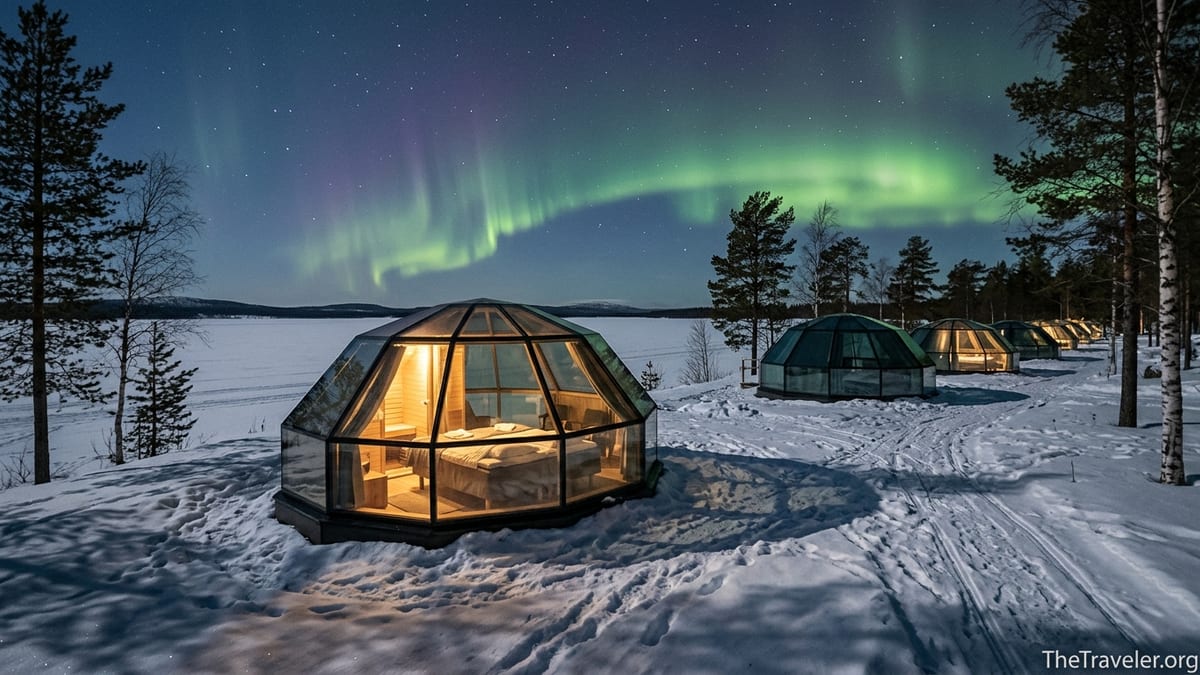
Ranua Resort grew out of Ranua Wildlife Park, which opened in 1983 and remains one of Finland’s best-known wildlife parks dedicated to northern and Arctic species. Today the resort combines the park, a cluster of Gulo Gulo holiday villas opposite the entrance, two camping areas and an igloo village of Arctic glass igloos on the shore of Lake Ranuanjärvi. For travelers this means you can watch brown bears and lynx in the afternoon, then fall asleep in a glass-walled bedroom watching the sky over the lake that same night.
The wildlife park is compact enough to manage in half a day but large enough to feel immersed in forest. Around 50 species of northern animals are housed in spacious outdoor enclosures, including lynx, elk, wolverine, arctic fox and Finland’s only permanent polar bear. Paths are mostly boardwalk and gravel, so families with strollers or older travelers can move around comfortably in most conditions, though winter snow can make the loop slower.
What sets Ranua apart from some better-known Lapland resorts is its quieter, small-scale feel. There is no sprawling ski village or theme-park atmosphere. Instead you have a simple resort hub, a lake, dark skies and forest. Travelers who have already visited Rovaniemi’s Santa Claus Village often choose Ranua for a two- or three-night add-on to see Arctic wildlife and sleep in a glass igloo without the crowds that gather right next to the Arctic Circle.
Because Ranua is about 80 to 90 kilometers south of Rovaniemi, it also tends to be slightly less expensive than headline-name northern resorts. A glass igloo night is still a splurge, but combinations of camping cabins or holiday villas with one igloo night can keep a long weekend here within a realistic budget for many travelers.
Choosing the Best Season for Wildlife and Arctic Adventures
Ranua Resort works differently depending on the season, so start planning by deciding what you most want to experience. From November to March, the focus is winter safaris, snow-covered forest and Northern Lights. Daylight is short, which leaves long evenings for aurora hunting from the lakeshore or your igloo, and the resort’s winter program typically includes activities such as snowmobile tours, husky rides and reindeer safaris operated in the surrounding forest.
In contrast, late May through August revolve around green forest, long days and the “nightless night” around midsummer. The lake is open, birds are active, and animals in the wildlife park are often easier to observe in mild temperatures than in deep winter. Ranua Resort has promoted summer offers such as a 15 percent discount on holiday villas and glass igloos for stays between early May and late August, which is a useful indication that summer is considered a primary season rather than an off-peak afterthought.
Autumn, especially September and early October, is a good compromise for travelers who want both color and darkness. Forests around Ranua turn shades of orange and red, mosquitoes fade away, and the nights are again dark enough for the Northern Lights if skies are clear. Glass igloo pricing around this shoulder season is generally lower than in the Christmas and New Year peak, which can be one of the most expensive times of the year for Arctic accommodation.
Whenever you come, remember that wildlife behavior changes with the seasons. The polar bear and other large carnivores can be easier to see when snow cover is present, because they stand out more clearly against the white background. In high summer, birds and smaller mammals are very active, and walking the full loop of the park in light clothing can be more comfortable for young children than in sub-zero temperatures. Matching your expectations to the season will make your stay feel well chosen rather than lucky or disappointing.
Understanding Ranua Resort Accommodation Options
Ranua Resort is spread across several distinct areas, so it helps to understand the accommodation types before you book. The resort’s centre next to the wildlife park houses the Gulo Gulo holiday villas, the main reception, restaurant and one of the camping areas. Around six kilometers away on the shore of Lake Ranuanjärvi, the Arctic Igloos village offers the classic glass-igloo experience. There is also a camping area by the lake for travelers in motorhomes or those who prefer simple cabins.
The Arctic Igloos are fully equipped glass cabins, not basic pods. Typical units are around 36 square meters and have a glass-walled bedroom facing the lake, a small kitchenette with microwave, kettle and basic dishes, a private sauna, shower and toilet, and either twin beds or a double bed plus pull-out beds for up to two children. Breakfast, bed linen, towels and final cleaning are generally included in the nightly rate, and the roof glass is heated so snow does not accumulate and block sky views.
Closer to the wildlife park, Gulo Gulo holiday villas function more like small apartments. For families who plan several days of wildlife and activities with less focus on sky viewing, these villas can be more practical. You can, for example, spend two or three nights in a holiday villa for easy daytime access to the park and activities, then add one night in a lakeside glass igloo for a special finale focused on the Northern Lights.
At the budget end, camping cabins and pitches give access to the same forest surroundings at a lower price point. While prices change from year to year, a basic camping cabin night can cost less than a third of a peak-season glass igloo night. For travelers with a rental car and their own winter clothing, splitting a stay between camping and one premium night at the lake is a realistic way to experience the resort without overspending.
Budgeting and Example Costs for a Stay
Accommodation is the biggest cost driver at Ranua Resort, so start by deciding how many nights you want in a glass igloo versus other options. Recent price lists for the Arctic Igloos give a rough idea of the range: in spring and summer, a twin glass igloo for one or two people has been priced in the mid-200 euro range per night, while lakeside igloos for up to two adults and two children start higher. In the Christmas and New Year period, nightly rates can rise several times above those shoulder-season figures.
As a practical example, a couple traveling in June might find a romantic glass-igloo package around 299 euros per night, including breakfast, a small romance package and entrance to the wildlife park for the duration of the stay. If they combine one igloo night at that price with two nights in a holiday villa at a lower nightly rate, the total for three nights can remain under what a full igloo stay over New Year might cost for a single night.
On top of accommodation, factor in wildlife park tickets and activities. Standard day tickets to the wildlife park are typically priced in the tens of euros per adult rather than single digits, with reduced prices for children and family combinations. Some accommodation packages include park entrance for the entire stay, which can be very cost effective if you plan to visit the park on several days for short walks rather than a single long visit.
Winter safaris and experiences such as husky rides, snowmobile tours or reindeer sleigh rides are high-value but relatively high-cost items. A short husky safari or snowmobile tour can easily cost more per person than a park ticket. When creating a budget, many travelers choose one or two flagship activities, combined with lower-cost options like snowshoeing around marked trails, renting a fat bike from local providers or simply spending unstructured time by the lake and in the forest.
Getting to Ranua and Moving Around
Most international visitors reach Ranua via Rovaniemi, the main gateway to Finnish Lapland. Rovaniemi Airport has regular flights from Helsinki and seasonal connections from other European cities. From the airport, the road distance to Ranua is roughly 80 to 90 kilometers, or about an hour to an hour and a half by car in good winter conditions. Renting a car at the airport is the most flexible option, especially in winter, because public transport in Lapland is limited and schedules can be sparse outside school and commuter hours.
For travelers who prefer not to drive, bus options exist between Rovaniemi and Ranua village, operated by regional bus companies. Journey times are typically around one hour and fifteen minutes, with one-way fares starting from around 15 to 20 euros depending on the operator and booking channel. Buses do not run every hour, so it is important to check current timetables and to align your arrival in Rovaniemi with a same-day connection to Ranua where possible.
Once in Ranua, the distances are short but still significant enough to matter in winter. The wildlife park and Gulo Gulo holiday villas sit a short walk apart, but the Arctic Igloos village is about six kilometers away on the lakeshore. The resort can arrange transfers between the two areas, and some package holidays include transport. If you are driving, winter tires are standard on rental cars in season, but you should still be prepared for icy roads and reduced visibility, particularly in December and January.
Because there is no urban taxi fleet on the scale of a large city, advance planning is wise. For example, if you book a Northern Lights excursion that ends late at night and you are staying at the igloo village, confirm whether pick-up and drop-off are included from your specific accommodation. Doing this at the reservation stage avoids having to arrange expensive last-minute transfers in snow and darkness.
Wildlife Experiences and Nature Around the Resort
Ranua Wildlife Park is the heart of the resort and the main reason many nature lovers come. The park’s loop trail winds for several kilometers through boreal forest, past large enclosures designed to resemble natural habitats. Visitors can see species such as reindeer, elk, wolves, wolverines, lynx, arctic foxes, and brown bears. The presence of a polar bear enclosure is a distinctive feature in Finland, making Ranua one of the few places in the country where you can observe this animal up close.
In practical terms, you can complete the circuit in around two to three hours at a gentle pace, but many guests break it into sections across different days, especially in winter when walking in snow can be tiring. The paths are generally well signposted and suitable for families. Cafes and service buildings along the route provide chances to warm up, which matters on days when temperatures drop significantly below freezing.
Beyond the park, the surrounding Ranua region offers quiet nature that complements the structured wildlife experience. In summer, you can walk forest paths around Ranuanjärvi, rent a canoe or stand-up paddleboard from local operators, or simply explore the lakeshore from the camping area. In winter, marked trails for snowshoeing and cross-country skiing give access to frozen lakes and snowy forest, often within a short distance of the resort buildings.
For serious birdwatchers and photographers, a stay at Ranua can be a base for day trips into wider Lapland, but even from the resort itself you are likely to see common northern species such as willow tit, Siberian jay and various woodpeckers. Bringing binoculars on your wildlife park visit enhances the experience, especially for shyer animals that may rest at the back of their enclosures.
Arctic Activities: From Northern Lights to Husky Safaris
Ranua Resort’s activity program in winter typically includes a selection of classic Lapland experiences run by specialized partners. Common options include husky sledding, where you drive or sit in a sled pulled by a small team of dogs through forest trails; snowmobile safaris that venture further into the wilderness; and reindeer sleigh rides hosted by local herders. These tours usually last from one to several hours and include warm clothing, guiding and sometimes a hot drink or snack.
If your primary goal is to see the Northern Lights, staying at the Arctic Igloos village gives you a strategic advantage. The igloos sit on a relatively dark lakeshore away from street lights, so if the aurora appears in the right part of the sky you may be able to watch it from your bed or from the small terrace outside your cabin. Many guests still book at least one dedicated aurora excursion by car or minibus, because guides monitor forecasts and know local spots with good north-facing horizons.
Not every activity has to be guided or expensive. In the main resort area you can rent fat bikes to ride snowy tracks, borrow sleds for children, or simply walk in the dark forest listening to snow under your boots. Some visitors plan one major paid excursion per day, such as a daytime husky safari followed by an unguided evening of aurora watching. This balances budget with the sense of being genuinely in the Arctic, not just moving from one packaged experience to another.
In summer, the tone shifts to slower outdoor pursuits. Canoeing on Ranuanjärvi, berry picking on nearby trails, and evening walks under the midnight sun are common highlights. Because there is no need for thermal suits or snowmobiles, summer activities are usually less logistically demanding and less expensive, which may appeal to families looking for a calm nature holiday with children rather than a packed schedule of winter safaris.
Practical Planning Tips for a Smooth Stay
Successful visits to Ranua Resort usually come from planning details early. First, align your flights or train journeys to Rovaniemi with ground transport to Ranua. If bus timetables do not match your arrival, consider booking the first or last night in Rovaniemi itself and traveling to Ranua the following morning. This can be less stressful than trying to catch an infrequent rural bus in the dark after a delayed flight.
Second, study the resort’s accommodation and activity terms. Check-in for villas and igloos generally starts mid-afternoon and check-out is usually before noon, which matters if you are booking morning safaris or late-evening aurora tours. Some special offers, such as discounted summer stays or romance packages, must be fully prepaid and may have stricter cancellation conditions than standard rates. Reading the terms before you confirm will help you understand whether you can change dates if your plans shift.
Clothing is the third major element. Even if you book a winter package that includes thermal overalls, boots and mittens, you still need a reliable base layer system of wool or synthetic underwear, warm socks and insulating mid-layers. Glass igloos and villas are heated and comfortable, but paths between buildings and activities can be icy and exposed. Spikes or traction aids for your shoes are a useful accessory in midwinter, and headlamps or small torches can be handy when walking around after dark.
Finally, manage expectations about the Northern Lights. Ranua lies far enough north that aurora displays are common in clear, dark skies, but there is never a guarantee. Think of the lights as a potential highlight rather than the sole reason for your trip. That way, time in the wildlife park, sauna evenings in your igloo, and quiet walks on the frozen lake will feel like core experiences instead of consolation prizes.
The Takeaway
Planning a stay at Ranua Resort is about fitting several pieces together: the wildlife park, the lake, the glass igloos and the wider Arctic landscape of Lapland. With thoughtful choices on season, accommodation mix and activities, you can shape a visit that focuses on what matters most to you, whether that is slow nature days with children or a compact, high-impact winter adventure with huskies and aurora hunting.
By budgeting realistically, understanding the distances between resort areas and booking key activities in advance, you reduce the role of chance and logistics stress once you arrive. In return, Ranua offers something rare: the ability to watch Arctic animals by day, step into a private sauna at sunset and then lie in bed beneath heated glass panels, scanning the sky over a quiet Lapland lake.
For many travelers, that combination of wildlife, comfort and genuine northern atmosphere makes Ranua not just a side trip from Rovaniemi, but a small Arctic destination in its own right. With the right preparation, your time here can feel less like a standard hotel stay and more like living, briefly, in the rhythm of the forest and the changing polar light.
FAQ
Q1. How many nights should I stay at Ranua Resort?
For most travelers, two to four nights work well. This allows one full day in the wildlife park, one or two days for winter or summer activities, and at least one evening focused on Northern Lights watching or lakeside relaxation.
Q2. Is a glass igloo at Ranua worth the extra cost?
For many visitors, one or two nights in a glass igloo are the highlight of the trip, especially in winter when you can watch the sky from your bed. To control costs, consider combining igloo nights with cheaper nights in holiday villas or camping cabins rather than staying in an igloo for your entire visit.
Q3. Can I visit Ranua as a day trip from Rovaniemi?
A day trip is possible by rental car or bus, and some travelers do this to visit only the wildlife park. However, staying overnight lets you experience the quieter evening atmosphere, try activities that finish after dark, and potentially see the Northern Lights from the lake or your accommodation.
Q4. Do I need to book Ranua Wildlife Park tickets in advance?
Outside the busiest Christmas and New Year period, you can usually buy tickets on arrival. That said, booking online or choosing an accommodation package that includes park entry can save time and sometimes money, particularly for families.
Q5. What kind of clothing do I need in winter?
Plan on layered clothing: thermal base layers, a warm mid-layer such as fleece or wool, and a windproof, insulated outer layer. Good gloves, a warm hat, wool socks and sturdy waterproof boots are essential. Many winter safaris provide additional thermal suits and boots, but you still need your own proper base and mid-layers.
Q6. Is Ranua Resort suitable for young children?
Yes. The wildlife park loop is stroller-friendly in most conditions, and animals are a strong attraction for children. Holiday villas with kitchenettes and separate bedrooms can be more comfortable for families than a single hotel room, and some activities are designed specifically with younger guests in mind, such as short reindeer rides rather than long snowmobile safaris.
Q7. How likely am I to see the Northern Lights at Ranua?
From late August to April, the Northern Lights are possible whenever the skies are dark and clear, but they are never guaranteed. Staying at least two or three nights and being willing to go outside late in the evening improves your chances, particularly between September and March when nights are longest.
Q8. Do I need a car to get around Ranua Resort?
You can manage without a car if you arrange transfers through the resort and book activities that include pick-up. However, having a rental car makes it much easier to move between the wildlife park area and the lakeside igloos, to adapt to weather or timetable changes, and to explore the surroundings on your own schedule.
Q9. What food options are available at the resort?
The main resort area near the wildlife park has a restaurant and café, and breakfast is typically included with villa and igloo stays. Some igloo packages serve breakfast at the lakeside restaurant in season or as takeaway in low season. Because accommodation units have kitchenettes, many guests also prepare simple meals themselves, especially families or those with dietary restrictions.
Q10. How far in advance should I book Ranua accommodation?
For Christmas, New Year and popular school holiday weeks, it is wise to book several months ahead, particularly for glass igloos and larger family villas. For shoulder seasons like early December or late March, and for summer stays, you may find availability closer to arrival, but booking early still gives you more choice of room types and packages.