


Levi in Finnish Lapland combines a compact ski resort, a lively village and easy access to Arctic adventures. Yet many first-time visitors only realise after arrival that their accommodation choice does not match the trip they imagined. Distances feel longer in the polar night, ski-in ski-out turns out to be a bus ride away, and that Northern Lights cabin is beautiful but miles from the restaurants. Understanding how Levi is laid out and how winter conditions shape daily life will help you book a place that truly fits your plans.
Get the latest updates straight to your inbox!
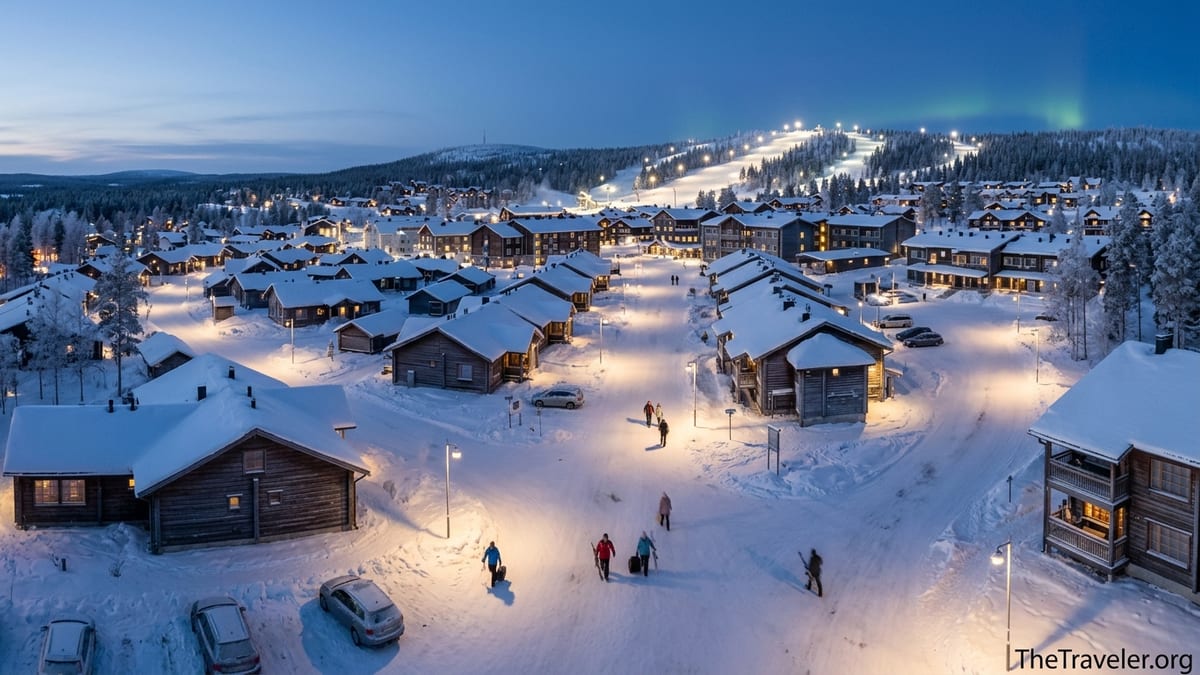
Not Understanding How Levi Is Laid Out
One of the biggest mistakes visitors make is assuming Levi is a single compact village where every bed is next to the lifts. In reality, Levi Ski Resort spreads across the fell and surrounding areas of Sirkka village in the municipality of Kittilä. The official village centre around the main crossroads hosts most hotels, restaurants and bars, while accommodation radiates out in several directions toward different slope access points and quieter cabin areas. It can look deceptively close on a map, but snow, darkness and icy roads change how these distances feel in winter.
The central Levi village suits visitors who want to walk to cafes, rental shops and après ski. Hotels such as Lapland Hotels Sirkantähti sit just a short stroll from the main slopes and services, and the transfer from Kittilä Airport is typically around 15 to 20 minutes by taxi or shuttle in good conditions. By contrast, areas like Utsuvaara and parts of the Northern Lights “wilderness” accommodations are several kilometres from the village; they can feel wonderfully remote for stargazing but inconvenient if you expect to pop out for dinner or quickly nip back between ski sessions.
A common real-world example is a family who books a stylish glass-roofed cabin marketed for aurora viewing, thinking it is just outside the main village. On arrival they discover it is 15 to 20 minutes away by car on a minor winter road, with no shops nearby and limited shuttle times. Their evenings end up dictated by transfer schedules rather than spontaneous strolls through the centre. Before booking, check whether an address is in or near the Levi village centre, at the South Point base, in Utsuvaara on the fell slopes, or in a more distant wilderness location that will require a car or arranged transport.
When reading accommodation descriptions, look for explicit references to walking distance to the main lifts or to Levintie (the central road), and do not hesitate to email properties to confirm realistic walking times in winter clothing. A place that is “only 2 km from the centre” may feel easy in summer but can become a 25-minute trudge on icy pavements at minus 20 degrees Celsius, especially with children and ski gear.
Misjudging Distance to Lifts, Ski School and Services
Another frequent pitfall is assuming that any property labeled “near slopes” will offer quick ski access. Levi has more than 40 slopes spread around the fell, with several access points, car parks and lift bases. An apartment might be next to a small learner lift or a cross-country track rather than the main gondola or the ski school meeting point that you actually need. This can particularly surprise beginners and families who rely on lessons, equipment rental and warm indoor spaces between runs.
Consider a beginner couple who books an apartment advertising “300 metres to ski lift.” On arrival, they find that lift serves only one short local piste and closes earlier than the main area, and the ski school they booked meets on the opposite side of the fell near the Zero Point or South Point base. Without a rental car, they end up dependent on the ski bus, building in 20 to 40 minutes of extra transfer time each morning and afternoon instead of the relaxed walk they imagined.
To avoid this, identify exactly which lift base or school you plan to use before choosing accommodation. If your children’s lessons start at Zero Point, prioritise hotels and cabins within a realistic walking radius of that base in full winter gear. If you prefer quieter slopes and more advanced terrain, staying closer to lift areas on the south or west side may suit you better. Many independent Levi guides list approximate distances in minutes from the centre to peripheral areas such as South Point and Utsuvaara, which can help you translate kilometres into day-to-day logistics.
Do the same exercise for non-ski services. If your plan includes frequent visits to the spa, restaurants or evening activities like husky safaris and reindeer rides departing from the village, staying walking distance from Levi’s main street will save you repeat taxi fares. Conversely, if your focus is cross-country skiing and you cook at home, a cabin a few kilometres out with trails at the doorstep can be more enjoyable, as long as you accept that evenings out will mean driving or arranging transfers.
Underestimating Arctic Conditions and Seasonality
Even experienced skiers from the Alps or Rockies can underestimate how Lapland’s climate and light conditions reshape a holiday. Temperatures can drop below minus 20 degrees Celsius, especially in January, with wind chill making it feel colder on exposed lifts. In midwinter, usable daylight is limited to a few hours, with skiing under floodlights in the morning and afternoon. These realities amplify every small inconvenience caused by an unsuitable accommodation choice.
For example, a group of friends might book an affordable cabin a 25-minute walk from the village, reasoning that they are fit and do not mind a stroll. In March on a bright afternoon that might feel fine, but in late December with sleet, icy pavements and heavy ski boots, that same route becomes a daily endurance test. Instead of enjoying après ski, they find themselves leaving the bar early to catch the last bus or trudging home in the dark along unlit sections of road.
Seasonality also affects pricing and availability. Finnish winter school holidays, Christmas and New Year, and Easter weeks are premium periods when central ski-in ski-out accommodation and popular glass igloos often sell out months in advance. Visitors who wait too long to book may end up in peripheral areas simply because nothing is left close to the lifts within their budget. Significantly cheaper stays in early December or late April can be excellent value, but snow conditions, lift openings and operating hours may differ from peak season, so matching your expectations is crucial.
When you compare options, picture the worst realistic weather for your travel month, not just the bluebird days you hope for. Ask yourself whether you would still be happy doing your planned daily walk, bus ride or transfer at minus 25 degrees in a gusty wind. If the answer is no, aim for accommodation as close as your budget allows to the services you will use most often.
Choosing the Wrong Type of Accommodation for Your Style
Levi offers everything from classic hotels and spa complexes in the centre to self-catered cabins, glass-roofed aurora igloos and high-end design chalets in quieter zones such as Utsuvaara. A recurring mistake is picking a property because it looks magical in photos without checking whether its services, layout and atmosphere match the way you like to travel day to day.
Families with small children, for instance, often do best in centrally located hotel-style accommodation with breakfast included, on-site play areas and easy access to ski school. A hotel like Lapland Hotels Sirkantähti or similar village properties allows you to dress everyone once in the morning, walk a few minutes to lessons and pop back easily for naps or forgotten mittens. In contrast, a beautiful stand-alone cabin 7 or 8 kilometres from town demands more planning: you will likely need a rental car or pre-booked taxis to manage lessons, grocery runs and activities.
Couples seeking Northern Lights viewing sometimes default to remote glass igloos or wilderness resorts outside the main fell area. These can be unforgettable if you are happy with seclusion and limited dining options. However, some guests report cabin “fever” after several nights when they realise they must pre-book transfers for every excursion and cannot spontaneously wander through shops or try a new restaurant. A balanced alternative is to split the trip, spending a few nights in a village hotel and a couple of nights in a remote aurora-focused property, which reduces logistical strain while still delivering the experience.
Friends travelling for nightlife and the lively side of Levi sometimes miscalculate by choosing bargain cabins in quiet residential clusters. While the price is appealing, late-night taxi availability and cost can quickly eat into savings, and returning home after bars close may involve waiting in the cold or long walks. For this style of trip, accommodation within a short walk of the village’s main venues is usually worth the premium, especially during dark, cold months when lingering outside is not pleasant.
Overlooking Total Trip Costs Around Accommodation
On paper, nightly rates in Levi can vary widely, with central hotels and ski-in ski-out cabins commanding higher prices than outlying apartments. A frequent visitor mistake is focusing solely on the nightly price without factoring in the additional costs generated by a remote location. Over a week, airport transfers, taxis, ski bus tickets and extra equipment rental days can erase any savings from an initially cheaper booking.
For example, imagine a family of four comparing a village-centre apartment at approximately 260 euros per night with a cabin 8 kilometres away priced at 200 euros per night. Over six nights, they save about 360 euros on accommodation. However, they may then spend on repeated taxi rides between their cabin and the lifts, especially if they cannot or do not want to rent a car in wintry conditions. Add the cost of occasional meals in the village when everyone is too tired to cook after a long, cold day, and the gap narrows quickly.
Lift passes and activities also interact with location choices. Current Levi ski pass prices mean that a six-day adult ticket runs into the mid to high two hundreds of euros in the 2025–2026 season, and children’s passes are cheaper but still significant. If poor transport links or long walks mean you cut ski days short or skip afternoon sessions, you are not getting full value from these passes. Similarly, aurora tours, snowmobile safaris and husky rides often depart from central meeting points. Staying close to departure locations lets you choose evening excursions spontaneously depending on weather and energy levels, rather than feeling obliged to go simply because you booked a transfer.
Be realistic about self-catering savings too. Supermarkets in Levi are well stocked but slightly more expensive than those in southern Finland, and shopping without a car can be cumbersome. If your accommodation is remote, check in advance whether grocery deliveries are available, and factor in any surcharges. Sometimes a central apartment with an efficient kitchen can offer a better overall budget balance than a cheaper remote cabin once transport and food logistics are included.
Booking Too Late or Too Rigidly
Levi’s popularity spikes sharply during key periods, particularly school holidays in Finland and neighbouring countries, Christmas and New Year, and late March when daylight is long but snow is still reliable. A classic mistake is assuming you can wait for last-minute deals for these windows. By the time many travellers start seriously looking, the best-located accommodation within walking distance of the lifts and village has already sold out, leaving only peripheral or very high-end options.
A typical scenario involves a family targeting Christmas week. In late summer they still see a range of options, but they delay booking in hopes of a package discount. By October or November, central apartments and many family rooms in popular hotels have gone. They end up choosing between a remote cabin that will make daily logistics complicated or a luxury resort that stretches their budget uncomfortably. In Levi, “book early” is not a marketing cliché but practical advice, especially if you are tied to school holiday dates.
At the same time, locking in a non-refundable booking without carefully checking details can create problems if your plans shift. Flights to Kittilä, rail connections via Rovaniemi or Kolari, and domestic transfers can change schedule or price. If your accommodation is inflexible, adjusting travel dates by even one day to secure cheaper or better-timed flights may not be possible. Where budgets allow, consider semi-flexible rates that permit date adjustments within a certain window, particularly for long-haul visitors who may face winter weather disruptions en route.
It is also wise to read cancellation policies in the context of Arctic weather. While Levi’s infrastructure is well adapted to snow and cold, storms and extreme temperatures can affect activities. If your main goal is a specific excursion, such as a Northern Lights photography workshop, and you have non-refundable nights far from other attractions, you may feel disappointed if conditions cancel your key activity. Staying in or close to the village provides more alternative things to do if the weather does not cooperate.
Ignoring Practical Details: Size, Sauna and Storage
Photos of Levi accommodation often highlight cosy fireplaces, twinkling lights and snowy trees. What they may not show as clearly are the more mundane but crucial details that dictate daily comfort: entryway size, drying cupboards, sauna arrangements and gear storage. Visitors used to milder ski destinations sometimes underestimate how much warm clothing and damp gear accumulates in a Lapland apartment after a day outside.
One common oversight is booking a studio or small one-bedroom for a family of four because the square metres appear sufficient on paper. Once everyone’s parkas, snowsuits, boots, gloves and helmets are inside, the space can feel cramped and cluttered. In Arctic conditions, drying these items properly overnight is essential. Look specifically for mentions of a drying cabinet, adequate hooks in the hallway and ski storage either inside the building or in a separate locker.
Saunas are another point where expectations and reality can misalign. Many Finnish-style apartments and cabins include a private sauna, which is a welcome way to warm up after skiing. However, some smaller studios and hotel rooms in the centre may only offer shared sauna facilities at set hours, or none at all. If daily sauna time is important to you, check the property description closely and read recent guest reviews to confirm how it works in practice. A couple who imagines long, private sauna evenings may be surprised to find themselves sharing limited sauna slots with other guests.
Finally, review bed layouts with honesty about your group’s needs. Loft sleeping areas are common in Levi cabins and can be charming, but low ceilings and steep ladders may not suit older travellers or very young children. In multi-generational groups, prioritise ground-floor bedrooms for anyone with mobility concerns. Clarify in advance whether sofa beds are standard size and how they are arranged within the living area to avoid evening conflicts over space and privacy.
The Takeaway
Levi Ski Resort rewards visitors who look beyond brochure images and think practically about how they will move, eat, ski and relax each day in real Arctic conditions. The biggest accommodation mistakes stem from underestimating distances and weather, misreading what “near slopes” truly means, and focusing solely on nightly rates without counting hidden logistical costs. By taking time to understand Levi’s layout, aligning your lodging type with your travel style and booking early for peak periods, you can turn a good holiday into an exceptional one.
Before you confirm anything, trace your typical day on a map: from your door to ski school, from the lifts to lunch, from après ski to your bed, and from your cabin to any Northern Lights spots or excursions. If every step of that imagined day still feels comfortable in the dark at minus 20 degrees, you have probably chosen well. Levi’s charm lies in its blend of wilderness and convenience. The right accommodation lets you enjoy both without unnecessary compromise.
FAQ
Q1. Is it better to stay in Levi village or in a remote cabin?
Staying in Levi village is usually better if you value walking access to lifts, restaurants and activities. Remote cabins suit travellers who prioritise seclusion, aurora viewing and do not mind relying on a rental car or pre-booked transfers.
Q2. How far is Levi from Kittilä Airport, and do I need to stay close to the airport?
Levi is roughly 15 to 20 minutes by taxi or shuttle from Kittilä Airport in typical winter conditions. You do not need airport-side accommodation; most visitors go straight to Levi and use the village as their base.
Q3. What does “near slopes” really mean in Levi accommodation listings?
“Near slopes” can mean anything from a short walk to a minor local lift to easy access by ski bus to the main gondola. Always check which lift or base station is closest and whether it matches your chosen ski school, ability level and daily plans.
Q4. Do I need a car if I stay outside Levi village?
You can manage with taxis and the ski bus, but a car makes life significantly easier if your accommodation is several kilometres from the centre, especially with children, evening activities or frequent grocery shopping.
Q5. When should I book Levi accommodation for Christmas or school holidays?
For Christmas, New Year and school holiday weeks, aim to book central or ski-in ski-out accommodation several months in advance. Waiting for last-minute deals often means compromising on location or paying a premium for what is left.
Q6. Are glass igloos and Northern Lights cabins practical bases for a full Levi ski week?
They can be, but they are often best for a short stay of one or two nights combined with more practical accommodation in the village. Many are set in quiet areas where you will depend on transfers for skiing and dining out.
Q7. How important is having a private sauna in Levi accommodation?
A private sauna is not essential but adds a lot of comfort after cold days outside. If you value daily sauna time, look for apartments or cabins with an in-unit sauna rather than relying on shared hotel facilities.
Q8. What should families with young children prioritise when choosing where to stay?
Families should prioritise walking distance to ski school meeting points, easy access to a supermarket, space for drying clothing and gear, and simple room layouts without steep loft ladders or awkward sofa beds.
Q9. How does season affect the best area to stay in Levi?
In the darkest midwinter weeks, being close to the lifts and village reduces time spent in the cold and on icy roads. In late winter and spring, with longer daylight, staying slightly further out can be more comfortable, especially if you focus on quiet cabin life and cross-country skiing.
Q10. Can I rely on walking everywhere in Levi without using buses or taxis?
If you stay in the central village or very close to a main lift base, you can walk almost everywhere. However, if your accommodation is more than a couple of kilometres from the centre, you will likely need to use the ski bus, taxis or a rental car, particularly in deep winter conditions.