


Ask most visitors what drew them to the Bay of Naples and they will likely mention Capri, Pompeii or the Amalfi Coast. Ask people who actually live around the bay, and you hear something different: the ritual of a Sunday stroll on the lungomare, the smell of frying anchovies in a tiny harbor bar in Pozzuoli, the quiet of Procida’s backstreets on a winter afternoon. For locals, this is not a postcard backdrop but a daily companion, woven into commutes, family outings and the rhythm of the seasons. To understand why they love it, you have to look just beyond the headline sights and step into the corners where everyday life still shapes the shoreline.
Get the latest updates straight to your inbox!
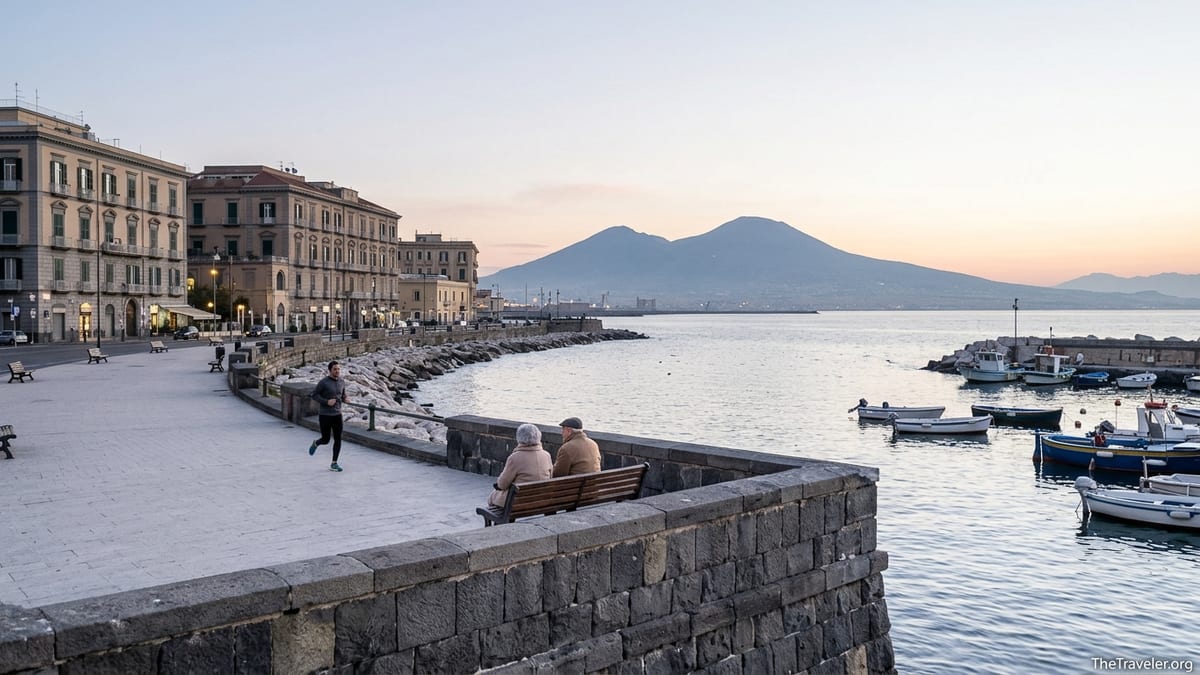
The Everyday Magic of Naples’ Lungomare
The waterfront promenade that curves from Mergellina to Castel dell’Ovo is one of the places Neapolitans cherish most, yet many visitors only see it in passing on the way to a boat. Known simply as the lungomare, this seafront walk stretches for almost four kilometers along Via Francesco Caracciolo and Via Partenope, with Mount Vesuvius perfectly framed across the bay. On weekday mornings you see office workers walking to Chiaia with a takeaway espresso in hand, elderly couples claiming their usual bench and joggers timing their runs between the fishing boats of Mergellina and the Borgo Marinari.
On Sundays, parts of the lungomare are often closed to traffic, and it turns into a vast open-air living room. Families push strollers while children ride rented bikes or scooters along the flat, sea-level path. Street musicians set up near the low walls where groups of teenagers sit facing the water, sharing slices of margherita folded in four from whichever pizzeria has the shortest queue that day. For locals, this is their most democratic luxury: a world-class view that costs nothing more than the price of a coffee.
Prices along the lungomare underline how Neapolitans have integrated it into ordinary life. At one of the kiosk-style bars near Mergellina, a standing espresso often costs around 1.20 to 1.50 euros, only slightly more than in the backstreets of the historic center, so it is feasible for nearby residents to stop every day. In the early evening, young couples might split a paper cone of fried seafood from a friggitoria for under 8 euros and linger by the low seawall while local kids fish with simple lines from the rocks below.
Even practical details show how this is designed for locals as much as for visitors. Bike and scooter share stations dot the waterfront, used by students heading between Chiaia and the university area or by workers commuting from Vomero down to the port. The wide paving, shaded benches by the Villa Comunale park and the frequent kiosks mean that for many Neapolitans, the lungomare is as much a daily corridor as it is a scenic attraction.
Fish, Ferries and Everyday Life in Pozzuoli and the Campi Flegrei
Northwest of central Naples, the coastline curves into the volcanic landscape of the Campi Flegrei, a patchwork of craters, fumaroles and small bays that locals know intimately. Pozzuoli, the main town here, is where the bay feels most like a working harbor. The Rione Terra headland still pushes into the sea, and at dawn small fishing boats return to the porto with crates of anchovies, mackerel and tiny “pesce azzurro” destined for local trattorias the same day.
By mid-morning, residents slide into simple seafood places along the waterfront that rarely feature in glossy roundups yet are beloved in the neighborhood. A plate of spaghetti alle vongole made with clams from the nearby coast might cost 14 to 18 euros, paired with a half-carafe of local Falanghina wine from nearby vineyards. Many places offer a “menu di pesce” at lunchtime, with an antipasto of marinated anchovies and octopus salad, a pasta dish and a small fried fish second course for a fixed price that is surprisingly moderate for such fresh seafood.
Locals also come to Pozzuoli for the small daily rituals that have nothing to do with bucket-list sights. Workers from Naples use the frequent ferries to reach Ischia and Procida, turning the port into a functional transit hub in the early morning and late afternoon. Small bars steps from the quay serve cornetti and coffee to commuters catching the 7:00 ferry to Ischia Porto, while in the evening friends meet for a spritz on the terraces overlooking the harbor, watching the silhouettes of ferries and hydrofoils slip across the bay.
Just around the headland, the underwater archaeological park of Baia hints at how long people have lived intimately with this restless coastline. Local diving clubs in Pozzuoli organize weekend excursions where Neapolitans, not just tourists, don wetsuits and swim above submerged Roman villas, mosaics and columns now several meters under the surface due to centuries of volcanic subsidence. For many people from the area, this possibility to explore their own past under the waves is part of what makes their bay unique.
Procida: The Island Locals Escape To
While Capri draws headlines, the tiny island of Procida is where many Neapolitans go when they want to feel the bay at a slower pace. Barely four square kilometers in size, it sits a short ferry ride from Naples and Pozzuoli. Despite its recent stint as Italy’s Capital of Culture, Procida still functions as a living island rather than an open-air resort. Ferries arrive at Marina Grande, where islanders gather at the bar opposite the dock for morning coffee, and schoolchildren in uniform weave between arriving visitors on their way uphill.
Marina Corricella, the island’s oldest fishing village, is one of the most loved places in the bay among locals. Its narrow waterfront is car-free, and pastel houses rise in layers above the harbor, their arches, staircases and terraces seemingly piled on top of each other. In the late afternoon, you might see fishermen mending purple and orange nets on the quayside while laundry flutters from balconies overhead. It feels remarkably quiet compared with Capri’s Piazzetta, which is exactly why residents from Naples and inland Campania slip over for a day or a night.
Everyday details reveal that Procida still belongs first to its inhabitants. Small alimentari along Via Vittorio Emanuele sell locally grown lemons and capers alongside basic groceries, and you can still buy a bag of freshly baked taralli for just a few euros to snack on while you walk. At simple trattorias facing Marina Corricella, the dish of the day might be paccheri with “gamberi di paranza,” shrimp landed that morning, or spaghetti with sea urchin in season. Prices, while higher than in some mainland neighborhoods, are still within reach for Neapolitans who treat a Procida lunch as an occasional treat rather than a once-in-a-lifetime splurge.
In the cooler months, when day-tripper ferries are less frequent, Procida becomes even more of a local secret. People from Naples come for winter weekends to walk the lanes between Terra Murata and Chiaiolella, sit in small bars with tiled floors and watch the harbor empty out in the evening. That seasonal contrast, between a gently busy summer and a hushed off-season when the island returns entirely to itself, is one of the reasons people from the bay speak about Procida with such affection.
Neighborhood Beaches and Hidden Swims
For many residents, loving the Bay of Naples means knowing where to swim without crossing paths with tour buses. Along the Posillipo coast on the western side of the city, small coves and lidos tucked beneath cliffs offer quick escapes from urban life. At Marechiaro, a tiny fishing hamlet reached by steep lanes, locals take small wooden boats out to swimming platforms and rock ledges that cannot be accessed from the road. In summer, children jump repeatedly from the same rock steps their grandparents used, while parents sit on plastic chairs under sun-faded umbrellas.
Farther along towards Gaiola, in the protected marine area, Neapolitans reserve timed entry slots during summer to reach the rocky shore and snorkel among submerged Roman remains and schools of fish. While reservations are required in peak season to protect the fragile ecosystem, the spot still feels more like a neighborhood playground than a resort. Students from nearby universities often bring simple panini bought for a few euros from bakeries in Posillipo and spend entire afternoons there, their backpacks piled on the rocks.
Across the bay on Procida and Ischia, local beach habits also differ from what many visitors expect. On Procida’s Chiaiolella beach, families from the mainland rent simple sunbeds by the day, but many still bring their own folding chairs and umbrellas, paying only for a coffee or a slice of lemon granita from the beach bar. On Ischia’s less advertised shores, such as the stretches near Lacco Ameno or the small coves of Sant’Angelo, it is common to see groups of older residents swimming laps well into October, taking advantage of the geothermal warmth that keeps the water mild.
Even in the heart of Naples, swimming culture survives. Along the rocks below the lungomare, near Castel dell’Ovo, teenagers and seasoned swimmers alike clamber down metal ladders bolted into the stone to dive into the bay between ferries. In early summer, before international visitors arrive in large numbers, this feels like a local ritual that quietly reclaims the city’s edge from the noise of traffic and construction.
Markets, Food Rituals and the Taste of the Bay
Locals love the Bay of Naples not only for how it looks, but for how it tastes. Coastal markets and neighborhood food rituals tie people directly to the sea and the volcanic soil around it. In Naples’ Mergellina district, small fish stalls set up early in the morning along side streets, selling fresh anchovies, mussels and tiny squid that have traveled only a few kilometers from net to counter. Residents know to shop before 10:00 to get the best selection, often planning that night’s dinner based on what the sea has provided.
In Pozzuoli and along the Campi Flegrei, the link between land and sea is even more visible. Local vineyards climb the slopes above the bay, producing white wines like Falanghina del Campi Flegrei that pair naturally with grilled fish and seafood pasta. A weekend lunch in a hillside agriturismo might include vegetables grown in volcanic soil, such as tomatoes and peppers with an intense flavor, alongside seafood caught just below. The combination is simple and unfussy, but for locals it represents the essence of their home.
Cafes and pastry shops around the bay also express this attachment. On Procida, bakeries near Marina Grande prepare “lingua di Procida,” a flaky pastry often filled with lemon cream made from the island’s fragrant lemons. In Naples itself, seaside cafes in Chiaia and on the lungomare specialize in sfogliatelle and babà, but many residents opt for a plain cornetto and a cappuccino for under 4 euros, taken standing at the counter while watching ferries and hydrofoils arrive and depart.
Evening food rituals anchor people to the waterfront. In summer, Neapolitans buy paper cones of fried fish, known as “cuoppo di mare,” from small take-out windows near the port or in Mergellina, then wander to the seawall to eat while watching Vesuvius change color at sunset. In Pozzuoli, groups of friends split platters of raw seafood and a bottle of local white wine on terraces overlooking the harbor, lingering long after the last tourists have left. These everyday choices are part of why the bay feels like a shared pantry rather than a backdrop.
Festivals, Faith and Quiet Winter Days
Beyond summer postcards, locals experience the Bay of Naples through a calendar of festivals and quieter seasons that most short-term visitors never see. Religious processions linked to the sea are particularly meaningful. On various feast days, statues of the Madonna are carried from churches down to small harbors like Mergellina or Borgo Marinari, where boats decorated with flowers accompany them in short processions just offshore. Families line the harbor walls, and fishermen pause their work to watch and cross themselves as the boats glide past.
Out on Procida, Holy Week brings one of the bay’s most striking local traditions, when islanders stage elaborate processions along the ridge of Terra Murata and down towards the port. Young men carry wooden “mysteries,” allegorical religious scenes built by local groups over many months. Although a few visitors attend, the event is primarily for residents, who treat it both as a solemn ritual and a chance for families scattered around Italy to return home for a few days.
Winter along the bay is another side locals love. In January, the lungomare can be almost empty on weekday afternoons, with only dog walkers and retirees in heavy coats sitting on benches facing the choppy sea. On particularly clear days, Vesuvius stands out with snow dusting its upper slopes, and the islands of Capri, Ischia and Procida appear unusually sharp on the horizon. Neapolitans often say this is when their bay feels most like it belongs to them, temporarily freed from the pressures of the high season.
Many coastal businesses adjust to this rhythm. Some beach clubs close entirely, while small bars and trattorias near the waterfront shift to hosting neighborhood card games, watching football matches on television and serving hearty winter dishes like pasta e fagioli alongside the usual seafood. For locals, the ability to experience the same places under such different moods across the year deepens their bond with the bay.
The Takeaway
To outsiders, the Bay of Naples can look like a backdrop for a checklist: Pompeii, Capri, Positano. For people who live here, it is more like a long, shifting corridor of familiar scenes: the early-morning jog on the lungomare, the ferry to Procida for a slow Sunday lunch, the winter wind on the Pozzuoli waterfront, the sight of children learning to swim off a quiet Posillipo rock. Their love for the bay is grounded not in spectacular one-off moments, but in thousands of ordinary encounters with sea, stone and sky.
Travelers who want to feel a fraction of that connection can do so by nudging slightly past the most famous viewpoints. Walk further along the lungomare than your guidebook suggests, taking time to notice where locals sit and which bars they choose. Spend an unhurried afternoon in Pozzuoli or Baia, or trade a day on Capri for an evening in Marina Corricella when the fishing boats return. Move at the speed of someone who might be back next weekend, rather than someone who believes this is their only chance.
In doing so, you will discover the Bay of Naples as its residents know it: not just a beautiful arc of water beneath a volcano, but a lived-in, ever-changing place where sea breezes, ferry horns and church bells blend into a soundtrack strong enough to keep generations rooted to its shore.
FAQ
Q1. Is the Bay of Naples safe to explore beyond the main tourist areas?
Overall, yes, as long as you use the same common sense you would in any busy coastal city: stay aware of your belongings, especially around ports and crowded promenades, avoid poorly lit backstreets late at night, and follow local advice about where to swim safely.
Q2. When is the best time of year to experience the Bay of Naples like a local?
Late spring and early autumn are ideal, roughly May to early June and late September to October, when the weather is pleasant, the sea is swimmable and the lungomare, Pozzuoli and Procida are lively but not overwhelmed by peak-summer tourism.
Q3. How can I visit Procida from Naples for a day without joining a tour?
You can take a scheduled ferry or hydrofoil from the main port in Naples or from Pozzuoli, buy a ticket at the terminal or from authorized agencies, and then explore Procida on foot using local buses or walking paths between Marina Grande, Terra Murata and Marina Corricella.
Q4. Are there affordable food options along the waterfront, or is it all expensive?
There are plenty of affordable choices, including kiosks selling coffee and pastries at normal city prices, simple bars offering sandwiches and pizza slices, and informal seafood places in Pozzuoli and on Procida where you can eat well for a moderate budget if you avoid the most high-profile restaurants.
Q5. Can I swim in the Bay of Naples near the city, or should I go to the islands?
You can do both: locals swim from rocks and small access points along the Posillipo coast and near Castel dell’Ovo in good weather, while the islands of Procida and Ischia, plus certain stretches near Pozzuoli and Baia, offer cleaner, more spacious beaches and coves for longer swimming days.
Q6. Do I need a car to explore lesser-known parts of the bay?
A car is not essential and can be inconvenient in central Naples; many coastal spots such as the lungomare, Pozzuoli and ferry ports are linked by metro and suburban trains, and the islands are pedestrian-friendly, though a car can be useful for reaching some scattered beaches or viewpoints in the broader Campi Flegrei area.
Q7. How do locals typically spend a Sunday by the bay?
Many Neapolitans take a mid-morning stroll along the lungomare, stop for coffee or an ice cream, perhaps have a long family lunch in a seaside trattoria in Pozzuoli or on Procida, and return home in the early evening after another short walk or an aperitivo overlooking the water.
Q8. Are there specific cultural customs I should respect when visiting coastal neighborhoods?
Dress modestly if passing churches during processions, avoid loud behavior late at night in residential lanes, ask before photographing people directly, and remember that fishing harbors and small beaches are working or family spaces, not just scenic backdrops.
Q9. What is the best way to support local communities around the bay?
Choose locally run bars, bakeries and trattorias, buy small items like pastries or fruit in neighborhood shops rather than only in tourist zones, travel by public transport when possible, and visit in the shoulder seasons so your presence benefits businesses beyond the busiest months.
Q10. How much time should I plan to truly experience the Bay of Naples beyond the big sights?
If your schedule allows, set aside at least three full days: one for Naples and its lungomare, one for a trip to Pozzuoli and the Campi Flegrei, and one for Procida or another island, moving slowly enough to observe how locals use the waterfront at different times of day.