


Rising from a volcanic islet at the eastern tip of Ischia and linked to the mainland by a slender stone bridge, Castello Aragonese is one of southern Italy’s most atmospheric fortresses. Many visitors dash through its ramparts on a rushed day trip, but with a little planning you can turn a simple visit into one of the most memorable experiences of your time in the Bay of Naples. Here is exactly how to see Castello Aragonese without missing its best highlights, from hidden gardens and frescoed churches to sunset terraces and sea views that feel almost suspended over the water.
Get the latest updates straight to your inbox!
Understanding Castello Aragonese Before You Go
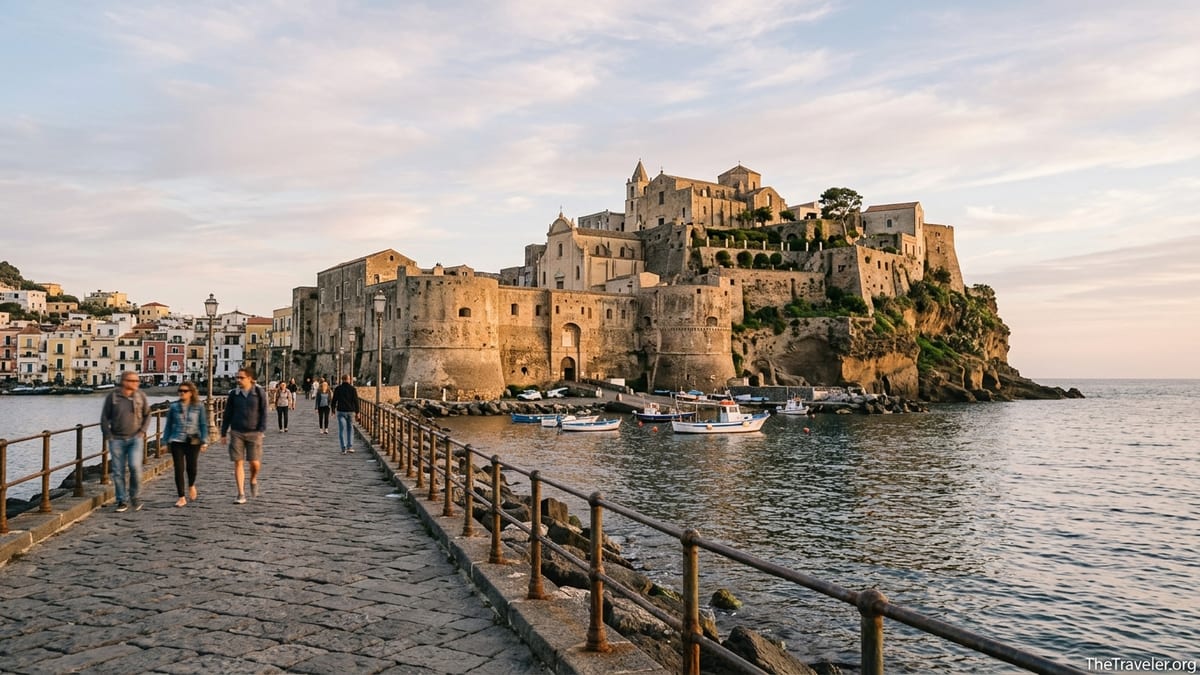
Castello Aragonese is more than a single fortress. It is a compact walled world perched on a rocky islet, connected to the fishing quarter of Ischia Ponte by a 200-plus meter stone causeway. Inside the walls you will find ruined prisons, convents, churches, gardens, viewpoints and a small hotel, all layered with history from Greek settlers through Aragonese kings to modern times. Knowing this in advance helps you slow down and treat the site as a small hill town rather than a quick castle stop.
The site is privately owned and run as a paid attraction with a clearly defined visiting route. Most travelers follow a signed loop that winds from the base of the rock up through tunnels and terraces to the summit, then back down another way. You will walk uphill for most of the first half of your visit, which is why timing and pace matter if you want to enjoy the best viewpoints without feeling rushed or exhausted.
For most visitors, two to three hours is a comfortable minimum, but it is easy to spend half a day if you linger over lunch, photography or quiet corners like the nun’s cemetery or the olive groves. Day-trippers from Naples sometimes try to squeeze the castle into a single packed itinerary with beaches and thermal parks, but dedicating a morning or afternoon specifically to Castello Aragonese will dramatically improve the experience.
The castle is open most days of the year with slightly shorter hours in winter and longer in summer. Opening and last-entry times can change with the season or special events, so it is wise to confirm the current schedule shortly before you travel, either with your hotel on Ischia or directly at the ticket office. Aim to arrive within an hour of opening or mid to late afternoon to avoid the heaviest midday groups.
Getting There: From Ischia Porto to the Castle Gate
Most visitors arrive on the island by ferry or hydrofoil into Ischia Porto. From the port, Castello Aragonese sits at the far end of the seafront in the historic district known as Ischia Ponte, a little over 2 kilometers away. If you are traveling light and enjoy walking, you can simply follow the waterfront promenade east from the harbor, passing cafes, gelaterie and small beaches, and reach the castle in around 25 to 30 minutes at a relaxed pace.
If you prefer not to walk, the island’s EAV public buses connect Ischia Porto and Ischia Ponte regularly on routes that cost only a few euros for a single ride, with day and multi-day passes also available. Many travelers buy a 3-day ticket that covers unlimited bus use across the island for a modest price, which can be good value if you are also visiting thermal parks or villages like Forio during your stay. Buses can be crowded in high season, so allow extra time and be prepared to stand.
Taxis line up at Ischia Porto and can take you directly to the start of the causeway leading to the castle. Official taxi tariffs published by the municipality list fixed fares for common routes around the island, so you can ask the driver for the set price to Ischia Ponte before getting in. This is the simplest option if you are arriving with luggage or traveling with children or older relatives who may find the walk tiring under the sun.
However you arrive, all vehicles must stop on the mainland side of the causeway. The final approach to Castello Aragonese is on foot along the scenic Ponte Aragonese, where waves crash against the old stone and fishermen’s boats bob in the small harbor to your right. Give yourself ten or fifteen minutes here simply to absorb the view back toward Ischia and to take a few photos before you pass through the castle gate and into the rock-cut tunnel that begins the visit.
Tickets, Elevators and Smart Timing
The ticket office for Castello Aragonese sits right at the base of the rock on the castle side of the causeway. There is a single main entry ticket that covers the full complex, with reduced prices for children, students and seniors. Prices have risen gradually in recent years, but remain comparable to other major Italian monuments. Plan to pay roughly the cost of a modest restaurant main course in Ischia for each adult ticket, and bring some cash in case card machines are offline.
One of the key practical decisions is whether to use the internal elevator. After you purchase your ticket, you enter a long rock tunnel that leads to a lift carved into the cliff, which carries visitors up to the upper levels of the island. The elevator is included in the ticket price and saves a demanding climb, so almost everyone uses it on the ascent. If you want more of a workout and are comfortable with steep steps, you can ask the staff to indicate the older stair route instead, but most people find the lift the better option, especially in the heat of summer.
Because large tour groups tend to arrive in waves, timing your entrance can make the difference between walking through crowded terraces and enjoying pockets of near silence. Early morning, within the first hour after opening, is often the quietest. You will also find softer light for photographs and cooler temperatures. Another excellent window is late afternoon, starting around two to three hours before closing, when day-trippers begin drifting back toward ferries and the castle terraces empty out again.
In high season, restaurants and the small hotel within the walls often host events and weddings. These rarely close the entire site, but specific chapels or terraces may be temporarily off-limits. If you have your heart set on a particular viewpoint or a meal at the castle’s restaurant, consider phoning ahead the day before to confirm that there are no private events that would affect your plans.
Unmissable Highlights on the Castle Circuit
Once you step out of the elevator at the upper level, you will find yourself in a suspended world of alleys, stone stairways and terraces overlooking the sea. Wayfinding signs help you follow a suggested circular route, but it is worth knowing the key highlights so that you recognize them and allow enough time to enjoy each.
One of the first major stops is the former convent area, where cloistered Poor Clare nuns once lived. The most striking space here is the so-called cemetery of the nuns, a haunting series of stone seats where the deceased were placed to slowly decompose while their sisters prayed. It is a sobering glimpse into early modern religious life and one of the places where visitors often linger in reflective silence. Nearby, a small museum space and simple cells give a sense of the austerity of the convent.
From there the path leads to panoramic gardens and terraces planted with Mediterranean shrubs, cacti and olive trees. The Belvedere towards Cartaromana Bay is among the most photogenic points in the castle, with sheer drops to turquoise water, views across to the main island of Ischia, and in clear weather a distant glimpse of the Sorrento Peninsula. Photographers often stop here around golden hour to capture the warm light catching the stone walls and the ripples of the sea below.
Two churches are also central to any visit. The Church of the Immacolata, recognizable by its light-filled single nave, serves today as an exhibition space for art and photography, while the older Cathedral of the Assunta preserves fragments of frescoes and a quiet chapel atmosphere. Even if you are not religious, stepping inside these cool interiors offers a welcome pause from the sun and a window onto how the rock has been both a fortress and a spiritual refuge.
Best Viewpoints, Photo Spots and Quiet Corners
With such a dramatic setting, Castello Aragonese can feel like a never-ending series of viewpoints. Yet some spots consistently stand out and are easily missed if you simply follow the crowd. One of the finest panoramas back toward Ischia Ponte and Ischia Porto lies on the terrace near the hotel and restaurant Il Monastero. Here the low stone wall frames the fishermen’s houses clustered around the causeway, with ferries sliding in and out of the distant harbor and Monte Epomeo rising behind.
Another rewarding perspective lies along the walls facing out to sea toward Procida and the mainland. On clear days you may be able to pick out the outlines of the Campania coastline and even Vesuvius on the horizon. The path here is often quieter, as many visitors skip straight from the convent area to the main terraces. If you value silence, follow the outer wall paths whenever possible and you will quickly find yourself alone with the sound of wind and gulls.
For close-up architectural details, look for weathered doorways, small shrines in niches, and crumbling bastions overgrown with wildflowers. The castle has been partially restored but not polished into a museum-perfect state, and the mixture of decay and careful maintenance makes for striking photographs. Early morning or late afternoon light emphasizes the texture of the stone, while the midday sun, though harsh, brings out the saturated blues and greens of sea and vegetation.
When you need a break, shaded benches dotted through the gardens and narrow side alleys make good places to rest without blocking main passageways. Many repeat visitors recommend building in at least one unstructured pause of ten or fifteen minutes with no agenda other than listening to the sounds around you. That is often when the atmosphere of the place, rather than any single monument, leaves its deepest impression.
Cafés, Terraces and Dining Inside the Walls
One of the pleasures of visiting Castello Aragonese is that you do not have to rush back down to the town for refreshments. A relaxed café-bar known as the Caffetteria del Monastero serves coffee, pastries, snacks and light lunches on a terrace with sweeping views over the bay. Prices here are higher than in a basic bar in Ischia Ponte, but still reasonable for such a spectacular setting, and many visitors consider a cappuccino or spritz on this terrace part of the experience.
For a more substantial meal, the castle is home to La Cucina del Monastero, an intimate restaurant linked to the small hotel Il Monastero. Open only for dinner and usually by reservation, it offers a short seasonal menu based on local seafood and island produce, accompanied by a carefully chosen wine list. Expect prices similar to an upscale restaurant in central Naples, with tasting menus that make a leisurely evening here feel like a special occasion rather than a quick bite between sights.
There is also a separate terrace venue often referred to simply as Il Terrazzo, used for aperitivi, events and sometimes light meals. On summer evenings this becomes a coveted place to watch the sky turn pink over Ischia Ponte while the lights of the town blink on one by one. If you plan to dine at the castle, booking several days in advance in high season is wise, especially for weekend dates or if you want a front-row table on the edge of the terrace.
If you prefer simpler, more budget-friendly options, you can always enjoy a coffee or soft drink at the café and then have your main meal back in Ischia Ponte, where trattorie along the waterfront serve classic Campanian dishes at a range of price points. This combination lets you enjoy the castle’s elevated terraces without committing to a full fine-dining experience.
Practical Tips: Crowds, Weather and Accessibility
Because of its dramatic setting and convenient location near Naples, Castello Aragonese is popular with both Italians and international visitors. In July and August, and on sunny weekends in spring and autumn, you can expect a steady flow of people throughout the day. To avoid the densest crowds, try to visit on a weekday and avoid the middle of the day, when organized groups are at their peak and the sun is strongest.
The castle’s paths are mostly paved or cobbled, with numerous steps and some steep stretches. Good walking shoes or sandals with sturdy soles are important, as thin-soled flip-flops can make the uneven surfaces tiring and slippery. There are railings on many of the steeper sections, but parents should keep a close eye on younger children near terrace edges and viewpoints. The elevator significantly reduces the overall climb, but full wheelchair access throughout the complex is limited by historic stairways.
Weather on Ischia is typically warm and sunny from late spring through early autumn, with high humidity in peak summer. On hot days, carry water, sunscreen and a hat, as shade is intermittent along the upper paths. In winter and on windy days, the exposed terraces can feel much cooler than the town below, so a windproof layer is helpful even when Ischia Ponte itself feels mild.
Photography enthusiasts should note that tripods and professional equipment may be subject to restrictions, especially if you appear to be shooting for commercial purposes. For typical travel cameras and smartphones there are no issues, but if in doubt you can ask at the ticket office. Drones are generally not allowed, both for safety and to preserve the atmosphere for other visitors.
Combining the Castle with the Rest of Ischia
To make the most of your day, consider how your visit to Castello Aragonese fits into a wider exploration of Ischia. Many travelers choose to start in the cool of the morning at the castle, then descend for a late seafood lunch in Ischia Ponte before spending the afternoon at a beach or thermal park elsewhere on the island. Others time their visit for late afternoon and stay on for aperitivo or dinner, using the castle as a sunset finale to a day of swimming or hiking.
Public buses from Ischia Ponte connect you not only back to Ischia Porto but also onward to resorts like Casamicciola, Lacco Ameno and Forio, where famous thermal parks such as Poseidon and Negombo offer hot spring pools overlooking the sea. A common pattern for overnight visitors is to devote one day largely to the castle and Ischia Ponte, and another to thermal baths and beaches, using day passes on the buses to move easily between them.
If you are staying on the island for several nights, remember that you can come back to the castle on a different day if the weather is hazy or crowds feel overwhelming. Many frequent visitors say that each visit reveals new angles, from a small chapel you overlooked the first time to a different quality of light on the stone. Returning at a different time of day, such as just before sunset, can make the experience feel almost new.
For those on a tight schedule, it is still possible to combine a half-day visit to Castello Aragonese with a quick swim at a nearby beach such as Cartaromana, accessible by path and boat from the east side of Ischia. In this case, plan your logistics carefully, checking ferry times back to Naples or Pozzuoli so that you are not rushing through the castle with one eye on the clock.
The Takeaway
Visiting Castello Aragonese is less about ticking off a single landmark and more about entering a self-contained world of stone, sea and sky. With thoughtful timing, comfortable shoes and a willingness to slow down, you can transform what might have been a crowded, hurried tour into a richly textured experience of history and landscape.
Arrive early or late to sidestep the biggest groups, use the elevator to conserve energy for wandering the terraces, and make time for the quieter corners that many people rush past. A pause at the Caffetteria del Monastero, an unhurried circuit of the convent and gardens, and a final look back along the causeway toward Ischia Porto will stay with you long after you have boarded the ferry back to the mainland.
Whether you weave the castle into a wider stay on Ischia or focus a single precious half-day around its heights, approaching Castello Aragonese with a clear plan ensures you will not miss its best highlights. Instead, you leave with a coherent story in your mind: of nuns and kings, battlements and olive groves, and a volcanic rock that has watched the Bay of Naples for centuries.
FAQ
Q1. How much time do I need to visit Castello Aragonese without feeling rushed?
Most visitors are comfortable with two to three hours inside the castle, which allows time for the convent, churches, gardens and several photo stops. If you plan to sit down for a drink or snack on the terraces, add at least another hour.
Q2. What is the best time of day to visit to avoid crowds and heat?
The first hour after opening and the later afternoon hours before closing are usually the quietest, with softer light and cooler temperatures. Midday in summer can be crowded and hot, especially when tour groups arrive from Naples.
Q3. Is Castello Aragonese suitable for visitors with limited mobility?
The internal elevator reduces much of the steep climb, but there are still uneven paths and stairs throughout the complex. Visitors with limited mobility can enjoy some terraces and views but may not be able to access every section. It is best to ask at the ticket office which areas are realistically manageable.
Q4. Can I eat or drink inside the castle, or should I plan to dine in town?
You can do both. The Caffetteria del Monastero serves drinks and light food on a panoramic terrace, while La Cucina del Monastero offers more refined dinners by reservation. For budget-friendly full meals, many visitors opt for a snack at the castle and then eat later in Ischia Ponte.
Q5. Do I need to book tickets in advance, or can I just turn up?
Individual travelers can usually buy tickets on the spot at the base of the castle, even in high season. However, if you are visiting at a particularly busy time such as a summer weekend or holiday, arriving earlier in the day helps you avoid queues at the ticket office and the elevator.
Q6. Are guided tours available, and are they worth it?
Guided tours are sometimes available through local agencies or private guides and can add context if you are interested in history and architecture. Many independent visitors, however, are satisfied with the information panels along the route and prefer to explore at their own pace.
Q7. What should I wear and bring for a comfortable visit?
Wear sturdy shoes or sandals with good grip, as paths and steps are uneven. In warm months, bring water, sunscreen, sunglasses and a hat, since shade is limited on the upper terraces. In cooler or windy weather, a light jacket is useful because the exposed viewpoints can feel colder than the town.
Q8. Can I combine Castello Aragonese with a beach or thermal bath in the same day?
Yes. Many visitors spend the morning at the castle, have lunch in Ischia Ponte, and then head by bus or taxi to a beach or thermal park such as the ones near Forio. With thoughtful planning and attention to ferry and bus times, this makes for a full yet balanced day.
Q9. Is the visit suitable for children?
Older children often enjoy the castle’s tunnels, cannons and views, but parents should be prepared for walking uphill and navigating steps. There are railings in many places, yet supervision is important near walls and terrace edges. Bringing snacks and planning short breaks helps keep younger visitors engaged.
Q10. Are there any parts of the castle that are easy to miss but worth seeking out?
Yes. The nun’s cemetery in the former convent, the quieter paths along the outer walls facing the open sea, and smaller side terraces near the hotel area are often overlooked. Taking a few minutes to wander away from the main flow of people will usually reward you with more peaceful spaces and unexpected viewpoints.