


Alaska cruises often advertise the Tongass National Forest, yet it is easy to spend a whole day in port without ever setting foot in true temperate rainforest. The good news is that from major Southeast Alaska cruise gateways, you can reach trails, lakes, fjords and even glaciers managed by the Forest Service in just a few hours. This guide explains how to get from ship or ferry dock into the Tongass from Juneau, Ketchikan, Sitka and, briefly, Wrangell and Petersburg, with realistic ideas for half day and full day visits.
Get the latest updates straight to your inbox!
Understanding the Tongass from Cruise Ports
The Tongass National Forest covers most of Southeast Alaska’s islands and coastal mountains, including the landscapes that surround Juneau, Ketchikan, Sitka, Wrangell and Petersburg. In practice, that means many of the forests, lakes and mountains just outside these towns are part of the Tongass, while the historic downtowns and dock areas are usually not. To experience the Tongass you normally need to ride a shuttle or taxi a few miles out of town, join a boat or flightseeing tour, or walk to a nearby trailhead where Forest Service signs mark the boundary.
For cruise passengers, the key constraint is time. Port calls often last between five and ten hours, and you must be back on board well before departure. That makes logistics especially important. Some of the best Tongass experiences, such as Mendenhall Glacier near Juneau or Ward Lake near Ketchikan, are reachable on public buses or dedicated shuttles in 30 to 40 minutes. Others, such as remote bear viewing at Anan Wildlife Observatory near Wrangell, require prebooked boat or floatplane trips and several extra hours.
Across ports, you will see three basic approaches. You can book through your ship, which costs more but virtually guarantees the vessel will wait or provide transport if a tour runs late. You can book independently with a local operator, usually cheaper and more flexible but with some risk if delays occur. Or you can do it yourself using city buses, taxis and unguided trails, which is often the least expensive and most independent option but demands careful time management and comfort with changeable weather.
Accessibility varies widely. Some Tongass sites, such as the Mendenhall Glacier Visitor Center or Ward Lake’s loop trail, offer paved paths or compacted gravel suitable for many wheelchairs and strollers. Steeper routes like Juneau’s West Glacier Trail or Sitka’s Harbor Mountain to Gavan Hill traverse wooden stairs, roots and uneven boardwalk and are realistic only for fit hikers with proper footwear.
Juneau: Mendenhall Glacier and Rainforest Trails
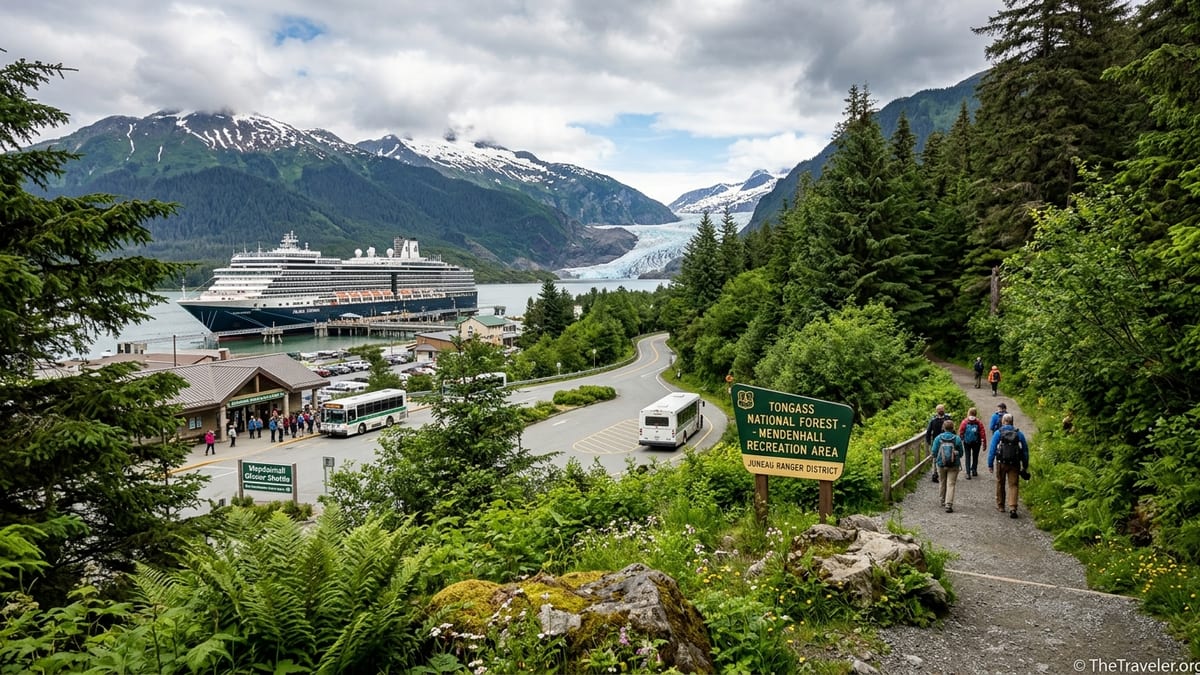
Juneau’s most accessible Tongass experience is the Mendenhall Glacier Recreation Area, a designated unit of the Tongass that protects the glacier, lake and surrounding forest. From the cruise docks in downtown Juneau, Mendenhall is about 12 miles by road. In season, multiple private shuttle companies sell round trip glacier bus tickets from booths along the dock area, often for a per person fare that is higher than local transit but still well below ship excursion prices. City buses operated by Capital Transit run year round toward the Mendenhall Valley; they currently stop a short walk away from the recreation area road, which adds roughly 1 to 1.5 miles each way on sidewalks and roadside paths.
From the visitor area you can choose several walks fully inside the Tongass. The paved Photo Point Trail leads to classic glacier and iceberg views with minimal elevation gain. The Nugget Falls Trail is a mostly flat, wide path of about 2 miles round trip to a powerful waterfall opposite the glacier face. The Steep Creek boardwalks, often used for bear viewing in salmon season, offer short, accessible loops through riparian forest. For a more active half day, the East Glacier Trail climbs through dense temperate rainforest with views over Mendenhall Lake, while the rougher West Glacier Trail accesses bedrock slabs and overlooks closer to the ice. All of these start within the recreation area boundary.
Reaching Mendenhall from a cruise ship can be done three ways. Ship excursions typically bundle transportation, timed entry to the visitor center building if required, and sometimes guides for about half a day, with prices that may be several times local shuttle fares. Independent shuttles from the dock offer frequent departures and flexible return times, but you are responsible for watching the clock. The city bus is the lowest cost at a small cash fare per ride, though service is less tailored to ship schedules and may be crowded when several ships are in port. Rideshare services exist in Juneau but are limited; there are not always enough drivers to count on them at peak times, so most visitors use shuttles or taxis arranged on the pier.
For a three to four hour low effort outing, walk off the ship, board a glacier shuttle, and spend two to three hours exploring the visitor center area: Photo Point, the Steep Creek platforms and, if mobility allows, the Nugget Falls path. Travelers with limited mobility can still enjoy indoor exhibits, ranger talks and views from the main visitor center and nearby accessible overlooks. For a full day in port, pair a morning hike on the East Glacier Trail or a partial ascent of West Glacier with an afternoon whale watch that departs from Auke Bay and returns you to the dock area, or reverse the order depending on your ship schedule and daylight.
Ketchikan: Ward Lake, Deer Mountain and Coastal Rainforest
Ketchikan stretches along the shoreline beneath steep mountains that rise inside the Tongass National Forest. While the cruise piers and historic Creek Street area sit in town, most of the classic rainforest hikes and lakes are just a short drive away. The Ward Lake Recreation Area, managed by the Forest Service north of town, is a popular choice for cruise visitors who want an easy walk under towering spruce and hemlock. The 1.3 mile loop around the lake is largely level and packed gravel, suitable for many strollers and some wheelchairs with assistance. Picnic sites and shelters along the shore make it an appealing family stop even in light rain.
Reaching Ward Lake from downtown or the Ward Cove cruise facility requires road transport. With a taxi you can usually reach the day use parking area in about 20 minutes. Local information confirms that public buses travel along the North Tongass Highway toward Ward Cove, but the stop does not sit directly at the lake. From the bus stop, expect at least a mile of walking along connecting roads and short access trails into the recreation area, which is fine for active visitors but not ideal if you are very short on time or have limited mobility. Several local tour companies offer Ward Lake or nearby Perseverance Lake as guided hikes that include transport from the pier.
For more strenuous Tongass hiking, the Deer Mountain Trail climbs directly from a trailhead near town into old growth forest and subalpine meadows, with one or two viewpoints that many hikers use as a turnaround for a half day outing. The Rainbird Trail, partially within the forest boundary above the west side of town, offers a shorter option with big views over the Tongass Narrows. Both involve roots, rocks and in places steep grades, so sturdy shoes and weather layers are essential. In poor visibility or heavy rain these trails can feel more remote than their distance from town suggests, and you must leave enough time to descend and return to the ship.
Most Ketchikan cruise docks are within walking distance of the free downtown shuttle loop, which serves attractions like the Southeast Alaska Discovery Center and Totem Heritage Center. However, this city shuttle does not go as far as Ward Lake or Deer Mountain trailhead, so for Tongass hiking you will need a taxi, prearranged shuttle or public bus plus walking. Independent hiking using local transit is budget friendly but leaves you more exposed to delays or service changes. Ship tours that bundle Ward Lake, rainforest walks or wildlife viewing charge a premium but reduce stress around timing and usually return directly to the pier, even in heavy traffic or construction zones north of town.
A gentle three to four hour plan is to taxi to Ward Lake, walk the lakeshore loop, enjoy a picnic and return with the same driver or a scheduled pickup time. Those with more energy can add a quick stroll along the Ward Creek or Frog Pond trails that link into the same basin. For a full day, combine a morning hike on Rainbird or the lower section of Deer Mountain with an afternoon cultural visit and seafood lunch in town. Visitors with limited mobility can still enjoy the Tongass by visiting the Discovery Center’s indoor rainforest exhibits and short interpretive paths near town, then taking a taxi for a brief scenic drive along the Tongass Highway to coastal viewpoints.
Sitka: Roadside Trails and High Ridges in the Tongass
Sitka lies on Baranof Island against a backdrop of roadless Tongass wilderness. A block or two beyond the small-ship dock and tender landing, forested hills rise into the Sitka Urban Roadless Area, which is part of the national forest and accessible by short road segments and well used local trails. This makes Sitka one of the easiest ports for independent rainforest walks directly from town, provided the weather cooperates and you are comfortable with some elevation gain.
Moderate to strenuous options include the Gavan Hill and Harbor Mountain Trail system, managed jointly by the Forest Service and local trail organizations. A steep route of stairs, boardwalks and dirt climbs from near town up Gavan Hill into subalpine terrain, connecting with the Harbor Mountain ridge route that continues along open ridges well inside the Tongass. Fit hikers with a full day in port and an early start sometimes arrange a one way taxi to the upper Harbor Mountain road trailhead, hiking the ridge and descending to town via Gavan, but this should only be attempted in clear conditions with careful time planning.
For cruise visitors seeking a lower key Tongass experience, several trailheads along the short road system north and south of Sitka reach beaches, coves and muskeg forest within an hour or two of town. The Mosquito Cove Trail at the end of the road north of town is a Forest Service loop through dense rainforest and rocky shoreline. Reaching it normally requires a taxi or rental car since there is no guarantee of rideshare coverage at the trailhead. Closer to the center, short sections of the Sitka Cross Trail pass through forested hillsides and can be accessed from multiple neighborhood trailheads for a make your own length walk.
Sitka’s cruise port arrangement affects how you start. Large ships often anchor and tender passengers to a dock several miles from the historic core, where local shuttles move visitors into town. From there you can walk to Sitka National Historical Park, which although managed by the National Park Service rather than the Forest Service, showcases similar coastal rainforest and totem poles along a flat, well maintained trail. To reach Tongass trailheads like Gavan Hill, Mosquito Cove or more remote Forest Service cabins and hot springs, you will usually need a taxi arranged at the dock or through your ship, or a prebooked hiking or boat tour.
As a three to four hour outing, pair the waterfront shuttle ride into town with a walk through Sitka National Historical Park for accessible rainforest and cultural exhibits, then, if time and mobility allow, add a short segment of the Cross Trail or a taxi ride to a nearby Tongass trailhead for an hour’s forest walk. Active travelers with a full day might book a guided Harbor Mountain hike or a combination boat trip and short island trail, which gives a sense of the forested coastline and the broader Tongass landscape while keeping logistics arranged by a local outfitter familiar with ship schedules.
Wrangell and Petersburg: Remote Tongass in a Day
Wrangell and Petersburg are smaller ports where ships call less frequently, but both are deeply embedded in the Tongass. From Wrangell, the Anan Wildlife Observatory on the mainland is a headline experience within Tongass National Forest. In summer, bears feed on salmon along Anan Creek below viewing platforms and a photo blind managed by the Forest Service. Daily use at the observatory is limited, and permits are required during the main season from early July through late August, which are typically handled for you if you book with a local tour operator. Access involves a boat ride or floatplane from Wrangell followed by a roughly half mile forest trail to the viewing area.
The logistics and permit system mean Anan is only realistic as a prebooked half day or longer trip. Independent travel requires arranging your own boat, permits and timing, which is difficult on a tight cruise schedule. Many visitors choose guided trips that include transport, safety briefings and permit handling. Because Anan lies in remote wilderness, weather and sea conditions can affect departures; reputable operators explain their refund or rescheduling policies in case high winds or poor visibility force cancellations.
Petersburg offers a quieter gateway to fjords and islands of the central Tongass. Day trips on small charter boats explore Frederick Sound, Thomas Bay and nearby bays lined with rainforest, waterfalls and tidewater glaciers. Some combine wildlife watching with on shore walks to Forest Service cabins or short trails, though specific offerings change seasonally. Both Petersburg and Wrangell have short road systems extending a few miles from town into Tongass forest where locals hike, camp and watch wildlife. Visitors with only a few hours and no tour may opt for a taxi ride to roadside viewpoints, picnic areas or easy trails recommended by the local ranger district or visitor center.
Because these communities see fewer large cruise ships, public transit options are minimal. You should not assume there will be city buses or rideshare services waiting at the dock. Instead, coordinate with your ship’s shore excursion team or contact local operators well before arrival to arrange boat trips, bear viewing, or simple transport to trailheads. In return you gain access to some of the most pristine and uncrowded parts of the Tongass, at the cost of more advance planning and a closer eye on departure times.
Choosing Between Ship Tours, Local Operators and DIY
When your goal is to step into the Tongass rather than simply browse shops near the dock, how you book your day matters. Ship excursions are usually the most expensive choice, but they offer two key advantages. First, they are timed specifically to your ship’s arrival and departure, with transport leaving from and returning directly to the pier. Second, if a ship tour runs late because of weather or traffic, the vessel will wait or arrange alternative transport, greatly reducing the risk of missing departure. That peace of mind appeals to many first time visitors and those traveling with children or older relatives.
Booking directly with local operators in Juneau, Ketchikan or Sitka often gives you more flexibility and better value. Independent whale watching boats, flightseeing planes and hiking guides may run smaller groups and give you more time at key locations. Prices vary, but it is common to see independent tours undercut comparable ship excursions, in part because they do not include the ship’s commission. The trade off is that if a tour returns late, the ship is not obligated to wait. Responsible operators schedule buffers prior to departure, yet unforeseen delays from fog, mechanical checks or harbor congestion are still possible.
A do it yourself approach using public buses, taxis and unguided trails into the Tongass is the most economical and adventurous way to experience the forest. In Juneau you can ride the city bus toward Mendenhall and walk into the recreation area; in Ketchikan you can use transit to reach the Ward Cove area and then hike into Ward Lake; in Sitka you can walk from town directly to nearby trailheads with the help of local maps. DIY travel demands an awareness of schedules, a watch set to ship time and a willingness to adjust plans if buses fill or weather worsens. Build in wide margins, aim to be back at the dock at least an hour before all aboard, and carry the phone numbers of taxi companies in case you need backup.
For major weather dependent activities like flightseeing or remote boat trips, ask in advance how operators handle cancellations. Low clouds and fog are common in Southeast Alaska, and planes may not be able to land at remote lakes or glaciers. Many companies offer full refunds if they cancel for safety, but may not refund if you choose to back out at the last minute due to drizzle or low visibility. Keeping an indoor or in town backup plan, such as museum visits or short waterfront walks, helps you make the most of a port day even if your Tongass flight or long boat trip cannot depart.
Accessibility and Matching Options to Travel Styles
The Tongass rewards every level of visitor, from travelers who use wheelchairs or can manage only a few hundred yards of walking to experienced hikers willing to climb thousands of feet. Around Juneau, the Mendenhall Glacier Visitor Center and Steep Creek viewing platforms offer ramps, railings and relatively even surfaces, along with interpretive exhibits and ranger programs that convey the essence of a temperate rainforest and glacial landscape without long walks. In Ketchikan, Ward Lake’s flat lakeshore loop and picnic sites create a low effort immersion in mossy forest and lake reflections. Sitka National Historical Park’s coastal path under tall spruce provides a similar experience near Sitka’s cruise shuttles.
Families with school age children often appreciate combination days that mix some activity with clear goals. Examples include a Juneau glacier visit paired with a short waterfall walk and ice cream back in town; a Ketchikan morning at Ward Lake followed by totem poles and salmon viewing in town; or a Sitka forest trail followed by time at a raptor center or cultural performance. All of these keep travel times modest while still delivering the “we were really in the forest” feeling many kids remember.
Active travelers have the widest range of Tongass options from these ports. Full day hikes up West Glacier in Juneau, Deer Mountain in Ketchikan, or Harbor Mountain to Gavan in Sitka demand solid fitness, ankle supporting footwear, rain gear and careful timing, but reward with big views and hours immersed in old growth forest. Longer boat or kayak excursions into glacial fjords around Petersburg or bear viewing from Anan near Wrangell fall into the same category of high commitment, high reward experiences that work best for seasoned travelers or those on small ship itineraries with more time in each port.
Budget conscious visitors can still reach the Tongass by leaning on public transit where available and choosing independent walks over guided tours. Riding Juneau’s city bus toward Mendenhall, hiking Ketchikan’s Rainbird Trail from town, and exploring Sitka’s close in forest paths all keep costs low. The main sacrifice is the structure, commentary and convenience that come with professional guides and dockside transport. Whatever your style, the most important step is to leave the pier, look beyond the souvenir shops and give yourself at least a few hours among the immense trees, soft moss and running water that define the Tongass National Forest.
Conclusion: Making the Tongass Part of Your Alaska Cruise
For many travelers, the highlight of an Alaska cruise is not the onboard amenities but the moment they stand in a quiet stand of dripping spruce, watch salmon push upstream beneath a boardwalk or feel the cool breeze off a glacier. From Juneau, Ketchikan, Sitka, Wrangell and Petersburg, those moments are within reach if you understand how to move from ship to forest. Investing a little time before you sail to study local maps, bus routes and shore excursion offerings will pay off in deeper experiences once you arrive.
Whether you roll along an accessible boardwalk at Mendenhall, circle Ward Lake with kids in rubber boots, climb high onto the ridges above Sitka, or ride a small boat up a rainforest lined channel, you are entering the living heart of the Tongass. Choose the mix of cost, comfort and adventure that suits your group, respect ship schedules, and keep weather flexibility in mind. With that preparation, even a short port call can include real time in the world’s largest temperate rainforest rather than just a view from the rail.