


Mardi Gras in New Orleans is as much a logistical puzzle as it is a legendary party. In 2027, Mardi Gras Day falls on Tuesday, February 9, with the Carnival season officially beginning on January 6. Parades start rolling soon after, but the heaviest concentration of the city’s largest krewes comes in the final stretch from Saturday, February 6 through Fat Tuesday. If you want to see Endymion on February 6, Bacchus on February 7, Orpheus on February 8, and Zulu and Rex on February 9, you will need to plan around real-world constraints like hotel minimum stays, street closures, transit disruptions and crowd pressure, not just the romance of Carnival traditions.
Get the latest updates straight to your inbox!
Key 2027 Mardi Gras Dates and Major Parades
The starting point for any 2027 plan is the calendar. New Orleans & Company and multiple parade tracking sites list Mardi Gras Day as Tuesday, February 9, 2027, with Carnival season beginning on Twelfth Night, Wednesday, January 6. Preliminary parade calendars already cluster the most sought after events in the final weekend: Endymion on Saturday, February 6, Bacchus on Sunday, February 7, Orpheus on Lundi Gras, Monday, February 8, and Zulu and Rex on Mardi Gras Day, Tuesday, February 9. These dates match across major schedule aggregators, but every source notes that times and routes remain subject to final confirmation by the city and police later in 2026.
For now, commonly cited 2027 start times suggest Endymion beginning around 4:00 pm in Mid City, Bacchus at roughly 5:15 pm on the Uptown route, Orpheus near 6:00 pm on Lundi Gras, Zulu at 8:00 am on Mardi Gras morning and Rex at 10:30 am. These times echo the 2024 and 2025 patterns, when the same krewes rolled on the same relative days and routes. The practical takeaway is simple: if you want to see the largest float parades, you should plan to be in New Orleans from at least the morning of Saturday, February 6 through Tuesday, February 9, and you should remain flexible about small shifts in start times or route details.
Carnival does not start with Endymion. Parades and walking krewes begin in early January, including Twelfth Night events and downtown walking parades in Marigny and the French Quarter on earlier weekends. If your priority is smaller, more local experiences such as Chewbacchus or Krewe du Vieux, you may want to target late January or the first weekend of February instead of the final crush. Those dates are typically announced closer to the season but still follow consistent patterns based on previous years.
Because the city finalizes 2027 routes and times only after public safety reviews and City Council motions, anyone planning far in advance should treat late 2026 as the moment to confirm details. The draft schedules are reliable for choosing travel dates and neighborhoods, but not precise corners or exact viewing times.
Understanding Parade Geographies: Uptown, Canal, French Quarter and Beyond
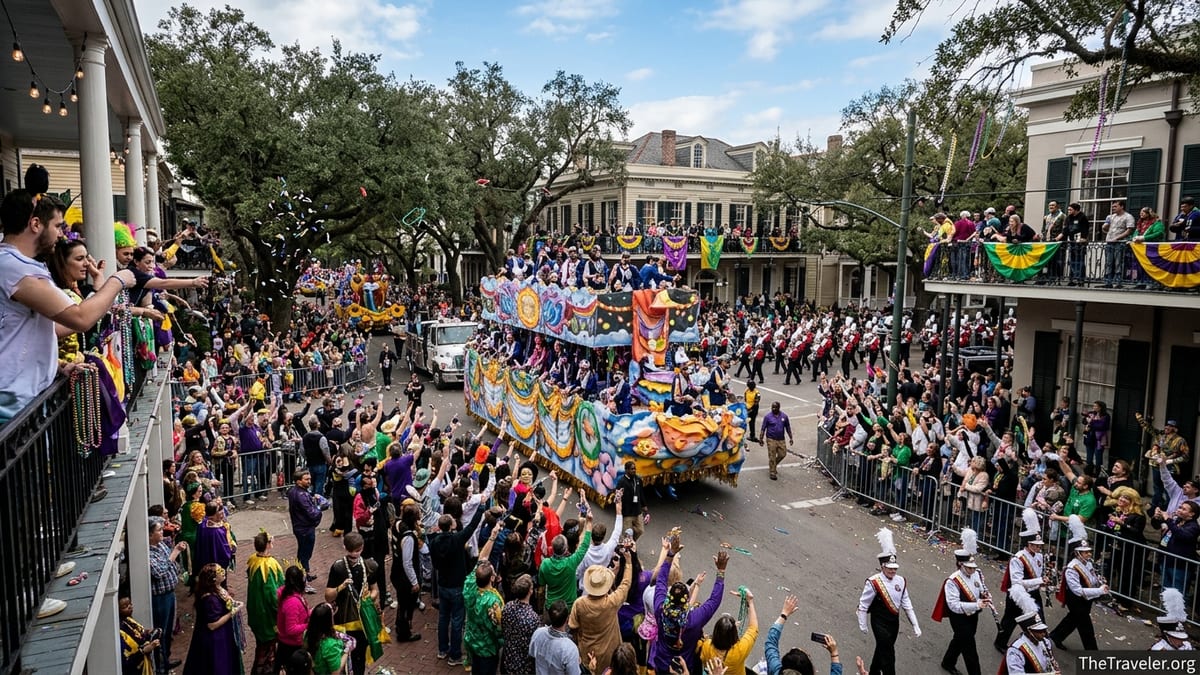
Most first time visitors are surprised to learn that the biggest Mardi Gras float parades do not roll through the narrow streets of the French Quarter. Major krewes such as Endymion, Bacchus, Orpheus, Zulu and Rex start in Uptown or Mid City and follow broad avenues like St Charles Avenue and Canal Street, on the upriver side of the French Quarter. Over the past decades, the city has pushed large float parades out of the Quarter because the streets are too tight and the buildings too close for safe operation.
The Uptown route is the main stage for final week parades. In recent years it has typically begun around Napoleon Avenue, then continued along St Charles Avenue into the edge of the Central Business District before turning onto Canal Street. In practice, this creates a long parade corridor from the Garden District through the CBD. Hotels along St Charles and within a short walk of the avenue, especially between Napoleon and Canal, give easy access to multiple parades without crossing barricades. This is where you will see huge floats, high school and college bands, and the most intense bead throwing.
Canal Street functions as the hinge between the Uptown route and downtown. Rex, for example, has in recent years started at Claiborne and Napoleon, run down St Charles, then turned onto Canal before ending near the Mississippi River. Zulu’s route has usually passed through Central City and then approached the CBD as well. Canal’s neutral ground and wide sidewalks are popular for grandstand seating and organized viewing areas, which sell tickets for specific parades such as Endymion, Bacchus, Zulu and Rex.
By contrast, the French Quarter and neighboring Marigny and Bywater focus on walking parades, brass bands and costumed revelers. Krewes like Krewe du Vieux and ‘tit Rəx traditionally wind through Marigny and parts of the Quarter with smaller floats pulled by people or mules. On Mardi Gras Day, marching groups such as the Society of Saint Anne walk from Bywater through Marigny into the French Quarter. These areas are ideal if you want dense street life, bars and smaller processions, but they are not the place to see the massive float parades that define televised Mardi Gras coverage.
Where to Stay: Neighborhoods, Costs and Minimum Stays
Hotel prices and booking rules change dramatically during Carnival. Across recent seasons, French Quarter properties that might charge 200 to 300 dollars per night in slower months often climb to 500 to 800 dollars per night or more for the final Mardi Gras weekend, with three or four night minimums common. Well known properties on or near Bourbon and Royal Streets frequently require nonrefundable deposits and full prepayment for packages that include balcony access or private parties during prime parade nights.
In the Central Business District and Warehouse District, rates are usually slightly lower than in the Quarter but still elevated. Chain hotels near Poydras and St Charles have recently listed Mardi Gras weekend rates in the 350 to 600 dollar range for standard rooms, with two or three night minimums and strict cancellation policies. The advantage in this area is proximity to the Uptown route at St Charles Avenue and to Canal Street viewing spots, as well as easier access to the streetcar network when service is running.
The Garden District and Lower St Charles corridor combine residential calm with front row access to the Uptown parades. Smaller hotels and guesthouses near St Charles and Magazine often price in the 300 to 500 dollar range during the final weekend, again with minimum stays of two or more nights. In return, you can often walk a block or two to the parade route without needing to cross major barricades, which is invaluable once streets begin to close to vehicles.
Mid City has become more relevant because of Endymion’s route. While large full service hotels are fewer, short term rentals and small inns near Orleans Avenue and City Park can be attractive if you are focused on Endymion Saturday. Prices are variable and depend heavily on city regulations and enforcement in the short term rental market, but travelers should expect Mardi Gras weekend rates significantly above the same properties in, say, April. Wherever you stay, check for minimum stays and whether the property is on the lake side or river side of a major parade route, because that affects how easily you can come and go once barricades are in place.
Street Closures, Transit Disruptions and Getting Around
On heavy parade days, the biggest constraint is not traffic but total street closures. New Orleans police close sections of St Charles Avenue, Napoleon, Canal and surrounding cross streets hours before large parades roll. Vehicle crossings are removed, and it can become impossible to drive or take a rideshare across the route. During recent seasons, local officials and transit guides have made clear that many short distance rideshares become impractical because drivers cannot navigate past barricades or must make lengthy detours around the parade footprint.
The regional transit authority adjusts streetcar and bus service significantly. Guides from recent Carnival seasons show that the St Charles streetcar line often shuts down between Napoleon and the CBD in mid afternoon on major parade days, with replacement buses either not crossing the route or running shortened paths. The Canal streetcar has also been truncated, with service stopping on one side of the route until parades finish. The airport bus line, for example, has in recent years terminated at the Union Passenger Terminal instead of crossing into Canal Street once crowds and closures build.
For airport transfers, visitors can choose between taxis from Louis Armstrong New Orleans International Airport, paid airport shuttles that drop at major hotels, or rideshare services, each typically priced in the 30 to 60 dollar one way range depending on time of day and traffic. During peak parade times, rideshare pickups in the French Quarter or along the Uptown corridor may be redirected several blocks away to cleared zones. A practical approach is to schedule flights that arrive before midday on non parade mornings, then use taxi or shuttle to reach a hotel that does not require crossing the parade route.
Pedestrian access remains the most reliable form of transport during Carnival. You can walk across the parade route except when a parade is actively passing, in which case police prevent crossings until a gap appears. This means that staying on the same side of St Charles or Canal as your viewing spot and evening plans can save you 30 minutes or more of waiting or backtracking. Public toilets are limited along the route, with a mix of rented portable units in some areas and pay to use restrooms at bars or private viewing stands. Many experienced visitors budget for food and drink at establishments that offer restroom access rather than relying on public facilities alone.
Sample Itineraries: Weekend, Family Focus and Full Fat Tuesday Stay
A compact three day weekend focused on the biggest parades might run from Friday night to Monday afternoon. Arrive Friday, check into a CBD or Garden District hotel near St Charles, and scout the Uptown route on foot. On Saturday, spend late morning at day parades such as Iris and Tucks Uptown, then head to Mid City by mid afternoon for Endymion, positioning yourself along Orleans Avenue or near the Superdome where the parade traditionally concludes at its ticketed Extravaganza. Sunday would be devoted to Uptown, where Okeanos, Thoth and Bacchus form a full day of parades along St Charles and Canal.
For a family friendly weekend, base yourself on the St Charles corridor away from Bourbon Street, perhaps near Audubon Park or the lower Garden District. Aim for Saturday and Sunday day parades, which often feature more families, ladders for children within the regulated distance from the curb, and a calmer atmosphere than late night French Quarter scenes. You might watch Tucks or a similar daytime krewe on Saturday, spend Sunday at Thoth and Mid City krewes, then depart Monday before the late night Lundi Gras crowds build downtown.
Travelers who want the full experience through Fat Tuesday should plan at least five nights, arriving Thursday, February 4 or Friday, February 5. This allows you to catch a marquee Thursday night parade such as Muses on the Uptown route, Hermes and other parades on Friday, Endymion on Saturday, Bacchus on Sunday, Orpheus on Lundi Gras and finally Zulu and Rex on Mardi Gras Day. On Fat Tuesday itself, one strategy is to start early along Zulu’s route for the chance at its prized coconuts, then walk toward Canal Street in time to catch Rex and the following truck parades. Later in the afternoon, you can drift into the French Quarter and Marigny to see elaborate costumes and marching groups before the city begins clearing Bourbon Street in the evening.
In each itinerary, the key is to cluster activities by side of town and avoid unnecessary crossings of the parade routes. Trying to watch Endymion in Mid City and then race back to a French Quarter dinner reservation often leads to frustration as barricades and crowds force long detours. Booking lodging within a short walk of your planned primary viewing area makes the schedule more relaxed and reduces dependence on strained transport.
Viewing Options: Curbside, Grandstands, Balconies and Hospitality
Most locals and budget conscious visitors watch parades from the public right of way along St Charles and Canal, paying nothing beyond what they spend on food and drink. This curbside viewing offers the most direct interaction with riders and throws, especially if you arrive early enough to claim a good spot near the barricades. Families often set up folding chairs and, where permitted, children’s ladders placed behind the legally required setback from the curb so they do not block the sidewalk.
Paid grandstand seating provides reserved space and some amenities. Companies that operate bleachers along St Charles and Canal typically sell tickets per parade, with 2024 and 2025 prices for major events like Endymion, Bacchus, Orpheus, Zulu and Rex often ranging from roughly 60 to over 150 dollars per person depending on location and whether food or drinks are included. These stands appeal to visitors who do not want to arrive hours early, who have mobility concerns, or who prefer restrooms and security staff nearby.
Balcony access in the French Quarter is another popular option, though it is more about people watching than float parades. Bars and hotels on Bourbon and adjacent streets sell balcony party packages, sometimes bundled with open bar and buffet offerings that can run into the hundreds of dollars per person on peak nights. This does not place you on the main parade routes but does give you an elevated vantage point for the street crowds and smaller walking groups that pass through the Quarter.
Private hospitality experiences, from hotel ballroom parties to krewe affiliated events like Endymion’s Extravaganza at the Superdome, offer the most controlled environment. Tickets for these events can cost from low hundreds to well over a thousand dollars per person depending on entertainment lineups and inclusions. They are worth considering if you value guaranteed seating, indoor facilities and live music as much as or more than street level parade interaction.
Budgeting for 2027: Solo, Couple and Family Scenarios
Because 2027 specific pricing is not yet published in full, the most realistic approach is to base budgets on recent Mardi Gras seasons and adjust for modest inflation. For a solo traveler sharing a room in a midrange CBD hotel at, say, 400 dollars per night over three nights, lodging might total around 1,200 dollars before taxes and fees. Add airport transfers at approximately 40 dollars each way, 60 to 80 dollars per day for meals if you mix casual restaurants with grab and go options, and perhaps 100 to 200 dollars for parade related extras like one grandstand ticket and some bar tabs along St Charles. A long weekend could therefore land in the 1,800 to 2,200 dollar range.
A couple staying four nights in a Garden District or Warehouse District hotel at roughly 450 to 550 dollars per night could see lodging in the 1,800 to 2,200 dollar range before taxes. With two airport transfers, meals at 120 to 160 dollars per day combined, perhaps two grandstand tickets for a single major parade and one paid balcony event in the Quarter, total spending may move into the 3,000 to 4,000 dollar range. Splurging on a krewe ball ticket or high end tasting menu will push that higher.
For a family of four prioritizing day parades and avoiding the most expensive nightlife, a realistic plan might involve a two bedroom short term rental or family suite in Mid City or along St Charles at an effective rate of 500 to 700 dollars per night over four nights, giving lodging costs of roughly 2,000 to 2,800 dollars. Meals can be moderated with grocery runs and casual dining, perhaps averaging 180 to 220 dollars per day. If the family adds one grandstand afternoon with tickets in the 60 to 90 dollar range per person and small spending on toys and throws from vendors, the total for a long weekend could sit around 3,500 to 4,500 dollars. These figures are illustrative rather than guaranteed and depend heavily on how early you book.
Optional attractions such as museum visits, riverboat cruises or cemetery tours continue to operate through much of Carnival, although some close on Mardi Gras Day itself. Admission typically ranges from 20 to 40 dollars per adult for major museums and slightly more for special tours. Travelers who want a quieter break from the parades may choose to visit the National WWII Museum or take a daytime river cruise on a non parade morning, then return to the route in the afternoon.
Etiquette, Rules, Weather and Safety
Parade etiquette in New Orleans revolves around sharing the space. Locals expect visitors not to block sidewalks with ladders or coolers, not to push in front of children who have been waiting, and not to climb the trees or street fixtures along St Charles and Canal. Recent City Council changes have strengthened enforcement on ladder placement, chair setbacks and access to neutral grounds, and violators can see their equipment removed. When catching throws, it is considered polite to pass beads or toys to nearby kids and not to dive dangerously into the street.
Drinking is part of the scene, but there are rules. Open containers are allowed in much of New Orleans if drinks are in plastic, but glass bottles are restricted along parade routes and in the French Quarter. Public intoxication, aggressive behavior and urinating in public can and do lead to arrest, especially during Mardi Gras when extra officers and mounted police are present. Weather is another factor; February in New Orleans can swing from humid and warm to windy and cold. Smart visitors bring layers, rain gear and shoes that can handle both puddles and long hours standing on asphalt.
Accessibility has improved gradually. Parade routes along St Charles and Canal have long stretches of relatively smooth pavement and some curb cuts, but dense crowds can make navigation challenging for visitors using wheelchairs or walkers. Grandstands and some hotel viewing areas offer reserved seating and designated accessible sections, though availability varies and often requires advance purchase. For families with young children, staying slightly upriver on St Charles or in residential sections of Mid City often provides a calmer environment than the CBD edge of the route.
Safety perceptions around Mardi Gras can be confusing. Official statistics show that the city manages large crowds with significant police presence, and most visitors who follow ordinary urban precautions experience no serious problems. That means staying aware of your surroundings, keeping valuables in a money belt or zippered bag, avoiding dark side streets late at night and moderating alcohol intake. Stories of widespread chaos usually come from a few concentrated blocks of Bourbon Street late at night. If you prioritize major parade routes, family oriented areas and well lit main streets, Mardi Gras is demanding but not inherently more dangerous than other very large urban festivals.
Final Recommendations for First Time Visitors
For a first Mardi Gras, the most rewarding strategy is to focus on quality rather than trying to see everything. Aim to be in New Orleans from at least Saturday, February 6 through Monday, February 8 if you want Endymion, Bacchus and Orpheus, or extend through Tuesday, February 9 to add Zulu and Rex. Book accommodation on or near the Uptown route or Canal Street so that you can walk to multiple parades without fighting street closures. The Garden District, lower St Charles and the CBD close to Lafayette Square are particularly strong bases.
Start serious hotel hunting 9 to 12 months in advance, especially for the final weekend. Watch for minimum stay requirements and nonrefundable deposits, and map the property in relation to the 2026 parade routes to understand which side of St Charles or Canal you will be on if similar patterns hold. If you plan to use rideshares, schedule arrivals and departures for mornings when no major parades are rolling, and be prepared to walk several blocks to meet your car.
If you can only commit to a long weekend, Sunday, February 7 offers the most concentrated experience thanks to the combination of multiple day parades and the marquee Bacchus procession at night. Travelers with more time should prioritize Thursday night for Muses, Saturday for Endymion and Tuesday morning for Zulu and Rex. Mix at least one curbside day in a family oriented stretch of St Charles with, perhaps, a single grandstand ticketed session so you experience both grassroots and organized viewing styles.
Finally, remember that Mardi Gras is a living, evolving event. Treat 2027 schedules as provisional until the city publishes final routes and times in the months before Carnival, stay flexible, and build your plans around where you sleep and how you move rather than just which krewes you want to see. With realistic expectations and a focus on logistics, New Orleans’ 2027 Mardi Gras can be not just unforgettable, but manageable and enjoyable from arrival to Ash Wednesday.