

More news on this day
With flight disruptions still common across major hubs, travelers face a critical question: when cancellations or long delays derail a trip, how much of their money can they realistically get back?
Get the latest news straight to your inbox!
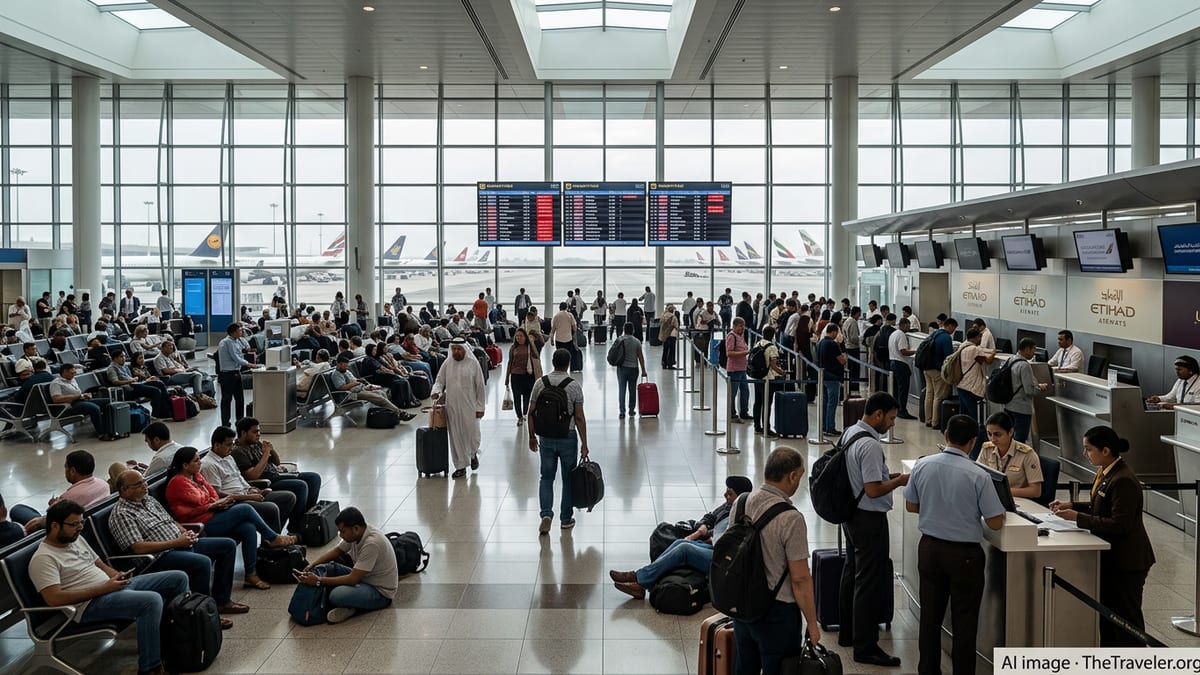
Stronger Refund Rules Shape What Airlines Must Repay
Recent regulatory changes are redefining what counts as a refundable disruption, particularly for travelers flying to or from the United States. Publicly available information on the U.S. Department of Transportation’s 2024 refund rule indicates that airlines must provide automatic cash refunds when a flight is canceled or significantly changed and the passenger chooses not to travel. This requirement applies even to many nonrefundable tickets and extends to certain ancillary fees, such as checked baggage, when the related service is not provided.
Consumer sites that track air passenger rights report that U.S. rules still do not guarantee cash compensation for delays in the way European regulations do. Instead, the focus is on refunding what travelers paid when the airline fails to deliver the purchased service. Guidance from passenger rights organizations notes that if a domestic departure is delayed by several hours, many airlines will let travelers switch to another flight or request a full ticket refund if they decide not to complete the trip.
On international routes, the picture becomes more complex. U.S. government material on air consumer rights points to the Montreal Convention, an international treaty that can provide compensation for provable financial losses caused by long delays or cancellations, such as hotel nights or missed prepaid services, up to certain liability limits. To access that money, passengers generally must file a claim directly with the airline and provide documentation of their out-of-pocket expenses.
EU261 and Other Foreign Rules Offer Additional Payouts
For travelers touching Europe, the European Union’s EC261 framework remains one of the most powerful tools for recouping disruption costs. Explanatory summaries of the regulation state that passengers on flights departing from an EU or EEA airport are entitled to fixed-sum compensation of up to 600 euros when they arrive with a long delay or when a flight is canceled at short notice and the cause is within the airline’s control. This compensation is separate from a refund of the ticket price and is designed to recognize lost time and inconvenience.
Guides to EU261 emphasize that eligibility depends on several factors, including the length of the delay at arrival, the distance of the route and whether the disruption was due to extraordinary circumstances such as severe weather, airspace closures or security risks. In those exceptional situations, airlines must still offer rerouting or a refund, and in many cases care such as meals and accommodation, but they are generally not required to pay the additional cash compensation.
Specialist analyses comparing the EU regime with U.S. rules highlight that European passengers often have clearer access to standardized payouts, while North American travelers rely more on refunds and voluntary vouchers. Similar frameworks also exist in other jurisdictions, such as Canada’s Air Passenger Protection Regulations, which can provide fixed compensation and duty-of-care obligations when flights to, from or within Canada are disrupted for reasons within an airline’s control.
Out-of-Pocket Costs: Hotels, Meals and Missed Plans
Even when a ticket is refunded, disrupted travelers are often left with secondary expenses: hotel nights, airport meals, rental cars or missed tours and events. Recent reporting on major U.S. carriers shows that airlines increasingly distinguish between disruptions within their control and those caused by external factors such as air traffic control restrictions or severe weather. When disruptions are considered outside the airline’s control, several large carriers have clarified that they will issue ticket refunds or credits but will not reimburse additional costs like hotels or ground transport.
Consumer advisories and airline customer commitments indicate that when the problem is within an airline’s control, some carriers will provide hotel vouchers, meal credits or ground transportation for stranded passengers, particularly if an overnight stay is required. However, these benefits are policy promises rather than legal guarantees in the United States, and terms vary widely from one carrier to another. Passenger advocates recommend reviewing an airline’s customer service plan or contract of carriage to understand what support is likely before booking.
Where airlines decline to cover secondary costs, travelers may still have options. The U.S. government’s passenger rights guidance notes that, on many international itineraries, travelers can seek reimbursement for certain disruption-related expenses under the Montreal Convention, again subject to proof of loss and liability caps. In practice, that often means submitting detailed receipts and a written claim, and in some cases escalating to a regulator or alternative dispute process if the airline refuses to pay.
Travel Insurance and Credit Cards as Financial Backstops
Travel insurance has become a central tool for recouping disruption expenses that airlines will not cover. Major insurance guides describe trip interruption and travel delay benefits that can reimburse additional costs when a covered reason, such as severe weather, illness or certain strikes, forces a traveler to extend or reroute a trip. Typical covered expenses can include hotel stays, meals, local transportation and the extra cost of catching up to a tour or cruise, up to daily and overall limits spelled out in the policy.
Insurance experts caution that these benefits usually apply only when the disruption meets specific time thresholds and cause requirements. Policies often exclude situations where the traveler voluntarily changes plans or where the airline has already provided a full cash refund. Publicly available explanations also underscore that travelers cannot claim the same expense from both the airline and the insurer, a principle that prevents double recovery of the same cost.
Credit card protections provide another, often overlooked, avenue. Premium travel cards commonly offer trip delay or trip cancellation coverage when the card is used to pay for the booking. Card benefit guides indicate that, when a delay surpasses a set number of hours, cardholders may be eligible to claim reimbursement for reasonable expenses such as meals and lodging. These protections typically sit on top of airline refunds and can be particularly valuable when a disruption falls outside the carrier’s direct responsibility.
Practical Steps to Maximize Recovery After a Disruption
Across jurisdictions, consumer groups and travel advisers stress that documentation is critical. Government guidance on air passenger rights encourages travelers to keep boarding passes, written notices from airlines and all receipts related to extra spending. That paperwork can support claims under EU261, the Montreal Convention, U.S. refund rules, private insurance policies and credit card benefits.
Publicly available resources also suggest that travelers act quickly once a disruption occurs. For those who decide not to travel, requesting a refund directly from the airline rather than accepting a voucher is often the most straightforward way to recover the cost of the ticket. In Europe, passengers seeking EU261 compensation are generally advised to file a written claim with the airline and, if necessary, escalate the matter to a national enforcement body or alternative dispute resolution scheme.
Travel analysts note that planning before departure can make a significant difference. Choosing flights operated by carriers with clear customer service commitments, paying attention to connection times and considering standalone travel insurance for complex or high-cost itineraries can all improve the chances of recouping money when problems arise. As refund rules tighten and international frameworks evolve, informed travelers may find they have more leverage than ever to recover the financial damage of a disrupted flight.