


More news on this day
Passengers at Vienna Airport faced extensive disruption today as publicly available tracking data showed 107 delayed departures and arrivals, along with two cancellations, affecting a web of routes linking the Austrian hub with Paris, Amsterdam and several other European cities.
Get the latest news straight to your inbox!
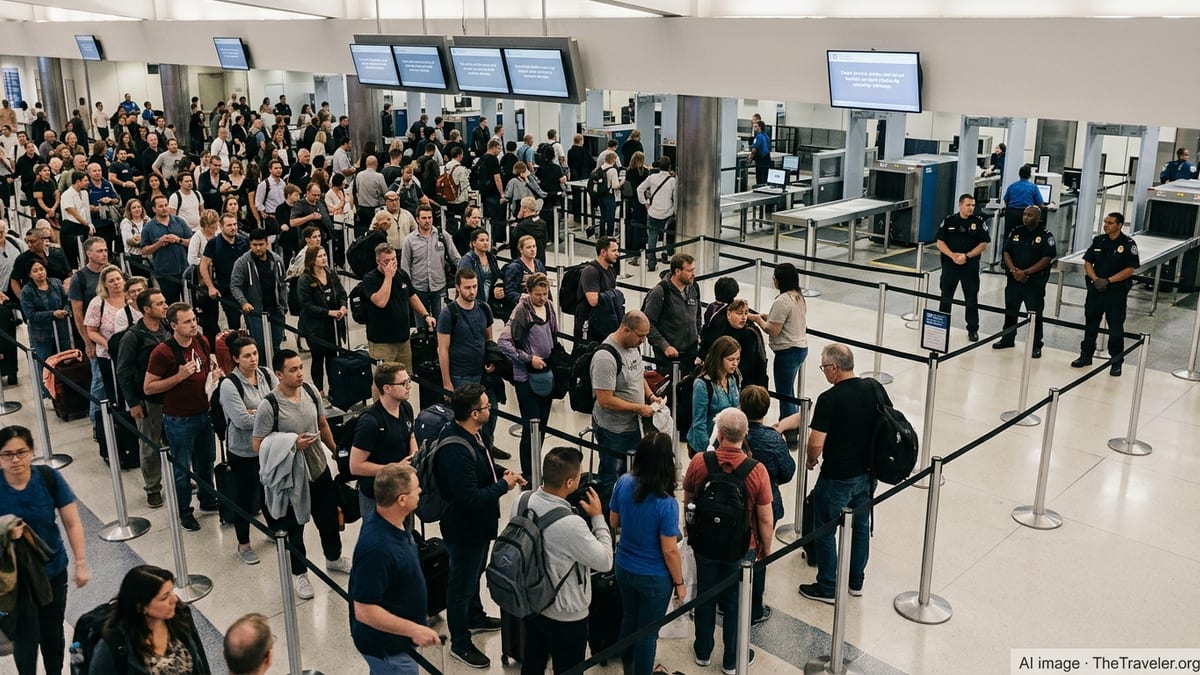
Delays Ripple Across Major European Hubs
Operational data from flight tracking and airport information platforms indicates that Vienna Airport experienced an unusually high volume of delayed services, with over one hundred flights running behind schedule. The disruption has touched a wide range of short and medium haul routes, including key links to Paris and Amsterdam, intensifying congestion at one of Central Europe’s busiest transfer points at the height of the summer travel period.
The pattern of delays shows knock on effects along major European corridors. Services between Vienna and Paris, as well as Vienna and Amsterdam, have recorded late departures and arrivals, complicating onward travel for connecting passengers. Routes from Vienna to other leisure and business destinations, including popular summer hotspots in southern Europe, have also been affected as aircraft and crew rotated through the network.
While Vienna has borne the brunt of the disruption, reports from passenger forums and public flight status dashboards suggest that delays have cascaded into partner hubs. Aircraft arriving late into Paris and Amsterdam have in some cases been turned around behind schedule, further tightening already stretched turnaround windows and reducing the margin for recovery during the day.
Industry monitoring services note that such clusters of delays are increasingly common in peak season, when dense schedules and heavy air traffic leave limited room to absorb even minor disruptions. Once a critical number of flights fall behind, late arrivals and departures tend to propagate across several airports and airlines.
Austrian Airlines, Ryanair and KLM Among Affected Carriers
The disruption at Vienna has involved a cross section of carriers, with Austrian Airlines, Ryanair and KLM among the most visible operators experiencing late running flights. Austrian Airlines, which uses Vienna as its primary hub, has seen multiple services depart later than planned, as reflected in real time status updates showing revised departure times and compressed connections on domestic and regional routes.
Ryanair operations at Vienna, focused on point to point links to leisure and secondary city destinations, have also encountered significant delays. Public tracking data for recent rotations between Vienna and cities such as Krakow highlight late evening arrivals well beyond scheduled times, illustrating how a single prolonged delay within the low cost carrier’s tightly sequenced schedule can affect subsequent flights.
KLM, which connects Vienna to its Amsterdam hub, has not been immune to the broader European operational strains. Passenger accounts and published discussions referencing recent KLM schedule changes and cancellations underscore that even legacy network carriers with substantial resources can struggle to maintain punctuality when upstream disruptions and resource constraints converge on a given day.
Other European airlines with a presence at Vienna, including fellow network and low cost operators, appear in delay statistics as well, underscoring that today’s disruption is not confined to a single brand or business model. Instead, it reflects shared pressure on airspace capacity, ground handling resources and aircraft availability.
Possible Drivers: Congested Skies and Tight Summer Schedules
Although no single cause fully explains the breadth of today’s delays, publicly available operational analysis points to a combination of factors that have been building across the European aviation system. Data compiled by Eurocontrol and other regional bodies for recent months shows that en route air traffic control regulation, airport capacity constraints and weather related restrictions continue to be major contributors to average delay per flight.
Summer schedules at Vienna and other hubs have been built around high aircraft utilization, with individual jets often operating several sectors per day. In such an environment, even short ground handling holdups, minor technical inspections or brief air traffic flow restrictions can accumulate into lengthy delays by the end of the operating day. Once multiple rotations are affected, airlines can face difficult choices between holding connections, preserving aircraft positioning or preemptively cancelling selected services.
Ground handling capacity and staffing remain another pressure point. Industry reports on recent European season performance highlight ongoing strains in baggage handling, check in and aircraft turnaround operations, especially during early morning and late evening peaks. When ramps, gates and staff are stretched thin, recovery from an initial disruption can take considerably longer, particularly at an airport like Vienna that serves both transfer passengers and point to point traffic.
Weather also plays a recurring role. Even when conditions at Vienna are stable, thunderstorms or low visibility at destination or en route airports such as Paris or Amsterdam can trigger flow restrictions, diversions or longer routings. This can leave aircraft and crew out of position for subsequent departures and compound the network wide impact over the course of the day.
Impact on Passengers and What Travelers Can Do
For passengers on today’s affected flights, the most immediate consequences are extended waits at departure gates, missed connections and overnight disruptions to itineraries. Crowded terminals and uncertainty over revised timings can be particularly challenging for families and travelers with tightly scheduled trips, including cruise departures, business meetings or nonrefundable accommodation bookings.
Consumer advocacy groups and travel advisers routinely recommend that passengers facing delays in Europe familiarize themselves with the protections available under EU and UK air passenger regulations. Depending on the length of delay, distance flown and underlying cause, travelers may be entitled to care such as meals, refreshments and hotel stays, as well as financial compensation in specific circumstances. These entitlements generally depend on whether the disruption was within the carrier’s control and on the final arrival delay at the destination.
Travel specialists suggest a number of practical steps to mitigate the impact of days like today at Vienna. Booking longer connection windows, especially when changing airlines or terminals, can provide a buffer against moderate delays. Choosing earlier flights where possible leaves additional options for same day rebooking if disruptions occur. Keeping airline apps and notifications enabled, and monitoring flight status through independent tracking tools, can also help travelers react quickly to schedule changes.
For those due to travel through Vienna, Paris, Amsterdam or other major European hubs in the coming days, current conditions underline the value of flexible planning. Refundable accommodation, flexible rail tickets and comprehensive travel insurance can reduce the financial impact if severe delays or cancellations continue to affect peak season operations.
Vienna’s Role in a Strained European Network
Today’s wave of delays at Vienna underscores the airport’s central role in Europe’s increasingly interconnected aviation system. Vienna serves as both a national gateway and a transfer point linking Central and Eastern Europe with Western European capitals and Mediterranean destinations, meaning that localized operational challenges can quickly reverberate across a wider network.
Recent disclosures from Vienna’s operator and regional air traffic bodies show that traffic levels at the airport have continued to recover strongly, with low cost and network carriers rebuilding and expanding capacity. At the same time, background issues affecting the broader European air traffic system, from staffing constraints to infrastructure upgrades, have limited the amount of slack available to absorb day to day irregularities.
Analysts observing today’s events note that the pattern of 107 recorded delays and two cancellations fits into a wider trend of periodic “traffic spikes” where multiple airports and airlines experience simultaneous pressure. These episodes tend to occur during peak holiday periods and can be triggered by a combination of high demand, weather variability and structural constraints in the air traffic management system.
As the summer season continues, Vienna’s performance will be closely watched by airlines, regulators and passengers alike as an indicator of how resilient Europe’s aviation network has become since the pandemic years. The latest disruption highlights both the progress made in restoring connectivity and the ongoing vulnerabilities that can swiftly turn a busy travel day into one marked by extensive delays.