


More news on this day
Flight disruptions are once again testing the patience of U.S. travelers, but a mix of tougher federal refund rules, airline promises and increasingly sophisticated tracking tools is changing how passengers can respond when trips go off schedule.
Get the latest news straight to your inbox!
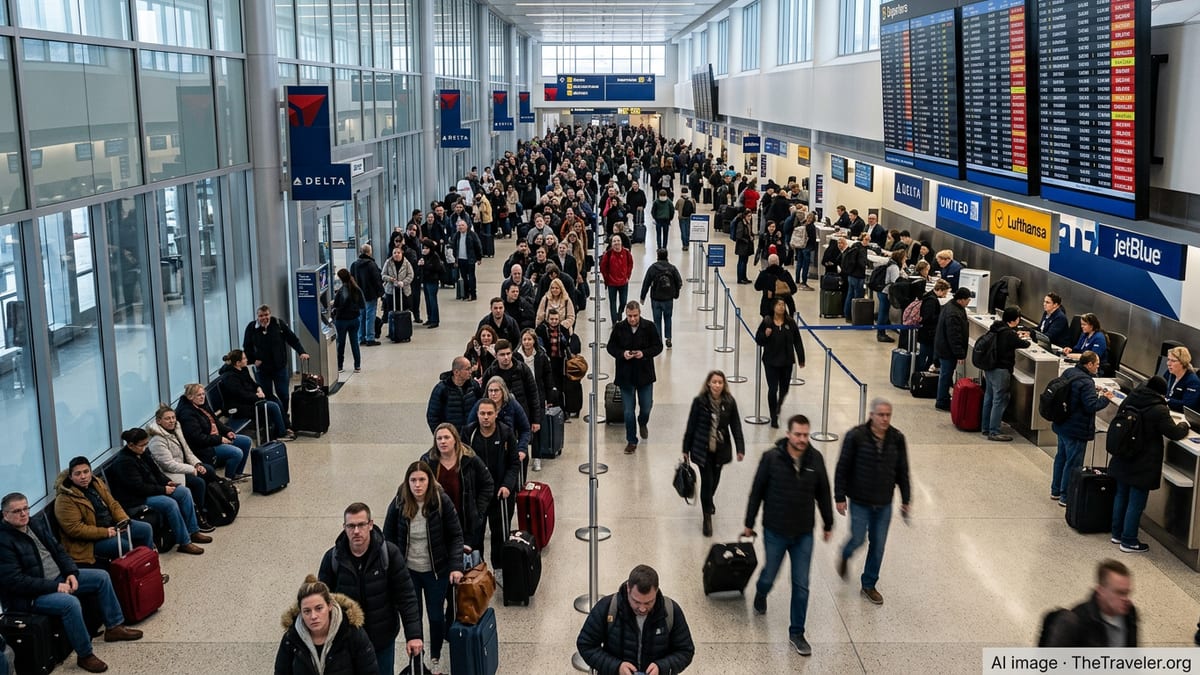
Refund rights strengthened after cancellations and long delays
Publicly available federal documents show that the U.S. Department of Transportation has moved to codify long-standing policy on refunds when airlines cancel or significantly change flights and passengers decide not to travel. The final rule on refunds and other consumer protections, issued in 2024, affirms that travelers are entitled to cash refunds rather than credits when an airline cancels a flight or makes a major schedule change and the customer declines the alternative offered.
The department’s guidance on refunds explains that this right applies to tickets bought directly from airlines and from ticket agents, covering domestic and many international itineraries touching the United States. If a flight is canceled outright or is subject to a significant delay or schedule change and the traveler rejects the rebooking, vouchers or other compensation, the airline is expected to return the fare paid to the original form of payment.
U.S. rules stop short of requiring automatic cash compensation for delays, a sharp contrast with European Union regulations that assign fixed euro amounts for long delays and many cancellations. Consumer advocacy analyses emphasize that American measures focus on refunds and transparency rather than punitive payments when flights run late, leaving most extra assistance to airline policies.
Despite that limitation, federal enforcement reports indicate that regulators are paying closer attention to how carriers handle disruptions. Oversight documents highlight a surge in passenger complaints since the pandemic, especially around refunds, and stress that misleading or obstructive practices around cancellations and schedule changes can be treated as unfair or deceptive under federal law.
What airlines now promise on meals, hotels and rebooking
To close some of the gaps between refund rules and on-the-ground experience, the Transportation Department maintains an Airline Cancellation and Delay Dashboard summarizing what major U.S. carriers voluntarily guarantee during controllable disruptions. According to the latest entries, the largest airlines now commit to providing meal vouchers when travelers face substantial waits because of problems within an airline’s control, typically around three hours or more.
Most large U.S. carriers also publicly commit to covering hotel accommodations and ground transportation to and from the hotel when an overnight stay is required due to a controllable delay or cancellation. The dashboard tables show that nearly all of the biggest airlines make this assurance, although policy language often carves out exceptions, such as limiting coverage to passengers who are not at their home airport or capping reimbursements at what the carrier deems a reasonable rate.
Rebooking policies are another key piece of the picture. The dashboard indicates that major airlines pledge free rebooking on their own flights in cases of controllable disruptions, and several also promise to rebook passengers on partner or rival airlines at no additional cost when their own options are limited. These commitments are set out in each airline’s customer service plan, a document that sits alongside the formal contract of carriage and is increasingly used as a benchmark by regulators and consumer advocates.
Travel experts note that these voluntary promises are not identical across carriers, which makes advance research important. Some airlines provide more generous hotel and meal coverage, while others specify stricter conditions and exclusions. Because the dashboard summarizes but does not replace the underlying plans, passengers are encouraged to check the latest version of the customer service plan for their specific airline when a disruption occurs.
How to check your rights on U.S. and international routes
For trips that begin or end outside the United States, different legal regimes may overlap. Comparisons by passenger rights specialists point out that the U.S. refund rules apply broadly to covered flights to and from the country, but do not guarantee fixed cash compensation for delays or most cancellations. By contrast, Europe’s Regulation 261/2004 offers standardized compensation amounts for many delays and cancellations, along with meals and hotel accommodation, provided the disruption is not caused by extraordinary circumstances such as severe weather or certain safety issues.
Published guides to these regimes emphasize that a single itinerary can sometimes fall under more than one rule set. For example, a flight from a European Union city to a U.S. destination operated by an EU-based carrier is generally covered by European rules as well as U.S. refund protections. That can mean a traveler may be entitled to both a cash refund if they decide not to travel and, in some situations, additional compensation if they were booked on an eligible European flight and arrived several hours late.
Travelers departing U.S. airports, however, do not benefit from any domestic equivalent to Europe’s automatic delay compensation, even on budget transatlantic carriers. Analyses by travel law commentators underline that on such routes the main guaranteed federal protection is a refund if the airline cancels or significantly changes a flight and the passenger refuses the alternative offered.
Because the details can be complex, consumer advocates often recommend that passengers facing disruption keep records of their booking, boarding passes, notifications, receipts and any communication with the airline. These documents can be important when invoking refund rules, filing a complaint with regulators or, on eligible routes, pursuing compensation under a foreign passenger rights regime.
Real-time tools to track delays, cancellations and airport bottlenecks
Alongside regulatory changes, a growing ecosystem of public and commercial tools is helping travelers monitor disruptions in real time. The Federal Aviation Administration’s public aviation information services provide a national view of airport status, describing ground stops, flow programs and other air traffic measures that can trigger systemwide delays at major hubs.
Private flight-tracking platforms add more granular views at the level of individual flights. Well-known services aggregate radar data, airline schedules and historical performance to show where an aircraft is, whether it is expected to depart on time and what kinds of delays are building at particular airports. Mobile apps associated with these platforms allow travelers to set alerts for specific flights, track gate changes and receive notifications of cancellations minutes after airlines update their systems.
More specialized travel apps have emerged that use machine learning and historical data to flag potential delays before they are formally posted by airlines. According to recent product descriptions, some of these apps scan for factors such as late-arriving aircraft, ground stop programs and weather advisories, then present early warnings to users. Newer services also bundle in guidance on passenger rights, estimating when a disruption may trigger refund eligibility or, on international routes, compensation opportunities under foreign regulations.
Consumer technology coverage notes that airline-specific apps remain an important first line of information for official rebooking and digital boarding passes. However, independent trackers and federal airport status feeds can help passengers verify what is happening across the network, particularly during major weather events or holiday peaks when call centers and gate agents are overwhelmed.
What travelers can do when disruption hits
When a delay or cancellation occurs, travel advisers recommend a combination of instant information gathering and careful documentation. Checking federal airport status pages, airline alerts and third-party tracking apps in parallel can clarify whether the problem is local to one carrier or part of a wider air traffic issue, which in turn influences what assistance the airline is likely to offer.
Once a disruption appears likely to exceed several hours, passengers may wish to review the airline’s customer service plan and compare it against the Transportation Department’s dashboard summary. If the situation is clearly within the airline’s control and matches a scenario where meals or hotels are promised, travelers can use that information when requesting vouchers or accommodations at the airport or through customer service channels.
If the airline cancels a flight outright or proposes a significantly changed itinerary, publicly available federal rules indicate that travelers can decline the alternative and request a cash refund instead. Consumer advocates advise making this request in writing, referencing the carrier, dates and flight numbers, and keeping copies of any correspondence and receipts for out-of-pocket expenses.
In more complex cases, such as disruptions on transatlantic routes, passengers may explore additional claims under European passenger rights regulations if their flight and carrier are covered. Guidance from legal and travel specialists stresses that deadlines, documentation needs and claim processes vary by regime, so U.S. travelers are encouraged to consult up-to-date information from regulators, consumer groups and reputable travel law resources when pursuing remedies beyond a basic refund.