


More news on this day
A Jet2 flight from London to Ibiza diverted to Paris after a reported mid-air medical incident, leading to an unscheduled landing and delays for holidaymakers at the height of the late-summer travel season.
Get the latest news straight to your inbox!
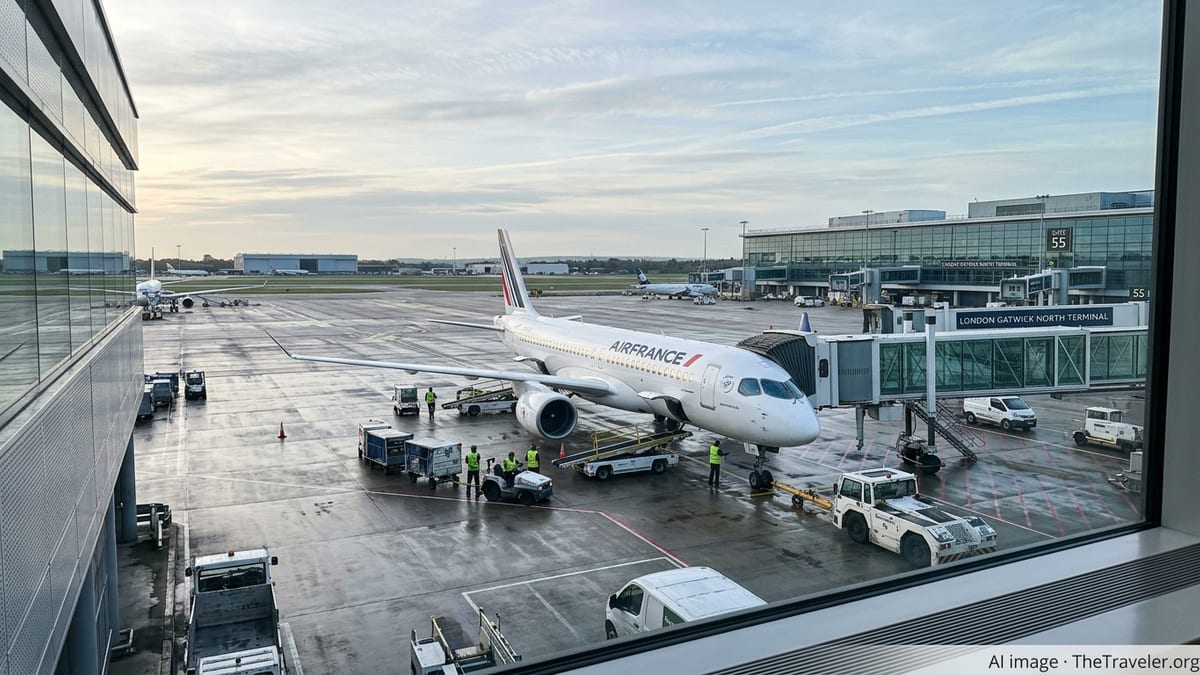
Aircraft diverts en route to Ibiza after emergency signal
Publicly available flight-tracking data and media coverage indicate that the Jet2 service was operating between London Stansted and Ibiza when the crew declared an emergency while cruising at around 35,000 feet. The Boeing 737-800, carrying leisure travellers bound for the Balearic Islands, turned back over France and was vectored toward Paris instead of continuing to Spain.
Reports describe the incident as a mid-air medical situation that required priority handling. The crew signalled an emergency code, prompting air traffic controllers to give the aircraft an expedited route to the French capital, where emergency services were on standby for its arrival in line with standard aviation procedures.
The flight landed safely in Paris with no further operational issues reported. Passengers were kept on the ground while arrangements were made for medical care and for the continuation of the journey to Ibiza later in the day.
Information compiled from aviation tracking platforms and travel industry outlets suggests that the aircraft later departed again, eventually reaching Ibiza several hours behind schedule compared with its original timetable.
Medical emergencies remain a key driver of in-flight diversions
While disruptive for passengers, mid-air medical incidents are one of the more common reasons for unscheduled diversions. Aviation safety bodies and industry guidance list four broad triggers for rerouting flights: technical issues, medical situations, adverse weather and other emergencies such as smoke or security concerns.
When a passenger or crew member becomes seriously unwell, flight crews work with medical support resources and air traffic control to determine whether a diversion is necessary. Factors include distance to the destination, the availability of suitable diversion airports, onboard medical capabilities and the condition of the individual involved.
In this case, reports indicate that the crew opted for a diversion into a major European hub, which provides rapid access to hospital facilities and established emergency response infrastructure. Such decisions are made to prioritise health outcomes, even if they cause significant disruption to schedules and travel plans.
Airlines such as Jet2 publish medical travel guidance for customers, outlining when passengers should seek clearance before flying and under what circumstances additional support may be required. The aim is to reduce the likelihood of acute incidents in the air, although unexpected events can still occur despite pre-travel screening and advice.
Knock-on disruption for holidaymakers and airline operations
The diversion to Paris resulted in a delay of more than two hours to the flight’s arrival into Ibiza, according to travel news summaries. For passengers, this meant extended time in transit, potential missed transfers and later check-ins at hotels during a busy period for Mediterranean resorts.
Operationally, diversions can create a complex chain of adjustments. Aircraft are taken out of their planned rotations, crews may reach duty-time limits sooner than scheduled, and ground teams at both the diversion point and the original destination must reorganise handling, catering and turnarounds. Airlines then decide whether to continue with the same aircraft and crew or to substitute equipment where possible.
Even a single medical diversion can reverberate across an airline’s network, contributing to later departures or aircraft swaps on unrelated routes. For carriers focused on leisure markets, such as Jet2, maintaining resilience during peak holiday seasons is particularly important because schedules are tightly packed and many flights operate at or near full capacity.
In this instance, publicly available information shows that the disrupted service eventually completed its journey, but the delay underlines how one mid-air incident can cascade into wider operational challenges on a busy travel day.
What passengers can expect when a flight diverts
When an in-flight medical situation prompts a diversion, passengers typically experience a sudden change of course and an unscheduled landing, followed by a period of waiting on board or in the terminal while the airline coordinates next steps. Cabin crews usually continue normal safety procedures, while any ongoing medical assistance remains focused on the affected individual.
Travel industry guidance notes that after a diversion, airlines generally work to re-establish the original itinerary as soon as practical, either by continuing with the same aircraft once cleared to operate or by arranging alternative transport. Accommodation or rebooking assistance may be offered if onward travel is significantly delayed or if curfews and crew duty limits prevent an immediate continuation.
Experts in passenger rights highlight that compensation frameworks in regions such as the United Kingdom and the European Union treat genuine medical emergencies as extraordinary circumstances. This means that while carriers are expected to provide care and support, they may not be required to pay financial compensation in the same way as for technical faults within their control.
For travellers, the episode underscores the importance of allowing buffer time at the start and end of trips, particularly when cruises, tour departures or long-distance connections are involved. Travel insurance with clear coverage for delays and missed connections can also mitigate the financial impact of rare but disruptive events like mid-air diversions.
Heightened scrutiny of flight disruptions during a busy season
The Jet2 diversion to Paris comes at a time when flight disruptions are under close scrutiny from passengers and consumer advocates. Recent weeks have seen travellers contending with technical faults, air traffic control interruptions and weather-related delays across parts of Europe, increasing sensitivity to any additional schedule shocks.
Against this backdrop, medical incidents stand apart as events primarily driven by health considerations rather than airline or infrastructure performance. Industry observers point out that such diversions demonstrate the priority given to passenger welfare, even when this generates significant operational and financial costs for carriers.
For Jet2, the incident adds to a broader pattern of operational challenges typical of a growing leisure airline operating at high utilisation during peak summer. However, publicly reported outcomes from this and similar events show flights returning safely to the ground and journeys eventually being completed, reinforcing the robustness of established safety and emergency-response protocols.
As late-summer travel continues, the episode serves as a reminder that air travel, while highly reliable, is occasionally subject to sudden changes. Travellers heading into the busy autumn getaway period are likely to keep a close eye on airline communications, flight-tracking apps and airport departure boards whenever unexpected incidents redirect aircraft from their planned paths.