


More news on this day
A Jet2 flight from London Stansted to the Bulgarian resort city of Burgas was diverted to Frankfurt for a refuelling stop after a reported medical incident on board, leaving holidaymakers facing disruption to their onward journeys but raising fresh attention on how airlines manage in-flight medical events.
Get the latest news straight to your inbox!
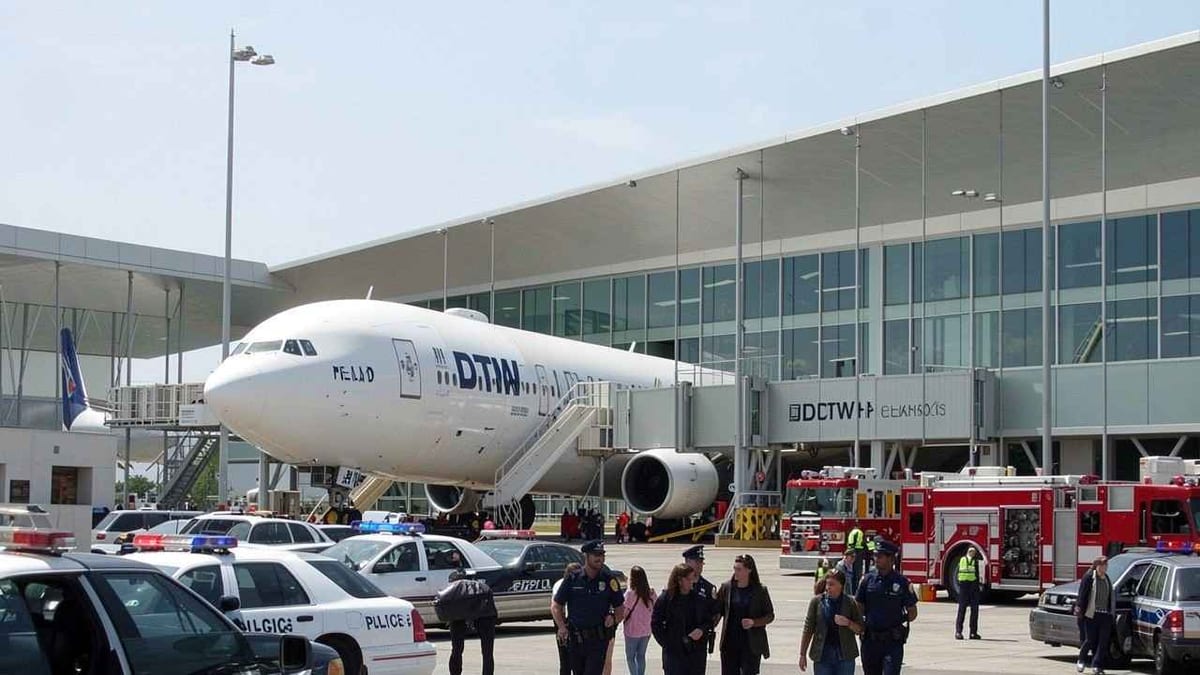
Stansted to Burgas service makes unscheduled stop in Germany
Publicly available flight-tracking data and posts shared by passengers indicate that Jet2 service LS1413, operating from London Stansted to Burgas on Monday 14 September 2026, diverted to Frankfurt instead of continuing directly to Bulgaria. Information circulated to customers, reproduced in online travel and aviation forums, stated that the diversion followed a medical incident on board.
The message shown to passengers explained that the aircraft would need to make a fuel stop in Frankfurt as a result of the circumstances surrounding the incident, characterising the change as unscheduled and apologising for the disruption. The wording emphasised efforts to minimise knock-on effects for onward travel and package holiday arrangements.
There were no immediate indications from publicly available information of a wider safety issue with the aircraft itself. The diversion route and subsequent refuelling were consistent with standard operational decisions taken when flight time or routing is altered by an onboard emergency.
Passengers face delays and itinerary changes
Accounts shared on social media platforms suggest that the diversion extended total journey times for passengers heading to the Black Sea coast at the end of the UK holiday season. Travellers reported uncertainty around revised landing times, hotel check-in arrangements and airport transfers, particularly for those booked on package holidays with pre-arranged ground transport.
The added stop in Germany also created potential for crew duty-time limitations and aircraft scheduling complications. In comparable disruption cases across European short-haul networks, diversions can cascade into subsequent delays as airlines reposition aircraft and staff to restore normal operations.
Despite the inconvenience, comments from some travellers in online discussions reflected understanding that medical incidents are treated as priority situations, with schedule reliability taking second place to passenger welfare. Many aviation observers note that diversions for serious medical events are typically viewed as unavoidable, even when they lead to overnight delays or missed connections.
Medical events classed as extraordinary disruption
Guidance on Jet2’s own customer information pages states that passenger medical emergencies fall within a category of “extraordinary circumstances” considered outside the airline’s control, similar to air traffic control restrictions or severe weather. In such cases, the carrier explains that compensation under UK and European passenger rights legislation is generally not payable, although customers may still be entitled to assistance such as refreshments, accommodation and rebooking support.
Passenger rights rules derived from Regulation 261/2004 and its UK equivalent differentiate between technical or staffing issues within an airline’s control and unforeseen events such as medical emergencies. Industry practice treats the latter as operational risks that cannot be fully prevented, even through robust planning and safety management systems.
Consumer advice bodies typically recommend that travellers keep receipts for any reasonable out-of-pocket expenses during disruption and contact airlines with full documentation when seeking reimbursement. However, they also note that each case is assessed individually, and outcomes can vary depending on the specific timings and causes of a delay.
Focus on onboard health and fitness to fly
The diversion has drawn renewed attention to pre-travel medical guidance published by airlines. Jet2’s fitness-to-fly information advises customers to consult medical professionals before travelling if they have recent or serious health conditions, and in some circumstances to obtain a formal medical clearance form or certificate before boarding.
Airlines typically stress that cabin crew are trained to respond to in-flight emergencies but do not provide the same level of care as hospital environments. In many cases, diversion decisions are taken to ensure that passengers can reach advanced medical facilities as quickly as possible, particularly on flights crossing large stretches of water or remote areas where ground access is limited.
Aviation safety reports show that in-flight medical incidents can range from minor illnesses to serious cardiac events. While the overall rate of such cases is low relative to the number of passengers carried each year, they remain a significant factor in unplanned diversions across global airline networks.
Operational resilience under continued network pressures
The Jet2 diversion occurred against a backdrop of wider strain on European aviation, following recent air traffic control system issues that disrupted thousands of flights across the United Kingdom and continental hubs. Industry reporting over the past week has highlighted how even routine schedules remain vulnerable to knock-on effects when aircraft and crews are displaced from their planned rotations.
Jet2’s recent corporate reporting describes how the company’s 24-hour operational control centre is tasked with managing day-of-travel disruption, coordinating with airports, ground handlers, resort teams and call centres to limit the impact of unexpected events. Diversions for medical reasons are classed alongside severe weather, third-party strikes and infrastructure outages as scenarios that require rapid response but cannot always be avoided.
For travellers, the Stansted to Burgas incident serves as a reminder that even well-planned holidays can be affected by unforeseen developments at altitude. Travel organisations continue to encourage passengers to build in time buffers where possible and to ensure that they have adequate travel insurance to cover delays, missed connections and emergency medical treatment abroad.