


More news on this day
Growing scrutiny of the Nigeria Civil Aviation Authority’s heavy focus on flight-delay statistics is raising questions about whether the regulator’s data releases are unintentionally de-marketing Nigerian airlines in an already fragile aviation market.
Get the latest news straight to your inbox!
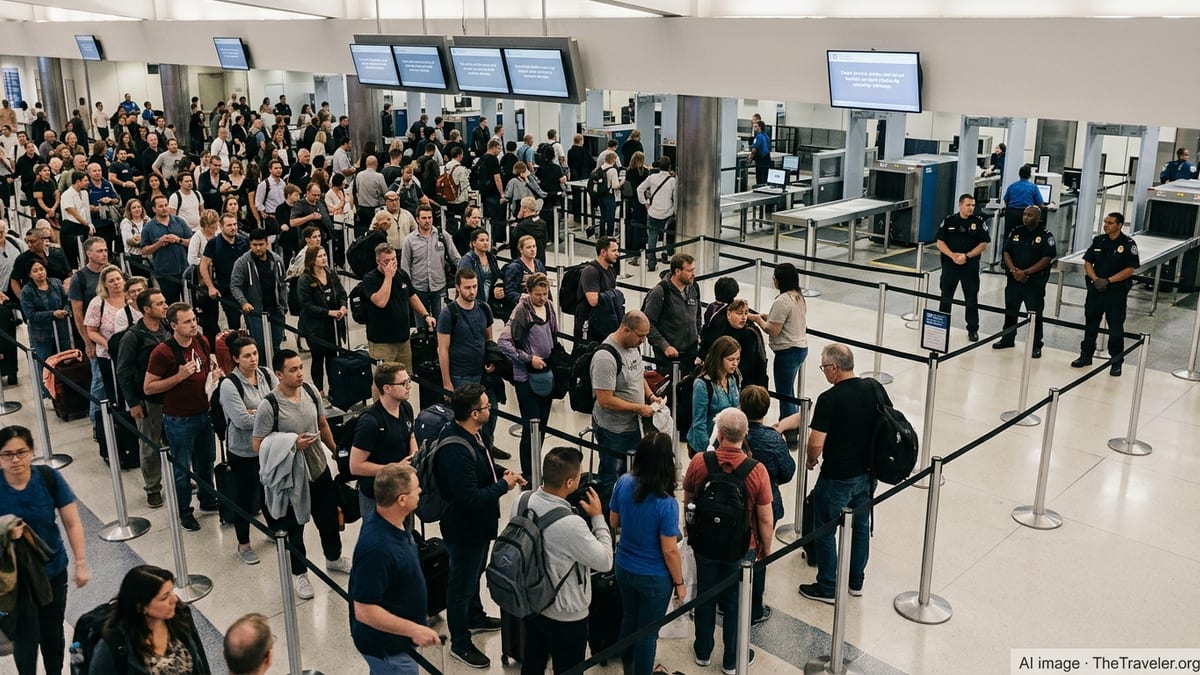
Rising volume of delays puts airlines under harsh spotlight
Recent operational data published by the Nigeria Civil Aviation Authority shows how exposed domestic carriers have become to public judgment based almost entirely on delay figures. A summary of August 2026 domestic operations indicated that nearly 60 percent of 7,961 scheduled flights were delayed, with some leading carriers recording disruption rates above 70 percent. The statistics were widely reproduced across local media, often framed as evidence of systemic underperformance by Nigerian airlines.
Reports indicate that the authority has, in recent years, institutionalised more frequent publication of disruption summaries, breaking them down by airline and route. While transparency advocates welcome this visibility, industry commentators argue that raw delay numbers, released without deeper context, risk cementing a narrative that Nigerian carriers are uniquely unreliable. They note that these figures are now routinely cited in online debates, social media posts and political discussions about the state of domestic aviation.
For carriers that depend heavily on reputation to attract corporate contracts and interline partnerships, this form of exposure can be costly. Airline managers have publicly acknowledged operational challenges ranging from fuel scarcity to congested airspace, but insist that delay tables alone do not capture the structural conditions under which they operate. As a result, they warn, statistics that were intended as a consumer-protection tool are increasingly functioning as a marketing handicap.
The concern among critics is not that the data are fabricated, but that they are presented in a way that leaves airlines to shoulder almost all of the blame. In an environment where passengers already assume the worst of local operators, a steady stream of disruption charts, devoid of comparative benchmarks, can reinforce a one-dimensional perception of failure.
How methodology and messaging can distort the market
The NCAA’s commercial and statistics department is mandated to collate and analyse airline data for planning, billing and regulatory oversight. Industry observers say that in practice, this function has become closely tied to consumer-protection enforcement, with delay records serving as an evidentiary backbone for sanctions and public naming. Critics argue that this approach encourages a punitive, rather than developmental, data culture.
Concerns centre on methodology and communication. Delay statistics are typically published as absolute counts alongside each airline’s total number of flights. Without standardised indicators such as delay minutes per flight, on-time performance ranges, or comparisons with regional peers, the heaviest operators inevitably appear worst, even when their relative performance is similar to or better than smaller competitors. This structure can skew public perception by equating size with poor service.
Furthermore, the data releases generally aggregate all causes of disruption, from weather and airspace restrictions to airline-specific technical or crew issues. Stakeholders say the absence of clear causal attributions leaves passengers with the impression that every delay is the sole fault of the carrier. Airport infrastructure failures, fuel supply bottlenecks and regulatory interventions that force schedule changes rarely feature in media coverage of the figures.
Policy analysts warn that this framing can distort competition by pushing passengers to favour foreign or smaller niche operators without a full understanding of systemic constraints. They also caution that investors, lenders and potential codeshare partners may interpret the persistent emphasis on domestic delays as a red flag, further tightening access to capital for Nigerian airlines.
Domestic reputation, international perception
The debate over delay statistics arrives as Nigeria’s aviation sector navigates sensitive international optics. In 2024, a widely shared report mischaracterised the United States aviation regulator’s technical reclassification of Nigeria as a safety-driven “ban” on the country’s airlines. The NCAA later issued a detailed clarification explaining that the development stemmed from the absence of Nigerian-registered operators on US routes over a specified period, not from any identified safety deficiency.
Industry commentators see a pattern in how complex regulatory and operational issues are simplified into headlines that suggest Nigerian aviation is inherently problematic. They argue that the way domestic delay data are promoted can feed similar misinterpretations abroad, where readers may be unfamiliar with local infrastructure or policy challenges. For airlines seeking to expand to regional and intercontinental routes, reputational drag of this kind can become a tangible barrier.
Travel analysts note that in a global marketplace where perception can weigh as heavily as audited safety scores, the narrative around punctuality carries outsized influence. While international carriers serving Nigeria also experience disruptions linked to airspace congestion or ground handling limits, their performance is rarely scrutinised in local publicity with the same intensity as that of indigenous airlines.
The fear among Nigerian operators is that sustained emphasis on their delay statistics, without equivalent focus on system-wide constraints or foreign carriers’ records, may entrench an image of domestic airlines as second-tier options. This can affect everything from passenger choice and ticket yields to negotiations over aircraft leases and insurance premiums.
Calls for more balanced performance reporting
As disruption numbers gain prominence, a growing body of opinion within aviation policy circles argues that the NCAA should recalibrate how it uses flight-delay data. Advocates of reform are not calling for the statistics to be hidden, but for them to be embedded in a fuller performance framework that includes safety records, customer service compliance and infrastructure reliability across the aviation value chain.
Suggested alternatives include publishing on-time performance percentages rather than only raw delay counts, separating delays by cause category, and introducing dashboards that highlight progress over time rather than isolated snapshots. Analysts also recommend simultaneous reporting on airport facilities, air navigation service efficiency and ground handling issues, so that passengers and policymakers can see how different actors contribute to overall punctuality.
Some stakeholders have proposed that the authority accompany each statistical release with a plain-language explainer that situates the data in regional and global context. Comparisons with on-time performance in similar markets, they argue, would help distinguish structural challenges shared across developing aviation systems from airline-specific operational weaknesses.
There are also calls for greater engagement with airlines before data are released, with a view to verifying anomalies, updating records and highlighting corrective actions already taken. Observers say such collaboration could mitigate adversarial dynamics while maintaining the regulator’s independence and commitment to consumer rights.
Passenger rights, regulatory trust and the road ahead
Underlying the controversy is a shared recognition that Nigerian passengers have endured years of unpredictable schedules, missed connections and inadequate communication at airports. Strengthening consumer rights has been a central theme of recent NCAA actions, including sanctions against carriers that fail to process refunds or provide mandated compensation for baggage and delay-related inconveniences.
Passenger advocates argue that transparent publication of delay statistics is essential to holding airlines accountable and empowering travellers to make informed choices. From this perspective, pulling back from disruption reporting could risk a return to opaque practices in which grievances are difficult to document and enforce.
However, sector analysts caution that if passengers come to see the regulator primarily as a public critic of local airlines rather than as a system-wide guardian, trust in the broader aviation ecosystem may erode. They suggest that a more nuanced approach, which combines robust consumer enforcement with data-driven insight into infrastructure, weather, fuel supply and regulatory bottlenecks, would better serve both travellers and operators.
For an industry grappling with high operating costs, currency volatility and intense regional competition, the way performance metrics are framed has become more than a technical issue. Whether the NCAA continues to foreground flight-delay tables as its most visible communication tool, or shifts toward a more holistic scorecard, could shape not only the public image of Nigerian airlines but also their prospects for sustainable growth at home and abroad.