


More news on this day
As delays and cancellations continue to snarl U.S. air travel, new federal rules and digital tools are reshaping how passengers can check their rights and track trouble before it ruins a trip.
Get the latest news straight to your inbox!
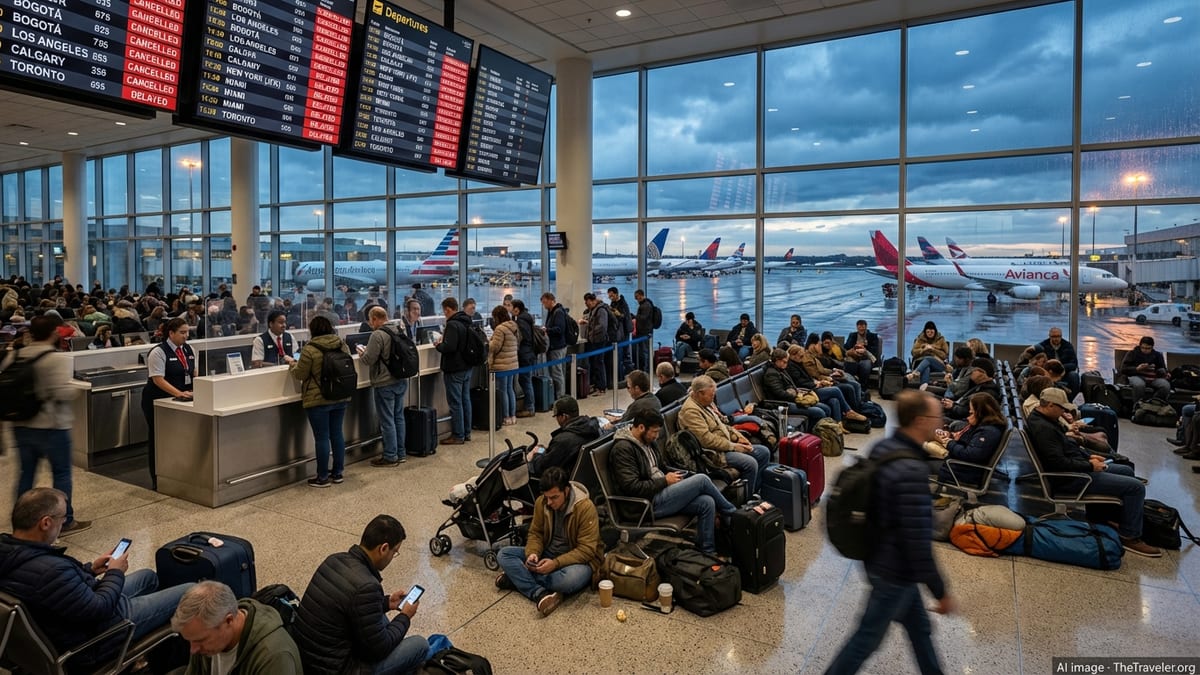
Refund rules tighten for cancellations and long delays
Publicly available information from the U.S. Department of Transportation shows that a major refund rule finalized in April 2024 has started to change what airlines owe passengers when trips fall apart. For flights to, from, or within the United States, carriers must provide prompt cash refunds when a flight is canceled or significantly changed and the traveler chooses not to accept an alternative itinerary or a credit.
DOT guidance defines a “significant delay” for these automatic refund rights as generally three hours or more for domestic flights and six hours or more for international routes, when the passenger decides not to travel on the revised schedule. The rule covers the base fare, taxes, and most mandatory ancillary fees when the traveler declines vouchers or credits and does not take the changed flight.
The department also requires airlines to notify travelers clearly when a cancellation or qualifying delay occurs and to spell out refund eligibility. Consumer advocates say these written disclosures are intended to reduce confusion at the gate, where passengers have often been steered toward travel credits instead of cash.
Separate from federal rules, each airline still sets its own policies for what it will provide when disruptions are within the carrier’s control, such as meal vouchers or overnight hotel stays. Industry overviews note that these commitments are reflected in airline customer service plans and can vary by route, fare type, and circumstances.
Where U.S. travelers can verify their rights
For travelers trying to understand what they can expect during a disruption, the clearest single reference point is the federal government’s aviation consumer protection portal. The site consolidates information on refunds, delays and cancellations, tarmac delays, baggage, and denied boarding, along with links to complaint forms and enforcement actions.
In addition, the Airline Customer Service Dashboard, launched in 2022 and updated as policies change, compares what the largest U.S. carriers promise when delays or cancellations are within the airline’s control. Publicly available summaries indicate that all major carriers now commit to providing meal coverage after lengthy controllable delays, and most pledge hotel accommodations and ground transportation when passengers are stranded overnight away from home.
The Federal Aviation Administration also directs passengers to these DOT resources when questions arise about bumped or canceled flights. While the FAA oversees safety and air traffic control, consumer refund and delay rights are handled primarily through the transportation department’s aviation consumer office.
Travel analysts note that the American system still differs from Europe’s EU261 regime, which offers standardized cash compensation in many disruption cases. In the United States, compensation for delays beyond a refund is typically driven by individual airline policies and, in some cases, voluntary vouchers offered as a goodwill gesture.
Using apps and trackers to spot problems early
Alongside new regulatory protections, mobile tools are making it easier for travelers to see trouble coming. Flight tracking platforms and airline apps monitor aircraft movements, gate changes, and air traffic slowdowns in near real time, often providing more detail than airport departure boards.
According to product descriptions from major tracking services, travelers can follow a specific flight, receive push alerts for delays or cancellations, and monitor congestion at key hubs. This kind of early warning can help passengers rebook faster, adjust connections, or contact airlines before call centers become overwhelmed during a large disruption.
Several independent apps now pair live flight data with guidance on passenger rights. One recently updated tool aimed at U.S. travelers advertises airline specific delay policies for ten large carriers, along with plain language explanations of when people might qualify for refunds, meals, or hotels. The app’s latest release notes describe automatically refreshed flight data every few minutes and built in scripts suggesting what customers might say at the gate when asking for assistance.
Airlines themselves increasingly encourage customers to use their official apps to track flights and manage disruptions. These apps generally support same day changes, standby lists, and push notifications about rebookings, although available options can depend heavily on fare class and loyalty status.
Key differences for international and European trips
For U.S. travelers heading overseas, the rules can change as soon as an itinerary crosses borders. Public legal summaries of the European Union’s Regulation 261 indicate that many departures from the EU, and certain flights operated by EU carriers, may qualify for fixed compensation when severe delays or cancellations occur, except in extraordinary circumstances such as severe weather or air traffic control strikes.
This means a journey that begins in Europe and continues to the United States may be covered by EU rules on the outbound leg, while the return flight departing from an American city is typically governed by U.S. regulations and airline policies. Consumer guides emphasize that eligibility often depends on where the trip starts, which carrier operates each segment, and whether all flights sit on a single booking.
In Canada, the Air Passenger Protection Regulations add another layer of potential coverage for cross border trips, with their own standards for when airlines must provide compensation, meals, or hotels. Comparative overviews published in 2026 highlight that Canada and the EU impose more explicit obligations to provide care and, in some cases, direct cash compensation, while the United States has focused more on refund rights and transparency.
Because of these differences, travel experts recommend that passengers check both the U.S. aviation consumer pages and, when relevant, EU or Canadian passenger rights portals before they depart. Knowing which framework applies can determine whether a traveler should pursue a statutory claim overseas or rely on airline specific goodwill in the United States.
How passengers can document and escalate complaints
Even with new rules and better visibility into disruptions, travelers still face the practical challenge of enforcing their rights. Aviation consumer advocates advise keeping boarding passes, screenshots of delay notifications, and receipts for meals or hotels purchased during a disruption, especially when the airline has indicated that such costs may be reimbursed.
If an airline denies a refund that appears to be required under federal rules, or fails to honor its written customer service commitments, passengers can file a complaint with the DOT’s aviation consumer office using online or mail forms. According to department summaries, these complaints help regulators identify patterns that may lead to enforcement actions or civil penalties against carriers.
Published enforcement notices over the past two years show that regulators have imposed record fines on airlines for chronic delays, refund failures, and large scale operational breakdowns. In several high profile cases, airlines have been required to pay substantial penalties while also issuing mass refunds or reimbursements to affected travelers.
Industry observers say that as refund rules settle into place and proposed requirements for guaranteed compensation and amenities continue to be debated, passengers who document problems and use official channels to report them are likely to play a central role in shaping the next phase of U.S. air travel protections.