


More news on this day
Nigeria’s domestic air travel network experienced widespread disruption in August, with new regulatory data showing that nearly 60 percent of scheduled local flights were delayed and dozens more were cancelled.
Get the latest news straight to your inbox!
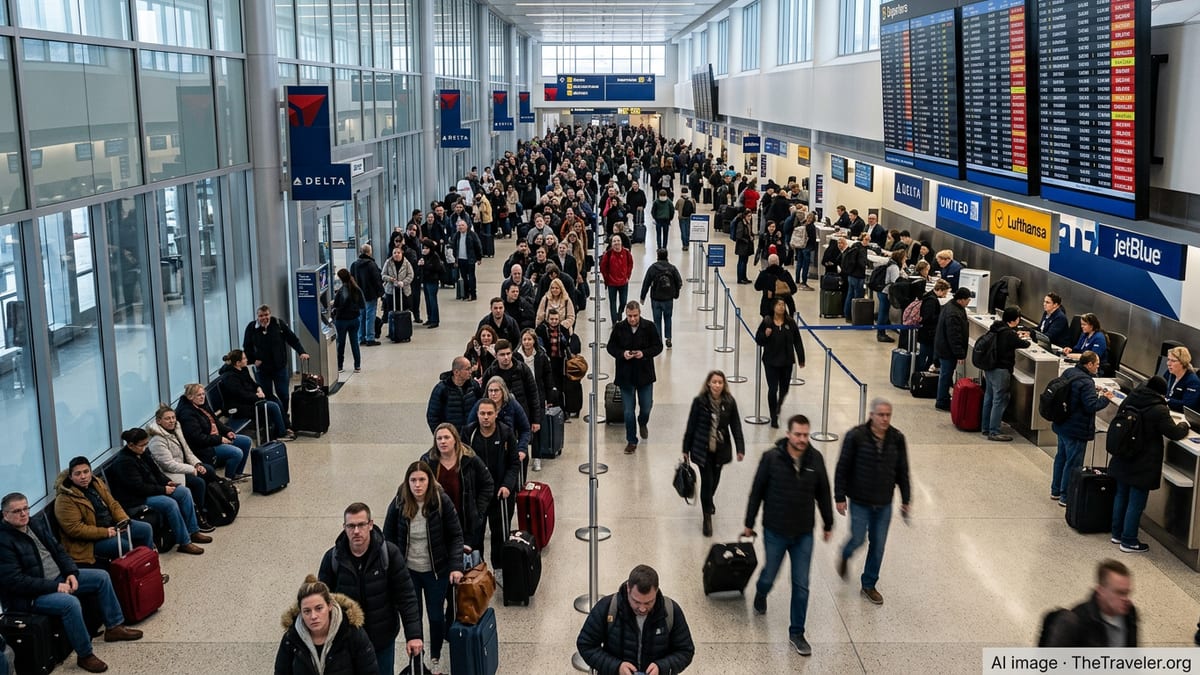
NCAA Data Reveal Scale of August Disruptions
Publicly available figures from the Nigeria Civil Aviation Authority indicate that 15 domestic airlines operated 7,961 flights in August, of which 4,765 were recorded as delayed. The data, summarized in flight disruption tables released by the regulator and reported by multiple Nigerian outlets, translate to a delay rate of about 59.9 percent for the month, meaning fewer than two in five flights operated on time.
The same summary shows that cancellations were comparatively limited in number but added to the strain on passengers. A total of 36 flights were cancelled across the domestic network, reinforcing the picture of an industry where the primary challenge for travelers is not whether flights operate at all but how reliably they keep to schedule.
The disruption levels underscore the fragility of domestic aviation operations at a time when Nigerian travelers are already contending with high fares, currency pressures and constrained household purchasing power. Industry observers note that such extensive delays can carry significant economic costs, from lost work hours to missed business opportunities and additional spending on accommodation and alternative transport.
The August data form part of a broader pattern that has emerged in recent years, with previous NCAA traffic summaries also pointing to persistent issues with punctuality in the domestic market. Analysts say the latest figures will likely intensify scrutiny of airline operational practices and the effectiveness of existing regulatory oversight mechanisms.
Air Peace and United Nigeria Top Delay Tables
The NCAA’s August breakdown highlights sizable differences in performance among individual carriers. Air Peace, Nigeria’s largest domestic operator by volume, flew 1,864 services during the month and recorded 1,330 delayed flights, a delay rate of about 71.4 percent. Reports on the data note that the airline also registered a small number of cancellations, reflecting the wider trend of disruption concentrated in late operations rather than outright flight withdrawals.
United Nigeria Airlines emerged with one of the highest disruption ratios among carriers with substantial schedules. The airline operated 1,231 flights and delayed 943 of them, equivalent to roughly 76.6 percent of its August operations. It also accounted for several of the 36 cancellations reported across the system, placing it near the top of the table both in the share and absolute number of disrupted flights.
Other domestic airlines, including Enugu Air, Value Jet, Ibom Air, Arik, Max Air, Overland, Rano, Aero Contractors and Green Africa, also reported notable numbers of delayed flights, though with varying delay rates. Some operators recorded disruptions on more than half of their services, while a few showed comparatively lower levels of lateness.
At the opposite end of the spectrum, Umza Air was cited in coverage of the NCAA figures as having one of the lowest delay rates among carriers with meaningful levels of activity. The airline reportedly operated just over 400 flights in August, with only a fraction recorded as delayed and none exceeding one hour. This outlier performance is likely to draw attention from passengers seeking more reliable options on the routes the carrier serves.
Industrial Action and Structural Pressures Deepen Delays
The August figures arrived in the context of wider operational pressures on Nigerian aviation. Earlier in the month, domestic flight schedules were disrupted by an industrial action involving aviation unions that picketed airline operations in Lagos and Abuja. According to published coverage of the event, the protests led to grounded flights and left many passengers stranded, contributing to the month’s accumulation of delays even if not all disruptions were directly attributed to the stoppage.
Beyond industrial disputes, carriers are grappling with high operating costs, foreign exchange constraints and maintenance challenges. Previous reporting on the sector has highlighted how the depreciation of the naira and difficulties accessing foreign currency complicate the import of spare parts and the servicing of leased aircraft, factors that can translate into more frequent technical delays and reduced fleet availability.
These financial and logistical strains come on top of elevated ticket prices documented by national statistics and media reports in recent years. Higher fares can dampen demand but do little to insulate passengers who still travel from the operational instability reflected in the NCAA’s disruption data.
Analysts observing the industry say the combination of wage disputes, fuel costs, infrastructure limitations and currency volatility has created a challenging environment for airlines attempting to maintain reliable schedules. The August disruption numbers are being viewed as a stark snapshot of how these overlapping pressures manifest in day-to-day operations.
Consumer Protection and Calls for Stronger Oversight
The NCAA’s publication of detailed monthly disruption data is part of a broader emphasis on consumer protection and transparency in the sector. Recent enforcement actions reported in Nigerian media, including financial penalties and directives tied to passenger complaints over baggage handling, suggest the regulator is attempting to more visibly apply the consumer provisions set out in its regulations.
Legislative and policy documents circulated in recent years have drawn attention to the economic cost of chronic flight delays, citing lost productivity, increased airline operating expenses, airport congestion and damage to brand reputation. These concerns have prompted calls in policy briefs and parliamentary discussions for more rigorous oversight of scheduling practices and on-time performance.
Industry commentators argue that consistent, publicly accessible data on delay and cancellation rates are essential for accountability. The August figures, they note, provide travelers with a clearer picture of carrier performance and may influence booking decisions on competitive routes, particularly where some airlines demonstrate markedly better punctuality than others.
At the same time, airlines have pointed to systemic hurdles beyond their direct control, such as air traffic management constraints and airport infrastructure bottlenecks, as contributing factors to poor on-time performance. Balancing these explanations against the need to safeguard passenger rights remains a central challenge for regulators.
Implications for Travelers and the Domestic Aviation Market
For passengers, the headline figure that nearly 60 percent of domestic flights were delayed in a single month reinforces the importance of building extra time into itineraries. Travel planners and corporate travel departments are likely to treat the NCAA numbers as a warning that same-day connections, time-sensitive meetings and events linked to domestic flights carry heightened risk.
The disruption levels may also influence perceptions of the value offered by air travel relative to other modes on certain routes. While road travel in Nigeria presents its own safety and reliability concerns, the cumulative effect of frequent delays and cancellations can erode confidence in domestic aviation, particularly among price-sensitive travelers who face rising fares.
From a market perspective, the spread in delay rates between carriers could present an opening for airlines able to invest in operational resilience and differentiate on reliability. Observers suggest that consistent on-time performance, even at a modest premium, could become a competitive advantage if passengers respond strongly to the growing availability of punctuality data.
Whether August proves to be an outlier or a sign of a deeper deterioration in operational stability will become clearer as more monthly statistics are published. For now, the NCAA’s latest disruption summary has placed a sharp spotlight on the performance of Nigeria’s domestic airlines and intensified debate over how to deliver more dependable air travel for the country’s growing population of flyers.