


More news on this day
Australian air travel has faced significant disruption as more than four hundred delayed services were recorded across major and regional routes in recent days, interrupting business travel, school holiday plans and crucial regional connections across the national network.
Get the latest news straight to your inbox!
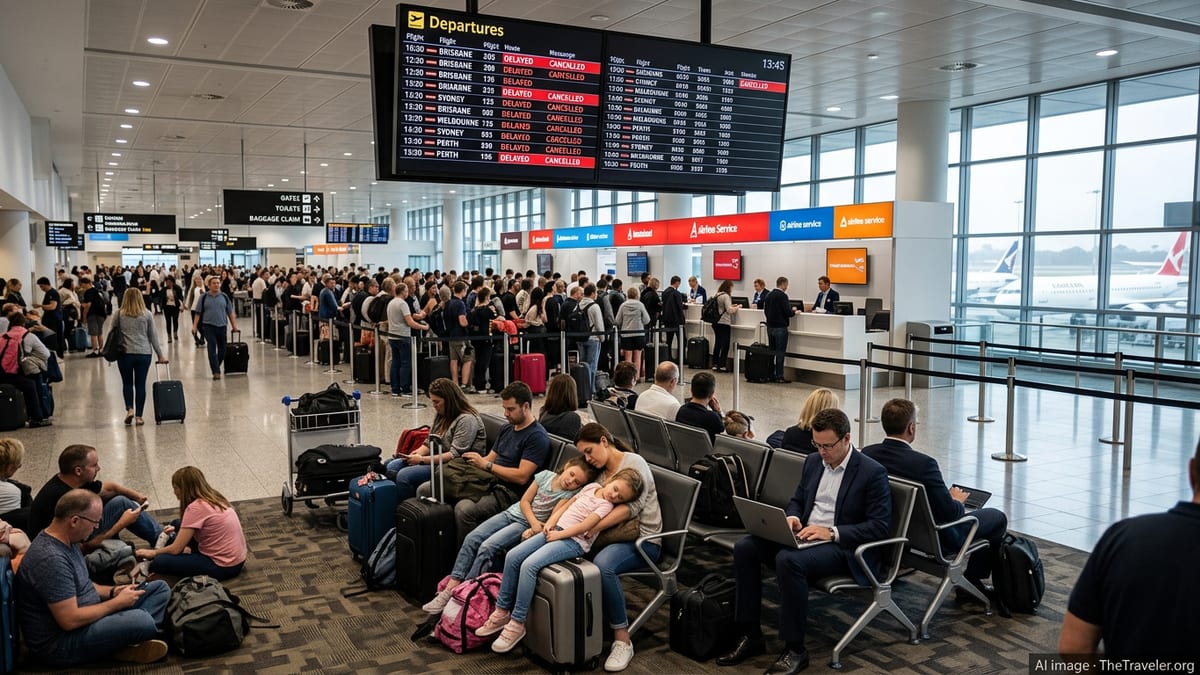
Nationwide Pattern of Disruption Emerges
Publicly available tracking data and airport boards indicate that delay totals across Australia have risen into the mid hundreds over several consecutive days, affecting Sydney, Melbourne, Brisbane, Perth and a broad mix of regional routes. The disruption has not been isolated to one carrier or airport, pointing instead to a system under sustained operational pressure.
The pattern has included late‑running morning services that cascade into the afternoon and evening schedule, reducing buffers that airlines normally rely on to recover from individual incidents. Passengers have reported missed connections across domestic and international networks, as even relatively short delays on busy trunk routes have knock‑on effects for onward flights.
While outright cancellations have remained lower than peak disruption episodes seen in recent years, the elevated volume of late departures and arrivals has left gates congested and crew rosters stretched. Travellers have increasingly described arriving at airports to find multiple flights showing delays of 30 to 90 minutes, even in periods of largely clear weather.
Industry observers note that this level of disruption, spread across more than four hundred services, amounts to one of the more significant system‑wide stress episodes since the sharp rebound in demand following the pandemic and more recent schedule changes linked to fuel costs and international conflicts.
Weather, Congested Hubs and Tight Schedules
Reports from aviation analytics providers and airport information screens point to a combination of short‑term and structural factors behind the surge in delays. Seasonal weather patterns, including low cloud and fog on the east coast, have periodically reduced runway capacity at Sydney and Brisbane, forcing holding patterns in the air and temporary ground stops that reverberate through the day’s schedule.
At the same time, Australia’s primary hubs continue to operate with limited spare capacity during peak periods. When even minor disruptions occur at Sydney or Melbourne, aircraft and crews are quickly thrown out of position for subsequent flights. This effect is especially pronounced on high‑frequency commuter and business routes, where turn‑around times are short and aircraft utilisation is high.
Published government data on on‑time performance over recent years has highlighted how small declines in punctuality at major hubs can translate into a sharp rise in late arrivals across the network. The current wave of delays appears to have followed this pattern, with congested morning banks of flights setting the tone for the rest of the operating day.
Analysts also point to complex international schedules, including long‑haul connections to Europe and Asia, which leave little margin for error. When wide‑body aircraft arrive late from overseas or depart behind schedule from Australian hubs, their delay can displace domestic aircraft from gates or disrupt crew connections, contributing to further hold‑ups.
Airlines Juggle Crews, Maintenance and Demand
According to recent airline updates and industry commentary, carriers are still working to balance strong passenger demand with crew availability, maintenance requirements and higher operating costs. Some major airlines have already trimmed or reshaped parts of their schedules this year to cope with sustained fuel prices and altered international routings, redistributing aircraft onto routes where demand is strongest.
However, these adjustments can leave domestic operations with leaner spare capacity. When aircraft are taken out of service for unplanned maintenance, or when crews reach duty‑time limits because of earlier delays, there are fewer backup options to keep later flights running on time. This has been evident during the latest disruption, as a number of services have incurred rolling delays while airlines sought replacement aircraft or crew.
Industry reporting also suggests that recruiting and training specialised staff, particularly pilots, engineers and air traffic controllers, remains a challenge across the region. Although the situation has stabilised compared with the immediate post‑pandemic period, the system remains vulnerable when several issues coincide, such as weather impacts, technical checks and busy holiday traffic.
Low‑cost and full‑service carriers alike are affected. Networks built around high utilisation of aircraft and tight turn‑arounds can be efficient in normal operations but become fragile when compounded disruptions occur. The most recent wave of more than four hundred delayed flights has underscored this vulnerability, particularly during school holidays and major events.
Regional Communities Feel the Strain
Regional airports and smaller communities have felt a disproportionate impact from the current disruption. With fewer daily services and limited competition on many routes, a single delay can translate into hours of additional waiting or even an unplanned overnight stay for passengers travelling to or from regional centres.
Accounts from travellers and community representatives describe situations where one late inbound aircraft has forced the rescheduling of an entire day’s flights at smaller airports. In areas dependent on fly‑in fly‑out workforces, tourism or medical travel, the knock‑on effects can be significant, disrupting mine rosters, tour departures and specialist appointments in capital cities.
Publicly available performance data has previously shown that regional routes often record higher variability in on‑time performance than major capital‑to‑capital services. The latest round of delays has reinforced long‑standing concerns in regional Australia about the resilience of air links and the lack of alternative transport options over long distances.
Travel advocates argue that when system‑wide disruption reaches the level of hundreds of delayed flights, regional passengers tend to have fewer rebooking choices and face longer recovery times, as spare seats on subsequent services are quickly taken by displaced travellers from city routes.
Pressure Builds for Transparency and Reform
The broad scale of recent delays has renewed debate about passenger rights, airline transparency and the robustness of Australia’s aviation policy settings. Legislative proposals already before the federal parliament seek to strengthen compensation arrangements for significant delays and cancellations, drawing on international models that provide automatic payments when disruptions are within an airline’s control.
Recent independent reports and government reviews have also examined airport slot management at Sydney, airline competition across domestic routes and the quality of public information about on‑time performance. The latest disruption involving more than four hundred delayed flights is likely to feed into these discussions, as policymakers weigh how to improve reliability while preserving competition and keeping fares affordable.
Consumer groups have called for clearer communication when delays occur, including more frequent updates at gates and more realistic schedule planning to reduce chronic late running on certain routes. There is also growing interest in the use of real‑time data to track performance and identify persistent problem points in the national network.
For now, travellers are being urged by travel advisers and airline notices to allow extra time for connections, consider earlier departures where possible and remain prepared for last‑minute changes. With aviation demand expected to remain strong through the coming months, the way airlines, airports and regulators respond to the latest wave of disruption will be closely watched by both industry and the travelling public.