


More news on this day
More than 2,600 flights have been delayed and at least 76 canceled across the United States in July, according to flight-tracking data, underscoring the fragility of the nation’s air travel network during the busy summer season.
Get the latest news straight to your inbox!
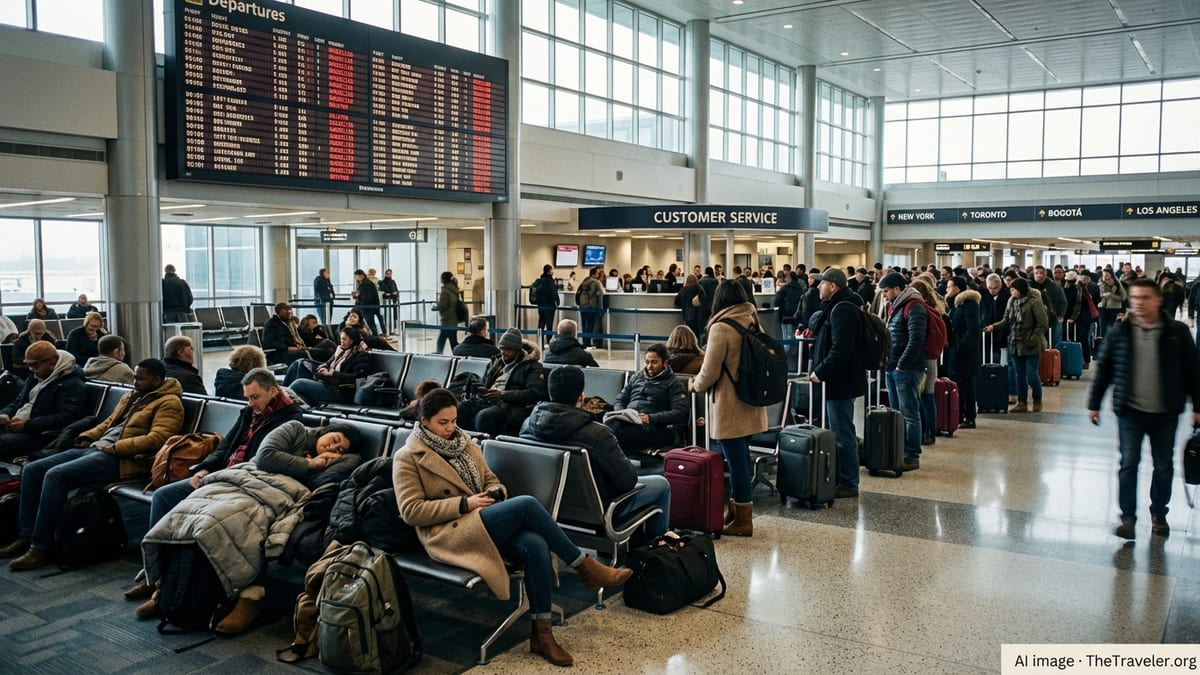
Fresh Wave of Disruptions in the Summer Rush
Publicly available tracking data indicate that U.S. airports have already seen over 2,600 delays and 76 cancellations in July, with numbers continuing to climb as the month progresses. While this represents a small fraction of overall scheduled flights, the disruptions are concentrated at certain hubs and peak travel periods, magnifying the impact on passengers.
The latest figures emerge during one of the busiest stretches of the year for domestic air travel, when summer holidays, family reunions, and major events push daily passenger volumes near or above pre-pandemic levels. Even modest operational hiccups can ripple quickly across the system, turning isolated issues into nationwide scheduling headaches.
Industry data show that delays far outnumber outright cancellations, suggesting airlines are often able to operate flights but struggle to keep them on schedule. For travelers, that can mean long hours in terminals, missed connections, and late-night arrivals rather than the more definitive outcome of a canceled itinerary.
Travelers have increasingly turned to real-time tools and apps to monitor disruption patterns by airport and airline, influencing decisions about departure times, connection choices, and whether to build in extra buffer days for important trips.
Weather, Congestion and Staffing Pressures Combine
Reports from aviation data providers and government statistics point to a familiar mix of causes behind July’s disruption tally. Thunderstorms and severe weather systems remain a dominant factor in summer, forcing ground stops, reroutes, and extended taxi times at major hubs across the East Coast, Midwest, and South.
Weather-related slowdowns are often compounded by congestion in already busy airspace. When storms force aircraft to deviate from typical routes or to hold before landing, even airports not directly affected by bad weather can experience knock-on delays. This can quickly clog departure queues and contribute to missed slots for subsequent flights.
Staffing and operational capacity are also in focus. Airlines and air traffic control facilities have rebuilt much of their workforce since the sharp downturn in 2020, but many remain sensitive to unexpected sick calls, training bottlenecks, and equipment outages. When schedules are tightly packed to meet high demand, even localized staffing shortages can result in longer-than-usual delays.
Industry analysts note that while airlines have trimmed some of the most aggressive schedules and added more buffer time compared with earlier summers, the system continues to operate close to its limits during peak travel days. That leaves less room to recover quickly when multiple issues hit at once.
How July’s Numbers Compare with Previous Years
Government transportation data and historical flight-tracking records show that summer remains the most disruption-prone season for U.S. air travel. July typically ranks among the top months for delays, driven by a combination of convective weather, heavy leisure travel, and tight aircraft utilization.
Recent years have seen particularly volatile performance as carriers adjusted from historically low traffic during the early pandemic period back to crowded skies. While the number of cancellations in July so far is well below the worst spikes recorded during major storms or national system outages, the volume of delays remains elevated compared with typical off-peak months.
Transportation statistics also illustrate how delays can be clustered by airport and region. Some hubs repeatedly appear near the top of monthly rankings for average delay times in July, reflecting exposure to storm tracks, runway constraints, or complex airspace. Passengers connecting through these airports are more likely to experience schedule disruptions even if conditions at their origin and destination appear calm.
Aviation analysts caution that month-to-month comparisons can be skewed by a few major events, such as a multi-day weather system or a widespread technology failure. Still, the emerging July pattern fits with a broader trend of summer travel operating near capacity, leaving little margin when events occur.
Impact on Travelers and What Passengers Can Do
For travelers, the practical result of more than 2,600 delayed flights is a patchwork of missed family gatherings, postponed business meetings, and extended airport stays. Even when flights ultimately depart, late departures can lead to tight or missed connections, particularly at large hub airports where banks of flights are scheduled within narrow time windows.
Consumer advocacy organizations have urged travelers to build extra flexibility into itineraries when possible. This can include choosing earlier departures to allow for downstream delays, avoiding very tight connections, and considering nonstop options where available to reduce exposure to hub disruptions. Travelers with time-sensitive events have also been encouraged to arrive a day early rather than relying on same-day arrival.
Many airlines now provide more granular delay updates through apps and text alerts, allowing passengers to adjust plans in real time. Nonetheless, reports suggest that communication quality still varies widely among carriers and routes. Passengers are advised to monitor both airline channels and independent flight-tracking platforms for the most complete picture of evolving conditions.
Experts also recommend that travelers understand their basic rights in the event of cancellations or severe delays, including rebooking policies, meal vouchers, and overnight accommodation practices. These can differ significantly by airline and by the cause of the disruption.
Outlook for the Remainder of July
With several of the busiest summer travel weekends still ahead, operational data suggest that the potential for further delays and scattered cancellations remains high. Seasonal storm patterns are expected to persist, and airlines have limited scope to add spare capacity on short notice.
Industry observers will be watching whether carriers can maintain more stable performance during the back half of the month or whether cumulative disruptions will grow. Factors such as crew positioning, aircraft maintenance schedules, and air traffic staffing will shape how resilient the system proves during upcoming peak days.
Travel planners indicate that demand for domestic flights remains strong through the end of July and into early August, leaving little sign that passenger volumes will ease the pressure on the network. Popular leisure routes to coastal, mountain, and theme-park destinations are likely to remain heavily booked.
For now, the reported tally of more than 2,600 delays and 76 cancellations serves as a snapshot of a system under strain but still moving millions of passengers each day. How airlines and infrastructure manage the remaining weeks of the season will help determine whether this July is remembered as a routine summer challenge or part of a longer pattern of travel turbulence.