


More news on this day
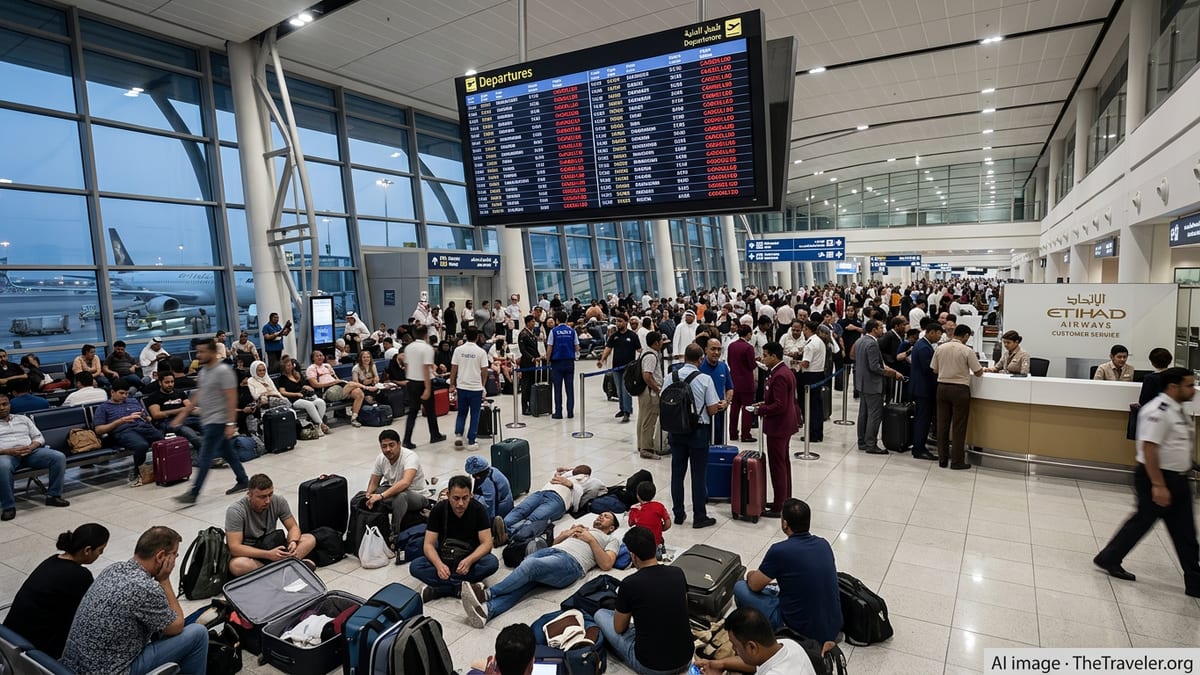
Air travel across the United Arab Emirates experienced a new wave of disruption as more than 400 flight delays and 32 cancellations were recorded at the country’s major airports, complicating journeys through one of the world’s busiest aviation hubs.
Get the latest news straight to your inbox!
Heavy Operational Strain at Major UAE Hubs
The latest disruption has primarily affected Dubai International, Abu Dhabi International and Sharjah International airports, all of which serve as key transit points between Asia, Europe and Africa. Publicly available flight-tracking data indicates that more than 400 services were delayed, with delays ranging in many cases from one to several hours, while 32 flights were cancelled outright.
The uneven pattern of disruption has led to crowded departure halls and extended queues at check in, security and transfer desks. Passengers with tight connections have been particularly exposed, as missed onward flights have forced last-minute rebookings and overnight stays. Airport operators have continued to run their terminals but with reduced punctuality and more complex aircraft rotations.
The disruption follows a period in which UAE aviation has already been managing heightened regional volatility and irregular airspace availability. While overall flight volumes have been recovering, the latest round of delays and cancellations underlines how quickly schedules can unravel when regional traffic flows need to be adjusted.
Despite the scale of the disruption, core airport infrastructure has remained intact, with runways, terminals and ground transport links operating. The primary challenges have been schedule stability, aircraft positioning and crew availability, rather than physical damage to facilities.
Regional Tensions and Airspace Rerouting
A combination of regional security concerns and precautionary measures has contributed to the latest wave of flight disruption. Published coverage on Middle East operations shows that sporadic airspace restrictions and rerouted corridors have forced airlines to fly longer, less direct paths, adding pressure to already busy schedules and leaving less margin for recovery when delays occur.
Airlines serving the UAE have adjusted routings to avoid affected overflight zones when required, which in turn has increased flight times and fuel consumption. Longer routings can cascade across a daily schedule, turning minor delays into missed slots, late arrivals and ultimately cancellations when crew duty limits are reached.
Travel advisories issued by several governments in recent months have warned that passengers flying to and from the Gulf region should be prepared for sudden schedule changes, intermittent airspace closures and rolling operational adjustments. The latest data on delays and cancellations at UAE airports appears consistent with this broader pattern of volatility, even as overall air traffic remains high.
Industry analysts note that hub airports such as Dubai and Abu Dhabi are particularly sensitive to regional airspace shifts, because a large share of their passengers are connecting between long-haul flights. Any restrictions that lengthen flight times or alter arrival waves can disrupt the carefully balanced connection banks on which hub models rely.
Impact on Passengers and Airline Responses
For travelers, the immediate impact of more than 400 delays and 32 cancellations has been longer journey times, congested boarding areas and, in some cases, unexpected overnight stays. Passengers connecting through the UAE from Europe, Asia and Australasia have reported extended layovers and the need to rebook onward services when minimum connection times could not be met.
Publicly available airline guidance for the current disruption period suggests that affected customers are being offered itinerary changes at no additional fare, as well as refunds for flights that are cancelled or significantly delayed. Some carriers have issued travel-flexibility policies for departures over specific date ranges, allowing passengers to shift their trips to later dates without penalty.
Airport and airline information channels, including mobile apps and social media feeds, have become central tools for passengers trying to navigate the situation. Travelers are being advised in published guidance to check flight status frequently, arrive at the airport early and keep boarding passes and receipts for any out-of-pocket expenses in case they are eligible for reimbursement.
The disruption has also highlighted the differing legal regimes that apply to passenger compensation, depending on the airline and the departure or arrival point. Routes touching the European Union or United Kingdom may fall under their respective passenger-rights frameworks, while other services are governed by airline-specific contracts and local regulations.
Recovery Efforts and Capacity Constraints
Recent statements and operational updates from UAE-based carriers show a broad effort to restore networks to near-normal levels after months of regional disruption. Large Gulf airlines have been steadily rebuilding frequencies and destinations, but the latest spike in delays and cancellations demonstrates that recovery remains vulnerable to external shocks.
Airline scheduling teams are working with tighter buffers in an attempt to balance efficiency with resilience. However, high aircraft utilization and strong demand, particularly during peak travel periods, leave limited room to absorb irregular operations. When multiple flights encounter route changes or arrival restrictions on the same day, spare aircraft and crew can quickly be exhausted.
Industry observers suggest that adding more slack into schedules, deploying additional reserve crews and coordinating more closely with regional air navigation providers could help lessen the impact of future disruptions. At the same time, these measures can increase operating costs and reduce capacity on some routes, which complicates decisions for airlines that are also under pressure to maintain competitive fares.
Airport operators in the UAE are continuing infrastructure investments aimed at improving passenger throughput and easing congestion during disruption events. Measures include more automated border and security processing, expanded transfer facilities and enhanced baggage-handling systems intended to reduce misconnections when flights run late.
What Travelers Should Do Now
For travelers with imminent plans to fly into or out of the UAE, current travel advice from multiple governments and aviation bodies emphasizes preparedness and flexibility. Passengers are encouraged to monitor airline communications closely in the 24 to 48 hours before departure, and to allow extra time at the airport in case check in or security processing is slower than usual.
Those with same-day connections through Dubai, Abu Dhabi or other UAE airports may wish to consider lengthening their planned layovers where possible, particularly on itineraries that cross multiple regions and rely on precise connection times. Travel experts note that slightly longer transfers can provide a useful buffer when upstream flights are subject to rerouting or rolling delays.
Travel insurance policies that include disruption coverage can also play an important role, especially for passengers booking complex itineraries or long-haul trips with multiple connections. Policy terms vary widely, so travelers are advised in public guidance to review their coverage details for provisions on cancellations, missed connections and accommodation costs.
While the latest figures on delays and cancellations underline the fragility of regional schedules, they do not indicate a full-scale shutdown of UAE air travel. Flights continue to operate in large numbers each day, and industry expectations point to a gradual normalization of operations once airspace conditions stabilize and airlines complete short-term schedule adjustments.