


More news on this day
Boston Logan International Airport is grappling with the aftermath of widespread air traffic disruptions centered on the New York City region, with publicly available data showing hundreds of delays and dozens of cancellations after a major communications failure triggered ground stops across key Northeast airports.
Get the latest news straight to your inbox!
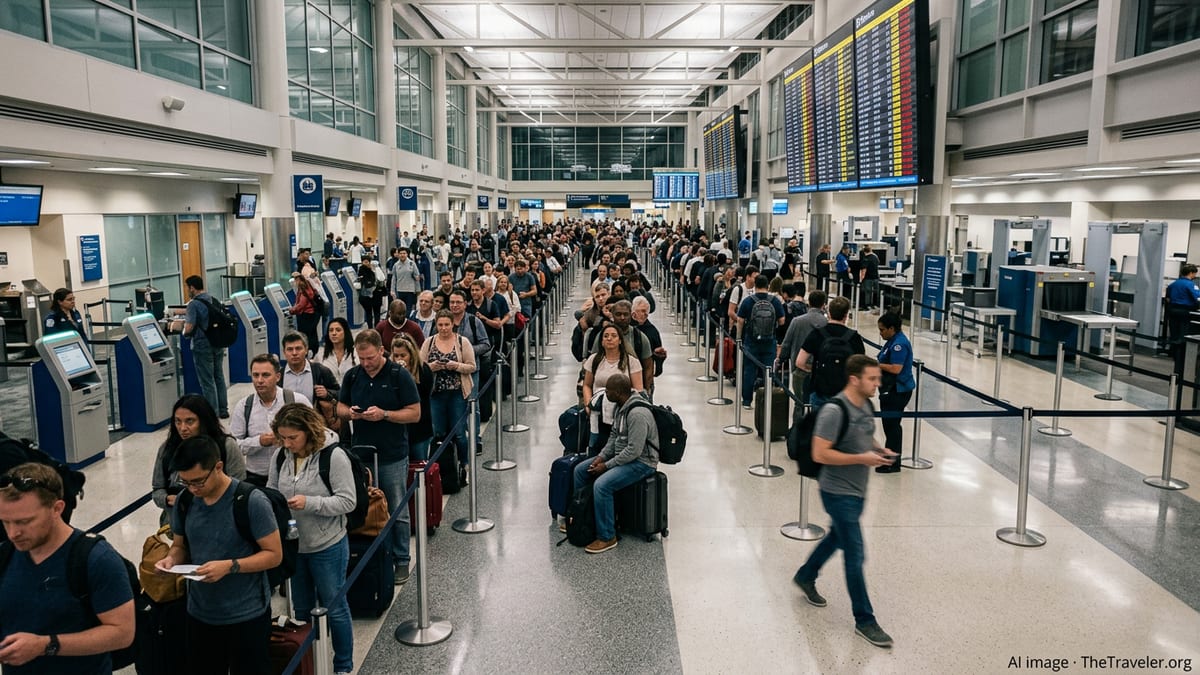
New York airspace outage ripples into Boston
Published coverage from September 21 and 22 indicates that a damaged fiber-optic line in New Jersey disrupted communications at a key air traffic facility responsible for managing traffic in the New York and Philadelphia airspace complex. The problem led to extensive ground stops and flow restrictions at major New York City area airports, including Newark Liberty International, John F. Kennedy International, and LaGuardia, as well as Philadelphia International.
Data compiled by national flight-tracking services and regional news outlets show that the outage forced hundreds of cancellations and delays at those airports on Monday, bringing operations at Newark in particular close to a standstill for much of the day. As those hubs struggled to recover, knock-on effects spread rapidly along one of the country’s busiest air corridors, where aircraft and crew schedules are tightly interlinked.
Because many of Boston Logan’s departures and arrivals are tied to aircraft cycling through New York, Philadelphia, or connecting hubs further south and west, disruptions in the New York region quickly translated into delays in Massachusetts. Flights scheduled to operate from Boston were often held at their origin or forced into long diversion routes, leaving gaps in the schedule even when conditions over Boston itself initially appeared manageable.
Hundreds of delays and cancellations at Logan
Publicly available statistics for Monday, September 21, indicate that Boston Logan recorded more than 480 delayed flights and in excess of 70 cancellations as the New York ground stops and related traffic management initiatives took hold. Flight-tracking platforms listed hundreds of additional delays into Tuesday, September 22, as airlines worked through displaced aircraft and crew.
Local broadcast coverage on Tuesday morning reported that departure boards at Logan still showed long lines of delayed flights, although the rate of outright cancellations had eased compared with the peak of the disruption. Flight data for that period highlighted that delays were affecting both short-haul shuttle routes in the Northeast and longer domestic and transcontinental services, reflecting how widely aircraft rotations had been interrupted.
Information available through Federal Aviation Administration airport-status tools indicated that Logan was placed under a formal ground delay program while the New York airspace remained constrained. Under such a program, which the FAA describes in its public glossaries, flights destined for the affected airport or airspace are assigned specific departure slots, spacing traffic out over time to manage limited capacity.
Runway construction and weather compound the impact
The extent of the disruption at Boston also reflects local operating conditions. Information released by airport operator Massport and referenced in aviation-focused reporting notes that a key Logan runway is closed for approximately 75 days of construction work through mid-November 2026. The project includes safety-focused upgrades such as installation of an engineered material arresting system at one end of the runway.
Because that runway intersects with several others and is normally used heavily, its temporary closure reduces Logan’s overall capacity and makes the airport more sensitive to surges in demand or regional constraints. When New York traffic resumed after ground stops were lifted, waves of inbound flights and rescheduled departures had to be accommodated using fewer available runways, increasing the odds of congestion.
FAA status updates for Logan late on September 22 cited construction-related impacts, with gate-hold and taxi-out delays reported in the range of roughly half an hour or more as traffic volumes built. Some of Monday’s disruption also coincided with weather-related flow restrictions, further tightening the margin for handling diverted aircraft and late-arriving flights from the New York region.
What travelers experienced on the ground
Passengers moving through Logan on Monday and Tuesday encountered long lines at check-in and security, crowded gate areas, and departure boards dominated by yellow and red delay indicators. Regional coverage and first-hand accounts shared on public forums described waits stretching to several hours for some departures, along with a growing number of flights that shifted from delayed to canceled as crew duty-time limits were reached.
Short-haul routes linking Boston with New York and other Northeast cities were particularly vulnerable. When ground stops in the New York area prevented aircraft from departing toward Boston, the knock-on effect often left no plane in position to operate the next Boston-originating sector. Even once the technical issues were addressed, the process of rebalancing fleets and crews across multiple hubs extended well into the following day.
Travelers with onward connections were among those most affected, as missed links cascaded into rebookings and overnight stays. Airlines operating at Logan responded by waiving certain change fees for affected dates and encouraging passengers to use mobile apps or websites to alter itineraries, according to publicly posted advisories. However, with load factors already high during the late-September travel period, alternative seats on the same day were limited on some routes.
Ongoing recovery and what flyers should do next
By the morning of Tuesday, September 22, FAA tools and flight-tracking platforms showed a gradual return toward more typical operations at Logan, with many flights operating close to schedule and general departure delays listed at around 15 minutes or less for parts of the day. Even so, residual delays continued in some banks as airlines repositioned aircraft and crews and accommodated passengers from earlier cancellations.
Publicly available information from the airport and carriers suggests that travelers scheduled to fly through Logan over the next several days should continue to monitor flight status closely. Airlines are advising passengers to check for updates before leaving for the airport and to allow extra time at the terminal in case of renewed congestion during peak periods.
The incident also serves as a reminder of how interconnected the Northeast aviation system has become. When a central node such as the New York airspace complex encounters a technical problem and goes into a ground stop, the effects can reach airports hundreds of miles away, including Boston. With runway construction still limiting capacity at Logan and autumn weather systems approaching, aviation planners and travelers alike are likely to keep a close eye on official status updates as the region works to maintain more stable operations.