


More news on this day
Air travelers using Washington’s three major airports could soon see fewer long waits on tarmacs and in departure lounges, as federal aviation officials begin introducing a new artificial intelligence based traffic management system designed to predict and prevent delays before they cascade across the region.
Get the latest news straight to your inbox!
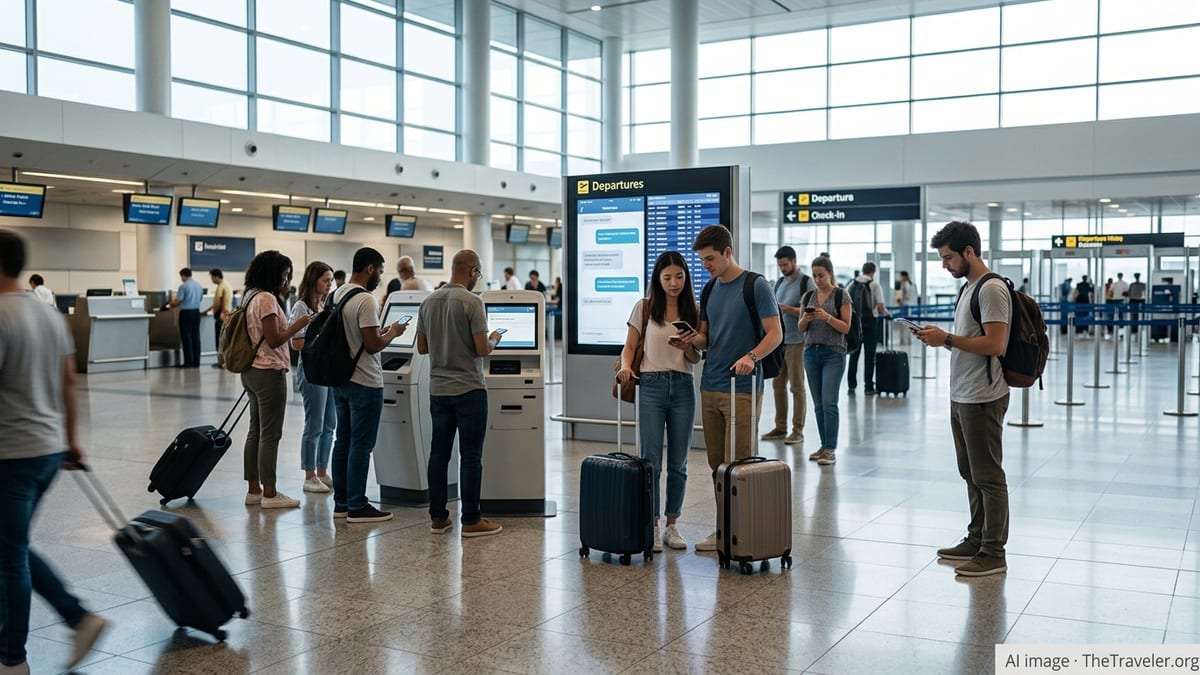
AI Comes to One of the Nation’s Busiest Air Corridors
The Washington region’s airspace is among the most complex in the United States, with Ronald Reagan Washington National, Washington Dulles International, and Baltimore/Washington International Thurgood Marshall airports funnelling millions of passengers through a relatively tight corridor controlled by the Washington Air Route Traffic Control Center in Leesburg, Virginia. Publicly available operational data shows that the center handled more than 2.4 million aircraft movements in 2024, connecting the capital region with major hubs across the country.
Recent federal aviation reports describe rising congestion and a growing share of departures delayed 15 minutes or more at the country’s busiest airports, including those serving the capital region. That backdrop has accelerated efforts to bring more automation and predictive tools into air traffic management, building on a decade of research by NASA and the Federal Aviation Administration into smarter scheduling and surface movement systems.
According to published government research plans, artificial intelligence and machine learning are now being embedded in new flow management tools that analyze demand and capacity across the National Airspace System. The Washington area has emerged as an early test bed for these technologies, reflecting both its operational importance and its history as a focus of the FAA’s metroplex modernization program.
Early indications on aviation forums and in industry discussions suggest that the new system will work alongside, rather than replace, existing controller tools. It is expected to provide recommendations on how many flights can depart or arrive in given time windows when storms, runway closures, or other constraints threaten to disrupt published schedules.
How the New AI System Is Expected to Work
Documentation associated with the FAA’s modernization efforts describes an AI enabled application that continuously scans airline schedules, real time weather feeds, airport capacity figures, and airspace constraints to generate forecasts of traffic flows hours in advance. Instead of reacting once delays have already formed, the software is designed to highlight overloads on specific routes or at particular times so that controllers and traffic managers can adjust departure rates earlier.
Research material from NASA’s Airspace Technology Demonstration initiatives outlines how similar tools create an integrated picture of arrivals, departures, and aircraft taxiing on the surface. By combining those streams into a single predictive timeline, algorithms can suggest the best exact moment for an aircraft to push back from the gate so that it reaches the runway just in time for a takeoff slot in the overhead stream.
In practice, that could mean that on a summer afternoon when thunderstorms are forecast along the East Coast, the system identifies periods when arrival demand into the Washington area would far exceed safe handling rates. It could then recommend capping departures from distant origins, spacing arrivals more evenly, and re-routing certain flights through less congested sectors long before weather cells fully develop.
Publicly released FAA research plans also reference the use of artificial intelligence to support strategic flow management at the national level. For travelers in and out of Washington, that may translate into more targeted ground delays for specific flights, but fewer broad ground stops that ripple across all three metro airports at once when traffic control facilities are stressed.
Building on a Decade of NASA and FAA Research
The new Washington area deployment does not start from scratch. Over the past decade, NASA’s Airspace Technology Demonstration 2 project has worked with the FAA and selected airports to refine integrated arrival, departure, and surface tools. Demonstrations at major hubs such as Charlotte Douglas International Airport, along with metroplex field trials that included facilities connected to Washington Center, have already shown measurable reductions in taxi times, fuel burn, and pushback delays.
Technology transfer summaries from NASA state that those tools were handed over to the FAA for nationwide implementation as part of its Terminal Flight Data Manager and other NextGen programs. The latest step involves layering more advanced prediction techniques, including modern machine learning models, on top of that foundation and tailoring them to busy multi airport regions.
Planning documents for the FAA’s National Aviation Research Plan for 2024 through 2028 specifically call out new traffic flow management applications that use AI to reduce reroutes, delays, and environmental impacts. The Washington region, which sits on key north south and east west corridors, fits the profile for early operational testing because even minor efficiency gains there can relieve pressure across the broader system.
Aviation researchers note that metroplex environments like Washington’s, where several major airports share overlapping approach and departure paths, stand to benefit the most from sophisticated scheduling. AI supported systems can account for dependencies between airports, suggesting, for example, a small slowdown at one field in order to prevent large airborne holding patterns building up at another.
What DC Area Travelers Might Notice
The rollout of AI supported traffic management in the Washington area is expected to be gradual, with the system initially running in advisory mode. In that phase, controllers and traffic managers can compare the software’s recommendations with existing practices, accept or reject suggestions, and flag edge cases where additional tuning is needed.
For passengers, the changes may first show up as more precise departure times and fewer extended waits after boarding. If the AI tool advises keeping an aircraft at the gate for 20 extra minutes so that it can depart directly into a usable arrival slot at its destination, airlines may hold boarding slightly longer instead of pushing back on time only to sit in a lengthy taxi queue.
On days of severe weather, some travelers could see more preemptive schedule adjustments, with flights canceled or retimed earlier based on the system’s projections. While that can be frustrating in the short term, aviation planners argue in public documents that targeted, earlier interventions are preferable to widespread last minute delays that strand aircraft and crews out of position for days.
The Washington metro airports also serve a large population of connecting passengers, and airline network planners are watching closely to see whether improved predictability at Dulles, National, and Baltimore/Washington can reduce missed connections. Research cited by NASA indicates that more accurate gate to runway timing can help carriers trim extra padding from schedules without increasing the risk of misconnecting travelers.
Questions Around Transparency and Long Term Impact
As with many new AI deployments in transportation, the Washington trial raises questions about transparency and accountability. Public discussions in aviation and local online communities show interest in how the algorithms make tradeoffs between maximizing throughput, reducing fuel burn, and minimizing individual delay minutes, and whether those priorities are reviewed as conditions change.
Industry experts emphasize in published commentary that the new tools act as decision support rather than automated control. Human air traffic controllers remain responsible for final clearances, separation standards, and safety related decisions, with the AI system providing forecasts and ranked options rather than binding instructions.
Federal planning documents point to longer term goals that extend beyond delay reduction, including lower emissions from reduced taxi and holding times, better integration of new entrants such as drones, and greater resilience when technical outages affect key facilities. The Washington region, which has experienced several high profile disruptions linked to automation issues and evacuations at traffic control centers in recent years, is seen as a critical proving ground for these resilience goals.
The coming months are likely to bring more detailed public briefings and technical updates as the system moves from test mode toward routine use. For travelers watching departure boards at the region’s airports, the most important measure will be whether the new technology quietly delivers on its promise of fewer surprise delays and smoother journeys through one of the nation’s busiest and most politically significant air corridors.