


More news on this day
Travelers flying to and from France on Thursday faced widespread disruption, as data from flight-tracking and passenger-rights platforms indicated around 549 delayed services and 12 outright cancellations affecting departures from Paris, Nice, Marseille, Lyon and other airports.
Get the latest news straight to your inbox!
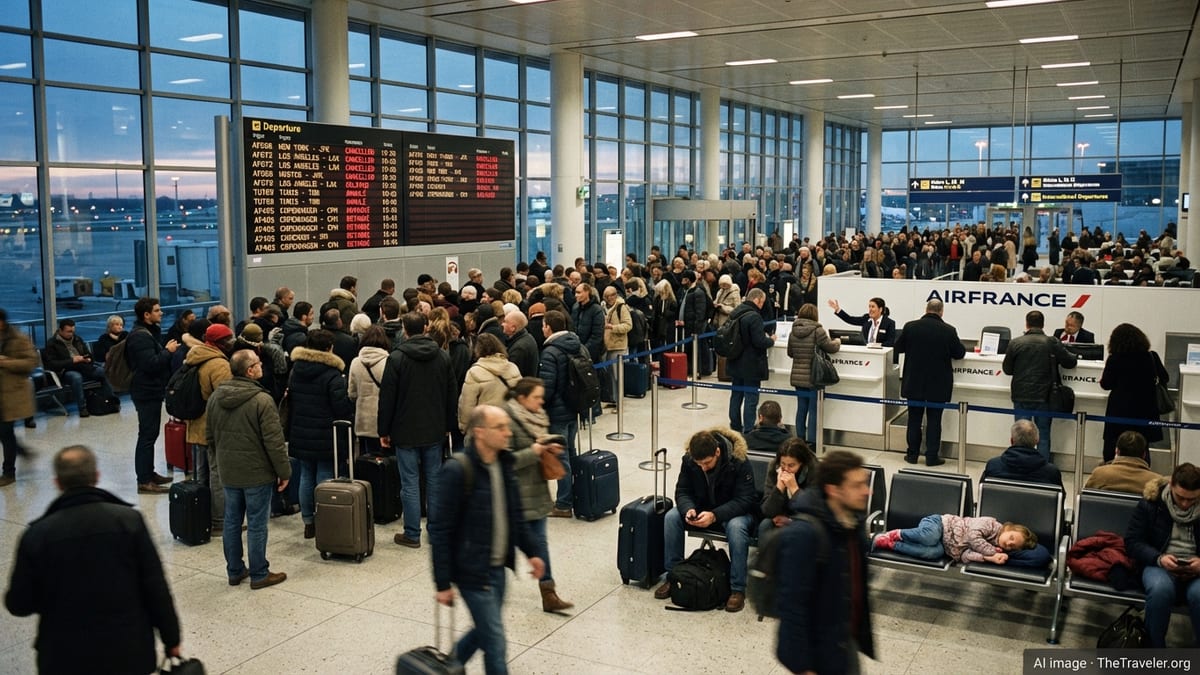
Delays Mount Across Major French Airports
The disruption stretched across France’s busiest hubs, with Paris Charles de Gaulle and Paris Orly experiencing dense clusters of delayed departures in the morning and early afternoon. Publicly available airport boards showed punctuality deteriorating as peak traffic built up, with short haul European services among the hardest hit.
In the south, Nice Côte d’Azur and Marseille Provence also reported mounting delays, particularly on popular links to Paris and other major cities. Lyon Saint Exupéry, which local coverage recently ranked among the French airports with the highest levels of tardy departures, again appeared prominently in delay tallies, underscoring the pressure on France’s regional hubs this season.
While long haul flights were not immune, the majority of affected services were intra European routes where tight turnaround times leave little margin when congestion or staffing constraints arise. The latest figures illustrate how quickly disruption can cascade across the network once punctuality begins to slip at key connecting airports.
Flag Carriers and Low Cost Giants Equally Affected
The pattern of disruption cut across business models, with both traditional network airlines and low cost groups heavily represented in delay and cancellation data. Air France registered one of the largest clusters of late-running services, in keeping with recent monitoring that has highlighted frequent delays on some domestic and regional routes linking Paris with cities such as Marseille, Nice and Lyon.
Ryanair and EasyJet, two of Europe’s biggest budget operators, also featured prominently in lists of disrupted flights touching French airspace. Passenger-rights trackers pointed to a series of late departures and schedule adjustments for their services connecting France with the United Kingdom and other European destinations, echoing earlier advisories that these carriers were exposed to recent operational constraints.
Lufthansa and British Airways were likewise named among airlines with delayed or cancelled flights involving French airports, reflecting the central role of Paris and regional French gateways in wider European networks. Though the absolute number of cancellations remained limited compared with total daily traffic, the knock on effects for missed connections and rebookings were significant for many travelers.
Underlying Pressures: Staffing, Strikes and Summer Demand
The spike in same day disruption comes against a backdrop of wider operational strain in European aviation. Recent industry and regulatory reports have charted rising traffic levels across the continent as airlines rebuild schedules for summer 2026, while warning that air traffic control capacity and airport staffing have not always kept pace. Earlier analyses of French operations have shown that industrial action and tight staffing can translate rapidly into air traffic flow management delays and crowded departure banks.
Separate planning documents on French air traffic control highlighted the risk of multi day work stoppages and capacity restrictions in the coming months, particularly during busy holiday periods. Even when no formal strike is in progress, air navigation and ground handling systems can remain stretched, especially at hub airports with complex runway and terminal operations such as Charles de Gaulle.
Carriers are also still adjusting their networks after earlier capacity cuts and fuel driven schedule changes. Lufthansa, for example, has already confirmed structural reductions on several European routes, including links to French cities, for the early summer period. Similar program adjustments by other groups have left less slack in timetables, so isolated delays can ripple more quickly through daily rotations.
Passenger Rights and What Travelers Can Expect
For stranded passengers, the practical question is what kind of assistance and compensation may be available. Consumer advocates and legal resources underline that flights departing from France or operated by European Union carriers generally fall under EU passenger protection rules, which set out entitlements to care, rerouting or refunds during significant disruption.
Specialist compensation services note that when delays or cancellations stem from structural airline or scheduling issues, affected customers may be eligible for fixed sum payments if arrival is pushed back beyond certain thresholds and the cause is considered within the carrier’s control. However, when air traffic control restrictions, severe weather or third party strikes are the primary cause, cash compensation is often not granted, even though airlines are still expected to offer meals, refreshments and onward travel solutions.
With delays now a recurring feature of peak travel days in France, passenger-rights organisations encourage travelers to document actual departure and arrival times, keep boarding passes and booking confirmations, and submit formal claims where appropriate. Publicly available case studies indicate that many travelers do eventually obtain refunds or compensation, but often only after following up repeatedly or using dedicated claims channels.
Advice for Travelers Heading Through France
Travel experts recommend building additional time into itineraries involving French hubs while the current pattern of disruption persists. For those connecting onward to long haul flights or cruises, routing a night in Paris or another gateway city rather than a tight same day transfer can reduce the risk of expensive missed departures when delays stack up.
On busy domestic and regional routes, travelers may want to monitor both air and rail options, particularly between Paris and cities such as Lyon, Marseille and Nice. While trains can also face disruption, advance bookings on high speed services may provide a useful back up when short haul flights are experiencing repeated schedule changes.
Finally, industry briefings suggest that choosing early morning departures where possible can slightly improve the odds of an on time journey, since aircraft and crew are more likely to be in position before the day’s operational challenges accumulate. As today’s wave of 549 delays and 12 cancellations shows, once bottlenecks emerge at French airports, the impact can be felt well beyond national borders and across a wide range of airlines.