


More news on this day
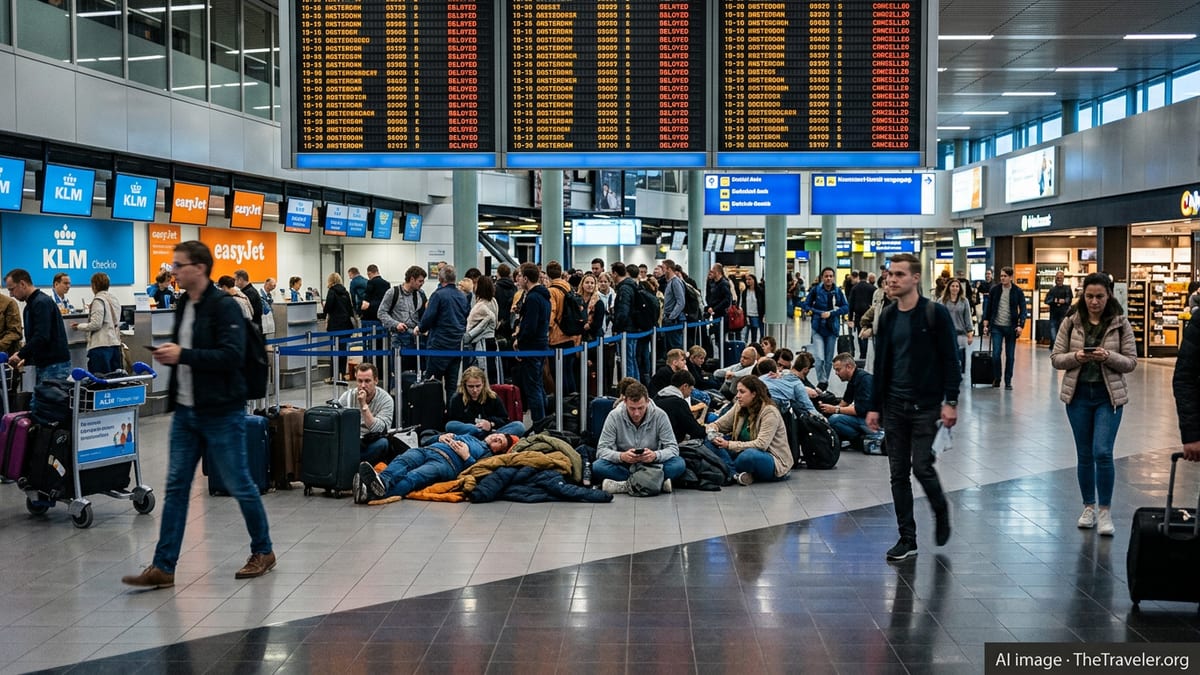
Hundreds of travelers were left stranded at Amsterdam Schiphol Airport as widespread disruption led to 352 delayed flights and 26 cancellations, snarling operations for carriers including KLM, Delta Air Lines, easyJet, British Airways, Lufthansa, Emirates, and several other major airlines across both European and long haul routes.
Get the latest news straight to your inbox!
Major Hub Sees Another Day of Severe Operational Disruption
Publicly available flight tracking data for Amsterdam Schiphol on the affected day indicate an intense wave of irregular operations, with 352 flights delayed and 26 canceled across arrivals and departures. The figures place Schiphol among Europe’s most heavily disrupted hubs in recent weeks, echoing broader patterns of instability across the continent’s aviation network.
The disruption affected a mix of short haul and long haul services, touching routes across Europe, North America, the Middle East, and Asia. Passengers connecting through Amsterdam reported missed onward flights and extensive time spent in terminals as aircraft waited for departure slots or inbound planes were rerouted and rescheduled.
Schiphol has faced repeated strain in 2026 from a combination of seasonal storms, intermittent air traffic control constraints, and tight aircraft and crew availability. Recent coverage of Europe wide delays has highlighted how even short periods of constrained capacity at one major hub can trigger cascading knock on effects at neighboring airports and along interconnected route networks.
Flag Carriers, Low Cost Airlines, and Gulf Operators All Hit
The disruption at Schiphol rippled across a broad range of airlines. KLM, the dominant carrier at the airport, bore a significant share of the impact, with multiple departures and arrivals operating well behind schedule and a subset removed from the timetable entirely. Published accounts in recent weeks have already described KLM adjusting schedules and canceling sectors at Amsterdam in response to operational bottlenecks and earlier weather related disruptions.
Delta Air Lines, which links Amsterdam to major hubs in the United States, also experienced knock on delays as late inbound aircraft from North America compressed ground times and pushed subsequent departures beyond their planned slots. For transatlantic travelers, even modest delays at Schiphol can translate into missed connections onward to other European cities or long waits for rebooking.
Low cost carrier easyJet, along with British Airways and Lufthansa, saw services into and out of Amsterdam affected as part of a wider web of European disruptions. In recent weeks, reports have documented how a combination of staff availability issues and localized industrial actions in parts of Europe have limited the ability of airlines to absorb schedule shocks, leaving little margin when weather or traffic flow restrictions arise.
Long haul operators such as Emirates, which connects Amsterdam to the Middle East and onward Asia Pacific destinations, were also drawn into the disruption as aircraft rotations tightened. When hub and spoke carriers experience delays at one end of a long haul sector, it can affect several subsequent legs, intensifying the impact for passengers far beyond the original departure point.
Passengers Face Long Queues, Overnight Stays, and Missed Connections
For travelers at Schiphol, the operational statistics translated into crowded departure halls, long queues at customer service desks, and extended waits for updated information on revised departure times. Social media posts and traveler accounts referenced hours spent in terminal seating areas and gate zones as airlines worked through rebooking backlogs and crew scheduling challenges.
With 26 flights canceled outright, many passengers required re accommodation on later departures or alternative routings via other European hubs including London, Paris, and Frankfurt. In cases where same day options were unavailable, travelers reported overnight stays in airport hotels or nearby accommodations, adding unplanned costs and time to their journeys.
Recent guidance cited in passenger rights discussions has emphasized that compensation and care entitlements can vary according to the cause of disruption, whether it stems from adverse weather, air traffic restrictions, or airline controlled operational issues. For many travelers, however, the immediate priority remained securing a confirmed seat out of Amsterdam, even if that meant reaching final destinations many hours or a full day later than planned.
The situation at Schiphol also underscored the vulnerability of tight connection windows at large hubs. Passengers arriving from long haul sectors with only short scheduled layovers found themselves particularly exposed when inbound delays compressed or erased the time needed to clear security checkpoints and reach onward gates.
Part of a Broader Pattern of European Travel Volatility in 2026
The latest disruption at Amsterdam Schiphol is not an isolated event. Over recent months, flight data and industry analysis have pointed to repeated clusters of delays and cancellations across major European hubs, including Paris, London, Frankfurt, and Oslo. Episodes of air traffic control restrictions, localized strikes, and capacity reductions have combined with volatile weather to overwhelm operational buffers.
Reports covering Europe wide disruption in June 2026 have described days where more than a thousand flights were delayed and dozens canceled across the continent, leaving passengers stranded at multiple hubs simultaneously. Amsterdam has repeatedly featured in those tallies, reflecting its role as a central transfer point for intra European and intercontinental travel.
Experts cited in broader aviation commentary note that the post pandemic ramp up in passenger demand has stretched resources at some airports, particularly where staff shortages or infrastructure limitations remain. In such an environment, even relatively short lived weather systems or traffic flow restrictions can produce long lasting schedule knock on effects, as seen again in the latest Schiphol disruption.
Travel analysts also point to the interconnected nature of airline alliances and codeshare agreements. When a hub like Amsterdam encounters heavy disruption, the impact is magnified through shared operations with partner airlines based in other countries. This helps explain why travelers on carriers based far from the Netherlands can still experience delays and cancellations rooted in Schiphol’s operational challenges.
Advice for Travelers Connecting Through Amsterdam in Coming Weeks
In light of repeated disruptions at major European hubs this year, travel industry guidance increasingly emphasizes preparation and flexibility for passengers planning to connect through Amsterdam. Publicly available advisories suggest that travelers build in longer layovers where possible, particularly when connecting between long haul and short haul flights or when traveling during periods of forecast adverse weather.
Passengers are also encouraged to monitor their flight status through airline apps and official airport information channels rather than relying solely on static itineraries issued at the time of booking. Same day schedule changes and rolling delays have become more common in tight operational environments, making real time updates critical for planning ground transport and accommodation.
For those who do experience significant delays or cancellations, recent consumer guidance recommends retaining boarding passes, booking confirmations, and receipts for extra expenses such as meals or overnight stays, as these may be relevant for subsequent compensation or reimbursement claims. Travelers are further advised to review the specific conditions of carriage and passenger rights applicable to their ticket and route, since entitlements can differ between domestic European segments and intercontinental services.
Despite the challenging scenes at Amsterdam Schiphol during the latest wave of disruption, airlines and airport operators continue to adjust schedules and resource allocation in an effort to stabilize operations. However, with the summer peak travel period underway and broader structural pressures still evident across the European aviation system, passengers transiting Amsterdam in the near term are likely to continue facing a higher than usual risk of delays and last minute itinerary changes.