


More news on this day
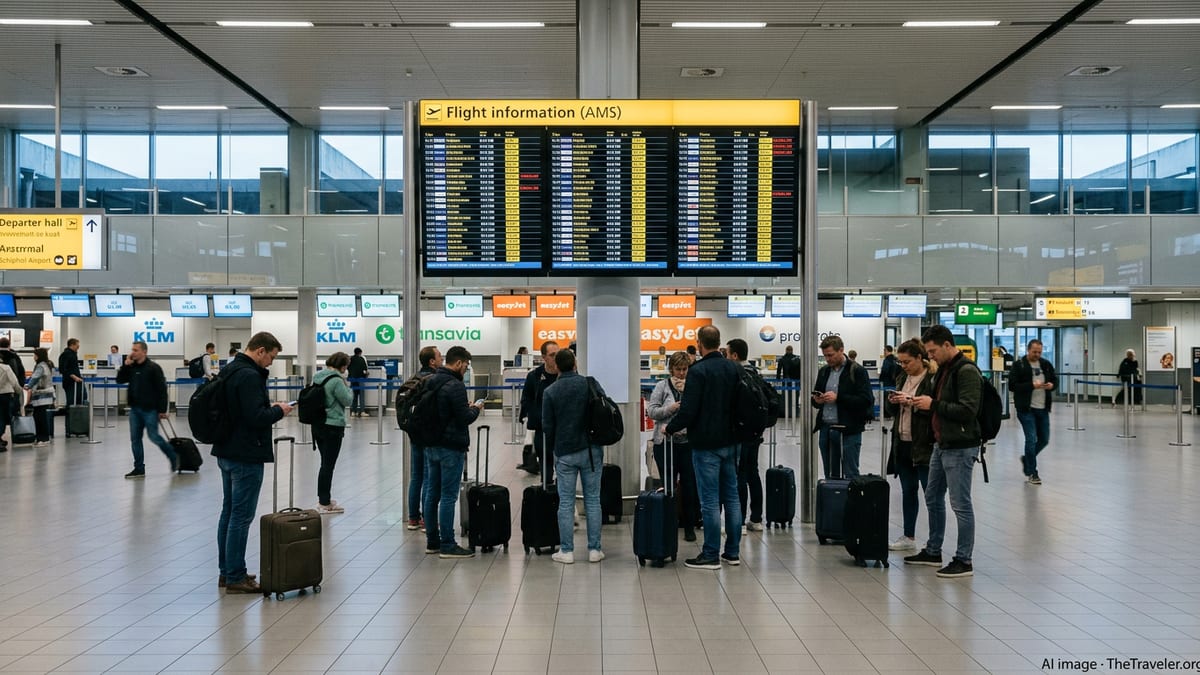
Hundreds of passengers were left stranded at Amsterdam’s Schiphol Airport after a new wave of disruption saw 252 flights delayed and 20 cancelled, turning one of Europe’s busiest hubs into a maze of missed connections and improvised travel plans.
Get the latest news straight to your inbox!
Fresh Disruption at Europe’s Key Aviation Hub
Publicly available flight-tracking data and operational updates show that Schiphol once again ranked among Europe’s most disrupted airports, with a combined 272 delays and cancellations recorded over the course of the day. The imbalance between delays and outright cancellations meant many flights eventually departed hours behind schedule, while a smaller number were removed from timetables entirely.
The disturbance followed months of intermittent pressure on the Dutch hub, which has repeatedly struggled with winter-weather impacts, tight turnaround schedules and lingering staffing constraints. Earlier in the year, published coverage highlighted days when hundreds of flights were affected by snow and high winds, underscoring the vulnerability of congested hubs to even short-lived weather systems.
Friday’s numbers were smaller than the most extreme winter-weather days reported this season, when several hundred flights were grounded outright, but the pattern of widespread delays proved especially disruptive for connecting travelers. Many stranded passengers were not simply waiting for a single departure, but for replacement routings that could move them onward to North America, the Middle East and other parts of Europe.
Schiphol’s status as a primary transfer point for KLM and its SkyTeam partners magnified the impact. When an initial departure slipped by several hours, subsequent legs could no longer operate as planned, creating a cascade of missed connections that outstripped the modest number of cancellations on the airport’s departure board.
Knock-on Effects for Airlines and Connecting Passengers
According to data platforms that monitor air traffic across Europe, the bulk of the disruption at Schiphol centered on short and medium haul services feeding the hub from regional cities. These feeder flights are crucial for filling long haul departures to destinations such as New York, Dubai and Singapore, and delays on these routes often ripple through the wider network.
Published reports on recent disruption patterns at the airport indicate that carriers operating hub-and-spoke models, including KLM and its codeshare partners, are particularly exposed when schedules tighten. Even relatively modest ground delays can push crews beyond legal duty limits or leave aircraft out of position for their next rotation, forcing airlines to consolidate services or cancel individual legs.
The result for passengers was a familiar mix of missed onward flights, rebooked itineraries and unexpectedly long layovers in Amsterdam. Travel forums and social media posts reflected scenes of crowded customer service desks, long lines at transfer counters and departure halls filled with travelers attempting to rearrange plans via airline apps that were struggling under peak demand.
Some passengers were able to secure same-day alternatives via other European hubs, while others were rebooked for departures the following day and directed to local hotels or overnight rest areas in the terminal. For travelers on tightly timed trips, including business journeys and long-planned holidays, the combination of 20 cancellations and hundreds of delays translated into lost days and, in some cases, abandoned itineraries.
Weather, Capacity and Structural Pressures Converge
Recent coverage of Schiphol’s performance points to a blend of structural and short-term factors behind repeated disruption. On previous peak days this winter, wintry showers, strong crosswinds and low visibility reduced the number of takeoffs and landings permitted per hour, forcing the airport and airlines to trim schedules and accept compounding delays. Today’s figures for 252 delays and 20 cancellations fit into that broader pattern of capacity being periodically squeezed by weather and operational limits.
Apart from the weather, Schiphol continues to operate near the upper edge of its declared capacity, a situation that leaves little margin when problems emerge in one part of the system. Earlier analyses of flight data for major European hubs have repeatedly shown Amsterdam among the airports with the highest disruption levels on challenging days, with hundreds of departures either late or scrubbed in response to airspace constraints and ground-handling bottlenecks.
Industry observers note that proactive cancellations are increasingly used by carriers as a tool to prevent even worse knock-on chaos. By removing a limited number of flights from the schedule, airlines attempt to protect the remainder of the day’s operations. The figures reported at Schiphol, with cancellations outnumbered by more than ten to one by delayed flights, suggest that such strategies were again in play, albeit with significant consequences for those whose services were cut.
Passengers arriving in Amsterdam by rail or road were also affected by the airport’s stretched capacity, with images and user accounts describing crowded check-in areas and long security queues. While these scenes are not unusual during peak travel periods, they add additional strain when flight disruption forces large numbers of travelers to remain landside or in transfer zones for longer than anticipated.
Guidance for Affected Travelers and Passenger Rights
Consumer-rights organizations and travel advisories recommend that passengers caught up in disruption at European hubs such as Schiphol keep detailed records of boarding passes, booking references and any written communication from airlines about delays or cancellations. Under European Union air passenger regulations, travelers on eligible flights may be entitled to care, rerouting or compensation when services are significantly delayed or cancelled, depending on the cause of the disruption.
Public information from air-passenger support services stresses that entitlement varies, particularly when weather plays a central role. Severe snow or strong winds are typically categorized as extraordinary circumstances, which can limit compensation even when the practical impact on travelers is substantial. However, passengers may still have rights to meals, refreshments and hotel accommodation when delays stretch late into the night or when rebooking is only possible the following day.
For those still trying to reach their destinations after the latest wave of 252 delays and 20 cancellations at Schiphol, specialists advise focusing first on securing a confirmed alternative itinerary before pursuing any claims. Once onward travel is arranged, affected passengers can then contact airlines or use online claim channels to seek reimbursement for out-of-pocket expenses where applicable.
Travel planners suggest that passengers transiting major hubs prone to disruption build additional buffer time into itineraries, particularly during winter and peak holiday periods. While no schedule can be fully protected from the type of cascading delays seen at Schiphol, longer connection windows and flexible bookings can reduce the risk of being among the hundreds left stranded when operations are suddenly curtailed.
Schiphol’s Ongoing Challenge to Restore Confidence
The latest disruption figures arrive at a sensitive moment for Amsterdam’s main airport, which has spent several seasons under scrutiny for queues, staffing shortages and repeated bouts of weather-related chaos. Each new episode of large-scale delay and cancellation further tests the patience of frequent travelers and raises questions about resilience at one of Europe’s most important aviation gateways.
Comparative analyses of recent seasons indicate that Schiphol is not alone in experiencing severe operational strain. Other major European hubs have also reported days with hundreds of disrupted flights, particularly during storms and snowfalls. However, the concentration of cancellations and delays in Amsterdam has prompted debate within the travel industry about infrastructure limits, staffing levels and the pace of recovery following earlier crises.
As airlines and airport operators assess today’s tally of 252 delays and 20 cancellations, efforts are expected to focus on restoring normal operations and clearing backlogs of passengers and baggage. For travelers, the immediate priority remains more straightforward: finding a way out of crowded halls and onto flights that can finally depart on time.