


More news on this day
Iberia has officially added Bucharest to its network for summer 2026, unveiling a new seasonal Madrid to Bucharest route that positions the Spanish flag carrier to capture growing leisure and visiting-friends-and-relatives demand between Spain and Romania.
Get the latest news straight to your inbox!
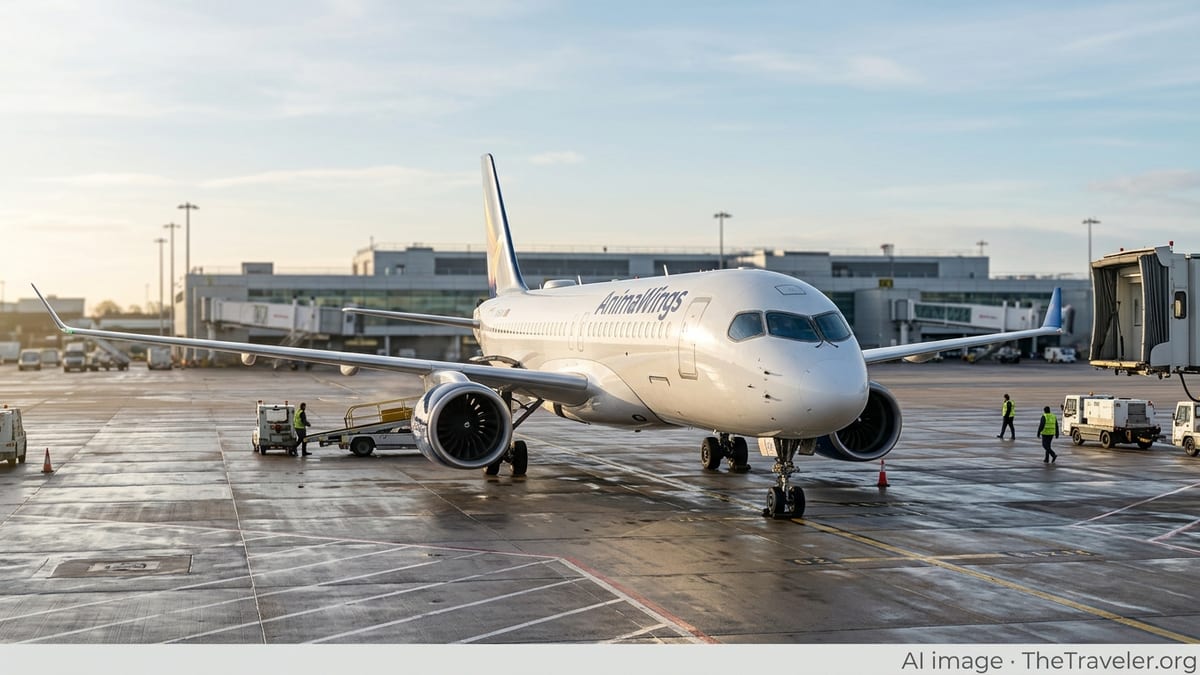
Key details of the new Madrid–Bucharest service
Publicly available information from Iberia’s summer 2026 program shows that the Madrid to Bucharest route launched on 3 June 2026 and is scheduled to run through 30 September 2026. The flights operate twice weekly, providing a non-stop link between Adolfo Suárez Madrid–Barajas Airport and Bucharest Henri Coandă International Airport during the peak European holiday season.
Coverage of the launch indicates that the service is primarily operated with Airbus A320 family aircraft, offering a total capacity of more than 12,000 seats across the season. The frequency pattern focuses on midweek and weekend travel, with departures on Wednesdays and Sundays designed to appeal both to holidaymakers and to passengers combining city breaks with longer itineraries across Spain or Romania.
According to Iberia’s published summer schedule, the Bucharest service forms part of a wider expansion that also includes new long-haul routes to Monterrey in Mexico and Toronto in Canada, along with strengthened operations to the United States and Latin America. The new Romanian connection is presented as one of four fresh destinations in the airline’s European and transatlantic program for the 2026 high season.
Strategic role in Iberia’s Flight Plan 2030
The Madrid to Bucharest route is closely linked to Iberia’s multi-year Flight Plan 2030, a strategic roadmap that aims to consolidate Madrid’s role as a leading hub between Europe and the Americas. Company communications describe Bucharest, together with Tivat in Montenegro, as part of a cluster of new European destinations intended to feed long-haul traffic over Madrid while also meeting point-to-point demand.
Reports on the 2026 summer schedule highlight that Iberia expects to offer more than 21 million seats across its network during the season, with nearly 16 million seats dedicated to Spain and Europe. Within that context, Bucharest is one of several leisure-oriented routes, joining a portfolio that includes strengthened services to Greece, Italy, Croatia and Portugal, as well as the new North American connections.
Industry analysis notes that the carrier is using the 2026 season to deepen its presence in markets where demand has rebounded strongly, while also probing new origin-and-destination pairs that can support the hub’s banked wave structure. The addition of Bucharest fits this strategy, increasing Iberia’s reach into Eastern Europe and providing an extra spoke for inbound traffic from Latin America and North America transiting through Madrid.
Boost for Spain–Romania travel and connectivity
The launch of direct Madrid–Bucharest flights is expected to stimulate both tourism and visiting-friends-and-relatives flows between Spain and Romania. Spain is home to one of the largest Romanian communities in Western Europe, and aviation analysts suggest that improved connectivity can support year-round links between family networks, even if the route is initially marketed as a summer-only option.
Tourism publications describe Bucharest as a city with a growing profile among European travelers, highlighting its mix of Belle Époque architecture, communist-era boulevards and emerging creative districts. The new Iberia route gives Spanish travelers another direct gateway to Romania’s capital, from which they can reach destinations such as Transylvania, the Carpathian Mountains and the Danube Delta.
At the same time, the connection offers Romanian travelers easier access to Spain’s extensive domestic and international network via Madrid, including popular leisure destinations on the Balearic and Canary Islands, as well as major cities across the Iberian Peninsula. For many passengers, the new service is likely to reduce overall travel times and limit the need for secondary connections through other European hubs.
How the route fits into Iberia’s wider European network
In its European portfolio, Iberia has traditionally focused on high-frequency links to key Western European capitals and strong seasonal offerings to Mediterranean holiday markets. The decision to add Bucharest and Tivat for summer 2026 marks a calibrated move eastward, adding depth in the Balkans and Eastern Europe while maintaining the airline’s core strengths in Spain, Italy, Portugal and Greece.
Reports on the airline’s schedule evolution indicate that this growth is being supported by fleet renewal and increased aircraft utilization. Iberia has been progressively modernizing its short- and medium-haul fleet, a process expected to contribute to better fuel efficiency and enhanced passenger comfort on routes like Madrid–Bucharest. The 2026 summer timetable reflects this strategy by pairing new destinations with more competitive aircraft types on intra-European sectors.
Observers of the Spanish aviation market note that the new Romanian route also strengthens competition on eastbound city-break and holiday traffic from Spain. With Bucharest now linked non-stop to Madrid by Iberia, travelers gain an additional option alongside existing services operated by other carriers from Spanish and European airports, potentially putting pressure on fares and expanding choice in the market.
Seasonal outlook for summer 2026
Travel data providers and tourism-focused outlets point to a robust booking environment for summer 2026, supported by strong demand for European city breaks and multi-country itineraries. Iberia’s decision to run the Bucharest route from early June through the end of September aligns with peak demand patterns, capturing school holidays and the main vacation period in both Spain and much of Europe.
While the service is currently defined as seasonal, analysts suggest its performance during this first full season will shape decisions on future capacity. High load factors and strong connecting flows could support a longer operating window or increased weekly frequencies in subsequent years, while also reinforcing Madrid’s status as the primary transfer point for Iberia Group carriers.
For now, the 2026 schedule positions Madrid–Bucharest as a must-book summer route for travelers seeking to pair Spain’s cultural capitals and coastal resorts with Romania’s rapidly evolving urban and natural tourism offer. With a clear role in Iberia’s broader growth plan, the new link adds another piece to the evolving map of European connectivity ahead of the next decade.