


More news on this day
India has tightened its Iran travel advisory in step with Canada, Australia, the United Kingdom and other governments, as the prolonged West Asia conflict and recurring missile exchanges trigger mounting security fears, disrupted air corridors and a new wave of risk assessments for travelers and airlines.
Get the latest news straight to your inbox!
India Escalates Warnings As Conflict Ripples Across West Asia
India has moved Iran firmly into the do not travel category in recent weeks, reiterating that its nationals should avoid visiting the country and advising those already there to leave as soon as commercial options allow. Publicly available notices from the Indian government and its embassy in Tehran show a series of advisories issued through late February, March and April 2026, followed by a stronger June reminder that referenced fresh regional strikes and an unpredictable security environment.
The step places Iran among the highest-risk destinations in India’s consular guidance, reflecting both the direct impact of the 2026 Iran Israel United States confrontation and concerns about arbitrary detention, civil unrest and the possibility of renewed attacks on critical infrastructure. Travel and safety notices emphasize that Indian citizens remaining in Iran should maintain close contact with the embassy, avoid protest sites and sensitive government or military facilities, and be prepared for rapid changes to flight schedules.
India’s moves also have a domestic dimension. Parliament documents and tourism ministry responses indicate that tens of thousands of Indian workers and pilgrims have traditionally moved through Iran and the broader Gulf each year, and officials have acknowledged that the latest crisis has forced a reassessment of evacuation planning, border transit routes and consular capacity across West Asia.
Canada, UK and Australia Already at ‘Do Not Travel’ for Iran
India’s tougher stance comes as Canada, the United Kingdom and Australia maintain some of the most restrictive Iran advisories in their respective systems. Canada’s federal travel guidance lists Iran at its highest caution level, citing the risk of arbitrary arrest and detention, a volatile security environment and limited consular access. Recent Canadian coverage of the 2026 Iran war has underlined that the country has had no resident diplomatic mission in Tehran for more than a decade, further constraining assistance to citizens.
In London, the Foreign, Commonwealth and Development Office currently advises against all travel to Iran, noting that the United Kingdom would not be able to conduct evacuations or provide face to face consular services in the event of major unrest or conflict escalation. The official advisory stresses the persistent threat of terrorism, the risk of detention for dual nationals and the dangers near sensitive border regions, echoing a red classification that was expanded across much of the Middle East after the 2026 fighting intensified.
Australia’s Smartraveller platform also labels Iran as do not travel, with language updated in May and June 2026 to reflect what it describes as an extremely volatile security situation. The advice highlights the risk of missile and drone strikes, civil unrest and potential disruptions to airspace. In parallel, domestic reporting in Australia has noted the use of new immigration controls affecting some Iranian visitors, as policymakers balance security fears with humanitarian considerations for those affected by the conflict.
Airspace Disruptions, Rerouted Flights and Stranded Travelers
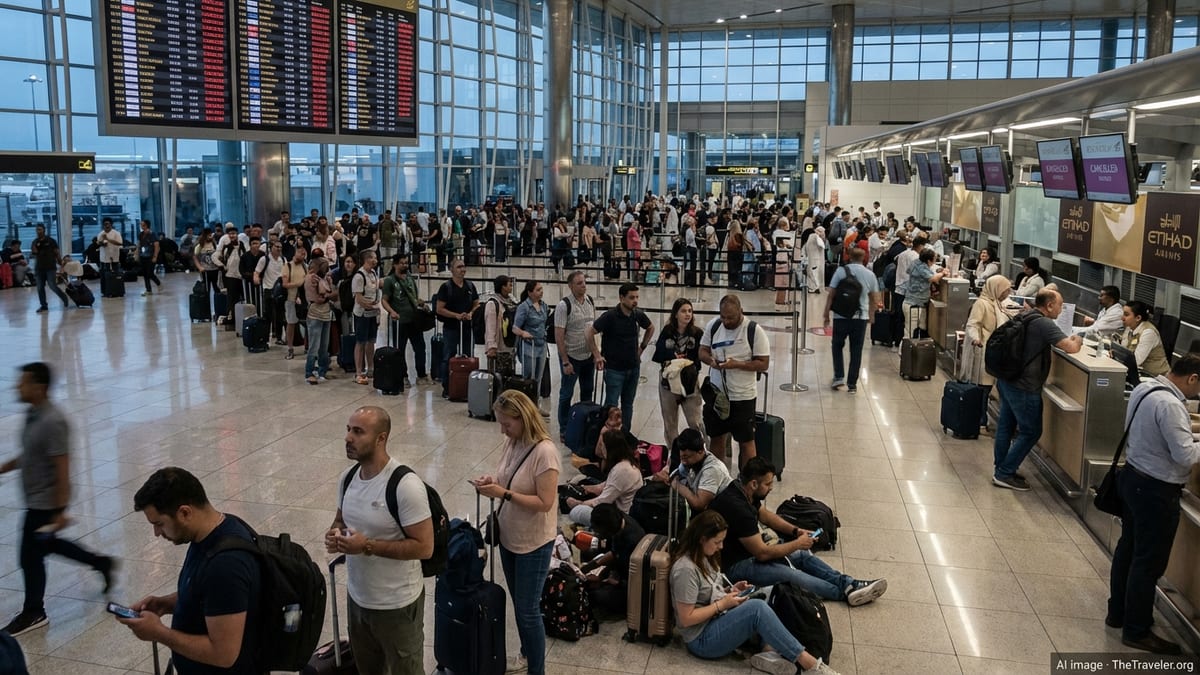
The overlapping travel advisories are not just theoretical. The 2026 Iran war has already produced region wide airspace closures, emergency diversions and waves of canceled or rescheduled flights, according to aviation tracking data and regional news coverage. During the most intense phases of the crisis, major Middle Eastern hubs temporarily suspended traffic over or near Iranian territory, forcing long haul services between Europe and Asia to add hours of flying time or route via Central Asia and the Caucasus.
Travel forums and airline statements reflect the uncertainty facing passengers, especially those connecting between India, Europe and North America via Gulf and Turkish carriers. Some travelers have reported abrupt itinerary changes, last minute aircraft swaps and rising fares on routes that avoid Iranian or nearby airspace. For Indian nationals attempting to leave Iran in line with the latest advisory, this has meant monitoring sudden openings on limited commercial services or seeking overland exits toward safer neighboring states, subject to local restrictions at land borders.
Industry analysts say that even as some flight corridors have gradually reopened following localized ceasefires and new de escalation efforts, the combination of state travel warnings and elevated insurance costs continues to depress demand for itineraries that pass close to the conflict zone. Tour operators that once featured Iran on cultural or religious circuits across West Asia are now pausing or reconfiguring programs, often substituting destinations in the Caucasus, Central Asia or the eastern Mediterranean.
Rising Security Concerns for Dual Nationals and Diaspora Travelers
A further factor driving the hardening tone of Western and Indo Pacific advisories is the treatment of dual nationals and foreign passport holders in Iran. The United Kingdom’s travel guidance specifically warns that British and British Iranian dual nationals face a heightened risk of questioning, arrest or detention, a concern echoed in previous cases documented by human rights organizations and media outlets over the past decade.
Canadian coverage of its own sanctions and diplomatic freeze with Tehran underscores similar anxieties. Without an embassy on the ground and amid strained political relations, Ottawa’s public information stresses that consular assistance in Iran would be extremely limited, reinforcing recommendations that Canadians avoid all travel. These concerns resonate with diaspora communities in Europe, North America and Australia, many of whom maintain family ties in Iran but now confront higher perceived risks in planning visits.
India’s advisories, while framed more around the immediate conflict and physical security, also implicitly cover groups such as migrant workers, medical tourists and pilgrims who may have fewer resources to navigate complex evacuations or sudden border closures. Embassies and high commissions across the region have been publishing checklists and registration forms so that nationals can be contacted quickly if the security situation deteriorates again.
Travel Industry Braces for a Longer Period of Uncertainty
For the global travel sector, the alignment of Indian, Canadian, Australian and UK advisories around a clear do not travel message for Iran suggests that disruption is likely to persist even if the current ceasefire arrangements hold. Insurers typically rely on official government guidance when assessing coverage, and a red categorization can make it difficult or impossible for mainstream policies to cover trips, which in turn discourages airlines and tour companies from rebuilding capacity.
Some regional carriers have indicated that they will review schedules season by season, restoring flights only when operational risk assessments permit. However, with multiple governments still warning of the possibility of renewed strikes or spillover violence across West Asia, many industry observers expect airlines to keep contingency routings and higher fuel surcharges in place through the remainder of 2026.
For travelers, the practical takeaway from the synchronized advisories is a need for greater flexibility and scrutiny when booking journeys that touch the region. Publicly available guidance from foreign ministries consistently recommends closely tracking official updates, registering travel plans where such services exist and considering alternative routes that avoid high risk airspace altogether. As India joins a widening circle of countries formally cautioning against trips to Iran, the map of perceived safe corridors through West Asia looks set to remain constrained for some time.