


More news on this day
India has unveiled a new e-group visit visa tailored for cruise passengers from 172 countries, marking a significant step toward positioning the country as a major global hub for ocean and river cruising.
Get the latest news straight to your inbox!
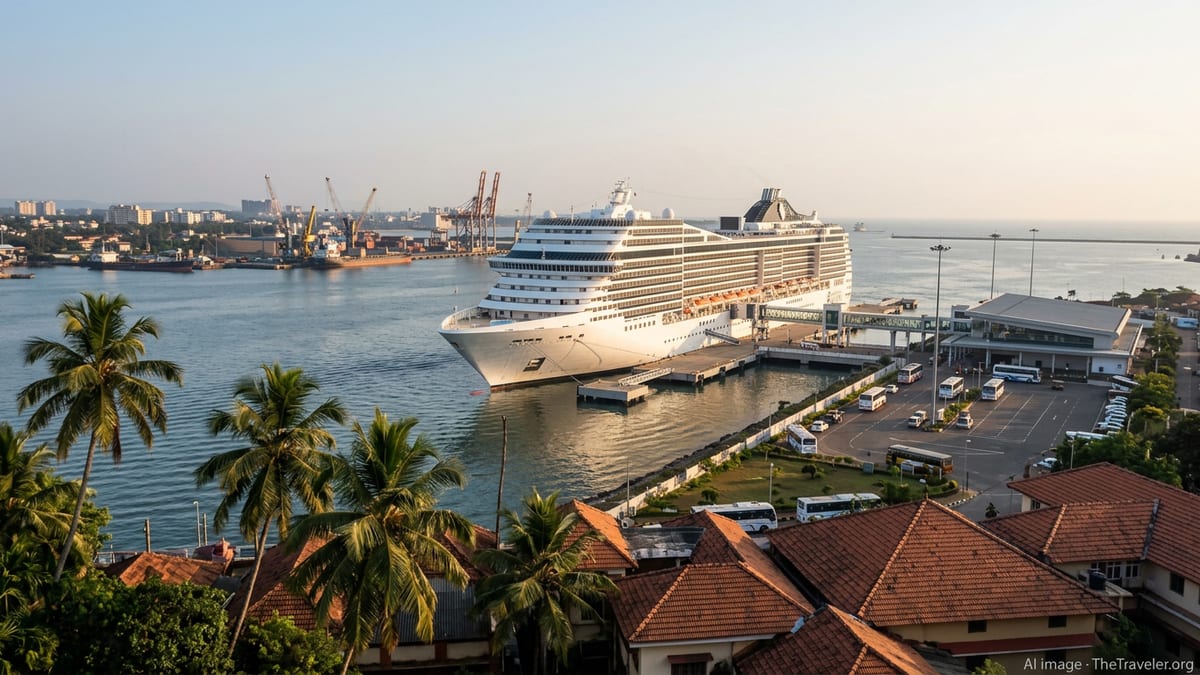
New e-Group Visa Targets Cruise Passengers
According to recent coverage of policy changes by India’s Ministry of Home Affairs, a dedicated e-group visit visa category has been approved for foreign tourists arriving on cruise vessels that operate on fixed and pre-approved itineraries. The measure builds on the existing e-Tourist visa regime, which already covers nationals from 172 countries eligible to apply online before travel.
Publicly available information on the Indian government’s e-visa portal shows that eligible travelers can already use e-visas to enter India through a growing number of designated seaports, in addition to major international airports. The introduction of a cruise-focused e-group visa is intended to streamline formalities further by aligning visa processing with the way cruise itineraries are booked and managed in groups.
Reports indicate that the new category is aimed at groups of foreign nationals traveling together on the same cruise voyage, rather than individual backpackers or independent travelers. The emphasis on pre-approved itineraries is expected to make it easier for immigration, port and tourism stakeholders to coordinate arrivals at multiple Indian ports of call during a single sailing.
Coverage in Indian media notes that the e-group visit visa (cruise) will be accessible to applicants from all countries that are currently eligible for India’s e-tourist visa. This effectively extends the new flexibility to source markets across North America, Europe, Asia-Pacific, Latin America, the Middle East and Africa, reflecting a broad push to widen India’s cruise tourism base.
172 Countries Now Linked to India’s Cruise Gateways
Data published on official e-visa channels show that India’s electronic travel authorization system, first introduced in 2014, has steadily expanded from an initial list of fewer than 50 nations to cover 172 nationalities for e-tourist visas. This network now underpins the new cruise e-group category, since eligibility directly mirrors the broader e-tourist visa list.
The Ministry of Home Affairs’ e-visa information pages also highlight that e-visa holders can enter India through a set of notified seaports, which have recently been expanded. A separate government communication in August 2026 detailed the notification of additional international ports for e-visa entry, explicitly including cruise visitors among the beneficiaries of the policy shift.
For cruise lines planning multi-port itineraries along India’s extensive coastline, the combination of an expanded seaport list and a specialized e-group visa means a larger number of embarkation and transit options. Ports on both the Arabian Sea and Bay of Bengal coasts are being positioned as gateways for circuits that can link Mumbai, Goa and Kochi with destinations such as Chennai, Visakhapatnam and islands in the Andaman and Lakshadweep chains.
Industry-facing summaries of the new framework suggest that cruise passengers using the e-group visa will continue to be subject to standard e-visa conditions, such as advance online application, passport validity requirements and proof of onward travel. However, handling passengers in organized groups tied to a ship manifest is expected to shorten processing times at busy cruise terminals.
Cruise Tourism at the Center of India’s Growth Strategy
Government documents outlining India’s cruise ambitions indicate a long-term plan to tap the country’s 7,500-kilometer coastline and more than 100 navigable waterways as key tourism assets. A statement from the Ministry of Ports, Shipping and Waterways in early 2024 highlighted cruise tourism as a high-potential segment, backed by upgrades to passenger terminals and a rationalized fee structure at major ports.
Measures already in place include priority berthing for cruise ships, removal of certain ousting charges and the waiver of cabotage restrictions to allow foreign-flagged cruise vessels to carry domestic passengers between Indian ports. Policy summaries also point to conditional tax exemptions for vessels switching between international and coastal operations, designed to make India more competitive as an embarkation and turnaround destination.
The Ministry of Tourism’s most recent annual report describes cruise tourism as one of several “niche” segments being actively promoted, along with adventure and medical travel. The same report notes that cruise visitors arriving on e-visas have previously been exempted from biometric enrollment requirements to speed up immigration at ports, signaling a broader focus on smoother passenger handling.
The addition of a dedicated e-group cruise visa fits into this wider pattern of facilitation. By aligning visa rules with cruise industry operating models and reducing friction at key gateways, authorities are aiming to increase ship calls, passenger volumes and itinerary diversity across both ocean and river cruise segments.
Economic Ripple Effects for Ports and Destinations
Analyses of India’s cruise policy published in local business and tourism media stress the potential multiplier effect of higher cruise arrivals on coastal economies. Each ship call typically generates demand for port services, shore excursions, local transport, food and beverage, and shopping, supporting a variety of small and medium enterprises in port cities and nearby destinations.
Official port sector updates in 2024 highlighted the completion of modernization works at cruise terminals in Mumbai-adjacent gateways such as Mormugao, as well as at Cochin, Chennai, New Mangalore and Visakhapatnam. These upgrades are intended to help terminals handle larger vessels, process passengers more quickly and provide an experience that is closer to that of established cruise hubs in Europe and the Caribbean.
Destination marketing efforts have also begun to align with the cruise push. Tourism promotion materials now emphasize coastal circuits that connect heritage cities, beach destinations, backwaters and wildlife areas, presenting cruise itineraries as a convenient way to sample multiple regions within a single trip. River cruise products on the Ganges and Brahmaputra are similarly being showcased as part of a broader “Cruise Bharat” concept.
With the new e-group cruise visa lowering administrative barriers for organized tour groups, stakeholders expect incremental gains in passenger spending and local employment in sectors such as guiding, handicrafts, hospitality and transport. The policy is also seen as a way to attract more off-season visitors, smoothing demand across the year for hotels and tourism businesses in port regions.
What Cruise Travellers Need to Know
For international travelers considering an India-focused or India-inclusive cruise, information on consular and e-visa websites indicates that the application process for the new e-group visa will be channeled through existing online systems. In practice, cruise lines or group tour organizers are expected to coordinate visa applications in line with confirmed passenger lists and voyage schedules.
Public guidance on India’s e-visa platform specifies that applicants must hold a passport with at least six months of validity at the time of application, along with a confirmed return or onward ticket and sufficient funds for their stay. These baseline rules are expected to apply equally to cruise travelers using the e-group category, even though much of their time in India will be spent on board a vessel.
Advisories from Indian consulates emphasize that travelers should verify that their ship is calling at designated e-visa ports and that their nationality is on the current eligibility list. Because visa and entry rules can change, prospective passengers are encouraged to consult the latest information on official government and consular websites in the run-up to their departure.
As cruise lines publish new itineraries taking advantage of India’s evolving port and visa framework, the country is positioning itself as a gateway between the Middle East, Southeast Asia and the Indian Ocean islands. The e-group visit visa for cruise passengers adds a new layer of predictability for both operators and guests, signaling that India intends to compete more actively for a share of global cruise traffic in the years ahead.
Ministry of Home Affairs e-Visa information
Ministry of Ports, Shipping and Waterways cruise industry measures