


More news on this day
Recaro Aircraft Seating has unveiled its next-generation R4 premium seat for the Boeing 787, a product positioned to reshape how airlines deliver comfort, privacy, and connectivity in the increasingly competitive premium economy and recliner-style business segments.
Get the latest news straight to your inbox!
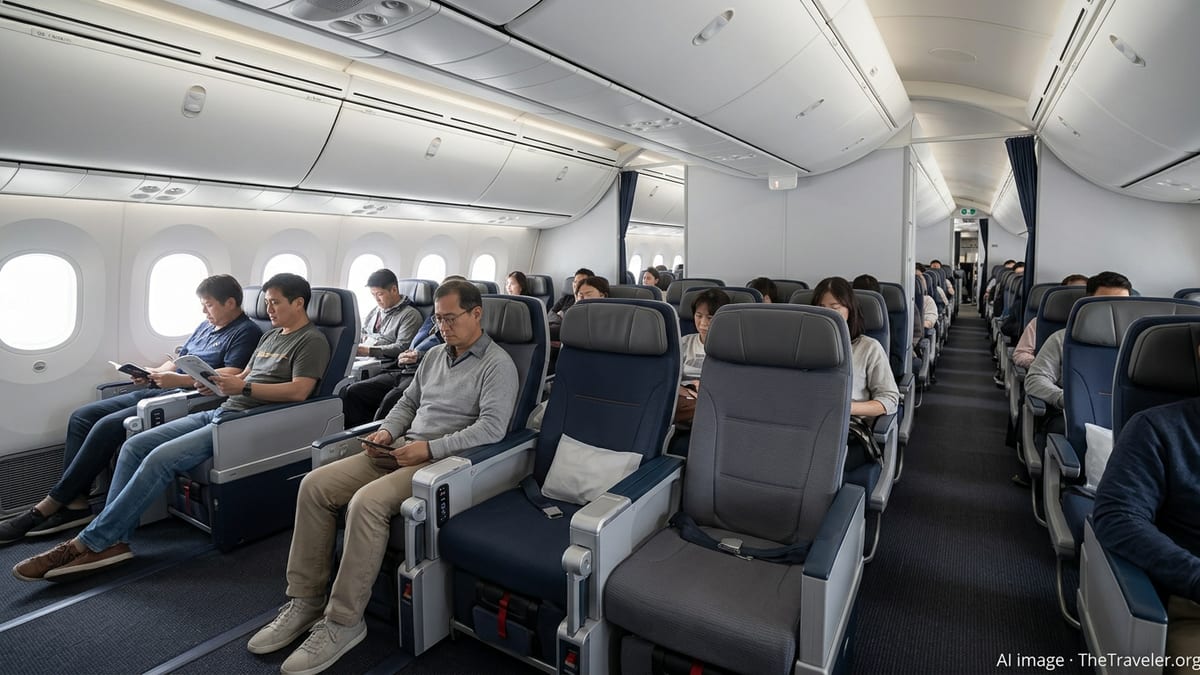
New Premium Seat Targets the Boeing 787 Market
According to recently published product information, the R4 is the first in Recaro’s refreshed premium-class line to reach European Technical Standard Order (ETSO) certification specifically for the Boeing 787, clearing a key regulatory step toward airline service entry by the end of 2026. Publicly available documentation on Boeing’s 787 offerable seat list also identifies the R4, previously marketed as the PL3810, as a premium option in a 2-3-2 layout with a pitch typically between 38 and 40 inches.
Industry coverage indicates that launch programs are centered on newly delivered or refurbished 787-9 aircraft, positioning the R4 as a mid-cabin product on long haul routes where airlines seek to differentiate from both traditional economy and fully flat business class. This segment has grown rapidly as carriers adapt cabins to capture demand from leisure travelers willing to pay extra for more space, without the price tag of a full business seat.
Reports from the aircraft interiors sector describe the R4 as part of a broader Recaro strategy to evolve its premium range while preserving a strong focus on weight reduction and maintainability. The company has previously emphasized that incremental weight savings compared with earlier models can help operators cut fuel burn over the life of a 787 fleet, a factor that continues to influence airline seat selection decisions.
Comfort and Privacy Features Move Closer to Business Class
Recaro’s R4 is designed to narrow the experiential gap between premium economy and business class, using features that focus on personal space, ergonomic support, and visual separation from neighboring passengers. Product descriptions highlight a sculpted shell structure, generous recline, and a multi-position leg and footrest arrangement aimed at supporting a wider range of sleeping and lounging positions than conventional premium economy seats.
Coverage in specialist aviation media notes that the R4 incorporates contoured privacy elements around the head and shoulder area, using flared “winglets” on the headrest and higher side structures to reduce line-of-sight contact across the cabin. While the seat does not enclose passengers behind a full-height door, the design intends to deliver a greater sense of personal territory, especially in window and aisle positions.
Seat geometry has also been refined to work with the Boeing 787’s specific cabin cross-section. Technical material associated with the program shows that the seat is engineered to fit in a 2-3-2 configuration while preserving shoulder space and knee clearance, supported by a thin yet rigid backrest architecture. Aviation analysts suggest that this approach allows airlines to maintain a competitive seat count while advertising a more spacious feel compared with legacy premium economy products on the same aircraft type.
Advanced Connectivity and Digital Control at Every Seat
A central focus of the R4 program is the integration of modern connectivity and in-seat power in a way that aligns with evolving passenger expectations. According to recent announcements tied to early customer programs, each seat is intended to pair with large-format 4K screens supplied by leading inflight entertainment suppliers on the 787, along with an upgraded power suite that includes both USB-A and USB-C outlets and, on some configurations, inductive wireless charging.
Several airlines adopting the R4 for their 787s have highlighted plans to combine these displays with Bluetooth audio connectivity, allowing passengers to use personal wireless headphones instead of airline-issued wired sets. Industry briefings further point to emerging “second-screen” features, where smartphones or tablets can be used as remote controls for the main screen or to interact with cabin services, enabled by the underlying seat wiring and IFE integration architecture that the R4 supports.
For airlines, the seat’s digital backbone is as significant as the visible hardware. Publicly available technical notes emphasize modular electronics bays and standardized wiring runs that simplify maintenance and future upgrades. This design philosophy enables 787 operators to adopt new USB standards, update wireless charging hardware, or refresh screen generations over time without replacing the entire seat monument, supporting longer life cycles and reduced downtime.
Early Airline Customers Signal Global Adoption
Among the first airlines publicly linked to the R4 on the Boeing 787 are carriers in Asia, where demand for high-density, long haul widebody operations remains strong. All Nippon Airways has outlined plans, in investor and product materials, to introduce new Recaro premium economy seats on its latest 787-9 aircraft from fiscal year 2026, referencing the R4 designation in the context of a wider cabin refresh across premium economy and economy.
In parallel, China Airlines has presented its forthcoming 787 premium economy cabin featuring 28 Recaro R4 seats in a 2-3-2 configuration. According to airline and industry briefings, this cabin will be paired with 15.6-inch 4K seatback monitors and Bluetooth connectivity, illustrating how the R4 platform is being used as the foundation for a technology-rich mid-cabin product. The airline has positioned the new premium economy as a key component of its three-class layout on the 787-9, sitting between a lie-flat premium business cabin and a refreshed economy section.
Sector reports suggest that additional unnamed customers have already begun taking delivery of R4 shipsets for 787 programs, with first commercial flights expected before the end of 2026. This reflects a broader trend in which seat manufacturers finalize certification and initial deliveries ahead of public route announcements, allowing airlines to retain flexibility in fleet planning and marketing timelines.
Implications for the Wider Premium Economy Landscape
The entry of the R4 into service on the Boeing 787 is widely seen by aviation analysts as a marker of how quickly expectations in premium economy are shifting. Passengers who once viewed the cabin as a modest step up from economy are now increasingly presented with products that borrow heavily from business class in terms of privacy screens, leg support, and personal technology. The R4’s arrival accelerates this movement by offering a relatively lightweight, certifiable solution tailored to one of the world’s most popular long haul aircraft families.
From an airline perspective, the R4’s flexibility on pitch, materials, and trim gives carriers latitude to tailor the experience to different markets. Some operators are likely to emphasize maximum seat density and consistent branding across fleets, while others may adopt more spacious layouts with additional soft-product enhancements such as upgraded bedding or dining. In each case, the underlying seat platform is structured to support varied strategies without requiring a unique engineering program for every customer.
For the traveling public, the combination of more supportive cushions, improved recline mechanics, and modern connectivity on the 787 is expected to make premium economy a more compelling option on overnight and ultra-long-haul flights. If adoption spreads beyond initial customers and into additional 787 operators, the R4 may help redefine the baseline expectations for comfort, privacy, and digital access in this fast-growing cabin class.
Recaro Aircraft Seating R4 product announcement
CAPA coverage of R4 premium seat entry into service