


More news on this day
India is rolling out a sweeping aviation security overhaul in 2026, tightening photography rules at major gateways such as Delhi, Mumbai, Bengaluru, Hyderabad, Chennai and Kolkata while standardising restrictions across the country’s 163 operational airports.
Get the latest news straight to your inbox!
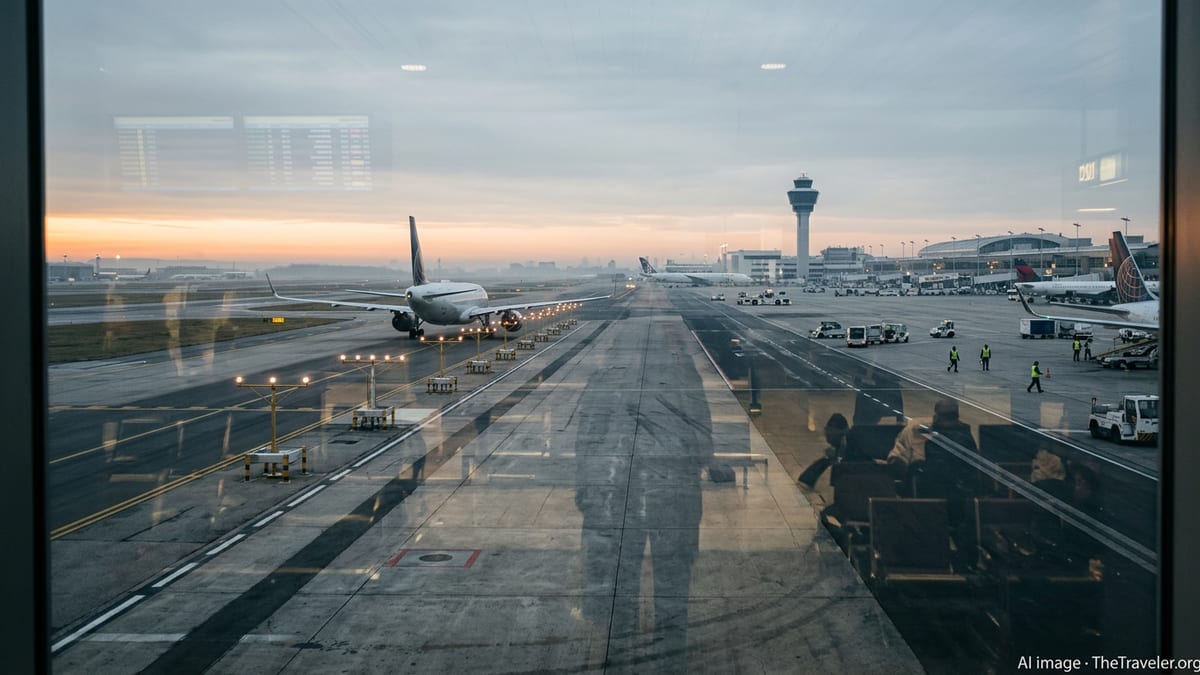
New Nationwide Framework for Airport Photography
Publicly available information from the Directorate General of Civil Aviation (DGCA) and the Ministry of Civil Aviation indicates that airport photography is being pulled into a more tightly controlled national framework, with distinctions made between public areas, security zones and airside operations. A recent DGCA circular issued on April 28, 2026, refines permissions to “take or cause or permit to be taken” photographs at aerodromes under Rule 13 of the Aircraft Rules, 1937, making clear that security considerations will drive decisions on when images can be captured and how they are stored.
Reports indicate that while photography in general terminal public areas remains broadly tolerated when it does not disrupt operations, the regime around sensitive locations is becoming more stringent. Security hold areas, boarding gates, tarmacs, aircraft parking bays and baggage handling zones are now being explicitly treated as controlled environments where only authorised photography is allowed, subject to strict identification and access protocols. Passengers face clearer prohibitions against casually taking photos or videos in these spaces, even on personal mobile phones.
This recalibration is designed to bring practice in line with a rapid expansion of India’s aviation network. Civil aviation data released in May 2026 confirms that the country now has 163 operational airports, compared with around 74 in 2014, placing new pressure on security oversight and uniform enforcement. The updated photography rules are being presented as one plank in a broader effort to reduce inconsistencies in how airports manage visual documentation of sensitive infrastructure.
Record-Keeping Mandate and Stricter Controls Airside
The most concrete shift comes in the form of new record-keeping obligations for airport operators. Coverage in Indian business media in May 2026 highlights a DGCA directive requiring aerodromes to retain photographic records taken in security hold areas and on the tarmac for three years, making them available for inspection on demand. The requirement applies to images captured by authorised personnel and contractors who already operate under Bureau of Civil Aviation Security (BCAS) guidelines, but it also raises the compliance bar for airport managements that rely heavily on third-party service providers.
According to notifications summarised by regulatory intelligence platforms, anyone taking photographs in these zones must carry formal identification and entry permits, undergo all applicable security checks and ensure that image-taking does not interfere with safety, operational workflows or the functioning of security systems. Photography that risks revealing aircraft movement patterns, access routes, screening layouts or security staff deployment is explicitly discouraged, reflecting growing concern about the misuse of high-resolution imagery in an era of cheap drones and ubiquitous social media.
For passengers, the practical effect at major hubs such as Delhi’s Indira Gandhi International Airport or Mumbai’s Chhatrapati Shivaji Maharaj International Airport is a sharper line between casual travel snapshots and restricted spaces. Travel advisories referencing the new framework stress that views from boarding bridges, close-ups of security checkpoints and tarmac selfies may now fall foul of the rules, particularly at airports that share facilities with the armed forces or host critical navigation and surveillance equipment.
Impact on Major Metro Hubs and Tourist Gateways
The tightened photography regime is especially significant at the six largest metropolitan hubs: Delhi, Mumbai, Bengaluru, Hyderabad, Chennai and Kolkata. These airports handle a majority share of the country’s international traffic and a growing volume of domestic connectivity under regional schemes, making them focal points for both aviation security and the traveller experience.
At Delhi and Mumbai, where terminals routinely manage large volumes of transfer passengers and high-profile international operations, airports are expected to lean on expanded CCTV coverage and formal photo documentation by staff, reducing tolerance for ad hoc filming in secure corridors. Travel and aviation forums already report greater signage and more frequent reminders near security lanes, immigration counters and boarding gates, indicating a push to inform passengers about what is and is not allowed before issues arise.
In Bengaluru, Hyderabad and Chennai, which have cultivated reputations as tech and investment gateways, the rules may also shape how commercial shooting, advertising and content creation are handled inside terminal buildings. Industry updates suggest that airport operators are moving towards clearer licensing and pre-approval processes for professional photo and video projects, with BCAS-aligned security reviews becoming a routine part of permissions. Kolkata’s Netaji Subhas Chandra Bose International Airport, a key eastern hub and popular subject for aviation enthusiasts, is similarly expected to see tighter screening of spotters and bloggers who seek vantage points close to runways and taxiways.
Aligning Security, Technology and Passenger Rights
The stricter photography rules are emerging alongside a broader modernisation of aviation security infrastructure. Data published by the Airports Authority of India in April 2026 points to thousands of Central Industrial Security Force (CISF) and state police personnel now deployed at over one hundred airports, supported by metal detectors, advanced X-ray baggage inspection systems, expanded CCTV networks and, at select locations, specialised bomb-disposal vehicles and counter-drone capabilities. These investments are intended to create a layered defence in which image capture and data retention are treated as integral to incident review and deterrence.
In parallel, India is expanding the digital footprint of its border and aviation systems, introducing measures such as a mandatory e-arrival card for foreign travellers from April 1, 2026. Passenger rights regulations are also being updated, with new rules around seating allocations, treatment of delays and handling of unruly behaviour. The tightened photography standards fit into this wider regulatory refresh, balancing individual expectations of transparency and documentation against concerns about operational security and critical infrastructure protection.
Privacy advocates and travel commentators are watching closely to see how airports communicate and enforce the changes. Their commentary suggests that clarity and consistency will be crucial, particularly around what is still permitted for personal use in public terminal areas and how long any images held by operators can be stored or shared. For international visitors, alignment with global aviation norms and clear English-language signage are likely to be important in avoiding confusion and disputes at security checkpoints.
What Travellers Should Expect in 2026
For travellers passing through India in 2026, the most visible difference may be greater emphasis on “no photography” zones and occasional requests from staff to delete images captured too close to security infrastructure. While the regulatory focus is on operators and authorised personnel, passengers are being encouraged through advisories and media coverage to err on the side of caution, especially when boarding, disembarking on the tarmac or moving through screening and immigration.
Travel experts note that India’s approach is still evolving and may be refined as airports test implementation over the busy summer and festive travel seasons. Airports are expected to combine stricter rules with practical measures such as more prominent signage, public announcements and training for frontline staff on how to handle misunderstandings in a customer-friendly way. At the same time, regulators are likely to watch how the three-year photographic record-keeping requirement affects airport costs, data management practices and cooperation with security agencies.
For now, visitors planning to transit through Delhi, Mumbai, Bengaluru, Hyderabad, Chennai, Kolkata or any of the expanding network of regional airports are advised to treat photography at Indian airports as a privilege subject to clear limits rather than an unrestricted right. The 2026 overhaul signals that visual documentation of aviation spaces is increasingly viewed as a security asset when controlled and a potential vulnerability when left to chance, reshaping the balance between travel memories and national security across one of the world’s fastest-growing aviation markets.