


More news on this day
The Netherlands has joined a growing bloc of European countries racing to secure alternative jet fuel routes via the Suez Canal, Bab el-Mandeb, the Red Sea and the Cape of Good Hope, as the prolonged closure of the Strait of Hormuz in 2026 threatens to trigger jet fuel shortages, large-scale flight disruptions, cruise itinerary upheavals and a wider tourism downturn across the continent.
Get the latest news straight to your inbox!
Europe Scrambles As Hormuz Blockage Squeezes Jet Fuel
The Strait of Hormuz has been effectively closed to most commercial shipping since late February 2026, following the escalation of the Iran war. Publicly available data indicates that around one fifth of global oil and a significant share of the world’s jet fuel exports normally pass through this narrow chokepoint, leaving global aviation heavily exposed when flows are interrupted.
Analysts tracking the energy market describe the current shock as the most acute jet fuel supply disruption in modern commercial aviation. European carriers, which shifted more of their crude and product sourcing toward the Gulf region after the 2022 Russia-Ukraine energy crunch, now find themselves particularly vulnerable, with much of their jet fuel import capacity concentrated on routes that are no longer viable.
Industry research notes that northwest Europe, including the Amsterdam-Rotterdam-Antwerp (ARA) refining and storage hub, typically sources roughly half of its imported jet fuel via supply chains linked to Hormuz. As those flows halt, the region is being forced into a rapid and costly reconfiguration of trade, storage and refining patterns to keep aircraft moving ahead of the peak summer season.
Airport associations, European institutions and market observers have all warned in recent weeks that, in the absence of a durable reopening of Hormuz, the continent could face systemic jet fuel shortages before the end of June. That timeline has put intense pressure on governments and companies to act before the main holiday travel wave starts.
Netherlands Aligns With Germany, UK, Italy, France, Spain and Greece
The Netherlands is now emerging as a central player in Europe’s response. The country hosts one of the world’s most important energy and jet fuel hubs in Rotterdam, as well as Amsterdam Schiphol, a major intercontinental aviation gateway. Publicly available information shows that Dutch authorities and fuel suppliers have begun coordinating with counterparts in Germany, the United Kingdom, Italy, France, Spain and Greece to diversify away from Hormuz-linked supplies.
Reports from shipping and energy consultancies indicate that refineries and traders serving Dutch and wider northwest European markets are redirecting tanker traffic through the Suez Canal where possible, pulling additional volumes from the Mediterranean, West Africa, the United States and even Asia. This trend mirrors moves already under way in Germany, France and the UK, where airlines and airports are seeking to lock in alternative contracted supplies despite sharply higher costs.
The Netherlands’ participation is significant because of its storage capacity and its role as a transit point for fuel heading to other EU states. Rotterdam’s tank farms are a major source of aviation fuel for airports in Germany, Belgium, Scandinavia and parts of central Europe. Any successful rerouting strategy managed through Dutch ports can therefore cushion the shock for a broad swathe of carriers and airports across the continent.
Southern European tourism hubs are also closely watching developments in the Netherlands and the ARA region. Italy, Spain and Greece depend heavily on inbound air travel in the summer months, and their governments are working with northern partners to ensure that sufficient jet fuel can be moved south via pipelines and coastal tankers if local supplies tighten.
Alternative Routes: Suez, Bab el-Mandeb, Red Sea and Cape of Good Hope
With Hormuz largely off limits, Europe’s energy and shipping sectors are turning to a complex web of alternative routes. Tankers that would have loaded in or near the Gulf are now being sourced from producers and storage hubs that can reach the Mediterranean via the Suez Canal and the Bab el-Mandeb strait, which together connect the Indian Ocean with the Red Sea and on to Europe.
This reconfiguration is not straightforward. Earlier Red Sea security incidents had already pushed some container and tanker traffic to divert around the Cape of Good Hope at the southern tip of Africa. The renewed reliance on Suez and Bab el-Mandeb for jet fuel and related products therefore comes with elevated shipping and insurance costs, as well as longer transit times that complicate just-in-time delivery to Europe’s low-buffer airport storage systems.
Shipping analysts note that where security or congestion concerns remain acute in the Red Sea corridor, some fuel cargoes bound for Europe are instead being routed entirely around the Cape of Good Hope. This adds one to two weeks to voyage times, tying up tanker capacity and increasing freight rates. For jet fuel, which has relatively limited storage life compared with other refined products, such delays reduce flexibility and raise the risk of temporary shortages if any part of the chain is disrupted.
Published industry assessments describe a rapidly evolving patchwork of routes and suppliers. Europe is drawing more on Atlantic Basin producers and on intra-European refining where crude supplies can be secured without transiting Hormuz. At the same time, the Red Sea and Suez corridor remains essential for bridging the gap, placing new strategic emphasis on the security of Bab el-Mandeb and on coordination with Egypt and regional partners.
Airlines Cut Capacity as Airports Count Down Fuel Days
As energy markets adjust, Europe’s airlines are being forced to rewrite their summer 2026 timetables. Publicly available airline and airport schedules show an accelerating wave of capacity cuts, with thousands of flights trimmed from June and July services across major carriers in Germany, France, the Netherlands, the UK and southern Europe.
Advisories from aviation consultancies indicate that some large European airport operators hold only two to five days of jet fuel cover in on-site tanks when pipeline deliveries function normally. With shipping delays now stretching supply lines and prompting occasional bottlenecks, many airports are preparing for rationing, prioritising long-haul and essential routes while trimming lower-yield leisure frequencies.
Travel demand, however, has remained strong into early spring, sustaining high load factors on the flights that are operating. This mismatch between demand and constrained capacity is pushing fares upward, especially on popular holiday routes from northern Europe to Mediterranean destinations. Consumers are also contending with tighter connection windows, fewer alternative routings and a growing risk of last-minute cancellations linked to fuel availability rather than aircraft or crew.
Aviation market research warns that even if outright shortages can be avoided through aggressive rerouting and inventory management, the combination of higher fuel costs and reduced schedules will weigh heavily on airline balance sheets. Carriers that entered 2026 with weaker finances are viewed as particularly exposed if the crisis stretches through the summer and into the autumn shoulder season.
Cruise Itineraries and Tourism Economies Under Pressure
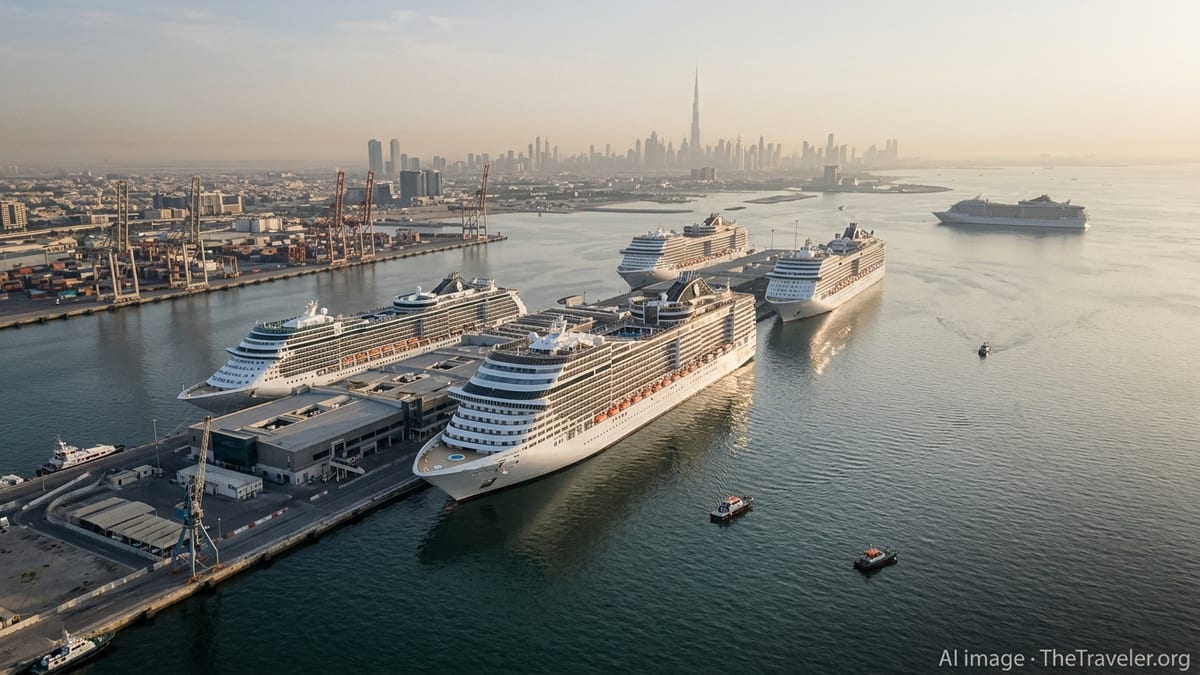
The disruption is not confined to aviation. Cruise operators serving European, Middle Eastern and Indian Ocean itineraries are also being forced to adjust to changing fuel availability and routing constraints. Publicly available cruise deployment data shows that some lines have already reprogrammed Gulf and Red Sea sailings, shifted embarkation ports or repositioned vessels toward the Mediterranean and northern Europe.
These changes are rippling through local tourism economies. Ports that had been investing heavily to attract cruise business in the eastern Mediterranean and along the Red Sea now face reduced calls, while traditional hubs in Spain, Italy, France and Greece may see a partial offset as ships are redeployed. However, the same jet fuel and marine fuel price pressures affecting airlines are raising operating costs for cruise companies, which is likely to translate into higher fares and on-board prices for travellers.
European tourism boards are seeking to reassure prospective visitors that the continent remains accessible, but many are quietly revising forecasts for 2026 visitor numbers and spending. Analysts highlight that higher transport costs can discourage long-haul trips in favour of closer-to-home travel, potentially benefiting intra-European tourism while reducing arrivals from North America and Asia.
For destinations such as Spain’s Balearic and Canary Islands, Greece’s island chains and Italy’s coastal resorts, the resilience of air links from northern Europe will be decisive. The Netherlands’ role as an aviation and fuel gateway, and its decision to join wider European efforts to secure alternative routes via Suez, Bab el-Mandeb, the Red Sea and the Cape of Good Hope, has therefore become a key element in the broader bid to prevent a summer tourism slump.