


More news on this day
India’s Bharat Gaurav tourist train program is entering a new phase, with Indian Railways and IRCTC unveiling extended 10‑ and 11‑day pilgrimage circuits that link some of the country’s most revered temples and heritage cities into single, all‑inclusive rail journeys.
Get the latest news straight to your inbox!
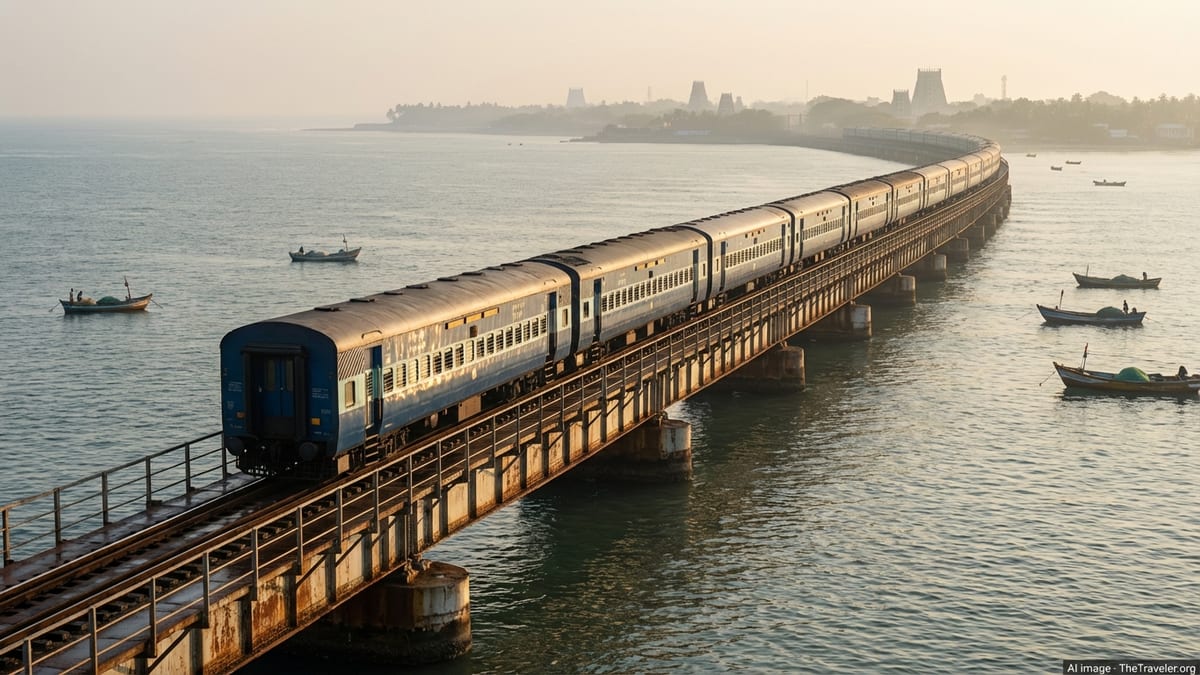
New Long-Haul Pilgrimage Circuits Take Shape
Publicly available information from Indian Railways and the Indian Railway Catering and Tourism Corporation (IRCTC) shows that Bharat Gaurav tourist trains are increasingly being deployed on longer spiritual circuits designed as one‑ticket pilgrimage adventures. Recent examples include 10‑night, 11‑day itineraries that combine multiple states and clusters of shrines into a single package, marketed to devotees seeking a structured way to visit distant holy sites.
These extended journeys build on the Bharat Gaurav scheme, under which themed tourist trains are operated to promote cultural, religious and heritage tourism across India. Schedules and routes vary by departure city, but the model is consistent: multi‑day, point‑to‑point itineraries with onboard accommodation, meals and escorted sightseeing at each stop, allowing passengers to undertake complex pilgrimages without having to manage individual rail bookings or local logistics.
According to route summaries published on the Indian Railways Bharat Gaurav portal, recent and upcoming departures originate from cities such as Amritsar, Rewa, Rajkot, Gorakhpur and Delhi, each targeting a specific spiritual theme or geographic region. The trains run as chartered tourist services, separate from regular passenger operations, with dedicated rakes branded under the Bharat Gaurav banner.
For many passengers, the appeal lies in being able to complete an ambitious multi‑state pilgrimage circuit within roughly a week and a half, while traveling in the relative comfort of reserved tourist coaches and staying in pre‑booked hotels at each major stop.
Key Sacred Destinations on the Bharat Gaurav Map
The latest Bharat Gaurav tourist train offerings highlight a wide range of sacred destinations, often grouped to reflect major pilgrimage traditions. One high‑profile example is the Sapta Jyotirlinga Mahayatra, an 11‑day circuit promoted by IRCTC that brings pilgrims to seven prominent Jyotirlinga shrines, including Somnath, Nageshwar near Dwarka, Mahakaleshwar and Omkareshwar in Madhya Pradesh, Trimbakeshwar and Bhimashankar in Maharashtra, and Grishneshwar near Ellora. These journeys typically also incorporate iconic temples such as Dwarkadhish and regionally important sites along the route.
Other Bharat Gaurav routes focus on different sacred geographies. Itineraries in southern India have been structured around revered temples such as Tirupati Balaji in Andhra Pradesh, Ramanathaswamy Temple in Rameswaram, the Meenakshi Amman Temple in Madurai, Mallikarjuna Jyotirlinga at Srisailam, and the coastal pilgrimage point of Kanyakumari. Tour descriptions indicate that passengers are transported by train between hubs, then shifted to buses for local transfers and guided visits at each temple town.
In eastern India, a newly announced "Divine East Temple Tour" operated on a Bharat Gaurav deluxe rake offers an 11‑day loop from Delhi Safdarjung to cities including Varanasi, Bhubaneswar, Puri, Kolkata and other major shrines across Uttar Pradesh, Odisha, West Bengal and Jharkhand. Published itineraries for this route emphasize visits to the Kashi Vishwanath corridor in Varanasi, the Jagannath Temple in Puri and prominent Shakti and Vaishnav temples in the region.
Separately, Bharat Gaurav services originating from Karnataka and other states have been configured to connect pilgrims with long‑aspired destinations such as Kashi, Ayodhya, Puri and key Shakti Peetha temples. Government briefings describe these trains as a way to give large groups an affordable option to complete extensive circuits that might otherwise require multiple individual trips over many years.
All-Inclusive Rail Tourism Experience for Devotees
IRCTC’s tour brochures and announcements describe Bharat Gaurav pilgrim trains as largely all‑inclusive packages. Fares are typically advertised to cover rail travel in reserved coaches, onboard or off‑board vegetarian meals, accommodation in hotels or dormitories at intermediate destinations, local transfers by bus, and the services of tour escorts. Some itineraries also bundle in travel insurance and basic security arrangements.
The 10‑ and 11‑day journeys are designed with a mix of overnight rail travel and daytime sightseeing. Schedules often show early‑morning arrivals into pilgrimage hubs, followed by hotel check‑ins, temple visits and city tours before the group returns to the station to re‑board the tourist rake in the evening. While comfort levels vary by package type and class, the train formations used for deluxe circuits typically feature air‑conditioned coaches, onboard infotainment and a designated pantry or catering setup.
Pricing structures differ based on class of accommodation and departure city, but the packages aim to offer a bundled cost per person that is competitive with booking separate rail tickets, hotels and transfers independently. This approach is positioned to appeal to older pilgrims, first‑time travelers and large family groups who may prefer an escorted, fixed‑itinerary format over unstructured travel.
Public information also indicates that Bharat Gaurav trains are being used to experiment with region‑specific circuits, such as heritage‑driven tours in Rajasthan combined with temple visits in Ujjain, or east‑coast journeys that pair Puri with other historic temple towns. For tour operators working under the Bharat Gaurav policy, multi‑day pilgrimage trains present a way to aggregate demand and operate at scale on pre‑approved routes.
Growing Network Under Bharat Gaurav Policy
Since the Bharat Gaurav policy was introduced, Indian Railways has encouraged public and private entities to operate themed tourist trains, with spiritual tourism emerging as one of the strongest segments. Press releases and route listings show a steady expansion in the number and diversity of Bharat Gaurav services, from early circuits like the Shri Ramayana Yatra to a wider portfolio that now includes Jyotirlinga tours, Shakti Peetha yatras, Dakshin Darshan journeys and regionally branded trains such as those originating from Karnataka.
Recent government communications highlight that these trains are being framed as a flagship tool for promoting domestic tourism and regional connectivity, particularly for travelers from tier‑2 and tier‑3 cities who may find it challenging to plan complex, multi‑state pilgrimages on their own. The policy allows operators to design itineraries that align with local devotional patterns, such as linking coastal temple towns with inland Jyotirlinga shrines or combining historic capitals with nearby pilgrimage centers.
Bharat Gaurav tourist trains also sit alongside other rail‑based tourism products, including the Buddhist Circuit special train and various luxury and semi‑luxury services tailored to heritage and wildlife travel. Together, these offerings signal a broader effort to use the rail network not only for point‑to‑point transport but also as an engine for curated travel experiences that integrate accommodation, food and sightseeing.
With new 10‑ and 11‑day Bharat Gaurav circuits being announced for different regions and themes, the network of pilgrimage routes is expected to grow further in the coming seasons, subject to demand, operational feasibility and coordination between tour operators and the railway administration.
Indian Railways Bharat Gaurav trains operated trips list
IRCTC Bharat Gaurav tourist train tour packages
Coverage of 11-day Divine East Temple Tour Bharat Gaurav train