


Landing at Los Cabos International Airport (SJD) can feel overwhelming, especially when a dozen people are waving taxi and shuttle offers the moment you walk out of customs. Prices vary widely, the rules for Uber confuse even frequent travelers, and it is not always obvious what a fair fare should be to Cabo San Lucas, the Tourist Corridor or San José del Cabo. This guide breaks down current fare expectations, how the official taxi system works, the real difference between Cabo San Lucas and San José del Cabo pricing, and practical strategies to avoid overpaying in 2026.
Get the latest updates straight to your inbox!
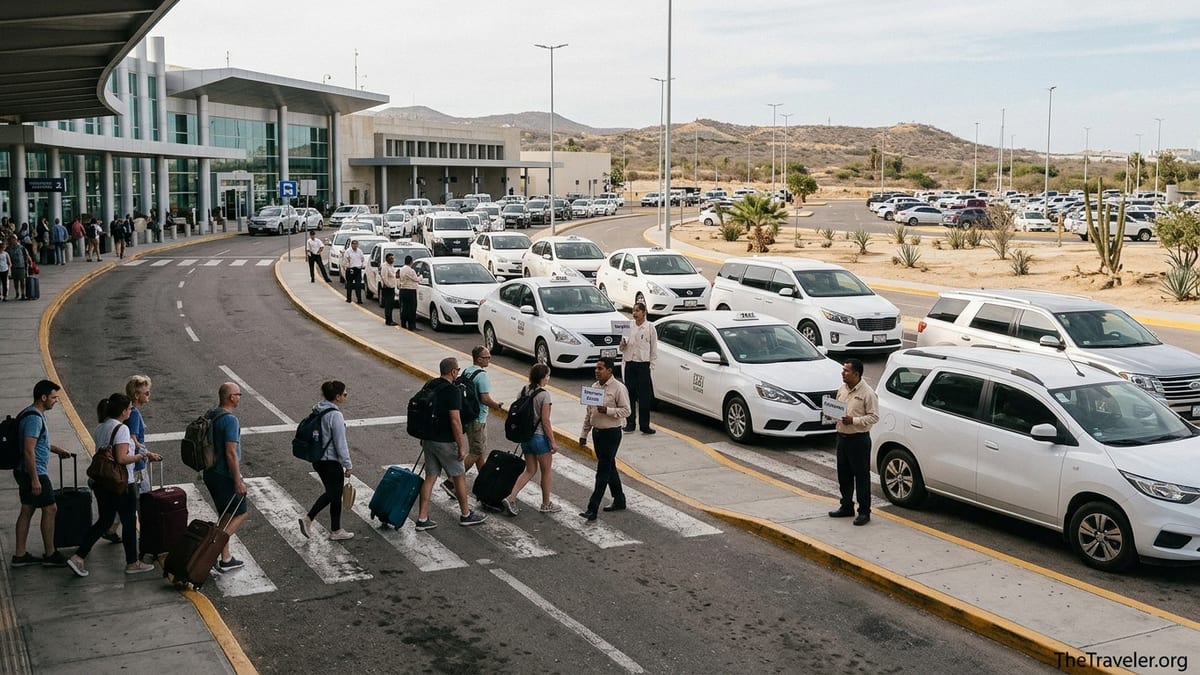
Understanding Los Cabos Airport and Its Hotel Zones
Los Cabos International Airport, often listed as SJD, serves both Cabo San Lucas and San José del Cabo along with the long stretch of resorts known as the Tourist Corridor. The airport sits closest to San José del Cabo, roughly 10 to 13 kilometers away, while Cabo San Lucas is around 35 to 40 kilometers to the southwest along the main highway. That distance difference alone explains why a taxi to Cabo San Lucas can cost noticeably more than one to San José del Cabo, even when you are using the same type of official service.
For taxi pricing, the region is divided into broad hotel zones. Names and boundaries vary slightly between companies, but the logic is similar: Zone 1 is typically San José del Cabo (including Centro Histórico and the San José hotel zone), Zone 2 covers the closer section of the Tourist Corridor, Zone 3 and 4 reach Cabo San Lucas and the Pacific side resorts. In practice, if you are staying at a beachfront all-inclusive near downtown San José, you will fall into the closest zone, while a resort around Cabo San Lucas Marina, Medano Beach or Pedregal will be in one of the farthest zones.
To give a concrete example, a couple arriving at SJD and heading to the hotel zone in San José del Cabo might be quoted an official taxi fare in the ballpark of 65 to 85 US dollars for the vehicle. The same couple going to a marina hotel in Cabo San Lucas can see starting prices closer to 90 to 115 dollars for an official taxi from the airport, simply because of the extra driving distance and higher zone category. Resorts in the mid-corridor, such as those near Chileno Bay or Cabo del Sol, will generally fall in between these two ranges.
Because so many resorts cluster along the highway, two properties just a few kilometers apart can fall into different zones. When comparing prices, always check how a company classifies your specific hotel. For instance, a property near Palmilla in the Corridor can be priced differently from one deeper into Cabo San Lucas, even though both might be marketed to travelers simply as “Cabo.”
Official Airport Taxis vs Pre‑Booked Transfers
At Los Cabos International Airport, the curb immediately outside the terminal is dominated by authorized transportation providers that operate under local regulations. These include official taxi unions, sometimes referred to as sindicato taxis, and a range of pre-booked private transfer companies that hold airport permits. Unlike many US airports, you cannot freely hail any rideshare at the terminal doors; access for services like Uber has been subject to ongoing restrictions and enforcement actions, so most visitors rely on official taxis or shuttles for the airport leg.
Official airport taxis work on fixed, zone-based rates posted internally and at their kiosks. For example, a standard union taxi from SJD to San José del Cabo’s hotel zone is typically quoted in a range around 65 to 85 US dollars for the ride, regardless of whether there are two or three passengers. To the Tourist Corridor, rates generally rise into the mid-seventies to mid-nineties. To Cabo San Lucas or Pacific-side resorts such as those near the marina or downtown, current published union ranges often fall between about 90 and 115 dollars for one vehicle. These fares are usually for a regular-size vehicle, and larger vans cost more.
By comparison, pre-booked private transfers can sometimes undercut or closely match taxi rates, especially when traveling to Cabo San Lucas or if you are sharing the cost among several people. It is not unusual to see a private SUV or van transfer from SJD to downtown Cabo San Lucas priced from around 90 to 130 dollars per vehicle one way, depending on the company, vehicle type and any extras like beer or grocery stops. Some specialist operators list zone tables such as approximately 130 dollars to Cabo San Lucas marina for a private suburban or 99 dollars to San José del Cabo for a smaller private vehicle, with the per-person cost dropping as you add passengers.
For solo travelers or couples heading only to San José del Cabo, an official taxi from the airport can still make sense, because the ride is relatively short and you avoid the need to locate a specific driver in the crowd. For families of four arriving on a busy Saturday night and going all the way to Cabo San Lucas, a pre-booked private transfer often yields more value: you know the price, your name is on a board at the exit, and you are not paying a per-person fare that might inflate the total.
Typical 2026 Taxi Fare Ranges by Area
Taxi and transfer prices in Los Cabos are volatile and can move with fuel costs and local negotiations, but there are still reasonable expectation ranges that help you spot potential overcharging. For airport to San José del Cabo hotel zone trips, expect most official taxi quotes for a normal-size vehicle in 2026 to sit roughly in the mid‑60s to mid‑80s US dollars. If you are offered a rate far above 100 dollars for that short ride in a standard taxi, you are likely looking at an inflated quote and should ask for clarification at the official kiosk.
For airport trips to the Tourist Corridor, especially resorts halfway between San José and Cabo like those near Costa Azul, Palmilla or Chileno Beach, realistic official taxi ranges generally move into the mid‑70s to mid‑90s dollars per vehicle, again depending on the exact zone and vehicle type. For example, a couple heading to a mid‑corridor resort might see an 80 to 90 dollar quoted rate for a standard union taxi, while a private transfer company might charge around 110 to 130 dollars for a larger SUV with a meet‑and‑greet and cold drinks on board.
Cabo San Lucas is usually the most expensive standard zone for airport taxis because of the distance. Current union rate tables and company comparisons suggest that a one‑way taxi from SJD to Cabo San Lucas marina or downtown area will often be quoted between about 90 and 115 dollars. Private transfer operators typically publish rates in a similar but slightly wider range, for example 110 to 150 dollars one way for a suburban or van that can hold four to six passengers comfortably. Travelers have reported paying around 75 to 100 dollars in sales or promotional deals for a private suburban to San Lucas, but anything substantially higher than the low‑hundreds for a basic transfer in a regular vehicle should be questioned.
Prices within the towns themselves are lower but still not cheap by Mexican standards. Once you are already in Cabo San Lucas, a short taxi hop from Medano Beach to the marina or from a downtown boutique hotel to the mall is typically sold as a flat city fare rather than per kilometer, often in the range of 8 to 15 dollars, depending on negotiation and time of day. In San José del Cabo, an evening taxi from the hotel zone to the main square in the Art District for dinner or the Thursday Art Walk is usually somewhat less, often around the equivalent of 6 to 10 dollars. These local examples are helpful reference points when you later see a taxi price quoted at the airport or your hotel’s front desk.
Cabo San Lucas vs San José del Cabo: Which Is Cheaper From the Airport?
Because the airport is physically closer to San José del Cabo, it is almost always cheaper to reach San José hotels by taxi than resorts in Cabo San Lucas. The difference in taxi fares is not just theoretical; in practice, you might see a standard authorized taxi from SJD to a San José hotel zone property such as a beachfront all‑inclusive priced near the lower end of the union table, while a similar taxi to a Cabo San Lucas marina hotel is quoted at least 20 to 30 dollars higher for the one‑way ride.
For example, a family of three flying in for a long weekend at a popular San José beachfront resort might pay around 70 dollars for a union taxi from the airport, whereas that same family heading to a similar‑category property near Cabo San Lucas Marina would likely see a bill closer to 95 or 105 dollars. Over a round trip, that difference can effectively fund an extra dinner out or a snorkeling tour in San José. For budget‑sensitive travelers who still want easy access to beaches and restaurants, basing themselves in San José del Cabo and using taxis or local buses for side trips can meaningfully reduce overall transport spend.
For Cabo San Lucas stays, pre‑booked transfers can narrow the gap. Some companies publish zone 3 or zone 4 prices that make a private SUV to a Cabo San Lucas resort cost only slightly more than an official taxi. A realistic 2026 example might be 130 dollars for a private suburban booked in advance to a marina‑area hotel, compared with 100 or 110 dollars for a taxi purchased at arrival. If you are traveling as four adults, that difference breaks down to a handful of dollars per person in exchange for a smoother arrival, a guaranteed vehicle type and sometimes included extras such as water, beer or a quick grocery stop on the way to the resort.
San José del Cabo can also offer more flexibility in transportation on arrival. Because the town is so close, some visitors headed to San José choose cheaper shared shuttles or even buses from just outside the airport grounds, then use local taxis within town. A shuttle seat from the airport into the San José hotel zone might run 15 to 25 dollars per person, a noticeable savings compared with paying the full taxi union rate as a solo traveler. This strategy is more attractive for those without large amounts of luggage and who are comfortable waiting for shuttles to fill before departure.
Luggage, Vehicle Types and How They Affect Price
Airport taxi and transfer prices in Los Cabos are usually quoted by vehicle, but the amount and size of your luggage can affect which vehicle you are allowed to book. A standard sedan taxi might be acceptable for two adults with carry‑on bags and one checked suitcase, but once you add golf bags, surfboards or several large checked suitcases, you will often be steered toward a larger SUV or van. That upgrade can add 15 to 40 dollars or more to the one‑way fare, so it is important to be realistic about how much space your group actually requires.
As an illustration, imagine a couple arriving with two large checked bags and a golf travel case headed to a mid‑corridor golf resort. At the airport taxi kiosk, they might be told that a standard taxi is not suitable and be quoted a larger vehicle at a higher zone rate, perhaps 110 to 130 dollars, while the base sedan fare for the same zone might otherwise fall around 80 to 90 dollars. A family of five with multiple suitcases plus a stroller will almost always be placed in a van category, especially if they also want a child seat, pushing the one‑way cost further upward.
Pre‑booked services tend to be more transparent on luggage limitations, listing a maximum number of passengers and suitcases per vehicle. For example, a private suburban advertised as suitable for up to five passengers might explicitly note that it can accommodate four large suitcases and one carry‑on per person. If you exceed that, you may need a second vehicle. Although this can increase the total cost, it reduces the likelihood of uncomfortable or unsafe packing jobs that sometimes occur with on‑the‑spot taxi arrangements.
Within town, luggage can also be a factor. If you switch hotels from Cabo San Lucas to the Tourist Corridor or from one San José resort to another, drivers may charge a bit more than the normal short‑hop rate when they see multiple large bags, particularly late at night or during busy periods such as Christmas and Easter holiday weeks. Being prepared with an idea of typical local taxi fares in pesos or dollars can help you negotiate that increase down to a reasonable level.
How to Avoid Overpaying for Taxis at SJD
The surest way to avoid overpaying for a taxi from Los Cabos International Airport is to know approximate current rates for your zone before you land and to avoid committing to any ride inside the terminal without checking these against official pricing. Sales staff in the arrival hall may offer transportation at a markup, often bundled with timeshare presentations or promotional pitches. If you walk straight past the timeshare desks and head outside toward the official taxi and shuttle representatives, you are more likely to receive standard zone fares rather than inflated, commission‑heavy offers.
One effective tactic used by repeat visitors is to collect a couple of online quotes from reputable transfer companies before the trip. For instance, if two established operators quote around 120 and 130 dollars respectively for a private SUV from SJD to a Cabo San Lucas marina hotel, and you see a walk‑up taxi table listing 95 to 110 dollars for the union taxi to the same zone, you can immediately recognize any on‑the‑spot quote over 150 dollars as an outlier. You do not need the exact pesos figure; just having a realistic bracket gives you confidence to decline or negotiate.
Another practical strategy is to consider round‑trip bookings in advance, especially during high season from December through April. Some private transfer companies offer small discounts when you book both legs at once. For example, you might see a one‑way rate of 120 dollars from airport to Cabo San Lucas, but a return package priced at around 220 dollars round trip. Compared with paying 110 to 120 dollars twice for walk‑up taxis, that can be a clear saving. It also locks in your departure time so you are not scrambling for a ride back to the airport on a busy Sunday morning.
Finally, keep cash options in mind. While more services are accepting credit cards, some union taxis at SJD still prefer or require payment in US dollars or Mexican pesos on arrival. If a driver quotes you a price only in dollars, politely ask for the equivalent in pesos and check the implied exchange rate. If it is wildly unfavorable, you can either pay in pesos at a better rate or politely decline and ask at the kiosk for clarification. Travelers who arrive with at least a modest amount of pesos on hand are often in a stronger position to avoid last‑minute exchange markups folded into the fare.
Alternatives to Taxis: Shuttles, Buses and Rideshare
While taxis and private transfers are the most visible options at SJD, they are not the only ways to reach your hotel. Shared shuttle vans operate between the airport and major hotel zones, typically charging a per‑person rate that is cheaper than taking a taxi alone but slower because the van stops at multiple resorts. For example, a shared shuttle seat to the San José del Cabo hotel zone or nearby Corridor resorts might fall in the rough range of 15 to 25 dollars per person, meaning a solo traveler could save significantly compared with a 70 dollar solo taxi ride. The trade‑off is waiting for other passengers and making several hotel stops before your own.
Private shuttles blur the line between taxis and private transfers. Many companies sell private vans on a per‑vehicle basis, much like a taxi, but with pre‑booked names and clear online rate tables. A group of four headed to a Cabo San Lucas resort, for example, might find a private shuttle listing around 90 to 140 dollars each way, sometimes including extras such as bottled water, beer or a 30‑minute grocery stop at a supermarket in San José del Cabo or Cabo San Lucas.
Public buses and colectivos are the cheapest options but require more confidence and time. The main bus route runs along the highway connecting the airport area with San José del Cabo and Cabo San Lucas, serving many local stops and some hotel zones. A ride from near the airport into San José can cost only a few dollars equivalent, and there are also airport‑specific buses used by workers and some budget travelers. However, these rides seldom drop you directly at your resort’s front door; you may still need a short taxi ride with your luggage from the highway or central station.
Rideshare services like Uber operate in parts of Los Cabos but face intermittent restrictions around the airport itself. It is common to hear of visitors using Uber within Cabo San Lucas or between town and popular beach clubs to save money compared with local taxis, with typical in‑town Uber trips costing closer to local Mexican city rates. From the airport, however, calling rideshare directly to the terminal is often discouraged or restricted, and many travelers decide that arranging an authorized transfer is less stressful upon arrival. Some visitors with light luggage choose an intermediate solution: they walk or take a short non‑airport taxi to a nearby point outside the airport zone, then request an Uber from there, but this approach is not convenient for everyone and may not be advisable at night or with children.
The Takeaway
Using taxis from Los Cabos International Airport does not have to be confusing or painfully expensive, as long as you understand the basic zone system and current fare ranges. Expect to pay noticeably less for trips to San José del Cabo than Cabo San Lucas, and remember that luggage and vehicle size can move you into higher price categories. Official union taxis and reputable private transfer companies both work with relatively predictable zone pricing, so obtaining a couple of quotes in advance gives you a clear benchmark.
If your priority is speed and simplicity and you are traveling as a couple or group, pre‑booking a private transfer to Cabo San Lucas often offers the best mix of value and comfort. For shorter journeys to San José del Cabo, a straightforward official taxi can still be a good choice, especially if you are arriving during off‑peak hours and want to go directly from customs to your hotel without dealing with multiple stops. Budget travelers might consider shared shuttles or even buses from near the airport, accepting a slower journey in exchange for considerably lower out‑of‑pocket costs.
Regardless of where you are staying, do not feel pressured to accept the first transport offer you hear inside the terminal. Walk outside, locate the official taxi and shuttle desks, and confirm that the price you are being quoted aligns with the realistic ranges described here. With a bit of preparation and a willingness to step past the sales gauntlet, you can arrive at your resort in Los Cabos confident that you have paid a fair fare and preserved more of your budget for sunset drinks, boat trips and days on the beach.
FAQ
Q1. How much should I expect to pay for a taxi from Los Cabos Airport to Cabo San Lucas in 2026?
For a standard authorized taxi from SJD to Cabo San Lucas marina or downtown, expect a typical range of about 90 to 115 US dollars per vehicle one way, with private transfer companies sometimes charging around 110 to 150 dollars depending on vehicle type and extras.
Q2. What is a normal taxi fare from Los Cabos Airport to San José del Cabo hotels?
To the San José del Cabo hotel zone or downtown, realistic 2026 fares for official airport taxis are usually in the neighborhood of 65 to 85 US dollars per vehicle, with shared shuttles offering lower per‑person prices if you are traveling alone or on a tight budget.
Q3. Are taxi prices from the airport per person or per vehicle?
Official airport taxis and most private transfers quote prices per vehicle, not per person, so a family of four generally pays the same as a couple, provided they fit within the same vehicle size and luggage limits.
Q4. Do taxis at Los Cabos Airport take credit cards or should I bring cash?
Some companies and vehicles accept credit cards, but many official taxis still prefer or require cash in US dollars or Mexican pesos, so carrying enough cash for your expected fare plus a small buffer is wise, especially if you arrive late in the evening.
Q5. Is it cheaper to pre‑book a transfer or just take a taxi when I arrive?
For Cabo San Lucas and mid‑corridor resorts, pre‑booked private transfers are often similar in price or slightly cheaper than walk‑up taxis, especially for groups, while for nearby San José del Cabo hotels the difference is smaller and an official taxi can be cost‑effective.
Q6. Can I use Uber or other rideshare services from Los Cabos Airport?
Rideshare services like Uber operate in parts of Los Cabos but face restrictions at the airport itself, so most travelers rely on authorized taxis or pre‑booked shuttles for the airport trip and then use Uber mainly within Cabo San Lucas or San José once in town.
Q7. How do I avoid being overcharged for a taxi at SJD?
Know approximate current fares for your hotel zone before landing, walk past the timeshare sales area to the official taxi or shuttle desks, and compare any quote you receive with the typical ranges described in this guide before agreeing.
Q8. Do I need to tip taxi drivers in Los Cabos?
Tipping is customary but not mandatory; for straightforward airport transfers with fair, pre‑agreed pricing, many travelers leave around 10 percent of the fare or round up, adding a bit more if the driver helps with heavy luggage or makes an extra stop.
Q9. Are child seats available in Los Cabos airport taxis?
Standard taxis usually do not carry child seats by default, but several private transfer companies allow you to request them in advance, sometimes for a small additional fee, which is recommended for families traveling with younger children.
Q10. How far in advance should I book a private airport transfer?
Booking at least several days in advance is generally sufficient outside peak holidays, but for Christmas, New Year or major festival weeks in Los Cabos, reserving your private transfer one to two weeks ahead ensures better vehicle choices and more stable pricing.