


More news on this day
Indian Railways is sharpening its focus on Ujjain ahead of Simhastha 2028, advancing new lines, extra services and station upgrades to handle one of the world’s largest religious gatherings.
Get the latest news straight to your inbox!
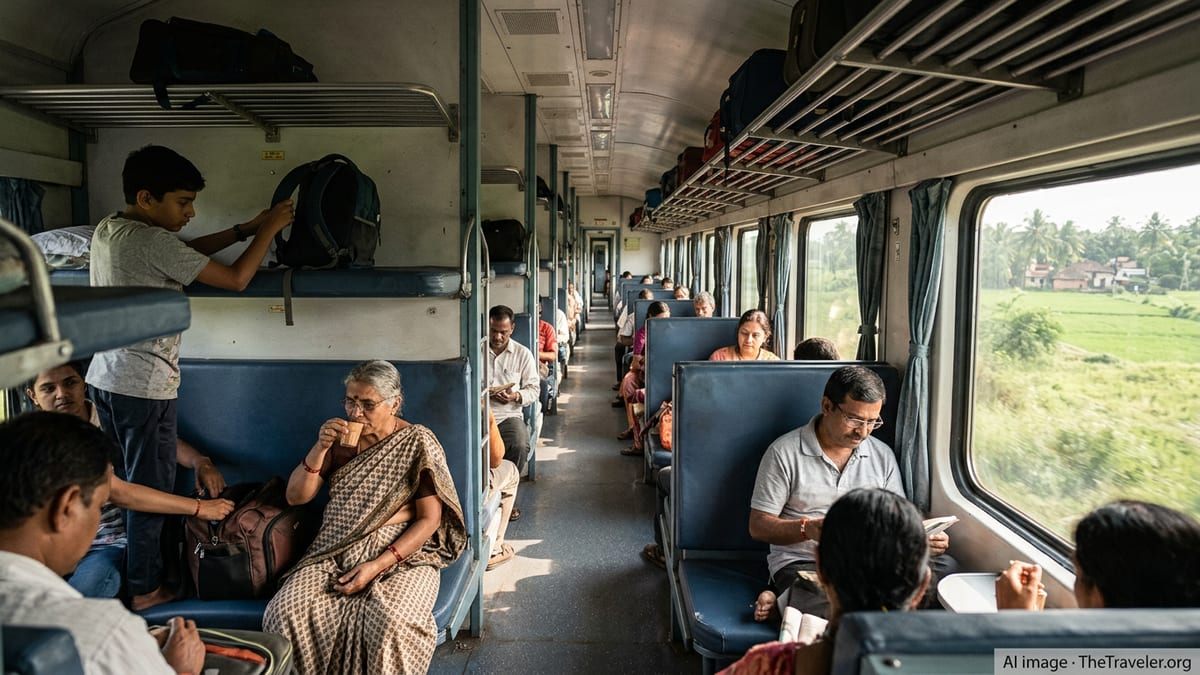
Massive Pilgrim Numbers Drive Rail Focus on Ujjain
Simhastha, the Kumbh-style festival held once in 12 years in Ujjain, is expected to attract far more visitors in 2028 than the estimated 80 million who came during the 2016 edition. Recent environment and planning documents note that tourism promotion linked to Simhastha 2028 is a key driver for new transport infrastructure, underscoring the pressure on rail and road systems into the city.
Publicly available reports indicate that the Union and Madhya Pradesh governments are working on an integrated mobility strategy that assumes up to 5 million daily visitors at peak, with Ujjain functioning as the core hub but depending heavily on nearby cities such as Indore for accommodation and onward connections. Rail capacity and reliability on all corridors feeding into Ujjain have therefore become central to the preparation effort.
The pattern from 2016, when most long-distance pilgrims arrived by train before dispersing by bus and shared vehicles to the ghats, continues to guide current planning. This time, however, rail planners are attempting to reduce bottlenecks on key junctions and introduce more through-running services so that special Simhastha trains can move large volumes of passengers without long halts or reversals.
Station Upgrades Across Western Railway’s Ratlam Division
Within Western Railway, the Ratlam Division has emerged as a focal point for Simhastha-related rail works. Division planning documents list upgrades at Ujjain Junction, Laxmibai Nagar near Indore and Naikheri as dedicated Simhastha 2028 projects, including improvements to station buildings, circulating areas, water supply and approach roads. These stations lie on some of the most heavily used routes for pilgrims coming from Gujarat, Rajasthan and Maharashtra.
Separate preparation status reports tracking Ujjain’s readiness mention that the redevelopment of Ujjain Junction has been taken up with a multi-hundred-crore budget and is significantly advanced. The works include longer and reconfigured platforms, redesigned concourses and new access points intended to separate arrivals and departures, along with improved passenger information systems and surveillance. Some updates describe completion levels above half for major civil components, although finishing and systems work are still in progress.
Ujjain’s railway hub is being integrated into a wider smart-city control network. A dedicated command and control facility at or near the station is already active, according to local readiness reviews, monitoring crowd movement, traffic, and basic environmental parameters. During Simhastha, this setup is expected to tie into temporary control rooms at the ghats and key bus terminals to coordinate passenger flows between trains and road transport in real time.
New Trains, Extra Services and Bypass Alignments
Rail operations are being expanded alongside station upgrades. Regional media coverage of Western Railway preparations describes a plan to run several thousand passenger services over the festival period, combining regular timetable trains with a large number of special services. These are expected to be scheduled with a particular focus on peak bathing dates, when historical data suggests sharp spikes in arrivals and departures within narrow time windows.
An important operational change is the development of an Ujjain bypass line on Western Railway. A recent press release on national rail investments highlights this bypass as a project aimed at removing the need for train reversals at Ujjain Junction, freeing up capacity and cutting dwell times for through trains. The corridor is explicitly linked with religious and tourist traffic to Ujjain and the Mahakaleshwar Jyotirlinga, and is referenced in connection with preparations for Simhastha 2028.
In parallel, Indian Railways has been advancing line-doubling and third-line projects on several sections that feed into Ujjain and Indore. Upgrades on the Indore–Dewas–Ujjain route and related corridors have already added capacity, with completed doubling noted in technical summaries. These enhancements create more room for special trains without displacing regular passenger and freight services during the extended festival window.
Indore–Manmad and Other Long-Distance Connectivity Projects
One of the most closely watched schemes linked to Simhastha 2028 is the Indore–Manmad rail line, designed to give Indore and, by extension, Ujjain a more direct connection toward Maharashtra and onward to southern India. According to national rail project overviews and media coverage, the broad completion target for this new line is currently placed in the 2028–2029 range, with state leaders pressing for a schedule that aligns with the Simhastha calendar.
The Indore–Manmad corridor is part of a broader effort to strengthen Indore’s long-distance connectivity, which has historically lagged behind other major cities of similar size. Other projects, such as the gauge conversion of the Ratlam–Mhow–Khandwa–Akola route and the Indore–Dahod line, are also moving forward with target dates around the end of the decade. While these schemes are national in scope, planning documents and public discussions frequently cite Simhastha as a milestone for putting at least parts of the network to use.
On the urban-transport side, airport-linked rail concepts are under consideration. Information summarising development at Indore’s Devi Ahilya Bai Holkar Airport notes a proposed intercity “Vande Metro” style service between Indore and Ujjain, terminating at the airport, with Simhastha 2028 mentioned as a key demand driver. Detailed timelines for such services are still emerging, but their inclusion in public planning material reflects expectations of significant air-to-rail pilgrim flows funnelling toward Ujjain during the festival.
Regional Corridors and Last-Mile Links to Ujjain
Simhastha planning is not confined to Ujjain city limits. A mobility master plan prepared for Ujjain and surrounding districts outlines how visitors are likely to arrive from multiple directions across India, with rail connections through nodes such as Indore, Dewas, Maksi, Ratlam, Nagda and Jhalawar. The plan emphasises that many pilgrims will first disembark at these larger junctions before transferring to road-based shuttle systems and local trains into Ujjain.
Complementary highway projects, including a greenfield Indore–Ujjain corridor and additional bridges near existing rail overbridges, are being developed to relieve pressure on the older road network. Local commentary and official summaries describe these works as essential to spreading traffic away from Ujjain’s core, allowing railway stations on the periphery to function as distributed gateways for arriving passengers.
Within Ujjain, proposals for new or improved halts, upgraded access to ghats, and expansions of parking near stations are aimed at smoothing the “last mile” of the journey from train to temple. Planning and environment submissions refer to the experience of previous Simhastha editions, when choke points formed quickly at the interface between railway premises and city streets. The current round of works attempts to create more holding areas, clearer pedestrian routes and better segregation of local and outstation traffic.
With less than two years remaining before Simhastha 2028 begins, many of the major rail and station projects are entering a critical delivery phase. Progress updates suggest substantial headway, but also highlight the challenge of synchronising national rail schemes, divisional station upgrades and city-level mobility plans in time to serve tens of millions of pilgrims converging on Ujjain.
Key sources for this article:
Press Information Bureau – Indian Railways connectivity projects including Ujjain bypass
Western Railway Ratlam Division works list for Simhastha 2028 stations
Times of India – Ujjain Simhastha 2028 mobility master plan
Simhastha 2028 – overview of Ujjain rail and infrastructure strategy
Ujjain Temple – summary of Simhastha 2028 preparation projects