


More news on this day
Indian Railways is moving early to prepare for a Diwali 2026 travel surge, drawing on recent years of record passenger demand and large-scale festival special train operations to shape this year’s network plan.
Get the latest news straight to your inbox!
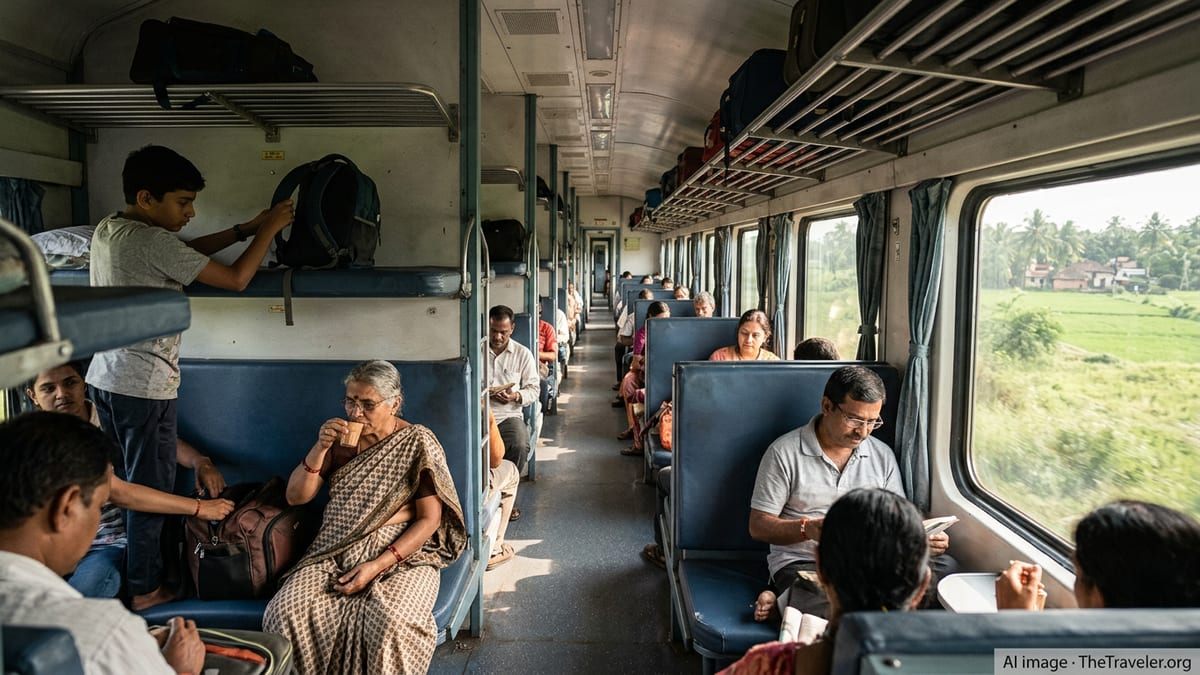
Early festival planning builds on recent Diwali rush
Publicly available information from recent festive seasons indicates that Indian Railways has relied on thousands of additional services to cope with Diwali and Chhath travel, setting a template for 2026. In 2025, coverage highlighted an extensive nationwide schedule, with more than 6,000 special train trips deployed around Diwali and Chhath for returning passengers, alongside a wider festive plan reportedly totalling up to 12,000 special services over the full season.
Data shared through official summaries and media reports for Western, Central and South Central Railway zones in 2024 and 2025 show sustained expansion of festival operations. Western Railway, for example, documented over 2,500 trips across 68 pairs of festival specials in a single season, while South Central Railway listed around 170 special train services to clear Diwali, Dussehra and Chhath rush on high-demand corridors. These patterns point to an increasingly systematised approach to festival scheduling that is expected to inform the Diwali 2026 plan.
Special trains have also been used to support newer premium services on crowded routes. For Diwali 2025, coverage described festival-special Vande Bharat Express services between Delhi and Patna, underscoring a twin-track strategy of adding both conventional and semi-high-speed capacity on key migrant and student corridors. Similar focused deployments on Delhi–Bihar, Mumbai–Uttar Pradesh and metro–tier‑2 city routes are widely expected to remain central when the 2026 specials are finalised.
While a consolidated Diwali 2026 timetable has not yet been published, rail timetable databases already show seasonal “Festival/Diwali Special” entries for 2026 that mirror last year’s directions of travel: an emphasis on long-distance connections from northern and western metros to eastern states, and a mix of reserved express, AC express and unreserved special services.
Network priorities for Diwali 2026 travellers
Recent festival-season schedules suggest that Diwali 2026 capacity will continue to be concentrated on a few core axes. Over the past two years, multiple announcements have highlighted strong deployment on routes linking Delhi, Mumbai and Ahmedabad to high-demand origin points in Bihar, Uttar Pradesh, Jharkhand and West Bengal. These routes carry large numbers of migrant workers and students who typically travel home for Durga Puja, Diwali and Chhath.
At the same time, Western and Central Railway plans for 2024 and 2025 reveal a parallel focus on tourist and pilgrimage flows. Special services have been operated to hubs such as Varanasi, Gaya, Velankanni and coastal Konkan stations during adjacent festivals, complementing the homebound rush. For Diwali 2026, observers expect similar patterns, with additional trains likely on corridors serving religious centres and popular leisure destinations as holidays are clubbed together.
Timetable snapshots circulating via rail‑information platforms for 2026 list a range of north–south and east–west festival specials, including services such as Delhi region to Jhansi or Visakhapatnam, and Durg to Hazrat Nizamuddin, tagged in public databases as seasonal or summer/festival specials. Although many of these listings are still structured as generic seasonal services rather than explicitly marked “Diwali 2026,” their timing in October–November positions them as part of the wider festive plan.
Regional coverage from 2025 also points to an expansion of through services that bypass traditional interchange hubs, such as specials from Dhanbad to Yesvantpur or Mau and Gorakhpur to western Rajasthan. This strategy, if repeated in 2026, would reduce crowding at major junctions while giving smaller cities more direct Diwali connectivity to employment centres.
What recent announcements signal for 2026 bookings
As of early September 2026, media reports indicate that Northern Railway has begun announcing festival specials for the upcoming Diwali and Chhath window, with at least 20 special trains publicised across key routes and bookings opening under designated “festival special” categories. These early declarations typically represent only an initial tranche, with further services layered on as demand patterns become clearer closer to the October–November peak.
In previous seasons, headline numbers for special trains have scaled up rapidly as more zones released their lists. During the 2025 festive period, for example, coverage cited over 150 festival special trains across zones for Durga Puja, Diwali and Chhath, and later reports referenced thousands of special trips nationwide. For Diwali 2025, Northern Railway and other zones opened bookings on a rolling basis, adjusted coach compositions, and added trips or extra rakes on popular services as waitlists lengthened.
Specialist rail‑tracking platforms currently show a growing roster of 2026 special services carrying festival or seasonal tags, suggesting that the Diwali matrix is beginning to take shape in the digital reservation system even as zone‑wise press notes are still staggered. Travellers monitoring these databases can often see temporary train numbers, limited‑period operating dates and indicative coach classes before full narrative announcements are compiled.
Based on the past two years, it is likely that more Diwali 2026 specials will be notified between late September and mid‑October, with an emphasis on weekend and pre‑Diwali departures from metros, followed by a second wave of post‑Diwali and post‑Chhath return specials from eastern and northern states.
Managing crowding, safety and passenger facilities
Recent Diwali seasons have underlined that adding trains is only one part of the challenge. Coverage from 2025 describes a centralised “war room” used to monitor festive operations across the network, backed by real-time data on crowding and punctuality. Publicly available information highlights measures such as queue‑management systems at major stations, strengthened passenger assistance booths and larger deployments of the Railway Protection Force around peak travel dates.
Reports from 2024 and 2025 also note that zones have experimented with a mix of fully reserved specials, AC‑only festival expresses and unreserved rush trains to try to balance safety with affordability and capacity. On some routes, additional general coaches were attached to regular trains to absorb standing passengers, while on others, premium festival specials like Vande Bharat Express services offered faster journeys for travellers able to secure higher‑fare tickets.
Experience from recent years has also drawn attention to challenges when services are cancelled or heavily delayed in the middle of the festive window, especially for passengers with RAC or waitlisted tickets. Travel forums and social posts around Diwali 2025 highlighted concerns about last‑minute cancellations on certain long‑distance trains, reinforcing calls from passengers for clearer contingency planning and timely rebooking options when disruptions occur.
For Diwali 2026, observers expect Indian Railways to lean more heavily on digital channels for passenger information, including real‑time updates on festival specials, coach position details and crowding advisories on high‑traffic days. Enhanced coordination between zonal control rooms, on‑ground station staff and online information platforms is seen as central to managing record passenger volumes more smoothly.
How travellers can prepare for Diwali 2026 journeys
Although the complete Diwali 2026 festival special schedule is still being rolled out, early patterns from previous years point to some practical steps for travellers. Advance planning remains critical on trunk routes linking Delhi, Mumbai, Bengaluru, Ahmedabad and Pune with cities in Uttar Pradesh, Bihar and West Bengal, where initial quotas on both regular and special trains tend to fill quickly once bookings open.
According to recent booking coverage, many festival specials have opened for reservations roughly three to four months before their first run dates, often under special temporary train numbers and fare structures. Travellers tracking official timetables, zonal release pages and well‑known rail‑information portals have generally had better chances of securing confirmed seats, particularly in sleeper and AC classes.
Another evolving trend is the growing role of connecting and less conventional routes. With more cross‑country festival specials scheduled through alternative corridors, passengers willing to travel via slightly longer or indirect paths may find improved availability compared to traditional direct trains that sell out early. Monitoring new seasonal listings and cross‑checking different departure points within a metro region can open up additional options.
As Indian Railways sharpens its preparations for Diwali 2026, travellers are likely to see a mix of familiar special trains returning to the timetable and new festival services designed around recent demand data. The overall objective, judging by the last two festive seasons, is to keep more seats and berths in circulation on peak days while gradually improving the station‑side experience for the millions of people who still rely on the rail network to get home for the festival of lights.
Akashvani News coverage of Diwali and Chhath special trains 2025
NDTV feature on festival special trains and booking
Western Railway summary of Dasshera, Diwali and Chhath festival specials