


More news on this day
India’s aviation and tourism sectors are being squeezed by the escalating conflict in West Asia, as airspace closures and longer detours push up international airfares, disrupt schedules and nudge price-sensitive travellers toward domestic holidays instead.
Get the latest news straight to your inbox!
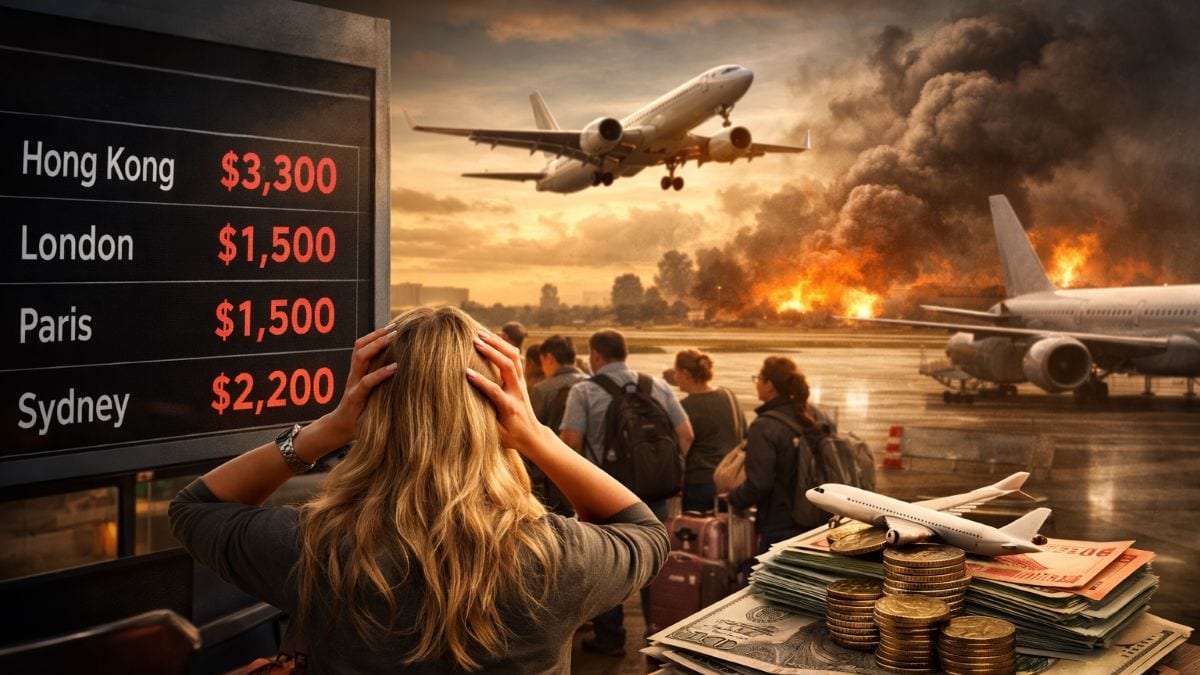
Rerouted Corridors Drive Up Costs and Fares
Since the outbreak of the Iran war in late February 2026, airlines operating between India, Europe and the Gulf have been forced to avoid large swathes of West Asian airspace. Publicly available route-tracking data and industry analyses indicate that carriers are now contouring around closed skies over Iran, Iraq and parts of the Gulf, with some also constrained by Pakistan’s continuing airspace restrictions for Indian-registered aircraft.
These detours are adding 90 minutes to as much as three hours to key westbound sectors such as Delhi to London and Frankfurt, according to specialist aviation briefings. The extra flying time has translated directly into higher fuel burn and crew costs at a moment when global oil prices are already elevated by the conflict and associated supply jitters.
Research circulated to airlines and investors in March suggested that fuel costs on some Europe–India routes had risen by 15 to 25 percent after the new routings took effect. With airlines operating on thin international margins, the added expense is being passed on to travellers through higher base fares, fuel surcharges and tighter discounting.
This squeeze is especially acute on the India–West Asia market itself, which is one of the country’s largest international travel corridors. Business coverage from Indian financial dailies in March and April described fares on select Gulf routes rising to as much as three to four times normal levels during peak travel windows as capacity was cut and remaining seats sold at steep premiums.
Schedule Cuts, Longer Flights and Passenger Disruption
Alongside higher prices, travellers are facing significant disruption to flight schedules. Reports in early May indicated that Air India plans to trim its long-haul international flying by up to around 12 percent through the end of July 2026, citing the combined effect of detours and expensive aviation turbine fuel. Internal guidance referenced in media coverage pointed to grounded wide-body aircraft on certain days and an emphasis on preserving the most profitable routes.
Earlier in March, the same airline group suspended several West Asia routes altogether while gradually restoring limited services to destinations such as Jeddah and Muscat. Other points in the region remain affected as carriers work around both security advisories and the practical challenges of threading aircraft through a shrinking number of open corridors.
To keep some long-haul routes viable, India’s aviation regulator granted temporary relaxations to pilot duty-time limits on extended sectors. Analysis from an international air-travel advisory site noted that the exemption, which allowed additional flying hours on rerouted flights through alternate corridors, was time-limited and could force further frequency reductions if the conflict and airspace closures persist.
For passengers, the result has been a patchwork of last-minute time changes, missed connections and rolling backlogs. Travel forums and passenger advisories describe rebooking windows stretching across one to two days in the immediate aftermath of the airspace shutdowns, with some travellers routed via Southeast Asia or Central Asia in place of the usual Gulf hubs.
Fuel Surcharges and the End of Domestic Fare Caps
The conflict’s impact is not confined to international services. Rising global oil prices have fed directly into Indian carriers’ domestic cost base, prompting a wave of fare adjustments even on internal routes. In mid-March, IndiGo, the country’s largest airline by market share, introduced a fuel surcharge across its domestic and international network, explicitly linking the move to the jump in jet fuel prices associated with the West Asia crisis.
Shortly afterward, the Air India group announced its own phased increases in fuel surcharges, again citing higher input costs. These changes came on top of regular fare hikes and reduced promotional discounts that many travellers had already noticed at the start of the summer scheduling season.
The upward pressure on domestic fares has been amplified by a key regulatory shift. Temporary price caps on Indian domestic airfares, introduced in late 2025 after a separate scheduling crisis, were withdrawn in late March 2026. Commentaries circulating among frequent flyers and industry analysts noted that airlines had lobbied for the rollback, arguing that price controls were unsustainable amid higher fuel bills and rerouting costs triggered by the West Asia conflict.
Credit-rating agency research published in April pointed out that the removal of fare caps gives carriers more freedom to pass through cost increases, but also warned that persistently high ticket prices could dampen passenger growth projections for the 2026 to 2027 financial year.
From Europe Trips to Himalayan Getaways: Demand Pivots Inward
As international fares climb and itineraries become more uncertain, a growing share of Indian travellers appears to be recalibrating plans closer to home. Economic and tourism coverage over the past month highlights a clear softening in outbound demand for Europe, the United States and parts of West Asia, with some trade associations estimating a 15 to 20 percent drop in international bookings for the April to mid-June window compared with 2025.
At the same time, domestic and near‑regional destinations are reporting resilient or even rising interest. Industry commentary points to steady bookings for summer travel to Kashmir, Ladakh, Himachal Pradesh, Uttarakhand, Kerala, the Andaman and Nicobar Islands and India’s Northeast, as well as for short-haul getaways to Nepal and Sri Lanka. Tour operators describe customers who might previously have chosen Dubai or Istanbul shifting instead to hill stations, beaches or temple circuits within India.
Data cited in Indian business media in late March also indicates that some of the fare inflation is creeping into key trunk routes such as Mumbai to Delhi, where average economy prices have ticked upward by roughly 1,000 rupees compared with pre-crisis levels. Even so, for many families, paying more for a shorter domestic flight is still seen as preferable to risking long detours, layovers and sudden cancellations on intercontinental journeys.
This pivot to domestic tourism is being reinforced by the weak rupee, which makes foreign hotels and expenses more costly in local-currency terms. For budget-conscious travellers, package deals inside India can now look relatively better value than international trips, especially once higher airfares and travel insurance premiums linked to conflict zones are factored in.
Airlines, Regulators and Tour Operators Weigh the Next Phase
How long the current pattern of soaring airfares and disrupted travel persists will depend largely on developments in West Asia. Global economic assessments of the 2026 Iran war suggest that, as long as multiple Gulf and Levant airspaces remain restricted and oil markets remain tight, airlines will have little room to unwind reroutings or roll back surcharges.
Indian carriers are responding with a mix of tactical schedule cuts, ad hoc capacity additions on resilient routes and efforts to nudge travellers toward alternative connections through Southeast Asia or Central Asia. Several analyses suggest that airlines are prioritising routes with strong visiting‑friends‑and‑relatives traffic and corporate demand, while being more willing to trim or suspend purely discretionary leisure services.
For policymakers, the challenge is balancing consumer protection with the financial health of airlines that only recently emerged from the pandemic downturn. While direct intervention in pricing has receded with the removal of domestic caps, the regulator continues to monitor fare trends and operational reliability as the summer peak approaches.
Within India’s tourism ecosystem, hotels, state tourism boards and tour operators are moving quickly to capture the domestic surge. Promotional campaigns for hill states, coastal regions and heritage circuits have intensified since March, seeking to position India’s internal destinations as safer, more predictable options in a volatile global travel landscape.