


More news on this day
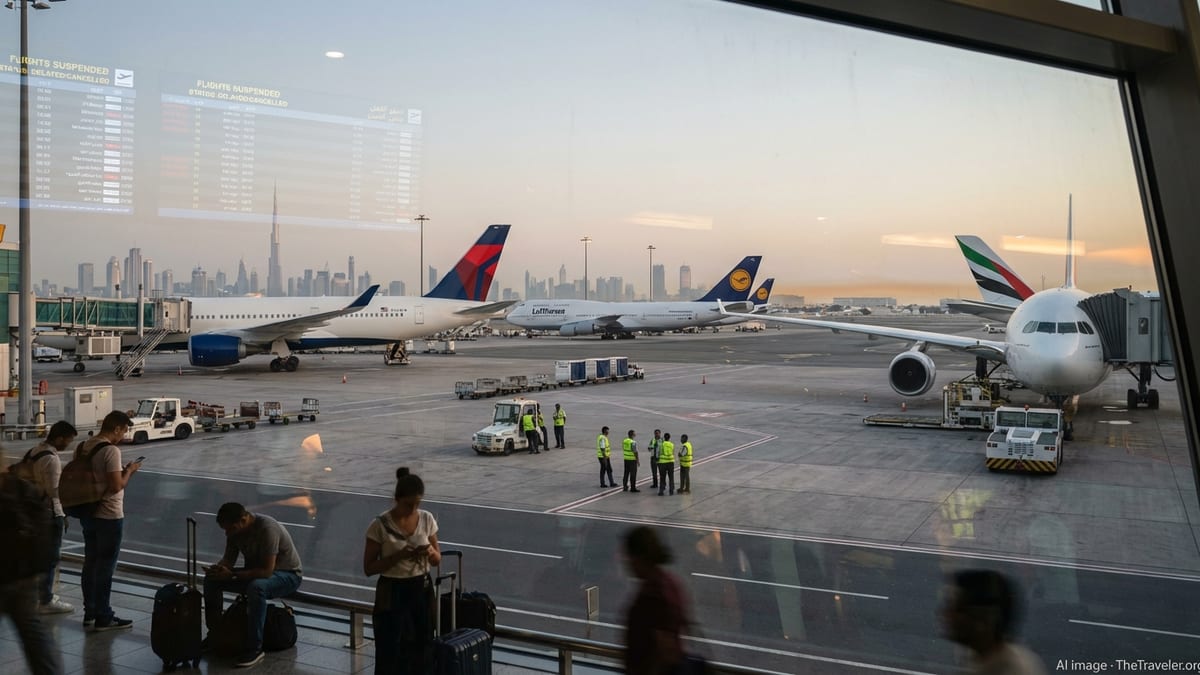
Millions of travelers across the United States are waking up to increasingly unreliable air service, as fresh federal data and private analyses point to a sustained rise in flight delays and cancellations that is reshaping how Americans plan and experience air travel.
Get the latest news straight to your inbox!
Fresh Numbers Paint a Troubling National Picture
Publicly available information from the U.S. Department of Transportation and the Bureau of Transportation Statistics shows that disruption is now a defining feature of domestic air travel rather than an occasional inconvenience. Summary performance data for recent years indicates that roughly one in five scheduled domestic flights arrived at least 15 minutes late, with millions of passengers caught up in knock-on delays each year.
Regulatory filings and aviation data compiled for federal rulemaking in late 2024 highlighted more than 1.4 million delayed domestic flights in a single year, along with tens of thousands of long delays lasting three hours or more. These prolonged disruptions have drawn particular scrutiny because they often involve passengers being stranded on aircraft or at crowded terminals for extended periods.
Separate analysis of 2020 to 2024 flight records, drawing on the same federal databases, suggests that while airlines have improved some operational metrics, the severity of delays has increased. The amount of delay time per disrupted flight has edged higher compared with pre-pandemic patterns, meaning that when problems occur, they are more likely to significantly upend travel plans.
Against this backdrop, the Department of Transportation has continued to publish its monthly Air Travel Consumer Report, which tracks on time performance, cancellations and consumer complaints. Recent editions show that the elevated levels of disruption that emerged after the pandemic travel rebound have not fully subsided, even as passenger volumes hit or exceed pre-2020 records.
States and Airports Where Disruption Hits Hardest
New state level research released over the past year indicates that where travelers begin their journeys can sharply influence their odds of getting stuck. An analysis by travel insurance platform Squaremouth, using national aviation data for the 12 months from July 2024 to June 2025, found that nearly one in four U.S. flights during that period was delayed or cancelled, with some states seeing disruption rates above 27 percent.
The same report highlighted West Virginia, New Jersey, Virginia, Kansas and Florida among the states with the highest combined rates of delays and cancellations. For travelers using major hubs in those regions, the elevated disruption can ripple across connecting itineraries, increasing the likelihood that a missed departure in one city cascades into additional missed flights downstream.
Other independent aggregators that draw directly from Bureau of Transportation Statistics data have documented similar patterns at the airport level. Large coastal and Sun Belt hubs, where traffic has rebounded strongly and weather related bottlenecks are common, often post some of the highest tallies of late and cancelled flights. These facilities also tend to be critical connection points, meaning that operational issues there can quickly spread through airline networks nationwide.
For leisure travelers lining up early morning departures to popular vacation destinations, such statistics mean that apparent schedule choices often mask a hidden risk profile. A flight routed through a chronically congested hub may be far more likely to run late than a slightly less convenient option, a factor that more consumers are now weighing as disruption metrics become easier to access online.
Airline Practices Under the Microscope
While weather and air traffic constraints still play a significant role in keeping planes on the ground, recent federal reports and academic work suggest that issues within airlines themselves remain a primary driver of delays and cancellations. Transportation Statistics Annual Reports describe how so called carrier delays, including maintenance problems, crew scheduling challenges and aircraft turnaround issues, account for a substantial share of recorded disruption minutes.
Independent data analysis of 2022 and 2023 performance has reinforced this picture, concluding that carrier controlled factors generated roughly one third to more than one third of all delay minutes in those years, even before counting late arriving aircraft that are themselves often the product of earlier internal problems. This has fueled public debate over whether airlines scheduled more flights than their staffing, aging fleets and support systems could reliably operate.
High profile breakdowns have intensified scrutiny. Following a widespread technology outage in July 2024 that cascaded through airport operations worldwide, one major U.S. airline experienced days of cancellations and rolling delays that stranded passengers in multiple hubs. Subsequent federal reviews classified the bulk of that disruption as controllable by the carrier, underscoring regulators’ view that companies are responsible for building resilience into their operations.
Consumer complaint data tells a similar story. Advocacy group analyses of 2024 filings found that certain low cost carriers recorded the highest rates of grievances per 100,000 passengers, alongside some of the weakest records for on time arrivals and cancellation rates. That combination has sharpened the competitive pressure on airlines to demonstrate that low fares do not come at the expense of basic reliability.
Costs Mount for Passengers and the Travel Industry
Rising disruption has financial consequences that reach well beyond missed vacations. Travel insurance providers report that higher rates of delayed and cancelled flights are translating into larger out of pocket costs for rebooked tickets, last minute hotel stays and lost prepaid reservations. Squaremouth’s analysis linked elevated state level disruption rates to an upswing in claims related to trip interruption and missed connections.
Academic and government studies on aviation weather impacts have previously estimated that prolonged delays and cancellations can impose multi million dollar costs on airlines and passengers during major events. As disruption becomes more frequent rather than confined to isolated storms or one off crises, those burdens are increasingly spread across routine travel days.
For airports and tourism dependent regions, persistent reliability problems can also erode competitiveness. Destinations that suffer repeated headline making gridlock risk losing visitors to rival cities that offer a smoother journey, particularly for international travelers weighing where to connect and spend limited vacation time.
Within households, the impact is measured in lost time and frayed trust. Families now commonly build extra buffer days into key trips, accept higher prices for nonstop flights that avoid vulnerable hubs, or purchase add on protections in an effort to shield themselves from the growing uncertainty built into the system.
Policy Push and Traveler Response
The rising tide of disruption has prompted a policy response in Washington. Building on several years of record complaints and repeated operational meltdowns, the Biden administration has advanced proposals that would require airlines to provide automatic compensation or benefits when significant delays and cancellations are within the carrier’s control. Draft rules under consideration aim to establish baseline standards for vouchers, meals and hotel accommodations across the industry.
The Department of Transportation has also expanded a publicly available dashboard that shows what each airline commits to offer stranded passengers in specific scenarios. This tool is designed to make it easier for travelers to compare carriers on their handling of disruptions, not just on headline fares or frequent flier perks.
Industry observers note that airlines are simultaneously investing in upgraded crew management software, refitted aircraft cabins and expanded customer service channels as they seek to reduce the operational fragility exposed by post pandemic demand surges and high profile outages. However, analysts caution that these improvements may take years to fully translate into more dependable day to day performance.
In the meantime, experienced travelers are adjusting their behavior. Trip planners increasingly look beyond schedule and price to examine historical on time records, seasonal weather patterns and connection times when choosing flights. For many Americans, the simple assumption that a morning departure will reach its destination on the same day is no longer taken for granted, as the latest data makes clear that unreliability has become an enduring feature of U.S. air travel.