


Through the summer and autumn of 2026, scientists tracking the North Pacific watched a familiar but unsettling pattern take shape. A large pool of unusually warm water, labeled NEP26A, emerged in the offshore Northeast Pacific in May and, by late October, was still active across the Gulf of Alaska. For travelers, fishing communities and anyone who cares about northern oceans and wildlife, this developing marine heatwave is an early test of how a warming world is reshaping one of the planet’s great cold‑water seas.
Get the latest updates straight to your inbox!
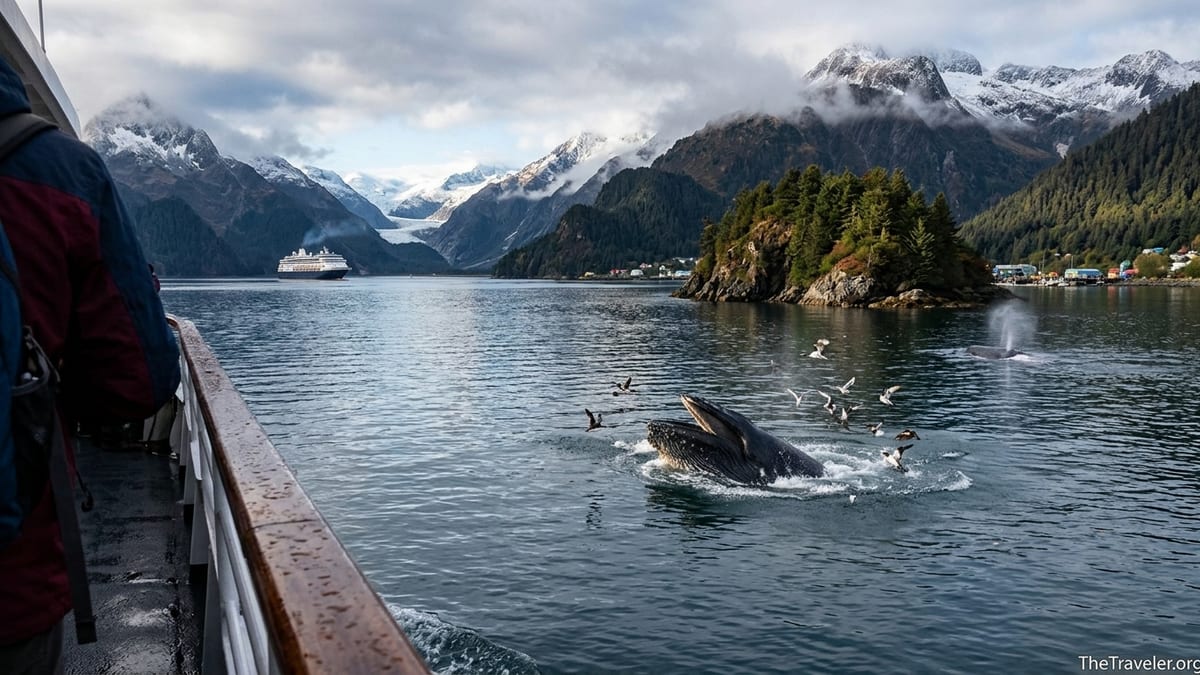
How NEP26A Formed and What NOAA Is Seeing Now
According to NOAA’s California Current Marine Heatwave Tracker, often called Blobtracker, scientists formally identified NEP26A in May 2026 when a large patch of the offshore Northeast Pacific crossed their size and temperature thresholds for a major marine heatwave. The feature initially formed in far offshore waters of the Northeast Pacific, then extended into the Gulf of Alaska region. By October 30, 2026, NOAA reported that NEP26A was still active in the northwestern part of its study area, within the Gulf of Alaska, with sea surface temperatures remaining significantly above their seasonal norms.
Over the month leading up to that October assessment, NOAA described NEP26A’s footprint as fluctuating in shape and coverage, but generally growing in both total area and intensity. In practical terms, that means maps of the region showed an expanding patch of orange and red temperature anomalies in the Gulf of Alaska, signaling water several tenths of a degree to more than a degree Celsius warmer than expected for the time of year. The exact values vary by location and date, and NOAA has been careful to publish only observed anomalies derived from satellite and in situ measurements rather than speculative figures.
At the same time, NOAA scientists emphasize that NEP26A is one piece of a broader pattern of unusually warm ocean conditions in 2026. A strong El Niño is underway in the tropical Pacific, and global marine heatwave monitoring from NOAA’s Physical Sciences Laboratory shows that more than a third of the world’s ocean surface experienced marine heatwave conditions in September 2026. Within that global context, NEP26A stands out because it is forming in a high‑latitude, traditionally cold region that supports iconic Gulf of Alaska fisheries and wildlife.
Importantly for travelers planning cruises out of ports such as Seward, Whittier and Vancouver, NEP26A’s core has so far been centered offshore rather than hugging Alaska’s inner coastal fjords. Nearshore waters and bays can respond differently because of local winds, tides and freshwater inputs. For example, NOAA’s Kasitsna Bay Laboratory has reported that parts of Kachemak Bay, a popular wildlife‑watching area near Homer, were actually cooler than expected during some summer 2026 surveys, highlighting how local circulation can partially buffer or delay offshore heat.
What Counts as a Marine Heatwave and Why Anomalies Matter
Marine heatwaves are not simply warm days at sea. NOAA and other research groups define them using statistics based on long records of sea surface temperature. A marine heatwave is typically declared when ocean temperatures at a given location exceed a high threshold, often the 90th percentile of historical values for that calendar date, and stay above that level for at least five consecutive days. This approach accounts for the normal seasonal cycle so that a “hot” day in February in the Gulf of Alaska is judged relative to typical February conditions, not to August.
In this framework, an anomaly is the difference between the observed temperature and the long‑term seasonal average. For instance, if surface waters in the central Gulf of Alaska would usually be about 8 degrees Celsius in late October but are measured at roughly 9 degrees, the anomaly is about plus one degree. On temperature‑anomaly maps, those positive deviations are usually shaded in yellow, orange or red; negative anomalies, where the ocean is cooler than average, appear blue. The intensity of a marine heatwave reflects how large those anomalies are and how long they last.
The distinction between a short‑lived spike and a marine heatwave is crucial. A single warm day might have little effect on marine life adapted to daily variations. In contrast, weeks to months of elevated temperatures can change the timing of spring phytoplankton blooms, alter the depth of nutrient‑rich water, shift fish and zooplankton distributions and stress cold‑water species. This is why NEP26A attracts scientific concern even though day‑to‑day temperatures still fluctuate. It is the sustained, basin‑scale departure from the usual seasonal pattern that defines the event and gives it potential ecological consequences.
NOAA’s global marine heatwave forecast system, discussed in its October 2026 outlook, flags areas where such prolonged anomalies are likely to persist. For the Northeast Pacific, including the Gulf of Alaska, experimental forecasts initialized in October 2026 indicate an elevated probability of above‑average temperatures extending into at least spring 2027. These are forecasts rather than guarantees, but they reinforce the picture of NEP26A as part of a multi‑season warm phase rather than a passing blip.
NEP26A vs NEP25A and the Role of El Niño
Blobtracker currently tracks two distinct large marine heatwaves in the Northeast Pacific: NEP25A and NEP26A. NEP25A first emerged in May 2025 and occupies a region off California and Baja California. It has remained a contiguous feature for more than a year, intensifying at times as warm equatorial Kelvin waves connected to El Niño propagated into the eastern Pacific and raised coastal sea surface temperatures. For travelers sailing along the U.S. West Coast or visiting coastal cities such as San Diego, Santa Barbara and Monterey, NEP25A is the marine heatwave most directly connected to local sea‑surface warming and some documented ecological changes farther south.
NEP26A, by contrast, lies farther north and west, centered in the Gulf of Alaska and adjacent offshore waters. NOAA’s October 30, 2026 update explicitly notes that while El Niño has strengthened NEP25A along the southern West Coast, NEP26A is not directly due to El Niño. Instead, it more closely resembles past high‑latitude Northeast Pacific marine heatwaves that developed during non‑El Niño years. That does not mean El Niño is irrelevant. Large‑scale atmospheric patterns that help produce El Niño, such as shifts in the jet stream and storm tracks, can also affect the high‑latitude North Pacific, altering wind patterns and surface heat fluxes that set the background conditions for marine heatwaves.
The key distinction is causal. For NEP25A, equatorial wave dynamics linked to El Niño feed warm water toward the coast, directly reinforcing the marine heatwave. For NEP26A, NOAA’s current assessment is that local and regional atmospheric forcing in the Gulf of Alaska, superimposed on a historically warm Pacific, are the primary drivers. El Niño may be part of the broader climate backdrop, but available analyses do not support describing NEP26A as an El Niño‑driven feature in the way some 1997 or 2015 events were.
This separation matters for expectations. If NEP26A were tightly locked to El Niño, its evolution might track the typical rise and fall of tropical Pacific conditions. Because it is driven by more local North Pacific dynamics, its duration and intensity could respond differently, for example to shifts in North Pacific high‑pressure systems or changes in storminess over the Gulf of Alaska in late winter and spring.
Possible Drivers: High‑Pressure Systems, Mixing, and Hidden Heat
Scientists are still unraveling the specific mechanisms that generated NEP26A. However, previous research on Northeast Pacific marine heatwaves, including the original 2013–2016 Blob, points to a suite of physical processes that likely play some role. One commonly implicated factor is a persistent high‑pressure ridge over the Northeast Pacific. Such a ridge suppresses storm activity, reduces cloud cover and weakens the winds that normally stir and cool the ocean surface. With less mechanical mixing and less evaporative cooling, the upper ocean can warm and remain stratified, trapping heat near the surface.
Another proposed contributor is reduced wind‑driven upwelling and vertical mixing. In typical cool years, strong winds along the Gulf of Alaska rim help pull colder, deeper water up toward the surface, particularly along the shelf break where many commercial fishing grounds lie. When those winds slacken for extended periods, the ocean surface can warm more quickly, especially if it has already been “preconditioned” by several consecutive years of above‑average global ocean heat content. Studies published in 2026 on Northeast Pacific marine heatwaves highlight how background warming loads the dice so that a given high‑pressure pattern yields a stronger thermal response than it would have a few decades ago.
Reemergence of subsurface heat is another plausible factor. Warm anomalies can be mixed downward in winter, stored below the surface and then resurface in the following spring and summer as the upper ocean restratifies. Recent analyses of North Pacific temperature profiles suggest that such subsurface reservoirs helped maintain The Blob and later events. For NEP26A, early 2026 oceanographic surveys and float data indicate that waters below the immediate surface mixed layer were already relatively warm going into spring, which may have primed the region for rapid development once atmospheric conditions aligned. The precise contribution of subsurface heat to NEP26A, however, remains under active investigation.
Air‑sea heat exchange completes the picture. When the atmosphere above the Gulf of Alaska is unusually warm, dry or calm, the ocean loses less heat to the air and can even absorb additional solar radiation due to reduced cloudiness. During some recent winters, for example, Anchorage and coastal Alaska communities have experienced mild spells with rain at low elevations rather than snow. While any single warm storm cannot be tied to NEP26A, these regional weather patterns reflect the same shift toward conditions that favor marine heatwaves. Researchers caution that until detailed attribution studies are complete, each of these mechanisms for NEP26A should be viewed as plausible contributions rather than proven dominant causes.
Comparing NEP26A with The Blob and Other Past Events
The 2013–2016 Northeast Pacific marine heatwave known as The Blob remains the benchmark for modern North Pacific extremes. That event began as an expansive warm pool far off the U.S. and Canadian West Coast, then spread south and north, at times stretching over 2,000 miles from Mexico to Alaska and penetrating deep into the Bering Sea. Sea surface temperatures in some regions were several degrees Celsius above normal, and the event persisted, with varying intensity, for more than two years. Ecologically, it triggered mass seabird die‑offs, harmful algal blooms that closed shellfish and crab fisheries, and changes in salmon, cod and zooplankton communities that rippled through the food web.
NEP26A, while significant, is not simply a replay of The Blob. One clear difference is its geography. As of late October 2026, NEP26A is centered in the offshore Gulf of Alaska and northwest portion of NOAA’s Northeast Pacific analysis region, rather than blanketing the entire West Coast. NEP25A, farther south, occupies a portion of the space once dominated by The Blob, but the two 2025–2026 features remain distinct in NOAA’s tracking. In terms of extent, preliminary graphics from Blobtracker show that the combined area of NEP25A and NEP26A ranks among the larger heatwaves in the satellite record, but still short of the maximum areal coverage reached in 2014–2015.
Duration is another point of comparison. The Blob lasted well over two years. NEP25A has already persisted since May 2025 and is still ongoing, giving it a multi‑year character. NEP26A has been present since May 2026, approaching half a year by late October, with forecasts hinting that anomalies may linger into at least early 2027. If those projections bear out, NEP26A would join a growing list of multi‑season or multi‑year events in the Gulf of Alaska, though the full time span remains uncertain. For now, scientists avoid declaring NEP26A a long‑duration event until observations, rather than models, confirm how it evolves through winter and spring.
Intensity comparisons must also be made carefully. Peak anomalies in The Blob reached several degrees Celsius above seasonal norms in some regions. Available NEP26A maps to date generally show more moderate positive anomalies over a large area, though local maxima may be higher in some pockets. That pattern is consistent with a broad but not yet “super‑charged” heatwave. NOAA’s research on Northeast Pacific marine heatwaves published in 2026 further notes that different seasons favor different types of events: winter and spring marine heatwaves tend to be more persistent but somewhat less intense at the surface than sharp, shorter summer peaks.
To help organize these comparisons, it is useful to think in terms of location, extent, duration and magnitude. The Blob scored extreme values on all four. NEP26A, in contrast, currently appears moderate in intensity but large in area and worrying in its potential duration. It also arises in an ocean that has warmed substantially since the early 2000s, meaning even “moderate” anomalies now ride on top of historically high baseline temperatures.
Ecological Effects: What We Know from Past Heatwaves
Although it is too early to fully quantify NEP26A’s ecological impacts, scientists can draw on a decade of research into past Gulf of Alaska and Northeast Pacific marine heatwaves. Studies following The Blob documented dramatic changes in phytoplankton bloom timing and composition. More recent work published in 2026 on phytoplankton phenology in the Gulf of Alaska found that marine heatwaves tend to compress and weaken the traditional spring bloom, shifting peak production earlier and reducing its intensity. That reorganization likely affects zooplankton, such as copepods and krill, that feed on phytoplankton and in turn support fish, seabirds and marine mammals.
Fish populations responded unevenly. Gulf of Alaska Pacific cod experienced a steep decline linked in part to warm‑induced changes in prey and metabolic stress, prompting significant cuts to cod quotas in the late 2010s. Capelin and other forage fishes that prefer cooler, nutrient‑rich conditions shifted distribution, with some surveys showing reduced abundance in traditional sampling areas. Salmon returns to certain Alaskan rivers weakened during and after The Blob period, while others remained relatively stable, illustrating how different stocks interact with changing ocean conditions depending on their migration routes and timing.
Seabirds and marine mammals provided some of the most visible signals. During and after The Blob, researchers documented mass strandings of emaciated common murres along Alaska’s coasts, ultimately estimating that millions of birds may have died. Humpback whales and other baleen whales altered feeding areas and timing, with some previously reliable summer whale‑watching hotspots around the Kenai Peninsula and Southeast Alaska seeing shifts in sightings as prey moved. Sea lion and fur seal rookeries also showed changes in pup condition and survival in some years, although multiple stressors, including prey competition with fisheries and disease, complicate attribution.
Commercial fisheries felt the effects where key target species intersected with heat‑altered habitats. Dungeness crab fisheries off the U.S. West Coast experienced harmful algal blooms and domoic acid contamination during past marine heatwaves, while Alaska pollock and groundfish managers increasingly integrated ecosystem indicators into harvest guidelines. The economic stakes are large. In 2024, pollock landings from the Bering Sea and Gulf of Alaska alone were worth more than 400 million dollars at the dock, supporting at‑sea processing vessels, shore plants in coastal communities like Kodiak and Dutch Harbor and seafood supply chains that reach supermarkets and fast‑food outlets across North America and Europe.
NEP26A’s Impacts So Far: Confirmed Evidence vs Open Questions
As of late 2026, scientists have not yet published comprehensive assessments that attribute specific ecological changes directly to NEP26A. NOAA Fisheries’ Gulf of Alaska ecosystem surveys, EcoFOCI field programs and Alaska Marine Ecosystem Status Reports provide ongoing data on temperature, plankton, fish recruitment and predator condition, but much of the detailed analysis for 2026 is still in progress. For travelers scanning news headlines, this time lag can be confusing. The ocean surface is already warm, yet peer‑reviewed studies linking those anomalies to biological responses will emerge months to years later.
What can be said with confidence is that the physical marine heatwave exists and overlaps with ecosystems known to be sensitive to past warming. Satellite data confirm persistent positive sea surface temperature anomalies in the NEP26A region. Ship‑based surveys and moorings in the Gulf of Alaska have reported water column warmth consistent with these anomalies. Preliminary reports from some 2026 surveys suggest shifts in zooplankton communities and timing of phytoplankton blooms compared with long‑term averages, echoing patterns seen in previous heatwave years, but detailed quantitative results are still being compiled.
For higher‑trophic‑level species, evidence is more fragmentary. Local reports of unusual whale or seabird sightings, or of salmon schools appearing earlier or closer to shore than expected, are valuable clues but cannot by themselves prove ecosystem‑wide change. Individual wildlife encounters near popular viewing spots such as Resurrection Bay, Glacier Bay or Prince William Sound are influenced by local prey patches, tides and weather on a given day. Scientists require systematic surveys across broad regions and multiple seasons to determine whether observed changes in distribution, breeding success or body condition are statistically linked to NEP26A rather than to short‑term variability.
This distinction between confirmed findings and plausible but unproven impacts is crucial for responsible communication. As of the latest 2026 data, confirmed findings include the existence and evolution of the NEP26A temperature anomaly, its approximate geographic extent in the Gulf of Alaska and evidence that plankton and fish communities are operating within an unusually warm thermal regime. Plausible risks, based on past events, include altered prey availability for salmon and whales, stress on cold‑adapted species such as Pacific cod and murres and potential shifts in recruitment of key commercial fishes. Unanswered questions include the magnitude and direction of changes in 2026–2027 salmon returns, the specific responses of capelin and other forage species in NEP26A’s core and whether harmful algal blooms will intensify in Gulf of Alaska coastal waters.
Forecasts into 2027 and What They Mean (and Do Not Mean)
NOAA’s October 2026 marine heatwave forecasts anticipate above‑average temperatures in much of the Northeast Pacific, including the Gulf of Alaska, into at least spring 2027. Some experimental outlooks show a high likelihood that parts of the region will remain in marine heatwave conditions over seasonal timescales. These forecasts combine information from global climate models, observed ocean heat content and atmospheric conditions, and they incorporate the influence of the ongoing El Niño and background climate warming.
However, a forecast is not an observation. It provides probabilities, not certainties, and cannot specify exactly how warm a particular fjord or fishing ground will be on a given date. Local conditions in places that travelers and fishers experience directly, such as Sitka Sound, Prince William Sound or the approaches to Kodiak, will still be shaped by short‑term storms, coastal upwelling events and freshwater inputs from rivers and melting snow. As a result, a tour operator could see near‑normal surface temperatures during an early‑season whale‑watching cruise even while the broader Gulf of Alaska remains anomalously warm.
Forecast uncertainties also arise from how models handle vertical mixing, cloud cover and regional wind patterns. Small errors in simulating a North Pacific high‑pressure ridge or the track of winter storms can translate into significant differences in surface temperature anomalies months later. NOAA stresses that its marine heatwave forecasts are experimental and intended as guidance for resource managers and stakeholders, not as definitive predictions for any specific location or fishery. They are most useful for planning monitoring, adjusting research cruises and preparing for a range of possible ecological responses rather than for making precise claims about future wildlife viewing conditions.
For coastal communities, these forecasts are nonetheless an early warning. If warm conditions persist into 2027, managers may need to plan for altered timing of fish runs, changes in prey fields for marine mammals and potential shifts in harmful algal bloom risk. For travelers, the message is more about context than disruption: visiting Alaska in 2027 will likely still involve spectacular scenery, abundant wildlife and busy fishing ports, but the ocean system underpinning that experience will be operating under a different thermal regime than in past cooler decades.
Implications for Fisheries, Coastal Economies and Travel
The Gulf of Alaska supports major commercial fisheries, small‑boat fleets and subsistence harvests that anchor coastal economies from Southeast Alaska to the Aleutian Islands. Pollock, Pacific cod, sablefish, halibut and salmon all use the region’s waters during critical life stages. When marine heatwaves alter prey distributions or recruitment success, the effects can cascade from boat crews and processing plants to seafood distributors and even restaurant menus thousands of kilometers away. Previous heatwaves have, for example, shifted the timing and location of salmon availability for both commercial trollers and guided sport charters based out of ports like Sitka, Juneau and Homer.
NEP26A raises similar concerns, though concrete 2026 impacts remain under review. If warm conditions reduce the abundance of large, energy‑rich zooplankton and favor smaller, less nutritious species, forage fish such as capelin and herring may decline or move, leaving less food for cod, salmon and whales in traditional hotspots. In some past years, charter operators in the Gulf of Alaska reported needing to travel farther offshore or target different species as local conditions changed. While such adjustments are a normal part of fishing, prolonged marine heatwaves can increase the frequency and scale of these shifts, challenging quota planning, bycatch management and fuel cost expectations for vessel owners.
Coastal tourism that depends on wildlife viewing, including whale‑watching excursions out of Seward, Kenai Fjords day cruises and bear‑watching tours tied to salmon runs, could also feel indirect effects if prey and predator distributions change. It is important to emphasize that, as of late 2026, there is no clear evidence that NEP26A has already disrupted cruise schedules or caused widespread cancellations of whale‑watching trips. Ships are sailing, and sightings of humpbacks, orcas and seabirds continue to draw visitors. What may change over time is which bays or offshore banks are most productive, or how predictable certain seasonal spectacles become, requiring operators to adapt routes and timing.
For conservation efforts, NEP26A underscores the need to design protected areas and management strategies that account for mobile ecosystems. Marine mammals, seabirds and fish are not fixed in place; they follow shifting prey and thermal fronts. Dynamic ocean management tools that blend satellite‑based anomaly maps with real‑time reports from fishers and researchers are already being tested along the California Current and could see expanded use in the Gulf of Alaska as managers seek to reduce bycatch, protect critical feeding grounds and sustain both fisheries and wildlife tourism under more variable conditions.
Chronology, Evidence Categories and Why NEP26A Matters
From a timeline perspective, NEP26A’s story so far is relatively clear. In early 2026, global ocean temperatures were already near record highs, and the Northeast Pacific showed patches of lingering warmth from previous years. In May 2026, Blobtracker identified NEP26A as a distinct large marine heatwave in the far offshore Northeast Pacific, meeting its size and anomaly criteria. Through summer 2026, the feature expanded and shifted, with positive anomalies becoming established across large parts of the Gulf of Alaska. By October 30, 2026, NOAA’s latest update confirmed that NEP26A remained active in the offshore northwestern Gulf, with area and intensity having generally increased over the preceding month.
Within that chronology, it is useful to separate three categories of evidence. Confirmed physical findings include the presence of sustained positive sea surface temperature anomalies in the NEP26A region since May 2026, their approximate spatial extent as seen in satellite and Blobtracker maps and their evolution in size and intensity over time. Confirmed ecological context includes previous research showing that Gulf of Alaska ecosystems are sensitive to similar anomalies, with documented effects during The Blob and subsequent marine heatwaves on phytoplankton timing, zooplankton communities, capelin, Pacific cod, salmon, seabirds and marine mammals.
Plausible but not yet fully documented NEP26A‑specific risks include shifts in prey distribution for salmon and whales, altered recruitment for groundfish such as pollock and cod, changes in seabird breeding success on Gulf of Alaska colonies and economic impacts on fisheries and wildlife tourism if key species move or suffer reduced productivity. These risks are grounded in past experience but require fresh data and analysis to confirm for the 2026–2027 period. Unanswered questions span the duration and peak intensity of NEP26A, the extent to which El Niño‑related atmospheric patterns will interact with North Pacific variability in the coming winter and the cumulative ecological effects of back‑to‑back or overlapping heatwaves like NEP25A and NEP26A in a warming ocean.
For travelers and coastal residents alike, NEP26A matters because it offers a real‑time glimpse into the future of cold‑water seas under climate change. Marine heatwaves are becoming more frequent and extensive as rising greenhouse gas concentrations warm the global ocean. The Gulf of Alaska, once viewed as a relatively stable cold refuge, is now experiencing repeated episodes of unusual warmth in rapid succession. Whether you are booking a cruise through Glacier Bay, fishing for halibut out of Homer or watching humpbacks bubble‑net feed near Sitka, your experience is increasingly shaped by subtle shifts in an ocean whose baseline has changed.
As of late 2026, researchers know that NEP26A is a substantial, ongoing marine heatwave in the Gulf of Alaska, distinct from but concurrent with NEP25A farther south and likely driven by a combination of local atmospheric patterns, reduced mixing, subsurface heat and a globally warmed ocean. They are now watching closely to see how plankton, fish, seabirds and marine mammals respond through the winter and into 2027, and how those responses feed back into fisheries, tourism and coastal livelihoods. The lesson from The Blob and subsequent events is that biological impacts may unfold slowly and unevenly, often becoming clear only after detailed analysis. NEP26A is still being written into that record, and its ultimate legacy will help determine how societies adapt to living, traveling and thriving alongside a more volatile North Pacific.