


More news on this day
On Royal Caribbean’s Icon of the Seas, the world’s largest cruise ship, demand has quietly crowned one stateroom type a clear favorite: the Infinite Ocean View Balcony. I booked one of these cabins on a recent Caribbean sailing to see how the most popular room on the most talked-about ship actually feels once you close the door behind you.
Get the latest news straight to your inbox!
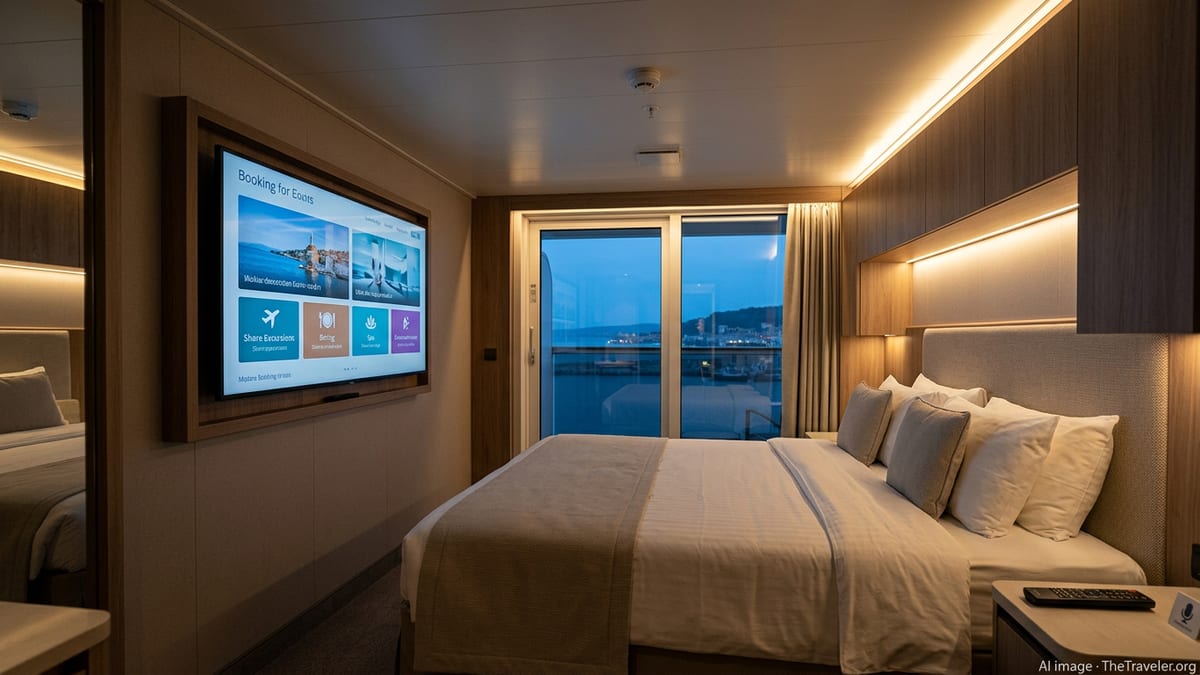
The cabin everyone wants on Icon of the Seas
Icon of the Seas, which entered service in January 2024, is the current record-holder for the world’s largest cruise ship, carrying up to around 7,600 passengers at full capacity across 20 decks. Publicly available deck plans and booking data show that balcony cabins make up a substantial share of its 2,800-plus staterooms, with a newer Infinite Balcony design emerging as one of the most in-demand options among mainstream travelers.
Within that category, the Infinite Ocean View Balcony has become a workhorse favorite. Travel agencies and cruise forums consistently highlight these cabins as the first to sell out on peak school holiday departures, often pricing at a noticeable premium over standard interior and ocean-view rooms. On my sailing, a quick check of the booking engine in the weeks before departure showed virtually every Infinite Balcony category waitlisted while some inside cabins remained available.
Part of the appeal is that these rooms sit at the intersection of aspirational and attainable. They are not the ship’s headline-grabbing suites that can run tens of thousands of dollars a week, but they deliver a balcony-like experience, floor-to-ceiling ocean views and smart space-saving technology without entering luxury price territory.
Walking into the cabin, the first impression is how much of the wall is glass. The Infinite Balcony is essentially an enclosed extension of the room, with a large window that can be lowered halfway at the touch of a button to open the space to sea air. It feels less like stepping onto a traditional outdoor balcony and more like having a sunroom that converts from climate-controlled lounge to open-air viewing platform.
Layout, storage and the realities of sleeping four
The basic footprint of the Infinite Ocean View Balcony is compact, but the space is clearly engineered to accommodate modern cruise behavior. The main bed can be split into two singles, a sofa converts to a bed, and in many four-person configurations a ceiling-mounted pull-down berth completes the sleeping arrangements. For a couple, the room feels comfortably sized; for a family of four, it becomes a test of choreography.
Storage is where this cabin quietly excels. Design details widely documented in ship guides, such as deep drawers, shelves tucked into the corners, and multiple open cubbies near the vanity, are all present and easy to use in practice. Suitcases slide under the bed, and there is enough hanging space for a week’s worth of resort wear if everyone packs with some restraint. The bathroom, while not large, benefits from shelves and a glass shower door instead of a clingy curtain, which makes the space feel more substantial than it is.
At night, however, the popularity of this cabin category for families comes with trade-offs. When the sofa is converted and the upper berth is lowered, floor space all but disappears. Moving from the balcony area to the bathroom requires careful stepping around bed corners and shoes. Reports from other guests about “tight quarters” for four align with the lived reality: it is workable, particularly for families used to hotel rooms in major cities, but far from spacious once all beds are in use.
Noise levels are more a function of location than cabin type. Midship cabins on higher decks remain the most coveted because they minimize motion and distance to venues. My mid-level deck cabin was mostly quiet, though late-night hallway traffic occasionally filtered through the door, a reminder that this is still a mass-market mega-ship rather than a small, sedate vessel.
Tech-forward touches and the Infinite Balcony in practice
Royal Caribbean has marketed Icon of the Seas as a tech-forward ship, and that philosophy extends into the Infinite Balcony cabins. Lighting can be adjusted through multiple presets, from bright “getting ready” mode to softer ambient settings in the evening. Air conditioning responds quickly, and charging points are abundant, with USB and standard outlets clustered around the vanity and bedside tables.
The Infinite Balcony itself is the showpiece. With the window fully raised, the space functions as part of the cabin, with two chairs and a small table positioned to face the sea. Lower the window, and a waist-high barrier seals the opening while sea breeze and ship sounds pour in. In practice, this arrangement is particularly appealing during hot Caribbean afternoons, when guests can enjoy ocean views with full air conditioning, then open the window in the cooler evenings or early mornings.
There are trade-offs compared with a traditional balcony. Because the space is enclosed by sliding glass doors rather than being fully outdoors, there is less of the feeling of stepping out into the open. For some travelers, that matters; for others, the ability to expand interior space and keep the room cool without sacrificing the view is a convincing advantage. During my voyage, the Infinite Balcony became the default place for reading, watching sail-ins and sail-aways, and drying swimwear on discreet hooks.
Technology can occasionally complicate the experience. The balcony window is controlled from a wall panel, and safety protocols restrict operation under certain conditions, such as high winds. On one particularly breezy sea day, an automated lockout temporarily prevented the window from lowering. The cabin remained comfortable, but it highlighted that this popular feature is still mediated by ship systems rather than being entirely at the guest’s discretion.
Life inside the most sought-after cabin on a record-breaking ship
Spending a week in one of the ship’s most booked cabin types emphasizes just how central the room can be to the Icon of the Seas experience. With seven pools, multiple water slides and eight themed neighborhoods, the ship disperses crowds across a vast footprint, yet the cabin ultimately becomes the place where sun, noise and stimulation are processed and unwound from.
From that perspective, the Infinite Ocean View Balcony succeeds. Morning coffee with an unbroken horizon, afternoon naps in cooled air while still feeling connected to the sea and private front-row seats for port departures all helped justify why these rooms sell quickly. The ability to retreat from packed pool decks and busy promenades to a bright, quiet, sea-facing space became one of the most valuable aspects of the trip.
Value calculations, however, are more complex. Published pricing trends show that Icon of the Seas regularly commands a premium over other Royal Caribbean ships of similar itinerary, and Infinite Balcony cabins often sit above traditional balcony rates on older vessels. For budget-conscious cruisers who prioritize ship amenities over private outdoor space, an interior or basic ocean-view cabin may still represent better value, especially outside peak travel periods.
For many travelers, though, the combination of the world’s largest ship and its most popular balcony cabin has clear appeal. The Infinite Ocean View Balcony offers a controlled, comfortable and genuinely scenic haven in the middle of a floating resort that feels closer in scale to a small city than a conventional cruise ship.
What this cabin reveals about today’s cruise trends
The rise of the Infinite Ocean View Balcony on Icon of the Seas reflects broader shifts in the cruise market. Recent industry reports show that demand for Caribbean sailings remains high and that younger and family travelers are increasingly present on mainstream lines. These groups tend to favor tech-enabled spaces, flexible sleeping arrangements and strong visual connections to the destinations they visit, all of which are hallmarks of this cabin type.
Ship design on Icon of the Seas also points toward a future in which interior volume is used as creatively as exterior deck space. By pulling the balcony into the room’s footprint and making it transformable, designers are effectively asking the cabin to do more. The result is a stateroom that supports remote work on sea days, children’s naps after time in the water park and quiet, climate-controlled evenings without cutting off the view.
At the same time, guests staying in these cabins encounter the realities of modern mega-ship cruising: high occupancy, premium pricing for preferred dates and a layout that can feel tight when fully booked to capacity. The Infinite Ocean View Balcony delivers a strong overall experience, but it does not change the fundamental character of sailing with several thousand fellow passengers.
For now, though, these cabins remain at the center of the Icon of the Seas story. They are the rooms that sell first, the backdrop to countless social media posts and, for many travelers, the setting where the scale of the world’s largest cruise ship becomes personal, framed by a floor-to-ceiling view of open water.