


In an era when nearly every high-end hotel promises personalized service and curated experiences, St. Regis Hotels & Resorts continues to occupy a rarefied space. Rooted in a 1904 New York grande dame and now spanning more than 50 properties worldwide, the brand has turned ritual, butler service, and old-world glamour into a recognizable global language of luxury. For travelers deciding where to splurge, understanding what actually happens inside a St. Regis can make the difference between a pleasant five-star stay and a genuinely memorable one.
Get the latest updates straight to your inbox!
The Legacy Behind the St. Regis Name
The St. Regis story begins in 1904, when financier John Jacob Astor IV opened The St. Regis New York at the corner of Fifth Avenue and 55th Street as a place for his mother, Caroline Astor, to entertain Manhattan high society. The hotel introduced then-novel ideas such as in-room telephones and central heating, combining technological innovation with European-style service. That mix of modernity and formality remains at the core of the brand’s identity today, even as the portfolio has grown to include beachfront resorts in Florida and ski retreats in Aspen.
Over the decades, the New York flagship shifted ownership and branding before becoming the cornerstone of Starwood’s ultra-luxury St. Regis collection in the late 1990s, and later part of Marriott International’s luxury stable. Despite this corporate evolution, the brand has maintained a consistent promise: it will feel more like a cultivated private residence than a conventional hotel. At many properties, from St. Regis Hong Kong to St. Regis Rome, that influence shows up in residential-style lobbies, art collections, and a sense that you are entering a well-heeled host’s townhouse rather than a chain hotel.
For travelers, the historical weight of the name still matters. Booking a stay at The St. Regis New York or The St. Regis Washington D.C. is not only about location or room size, but about participating in a lineage of social life, from Gilded Age balls to contemporary fashion events and diplomatic gatherings. It is this narrative continuity that St. Regis leans on when it talks about “timeless refinement,” and it is a key differentiator from newer luxury labels that lack a comparable backstory.
What St. Regis Butler Service Really Looks Like
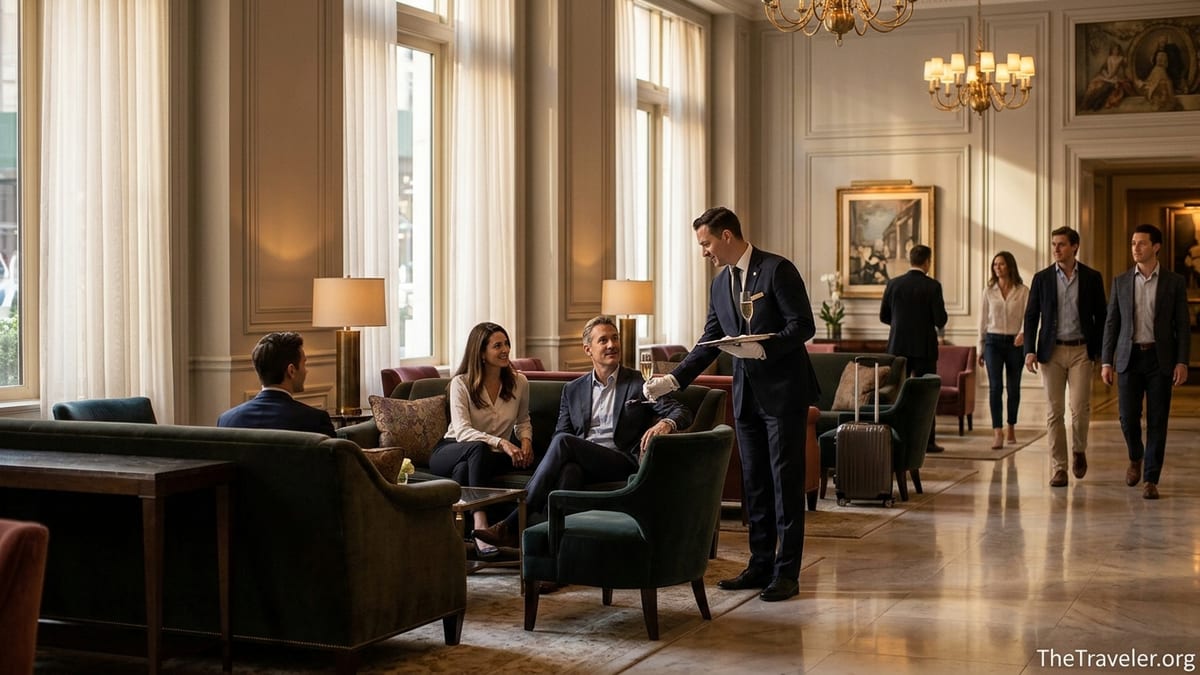
The element most guests associate with St. Regis is its butler service, which the brand positions as a direct descendant of the valets and household staff of early 20th-century aristocratic homes. Available at all St. Regis hotels and resorts, this service goes beyond the usual concierge desk. Typical offerings include unpacking and packing assistance, garment pressing, wake-up coffee or tea delivered on a silver tray, and a 24-hour Butler Service Desk reachable by phone, in-room messaging, or sometimes an app-based e-butler service.
In practice, this can feel quite concrete. At The St. Regis Toronto, for example, guests in many room categories can request their butler to press two garments per person per day, which is particularly valuable for business travelers arriving on an early flight with wrinkled suits. At beach locations such as The St. Regis Bahia Beach Resort in Puerto Rico, butlers often coordinate pool cabanas, restaurant reservations, and even help with special touches like arranging a sunset picnic on the sand for a proposal or anniversary.
At the highest tier, butler service becomes almost like a discreet personal assistant. In suites at The St. Regis New York, guests commonly ask their butler to coordinate airport transfers, secure last-minute theater tickets, or manage deliveries and luggage while they attend meetings in Midtown. Some properties, like The St. Regis Mexico City, are known among frequent travelers for particularly proactive butlers who remember guests’ preferred morning beverage, pillow type, and even how they like their cocktail mixed in the evening. That level of personalization, when it works, is where St. Regis clearly pulls ahead of many competitors.
Of course, reality can be nuanced. Travelers should know that the intensity of butler engagement can vary by property and occupancy. At very busy urban hotels, guests sometimes report more reactive than anticipatory service. At leisure-focused resorts, where staff-to-guest ratios are often higher, the butler experience tends to feel more leisurely and hands-on. Managing expectations and communicating clearly with your assigned butler on arrival usually leads to better outcomes.
Signature Rituals: Sabering, Tea, and the Art of Glamour
St. Regis has carefully developed a set of brand-wide rituals that are meant to anchor each property in a shared culture, while still allowing room for local interpretation. The most visible of these is Champagne sabering, performed at many hotels nightly or several times a week. Inspired by a tradition linked to Napoleon’s cavalry, the ritual typically sees a sommelier or butler in formal attire opening a bottle of Champagne with a saber in the lobby or bar, accompanied by a brief speech and complimentary tasting for guests.
At The St. Regis Bal Harbour Resort in Miami Beach, for instance, sabering often coincides with sunset over the Atlantic, with guests in resort wear gathering on a terrace to watch the ceremony before heading to dinner. In Mexico City, the ritual might be held in a sleek lobby lounge overlooking the Paseo de la Reforma, fusing European pageantry with Latin American cosmopolitan energy. These events cost the hotel relatively little but offer guests a sense of theater and inclusion that many rival properties struggle to replicate on a consistent basis.
Other brand rituals include an afternoon tea service and a Bloody Mary cocktail unique to each hotel. The original Red Snapper, considered an early version of the Bloody Mary, was popularized at The St. Regis New York in the 1930s, and today every St. Regis bar is encouraged to create a localized riff. In Hong Kong, that might mean a version featuring Chinese spices; in Singapore, ingredients such as pandan or local citrus may appear. For guests, sampling these drinks becomes a form of informal collecting, and a way to compare how different properties interpret the same brand DNA.
These rituals help St. Regis stand out because they are both repeatable and context-sensitive. Where some luxury brands rely on generic “welcome drinks” or unspecified cultural shows, St. Regis offers recognizable moments that regular guests can anticipate, while still feeling rooted in the destination. When you arrive at a St. Regis in Florence, Aspen, or the Maldives, you quickly understand how and when the hotel expects you to socialize, celebrate, and linger over a glass of something cold.
Design, Location, and a Sense of Place
St. Regis properties tend to fall into two broad categories: urban icons and resort escapes. In gateway cities, the brand often occupies historically significant or architecturally bold buildings. The St. Regis Hong Kong, opened in 2019 in Wan Chai and designed by revered designer André Fu, is a good example. Its interiors lean into warm woods, art pieces by local talents, and a club-like atmosphere that feels more like a discreet members’ club than a typical tower hotel.
In North America, The St. Regis Chicago occupies part of a striking Jeanne Gang–designed skyscraper along the city’s riverfront, while The St. Regis New York fills a Beaux-Arts landmark with coffered ceilings, gilded mirrors, and heavy draperies that signal “old New York” the moment you step inside. By contrast, The St. Regis Bal Harbour and The St. Regis Longboat Key Resort in Florida exemplify the resort side of the brand, where floor-to-ceiling glass, light stone, and expansive terraces emphasize ocean views and indoor-outdoor living.
What ties these different expressions together is the pursuit of an elevated residential feel. Suites at The St. Regis Mexico City, especially the newer garden terrace suites introduced in 2024, offer private outdoor hot tubs or plunge pools and landscaping that softens the tower’s urban profile. At The St. Regis Singapore, a recent refurbishment has refreshed guest rooms with softer palettes, improved lighting, and updated technology while retaining touches like crystal chandeliers and curated artwork. Across the portfolio, the intent is that you could imagine living in these spaces long term, rather than feeling as if you are in a strictly commercial environment.
Location choice is equally deliberate. St. Regis seldom opts for secondary neighborhoods. The St. Regis in Washington D.C. stands a short stroll from the White House, while the Florence property hugs the Arno River. Even when not directly on a city’s main thoroughfare, St. Regis properties typically secure easy access to major cultural or business districts, which is part of what justifies their premium pricing compared with nearby luxury competitors.
How St. Regis Compares on Pricing and Value
St. Regis sits within Marriott’s top luxury tier, often pricing at or above Ritz-Carlton in similar markets. In New York, entry-level rooms at The St. Regis New York frequently hover in the range of approximately 1,200 to 1,800 US dollars per night before taxes during busy periods, with holiday weeks and major events pushing rates higher. Signature suites, such as the Fifth Avenue or Astor Suites, can run into several thousand dollars per night, while the Presidential Suite has been marketed at roughly 35,000 dollars per night for private buyouts and ultra-high-end stays.
In contrast, a St. Regis city stay in regions like Asia or Latin America can feel comparatively accessible. In Mexico City, nightly cash rates at The St. Regis often undercut top-tier European capitals, especially outside peak holidays, while still offering full butler service, a prime avenue location, and strong dining. Travelers who collect Marriott Bonvoy points also look at St. Regis as a strategic redemption target. For instance, a five-night stay at certain properties during shoulder season might be booked entirely with points, effectively reducing the out-of-pocket cost below that of a midscale hotel in the same city.
Value at St. Regis is rarely about finding the lowest rate in town. It is more about maximizing inclusions that are especially meaningful to your trip. Guests who use butler services extensively, take advantage of destination-specific amenities like complimentary bikes or water sports at resorts, and time their visit for non-peak dates tend to feel they are getting a better return on what they spend. Elite members of Marriott’s loyalty program can also improve the equation through complimentary breakfast, room upgrades, and late checkout, which can be particularly helpful in cities with expensive dining and limited daytime lounge access.
That said, prospective guests should remain clear-eyed. In ultra-competitive markets such as New York or Hong Kong, some independent or smaller luxury brands may offer larger base rooms or more contemporary design at a similar or slightly lower price. St. Regis typically justifies its positioning with service intensity, rituals, and brand heritage rather than sheer square footage alone. Travelers who prioritize cutting-edge minimalism, nightlife, or a hyper-local boutique aesthetic may find better alignment with other luxury names.
Real Guest Experience: Where St. Regis Excels and Where It Can Falter
Speaking with frequent luxury travelers and scanning recent feedback, certain themes emerge about what St. Regis does consistently well. Personalized service remains the headline. At properties such as The St. Regis Mexico City and The St. Regis Hong Kong, guests regularly describe staff who quickly learn names, preferences, and daily routines, then quietly act on that knowledge. Examples include housekeeping teams timing service to a guest’s meeting schedule, or a bartender presenting a custom mocktail for a non-drinker without being asked twice.
Physical product quality at many St. Regis hotels is also strong. Front desks are usually set within visually impressive lobbies, rooms tend to have high thread count linens and well-upholstered furniture, and bathrooms often feature soaking tubs and separate rain showers, even at the entry level. At resorts like The St. Regis Bal Harbour, it is common to find multiple pools, beachfront service with chilled towels, and spa facilities that would be at home in top standalone wellness properties.
There are, however, a few recurring critiques. In some older city hotels, especially The St. Regis New York, guests occasionally report that room decor can feel dated or that maintenance has not kept pace with the price point, even if the public spaces remain grand. Others note inconsistency in butler engagement, with some stays feeling transformative and others hardly using the service at all because it was not clearly explained at check-in. Destination fees and high food and beverage prices, particularly in North America, can also create a sense that every extra amenity carries a premium.
The key takeaway for travelers is to research specific properties rather than assuming uniformity across the brand. The St. Regis Singapore, for example, has just emerged from a substantial refresh aimed at sharpening its positioning and enhancing comfort, while some older European properties feel more traditional and may not yet reflect the latest design direction. Matching your personal taste to the character of an individual hotel is essential to enjoying the St. Regis experience as it is meant to be lived.
How to Decide if St. Regis Is Right for Your Trip
Choosing St. Regis makes the most sense when you are planning a trip where ceremony, atmosphere, and attentive service can be fully appreciated. A milestone celebration in a city like Rome or Florence, a honeymoon on a Caribbean beach, or a long weekend in New York centered on dining and culture are all scenarios in which the brand’s rituals and butler services add tangible value. Champagne sabering at sunset, a custom Bloody Mary before a show, or having your wardrobe pressed and arranged before a formal dinner can elevate the entire trip mood.
Business travelers might gravitate toward St. Regis in cities where location and service efficiency matter as much as glamour. In Hong Kong, for example, the property’s connection to public transport and strong butler desk support make it an appealing base for meetings scattered across the city. In Washington D.C., proximity to federal buildings and embassies gives the hotel strategic appeal for diplomatic or governmental visits, where discreet, polished service is paramount.
On the other hand, if your travel priorities center on avant-garde design, buzzing nightlife, or experimental dining, you might find more alignment with brands known for high-energy public spaces. St. Regis bars and restaurants tend to be refined rather than raucous, and many properties close their main outlets at a traditional hour. Similarly, travelers who prefer self-service informality may feel constrained by the layers of staff interaction that are part of the St. Regis DNA.
Ultimately, the brand is best suited to travelers who enjoy formality when it is delivered with warmth and are willing to pay a premium for tradition and personal attention over trendiness. If you find satisfaction in the details of a polished turn-down service, appreciate well-executed classic cocktails, and like the idea of a hotel that feels like a grand residence, St. Regis will likely feel not just comfortable but deeply satisfying.
The Takeaway
Inside a St. Regis, luxury is expressed less through flashy gestures and more through a carefully orchestrated sequence of attentive moments. From a butler who unpacks your suitcase and remembers how you take your morning coffee, to a Champagne saber glinting in the lobby light at dusk, the brand leans on ritual, narrative, and service choreography to differentiate itself in a crowded field. It is a model of hospitality that prioritizes continuity and polish over novelty, but still leaves room for local flavor through design, dining, and destination-specific twists on its rituals.
For travelers, the decision to book St. Regis should be intentional. Understand that you are paying for a combination of heritage, address, and service style rather than simply the largest room or flashiest pool in town. When aligned with the right trip and the right property, the St. Regis experience can still feel special in 2026, offering a glimpse of old-world glamour that manages to stay relevant to modern luxury expectations.
FAQ
Q1. What exactly does St. Regis butler service include?
St. Regis butler service typically covers unpacking and packing assistance, garment pressing for a limited number of items, morning coffee or tea delivery, and a 24-hour Butler Service Desk to handle requests such as restaurant reservations, transportation, and special arrangements. The exact scope can vary slightly by property, so it is worth asking at check-in.
Q2. Do all St. Regis hotels offer butler service to every guest?
Butler service is a brand-wide signature, but how it is delivered can differ. Many St. Regis properties provide some level of butler access to all rooms, while others may focus more intensive, personalized attention on suites or higher-category accommodations. It is advisable to confirm the details for your specific hotel when booking.
Q3. How expensive is it to stay at a St. Regis compared with other luxury hotels?
St. Regis generally prices at the higher end of the luxury market in each destination. In major cities like New York, base rooms often exceed 1,200 US dollars per night during busy periods, while resort locations and secondary markets can be more moderate. Rates fluctuate based on season, demand, and special events.
Q4. Are St. Regis properties suitable for families with children?
Yes, many St. Regis hotels and resorts welcome families and offer amenities such as connecting rooms, kids’ menus, and in some cases children’s clubs or family-focused programming. Beach and resort properties, in particular, tend to be more family-friendly, while some urban hotels feel geared more toward couples, business travelers, and events.
Q5. How does St. Regis differ from Ritz-Carlton or other luxury brands?
St. Regis emphasizes heritage, formal service, and specific rituals such as Champagne sabering and bespoke Bloody Mary cocktails. Ritz-Carlton and similar brands might focus more on club lounges, large-scale conference facilities, or wellness. The overall tone at St. Regis is often more residential and ceremonious, leaning into the idea of a private mansion rather than a traditional hotel.
Q6. Is the dress code at St. Regis hotels very formal?
Public spaces at St. Regis generally encourage smart casual attire, especially in the evening and at signature bars or restaurants. You do not typically need black tie unless attending a special event, but activewear and beachwear are usually reserved for pools, spas, and resort outdoor areas rather than lobbies and lounges.
Q7. Can I use Marriott Bonvoy points to book a stay at St. Regis?
Yes, St. Regis is part of Marriott International, and most properties participate in Marriott Bonvoy. You can redeem points for free nights and sometimes for suite upgrades, subject to availability and the program’s dynamic pricing. This can be an effective way to experience the brand at a lower out-of-pocket cost.
Q8. Are St. Regis hotels good for business travelers?
Many St. Regis properties cater well to business guests, especially in financial and political capitals. They typically offer strong Wi-Fi, meeting spaces, and responsive butler or concierge teams who can assist with logistics. The atmosphere is more formal and quiet than lively, which suits travelers who value calm and discretion.
Q9. How important are the Champagne sabering and other rituals to the overall experience?
The rituals are not mandatory, but they are central to the St. Regis identity and often become trip highlights. A guest might plan to attend sabering on their first night or sample the property’s signature Bloody Mary as part of a pre-dinner routine. Skipping them will not diminish core comfort or service, but participating offers a clearer sense of what sets the brand apart.
Q10. How can I get the most value out of a St. Regis stay?
To maximize value, consider traveling during shoulder seasons, make full use of butler services such as garment pressing and in-room coffee, and take advantage of any loyalty benefits through Marriott Bonvoy. Communicating preferences early and clearly, from pillow types to dining interests, also helps the hotel tailor your experience and deliver the level of personalization that justifies the premium price.