


Choosing travel insurance as a digital nomad is no longer a box-ticking exercise. For many remote workers, insurance is the only safety net standing between a routine coworking day in Lisbon and a five-figure hospital bill in Bangkok. Two providers dominate digital nomad conversations in 2026: Insured Nomads and SafetyWing. Both were built with remote workers in mind, but they solve slightly different problems, at different price points. Understanding those differences is essential before you buy.
Get the latest updates straight to your inbox!
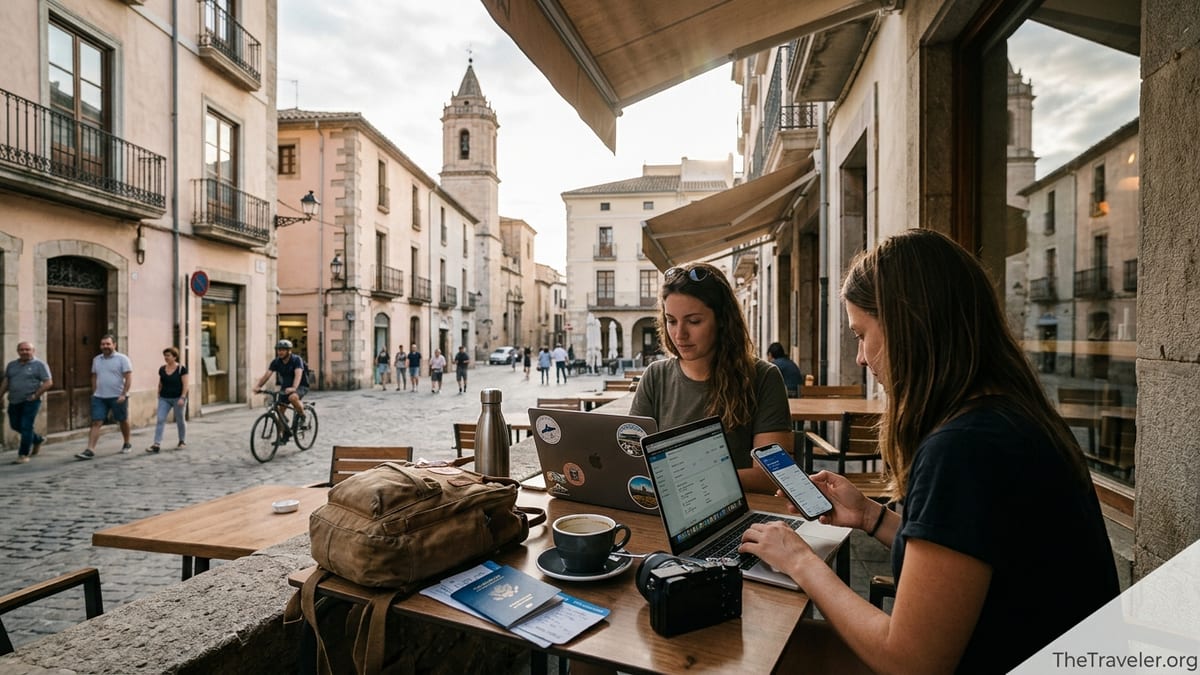
The big picture: what Insured Nomads and SafetyWing are built for
Insured Nomads and SafetyWing both market themselves directly to digital nomads, but they are not identical products. SafetyWing’s flagship Nomad Insurance is a subscription-style travel medical policy that renews every 28 days, with pricing for under-40s starting at around 56 US dollars per 4 weeks for the Essential version as of early 2026. It is designed for flexibility: you can start it while already abroad, keep it running for months, and cancel when you settle down.
Insured Nomads has two core lines relevant to nomads. World Explorer is closer to “classic” travel insurance for trips up to roughly 365 days, with tiers like Standard, Plus, and Guardian. Separate products such as their global health-style plans are aimed at expats or long-stay nomads who want more complete ongoing healthcare. In other words, Insured Nomads often feels more like traditional travel and expat insurance modernized for remote workers, while SafetyWing feels like a subscription utility for long-term travelers.
For a US freelancer spending six months bouncing between Medellín, Lisbon, and Kuala Lumpur, SafetyWing’s rolling model and straightforward pricing can be very attractive. By contrast, a family of four moving to Spain for a year on a digital nomad visa might lean toward Insured Nomads’ higher medical limits and more traditional trip-protection features, especially on the upper World Explorer tiers.
The right choice depends on three questions: how long you are away, how much ongoing healthcare you expect to need, and how much financial risk you are willing to carry if something truly serious happens. The rest of this comparison unpacks those trade-offs with concrete examples.
Coverage basics: medical limits, emergencies, and fine print
At a high level, both Insured Nomads and SafetyWing cover the classic emergencies that worry nomads: unexpected illness, accidents, emergency medical evacuation, and repatriation of remains. The differences lie in the limits, deductibles, and scope of what each company includes by default.
SafetyWing’s Nomad Insurance Essential policy, updated in February 2026, typically covers up to around 250,000 US dollars in eligible medical expenses for most ages, with a per-trip-period deductible of roughly 250 dollars. That limit is usually enough for a broken leg in Mexico, food poisoning in Thailand, or an appendix removal in Portugal, where costs are lower than in the United States. However, a long ICU stay or complex surgery in an expensive private hospital could exceed that ceiling, especially in North America or East Asia.
Insured Nomads’ World Explorer plans often come with higher medical maximums on the mid and top tiers, commonly in the hundreds of thousands to 1 million dollars range depending on the version and destination. The Guardian tier, for instance, is pitched toward travelers who want robust medical and evacuation coverage, not just budget protection. For a nomad skiing in the French Alps or diving in Indonesia, those higher limits can be reassuring if something catastrophic happens and you need medical evacuation plus weeks of hospital care.
Both providers include emergency medical evacuation, but the practical experience can vary. In real-world reports, nomads insured with SafetyWing have been evacuated from small islands in the Philippines to better-equipped hospitals in Manila after scooter crashes, or transferred from local clinics in Costa Rica to private hospitals in San José. With Insured Nomads, case studies highlighted in their brochures describe coordinating evacuations from remote trekking regions to capital cities via air ambulance. In either scenario, the key is not just the dollar limit, but how quickly the assistance team answers the phone and takes control during an emergency.
Pricing in 2026: what digital nomads actually pay
Cost is often the first filter for nomads juggling rent in Mexico City, coworking in Bali, and regular flights across continents. As of early to mid 2026, SafetyWing’s Nomad Insurance Essential for travelers aged roughly 10 to 39 typically starts at about 56 US dollars per 4-week billing period, which works out to roughly 2 dollars per day. Pricing steps up significantly in age brackets over 40, 50, and 60, with a 40-something nomad paying closer to the low 90s per 4 weeks and a 50-something paying well over 140 dollars for the same period.
SafetyWing’s Nomad Insurance Complete plan behaves more like an international health insurance policy. For an under-40 nomad, the starting price commonly sits in the region of 160 dollars per month, roughly triple the Essential tier, but it includes routine care, some dental, mental health, and stronger travel benefits like trip cancellation. This pricing makes Complete more comparable to entry-level expat health policies rather than cheap backpacker insurance, and it is increasingly used by nomads on long-stay visas who want everyday healthcare rather than just emergency cover.
Insured Nomads’ World Explorer pricing varies by trip length, region, and tier. A 30-year-old American buying a World Explorer Plus or Guardian plan for six months across Europe and Southeast Asia might see quotes in the range of several hundred to over a thousand US dollars for the full trip, depending on optional add-ons and sports coverage. On a per-month basis, that can land higher than SafetyWing Essential, but often with richer benefits and higher limits. For example, a six-month round-the-world trip might cost roughly 600 to 800 dollars on a mid-tier World Explorer plan, versus around 420 dollars total on SafetyWing Essential for the same period.
The key difference is how that money flows. SafetyWing charges in 28-day cycles on an ongoing basis, similar to a subscription streaming service. You can stop payments when you fly home. Insured Nomads tends to work on a “cover the trip” basis, where you pay upfront for the full period of cover. If you are testing nomad life for three months and staying flexible, paying monthly with SafetyWing can feel lighter. If you are locked into a 12-month remote work contract in Berlin, pre-paying a World Explorer policy or combining it with Insured Nomads’ health-style plans may make budgeting simpler.
Beyond emergencies: routine care, home country coverage, and add-ons
Emergency coverage is essential, but long-term nomads quickly discover less dramatic needs: a lingering cough in Chiang Mai, a mental health consult after burnout, or a routine prescription refill in Lisbon. Here, SafetyWing and Insured Nomads diverge more clearly.
SafetyWing Nomad Insurance Essential is fundamentally an emergency-focused travel medical product. It handles sudden illnesses and accidents, emergency evacuation, and a defined set of travel mishaps like lost luggage. It is not designed for routine check-ups or ongoing treatment of chronic conditions. Nomad Insurance Complete, however, expands into global health territory. For instance, Complete typically includes general practitioner visits, prescriptions, some preventive care, mental health services, and limited dental and maternity benefits, turning it into a realistic long-term solution for nomads who want to see a doctor regularly without huge out-of-pocket bills.
Insured Nomads’ positioning is slightly different. World Explorer plans can include a balance of emergency and some non-emergency benefits, depending on the tier, but the company also sells separate international health products more explicitly built for expats and long-stay remote workers. A Brazilian developer who relocates to Portugal on a two-year visa, for instance, might start with a World Explorer policy to cover the transition period, then upgrade to a more comprehensive global health plan through Insured Nomads once they secure residence and expect to use local healthcare more regularly.
Home country coverage also matters. SafetyWing’s updated Nomad Insurance Essential generally allows limited trips back to your home country while maintaining some coverage, often something like up to around 179 days within a 364-day coverage period in total, with stricter limits for US residents. For a US citizen who spends most of the year abroad but returns to visit family each winter, that can be useful as a stopgap. Insured Nomads may instead encourage pairing a strong travel policy with local or national coverage at home, especially for Americans who rely on domestic plans or marketplace insurance when stateside. For many nomads, a practical setup looks like SafetyWing or Insured Nomads while abroad, combined with a high-deductible US plan or national insurance when back home.
Real-world scenarios: which works better where?
Comparisons make the most sense when tied to specific journeys, so it is worth looking at three realistic digital nomad profiles: the budget solo traveler, the family nomad, and the long-stay visa holder. Each exposes different strengths of Insured Nomads and SafetyWing.
Consider a 29-year-old software engineer from Canada who plans to spend 9 months working remotely in Mexico, Colombia, and Argentina with no fixed return date. He wants to minimize costs but still have protection if he breaks an ankle in Medellín or ends up in hospital with dengue fever in Yucatán. For this traveler, SafetyWing Nomad Insurance Essential at roughly 56 dollars per 4 weeks is hard to beat. Over 9 months, he might spend around 378 dollars, a manageable line item in his budget, and he can cancel if he cuts the trip short. Insured Nomads’ mid-tier World Explorer equivalent would likely cost more overall, and the higher limits may not feel worth the extra spend for his risk tolerance.
Now take a family of four from the United States moving to Spain on a digital nomad visa: two parents in their mid-30s and children aged 7 and 3. SafetyWing has an advantage here with its approach to kids, often allowing one child under 10 to be added for free per insured adult on Nomad Insurance, which can keep costs surprisingly low for families. However, the parents might also want higher medical limits, better trip interruption benefits, and a clear path to more robust health coverage once they are settled. Insured Nomads’ World Explorer Guardian, potentially combined with a more comprehensive health policy later, can make more sense here, especially if their new visa requires specific minimum coverage limits.
Finally, consider a 45-year-old American UX designer basing herself in Lisbon for at least two years, with regular side trips to Morocco and Eastern Europe. At her age, SafetyWing’s Essential premium rises significantly per 4-week period, reducing its budget appeal. She will also want consistent access to routine healthcare, therapy, and possibly specialist consultations. In this case, SafetyWing Nomad Insurance Complete or an Insured Nomads expat-style health plan could both be good fits, but she might find that an Insured Nomads global health policy integrated with the Portuguese system more closely aligns with her long-term needs than a travel-centric policy alone.
Claims, customer experience, and reputational signals
No nomad buys insurance hoping to test the claims process, but online communities and anecdotal reports show that real-world experiences matter as much as policy wording. Both Insured Nomads and SafetyWing receive a steady stream of reviews in digital nomad forums, Facebook groups, and Reddit threads, with a mixture of praise and frustration.
SafetyWing benefits from strong brand recognition and a large affiliate ecosystem. Many blogs by full-time travelers and remote work influencers openly recommend SafetyWing as their default suggestion, often noting its ease of purchase and subscription billing. Positive reports frequently highlight straightforward reimbursement for relatively small claims, such as 200 dollars for urgent care in Bali after food poisoning, or 600 dollars for X-rays and treatment after a scooter crash in Chiang Mai. On the other hand, some nomads complain about denied claims for pre-existing conditions, confusion around documentation requirements, and the relatively low medical ceiling for serious incidents, particularly in the United States.
Insured Nomads is slightly less ubiquitous in influencer marketing, but it has been steadily gaining ground in more specialized remote-work circles, including companies that purchase coverage for distributed teams. Testimonials highlighted by the company include evacuations from trekking routes, coverage of hospital bills after car accidents in West Africa, and quick assistance when travelers lose passports or need security advice in higher-risk destinations. Criticisms tend to focus on higher upfront costs and policy complexity, especially for first-time buyers trying to choose between multiple tiers and optional add-ons.
Ultimately, both companies are working within the same constraints: they must balance premiums with payouts, and they rely on third-party underwriters and claims administrators. From a practical perspective, nomads who have the best experiences tend to be those who read the policy wording carefully, keep copies of receipts, contact the insurer before making big medical decisions where possible, and understand that neither company is a substitute for full national health coverage in their home country.
Who each provider suits best in 2026
Viewed through the lens of real digital nomad lifestyles in 2026, patterns emerge about who each provider tends to serve best. SafetyWing Nomad Insurance Essential is tailored for cost-conscious, highly mobile individuals who prioritize flexibility over comprehensive benefits. A 27-year-old video editor drifting between Tbilisi, Belgrade, and Ho Chi Minh City, living primarily in mid-range Airbnb apartments and coworking spaces, can generally rely on public or low-cost private clinics for minor issues and use SafetyWing as a backstop for major surprises.
SafetyWing Nomad Insurance Complete and Insured Nomads’ global health-style products sit in a different category. They are more appropriate for nomads who are effectively semi-expats: those on digital nomad visas in Portugal, Croatia, or Spain, or long-term residents in hubs like Dubai or Singapore who still travel regularly. For them, paying over 150 dollars per month for a more complete set of healthcare benefits may be worth it, particularly if they have families, known medical needs, or simply want predictable out-of-pocket costs.
Insured Nomads’ World Explorer line, especially in its higher tiers, often resonates with older nomads, remote-working couples, and travelers whose adventures include higher-risk activities. A 52-year-old American running an online consultancy while trekking in Nepal, scuba diving in the Maldives, and riding motorcycles in Vietnam might sleep better with World Explorer Guardian’s higher limits and broader adventure-sports options, even if the premium significantly exceeds that of SafetyWing Essential.
It is also worth noting that visa requirements are tightening. Many digital nomad visas and long-stay permits now require proof of insurance that covers not only emergencies but also some level of ongoing care and repatriation. In some European consulate interviews, applicants have reported that more robust policies from providers like Insured Nomads or SafetyWing’s broader products are looked on more favorably than bare-bones backpacker plans. That trend pushes serious long-term nomads toward more comprehensive coverage.
The Takeaway
If your priority is affordable, flexible protection while you test-drive the digital nomad lifestyle, SafetyWing Nomad Insurance Essential remains one of the most practical starting points in 2026. Its under-40 pricing, 28-day billing, and ability to sign up from almost anywhere make it suitable for extended trips through popular hubs like Mexico, Colombia, Thailand, and Portugal. You accept a mid-range medical limit and emergency-focused design in exchange for lower monthly costs and minimal commitment.
If you are settling into a long-term nomad or expat life, traveling with family, or engaging in higher-risk adventures, Insured Nomads deserves serious consideration. Its World Explorer tiers, combined with its expat-style health options, deliver higher medical ceilings, broader coverage, and a more traditional insurance structure that may satisfy strict visa requirements and personal risk tolerances more comfortably.
In practice, many seasoned nomads move along a spectrum. They might start with a budget-friendly product like SafetyWing Essential for their first year on the road, then upgrade to Nomad Insurance Complete or an Insured Nomads global health plan once they realize remote work is a long-term lifestyle rather than a sabbatical. Whatever you choose, read the policy documents carefully, match the coverage to your actual itinerary, and treat insurance as a foundation of sustainable nomad life, not an afterthought.
FAQ
Q1. Is SafetyWing or Insured Nomads cheaper for digital nomads under 40?
For most solo nomads under 40, SafetyWing Nomad Insurance Essential is usually cheaper on a month-to-month basis, starting at roughly 56 US dollars per 4 weeks. Insured Nomads’ World Explorer plans for comparable global trips often cost more overall, but they may include higher coverage limits and broader benefits that some travelers consider worth the additional expense.
Q2. Which provider is better for long-term digital nomad visas in Europe?
Both can work, but nomads on 1 to 2-year visas in countries like Portugal, Spain, or Croatia often gravitate toward more comprehensive options. SafetyWing’s Nomad Insurance Complete and Insured Nomads’ expat-style health plans are more likely to satisfy consulate expectations for ongoing coverage than bare emergency-only policies. Insured Nomads’ higher medical limits and more traditional structure can be an advantage when consulates scrutinize documentation closely.
Q3. Does either SafetyWing or Insured Nomads cover pre-existing conditions?
Neither company is a simple solution for pre-existing conditions. In general, both treat most pre-existing conditions with significant restrictions or exclusions, especially for travel-focused plans like SafetyWing Nomad Insurance Essential and Insured Nomads World Explorer. Some more advanced global health products may offer limited coverage after waiting periods or medical underwriting, but nomads with serious pre-existing issues should speak directly with each company or a specialist broker before purchasing.
Q4. How do these policies handle trips back to my home country?
SafetyWing’s Nomad Insurance Essential offers limited home country coverage, commonly allowing a set number of days of cover within a longer active period, with stricter rules for US residents. That is useful if you visit family regularly while still mostly living abroad. Insured Nomads tends to assume you will use domestic coverage when back home and focuses its World Explorer products on periods when you are outside your home country. For long-term hybrid lifestyles, some nomads pair a home-country policy with an international travel or health plan.
Q5. Which provider is better for families with children?
SafetyWing can be very attractive for families because it often allows one child under 10 to be included at no extra cost per insured adult on Nomad Insurance. That keeps monthly costs manageable for parents traveling full-time. Insured Nomads may offer higher limits and richer benefits on some tiers, which can appeal to families seeking stronger protection, but premiums are typically higher. The best choice depends on your budget, destinations, and whether your children have any medical needs that require more comprehensive coverage.
Q6. Do these plans cover adventure sports like diving, skiing, or motorbiking?
Both providers include some adventure sports, but limits and exclusions vary by sport and plan tier. SafetyWing may cover common activities like recreational scuba diving or motorbiking if you are properly licensed and wearing appropriate safety gear, while more technical or high-risk activities can be excluded or require higher-tier products. Insured Nomads’ World Explorer plans often provide more generous adventure sports coverage on their upper tiers, which is why they are popular with nomads who trek at altitude, ski off-piste, or dive regularly. Always check the specific sport list in the policy wording.
Q7. How easy is it to make a claim with Insured Nomads or SafetyWing?
Experiences are mixed with both brands, as is common across the insurance industry. Many nomads report smooth reimbursement from SafetyWing for small to medium claims when they submit clear documentation and follow procedures. Others describe frustrations with delays or denials, especially around pre-existing conditions or ambiguous cases. Insured Nomads claims stories include positive examples of quick responses during emergencies and complex evacuations, along with criticism of paperwork demands and slower processing in non-urgent cases. In all cases, keeping thorough records and contacting the assistance line early improves outcomes.
Q8. Can I buy cover after I have already left my home country?
Yes, that is one of the main reasons both companies are popular with digital nomads. SafetyWing explicitly allows you to start Nomad Insurance while already abroad, and many nomads sign up from places like Bali, Mexico City, or Lisbon after realizing their initial trip has turned into a longer stay. Insured Nomads also allows purchasing coverage from abroad, though eligibility and waiting periods can depend on the specific product and your residency status.
Q9. Are these policies enough if I plan to live abroad for several years?
For a short or medium-length digital nomad phase, travel-focused products like SafetyWing Nomad Insurance Essential or Insured Nomads World Explorer can be sufficient, especially if you are generally healthy and spend most of your time in countries with moderate healthcare costs. For multi-year stays, especially if you settle in one place, most experts recommend moving toward a more comprehensive global health insurance policy or integrating into the local national system where possible. SafetyWing’s Nomad Insurance Complete and Insured Nomads’ expat health offerings are examples of steps in that direction.
Q10. How should I decide between Insured Nomads and SafetyWing for my specific trip?
Start by mapping out your actual plans: which countries, how long, whether you have a fixed return date, and if any visas require specific coverage levels. Then consider your age, budget, and health profile. If you are under 40, cost-sensitive, and primarily worried about emergencies during an open-ended trip across common nomad hubs, SafetyWing Nomad Insurance Essential is often a strong fit. If you are older, traveling as a family, applying for a structured long-stay visa, or engaging in higher-risk activities where higher limits matter, Insured Nomads World Explorer or one of their health-style plans may be the safer long-term choice.