


More news on this day
China’s flagship Beijing–Hong Kong high-speed railway corridor is edging toward full completion, tightening journey times between the capital and Hong Kong and further anchoring the city as a southern gateway to the mainland’s vast rail network.
Get the latest news straight to your inbox!
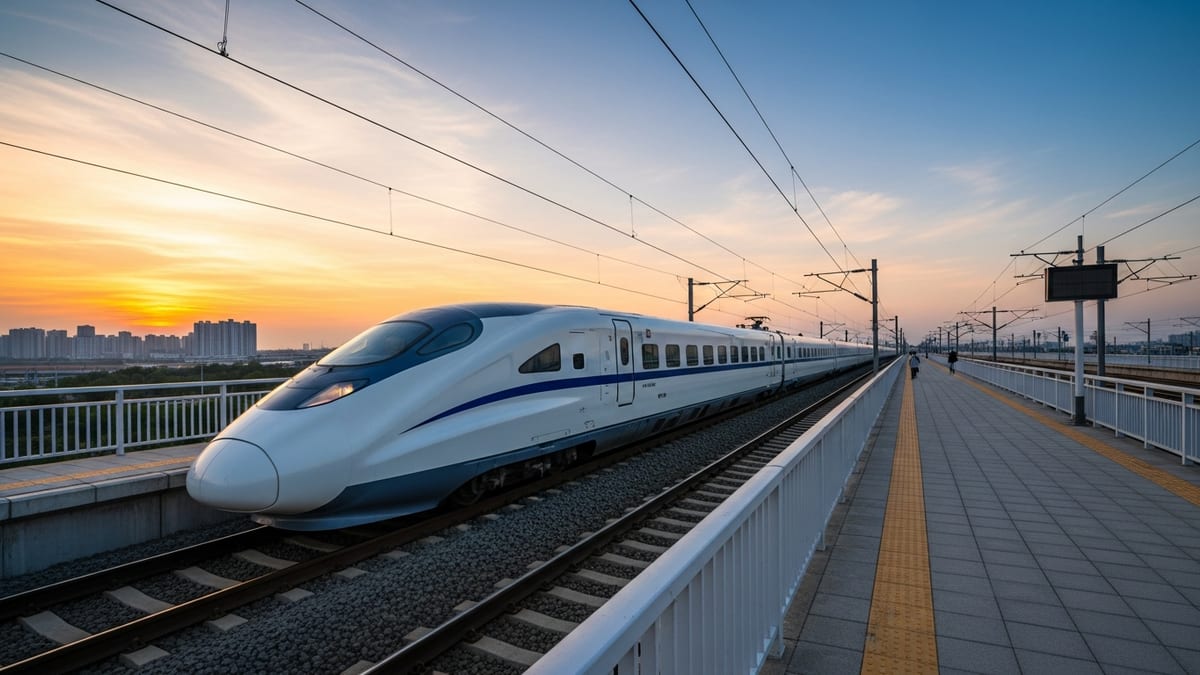
A North–South Spine Connecting Beijing to Hong Kong
The Beijing–Hong Kong high-speed corridor is one of China’s core north–south rail axes, running from the capital through major inland hubs such as Shijiazhuang, Zhengzhou, Wuhan, Changsha and Guangzhou before reaching Shenzhen and Hong Kong. Publicly available planning documents describe it as part of the country’s long-term “eight vertical and eight horizontal” grid of passenger-dedicated high-speed lines, designed for trains operating up to 350 km/h on most sections.
Much of this spine is already in commercial service. The Beijing–Guangzhou section, opened in stages over the past decade, has progressively reduced end-to-end journey times between northern and southern China. Network overviews indicate that the Guangzhou–Shenzhen–Hong Kong Express Rail Link forms the southernmost segment, technically completing the physical track link from Beijing West station to Hong Kong West Kowloon.
Industry-facing analyses of China’s high-speed rail development note that the full corridor is being upgraded and standardized as traffic grows. This includes aligning signalling and operational rules across provincial boundaries and integrating new connections and bypasses. As these works finish, the line is transitioning from a collection of high-speed segments into a more seamless, long-haul corridor branded around a single Beijing–Hong Kong service concept.
Recent media and rail enthusiast coverage highlight that the maturing corridor is increasingly competitive with air travel on total journey time between central Beijing and central Hong Kong, particularly when airport transfers and security checks are taken into account. That dynamic is expected to sharpen as remaining operational bottlenecks are eased.
Express Rail Link Puts Hong Kong on the National Grid
For Hong Kong, the crucial element is the 26-kilometre Hong Kong section of the Guangzhou–Shenzhen–Hong Kong Express Rail Link. Government and operator information describe this underground line as running from West Kowloon to the boundary at Futian, where it connects directly with the mainland’s high-speed network, including services on the Beijing–Guangzhou–Shenzhen axis.
Passenger guides and tourism-focused rail sites characterize the Guangzhou–Shenzhen–Hong Kong route as the southern portion of the broader Beijing–Hong Kong high-speed railway, with design speeds of up to 350 km/h on the mainland and 200 km/h in the constrained urban environment of Hong Kong. From West Kowloon, trains can reach Shenzhen in under 20 minutes and Guangzhou in under an hour, before continuing north via Wuhan and Changsha toward Beijing.
Hong Kong transport publications emphasize that the Express Rail Link connects directly into a national network that now extends more than 40,000 kilometres, and more recent reporting on China’s transport sector points to a high-speed network exceeding 50,000 kilometres as of early 2026. In practice, this means a passenger boarding in West Kowloon can reach hundreds of mainland cities through a mixture of direct and connecting services without leaving the high-speed system.
The strengthening of these links is visible in service patterns. Timetables compiled by online rail communities and cross-checked against official destination lists show multiple daily high-speed trains linking Hong Kong with Guangzhou, Shenzhen and other Greater Bay Area cities, alongside long-haul trains running along the Beijing–Guangzhou–Shenzhen–Hong Kong corridor under unified train numbers.
Long-Haul and Sleeper Services Extend Hong Kong’s Reach
One of the most tangible signs that the Beijing–Hong Kong spine is approaching full operational maturity is the rollout of through high-speed services between Hong Kong and the capital. Information shared on enthusiast forums and travel sites indicates that the flagship daytime G-series train between Hong Kong West Kowloon and Beijing West now covers roughly 2,400 kilometres in just over eight hours, at an average speed close to 300 km/h including intermediate stops.
Separately, official press releases and operator statements in recent years have highlighted the upgrade of conventional through trains between Hong Kong and major cities such as Beijing and Shanghai into high-speed sleeper services using Fuxing rolling stock. These overnight trains operate over the same Beijing–Guangzhou–Shenzhen–Hong Kong high-speed corridor, underlining its role as the primary north–south artery for both day and night services.
Policy briefings and replies to legislative questions in Hong Kong describe a strategy of gradually expanding the number of destinations directly connected to West Kowloon as the mainland network grows. Measures such as additional station stops, higher frequencies and flexible ticketing arrangements are framed as ways to stimulate demand and make long-distance rail more attractive for both business and leisure travellers.
Published coverage also points to growing interest in further long-haul links branching off the Beijing–Hong Kong corridor, including potential sleeper connections from Hong Kong to interior hubs like Xi’an and Chengdu via interchange. While many of these concepts remain under study, they depend on the continued enhancement of the north–south spine on which Hong Kong’s services rely.
Economic and Tourism Impacts for Hong Kong and the Greater Bay Area
Economic studies of China’s high-speed rail program suggest that major corridors such as the Beijing–Hong Kong line generate substantial spillover benefits, particularly where they link national capitals with regional economic clusters. In the case of Hong Kong, public branding materials describe the Express Rail Link as a tool to deepen integration with the mainland and strengthen the city’s position within the Guangdong–Hong Kong–Macau Greater Bay Area.
Hong Kong promotional literature aimed at investors and professionals highlights that the high-speed link effectively pulls Guangzhou and Shenzhen to within commuting distance, with sub‑hour travel times supporting cross-border business activity. From Guangzhou and Shenzhen, passengers can connect to services toward Beijing, Shanghai and other inland cities, turning West Kowloon into a node for two-way flows of talent and tourists.
Travel-industry sites report rising interest in rail-based itineraries that combine Hong Kong with other major Chinese cities using high-speed services, especially as visa policies evolve for short-term visits to neighboring Guangdong cities. Anecdotal accounts from travellers describe the convenience of boarding in Hong Kong and arriving in central districts of mainland cities without airport transfers.
Local commentary also notes that enhanced rail connectivity can diversify Hong Kong’s visitor mix. Shorter, more predictable journey times from northern and central China help support weekend and short-break tourism, while overnight sleepers can attract passengers who prefer to travel while they sleep and arrive early in city centers.
Next Steps as the Corridor Nears Full Integration
Although the physical tracks of the Beijing–Hong Kong corridor are largely in place, technical and operational integration is still evolving. Sector analyses of China’s rail strategy indicate ongoing work to harmonize signalling standards, increase capacity on busy segments such as Guangzhou–Shenzhen, and add passing loops or new alignments where demand is highest.
In the Pearl River Delta, planning reports and regional media have discussed additional high-speed or rapid rail projects designed to relieve congestion and create alternative routes between Guangzhou, Shenzhen and Hong Kong. A proposed second Guangzhou–Shenzhen high-speed line is one example cited as a way to boost resilience and provide more timetable flexibility for both regional and long-haul trains running along the Beijing–Hong Kong axis.
For Hong Kong, government information notes an intention to keep expanding the number of mainland destinations reachable directly from West Kowloon as new links open on the national network. This may include more intermediate cities along the Beijing–Guangzhou main line and further connections to surrounding high-speed corridors, which would deepen Hong Kong’s functional integration with inland provinces.
As China moves toward its long-term rail targets for 2030 and beyond, the Beijing–Hong Kong high-speed corridor is expected to remain one of the most strategically important routes. For travellers, the near-complete spine already offers a new way to move between Hong Kong and the capital, while for Hong Kong itself it represents a structural shift in how the city plugs into the mainland economy.
Hong Kong SAR Government: Connection with national high-speed rail network
MTR High Speed Rail: Destinations and network overview
TravelChinaGuide: Guangzhou–Shenzhen–Hong Kong High-Speed Railway guide
Background on the Beijing–Hong Kong (Taipei) high-speed corridor