


More news on this day
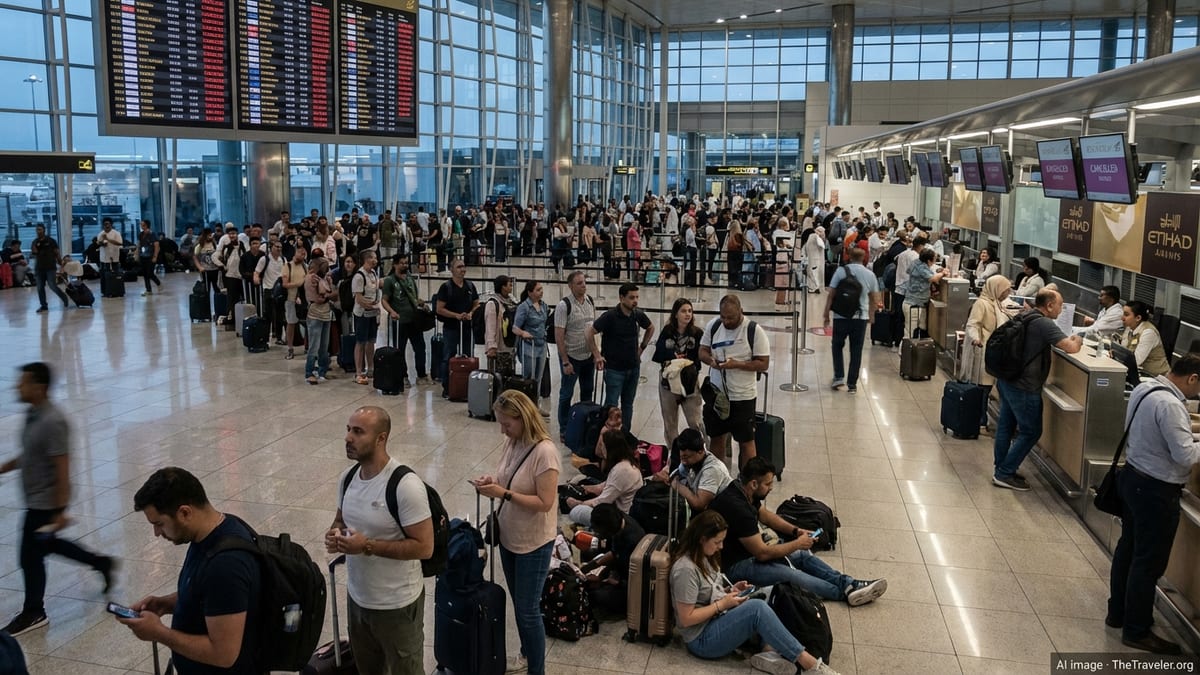
Air travel across Kuwait and key Gulf hubs, including Dubai, is facing renewed disruption after Kuwait reported intercepting what it described as a heinous barrage of Iranian missiles and drones targeting civilian and vital infrastructure, including Kuwait International Airport.
Get the latest news straight to your inbox!
Fresh Iranian attacks rattle Kuwait’s aviation infrastructure
Publicly available statements from Kuwait’s armed forces and civil aviation authorities indicate that the country has faced multiple waves of Iranian missile and drone fire in recent months, with a major strike on June 3 targeting Kuwait International Airport and nearby facilities. Officials reported intercepting dozens of ballistic missiles and drones, but acknowledged that some projectiles reached their targets, causing casualties and significant damage to airport buildings and air traffic management systems.
The Kuwaiti military described one such incident as a heinous Iranian attack aimed at civilian and vital facilities, including the airport’s main terminal and radar infrastructure. Coverage in regional outlets reports that Terminal 1 suffered structural damage and injuries among passengers and staff, prompting an immediate shutdown of operations and the suspension of commercial flights through the country’s primary gateway.
Subsequent reporting suggests that these strikes form part of a broader Iranian campaign against US and allied assets across the Gulf, carried out in response to American bombardments inside Iran and at sea. The targeting of aviation and logistics nodes has placed Kuwait’s airport network squarely on the front line of a regional confrontation that continues to escalate.
Airspace closures and intermittent shutdowns hit Kuwait-bound traffic
Following the June airport strike, Kuwait’s Directorate General of Civil Aviation temporarily halted air traffic and closed national airspace as assessment and emergency works were carried out. Local media accounts describe departing and arriving flights being suspended for several hours, with airlines instructed to divert or delay services until authorities could verify that the threat to civilian aviation had subsided.
In the weeks that followed, Kuwait reopened parts of its airport infrastructure, routing operations through Terminals 4 and 5 while keeping the damaged Terminal 1 closed. Updated travel advisories from foreign governments note that the airport remains partially operational but warn that renewed missile or drone launches from Iran could trigger further intermittent closures with limited notice.
On more than one occasion during the summer, Kuwait again restricted or paused air traffic after reporting the interception of fresh barrages of Iranian missiles and drones over its territory. These precautionary shutdowns, while often short-lived, have added a layer of uncertainty for carriers and passengers planning to transit the country or use Kuwait City as a regional hub.
Knock-on delays at Dubai, Abu Dhabi and other Gulf hubs
The impact of attacks on Kuwait has spread well beyond its borders to other major Gulf gateways, particularly Dubai International Airport and Abu Dhabi’s Zayed International Airport. Regional travel coverage notes that repeated strikes and retaliatory actions between Iran and the United States have forced air traffic controllers across the Gulf to reroute aircraft, adjust air corridors and, at times, temporarily restrict departures and arrivals.
According to recent reporting from travel industry outlets, passengers flying through Dubai, Abu Dhabi, Kuwait and Bahrain have experienced a pattern of delays, missed connections and occasional diversions as carriers adapt to changing airspace conditions. Even when airports in the United Arab Emirates remain fully open, closures or security alerts affecting neighboring states can constrain available routings and compel airlines to add holding patterns or longer flight paths around sensitive airspace.
Travel updates directed at passengers in Dubai warn that the intermittent closure of Kuwait International Airport and its airspace, tied to the evolving security situation, is among the main contributors to regional schedule disruption. With Gulf airports handling a substantial share of global east-west traffic, even modest restrictions in one state quickly ripple out across long-haul networks linking Europe, Asia, Africa and North America.
GCC concerns over regional aviation safety and stability
The missile and drone strikes on Kuwait have drawn strong reactions from Gulf Cooperation Council institutions, which have publicly condemned Iranian attacks on Bahrain, Kuwait and Jordan as blatant violations of sovereignty and international law. Official communiqués from GCC ministerial meetings emphasize that the security of member states is indivisible and highlight risks to regional air navigation and energy flows arising from continued military escalation.
Statements summarized in regional media underline concern that targeting airports and air defense infrastructure erodes the safety margin for civilian aviation and undermines the Gulf’s role as a reliable transit corridor. Kuwait’s decision to lodge a formal protest with the International Civil Aviation Organization over the airport strikes, citing injuries and extensive radar damage, reflects growing unease about the precedent such attacks may set for airspace security.
Analysts quoted in policy and aviation coverage point out that disruptions in Gulf airspace carry global implications, given that Middle Eastern hubs collectively manage a significant portion of international traffic. Prolonged instability could push some carriers to shift routes or hubs, at least temporarily, though the dense network of connections and investments in Gulf infrastructure make any rapid realignment challenging.
Travelers urged to monitor advisories and expect disruption
In response to the evolving security landscape, travel advisories from several governments now caution citizens that flights across the Middle East may be subject to sudden cancellation, diversion or delay. Guidance for those transiting Kuwait specifically notes that the airport is operating with reduced capacity while repairs continue at damaged facilities, and that further Iranian missile or drone activity could trigger renewed suspensions.
Industry-focused travel reports advise passengers with itineraries involving Dubai, Abu Dhabi, Kuwait City, Bahrain or nearby hubs to check airline notifications frequently, allow extra time for connections and remain flexible about rebooking options. Some airlines have updated their customer guidance to acknowledge that heightened tensions and intermittent airspace restrictions in and around Kuwait may affect operations on short notice.
While aviation authorities across the region continue to stress their commitment to safety, the pattern of Iranian missile and drone activity has injected a new level of unpredictability into one of the world’s busiest air corridors. Until a more durable de-escalation takes hold, passengers can expect that Kuwait’s exposure to attacks and the resulting airspace adjustments will remain a key factor shaping travel plans through Dubai and the wider Middle East.
Condé Nast Traveller Middle East: Dubai and Middle East flight disruption
Kuwait Times: Kuwait halts flights after Iranian missiles and drones hit airport
Emirates News Agency: Kuwait announces interception of missiles and drones