


Few winter experiences capture the imagination like gliding behind a team of huskies through silent, snow-covered forest. Husky safaris in Lapland, northern Norway and Swedish Lapland are now bucket-list staples, but they are also expensive, physically demanding and raise fair questions about animal welfare. So is a husky safari really worth it, and what should you expect if you book one today? This guide draws on current prices, real tours and traveler feedback from the 2025–2026 winter seasons to help you decide.
Get the latest updates straight to your inbox!
What Exactly Is a Husky Safari Today?
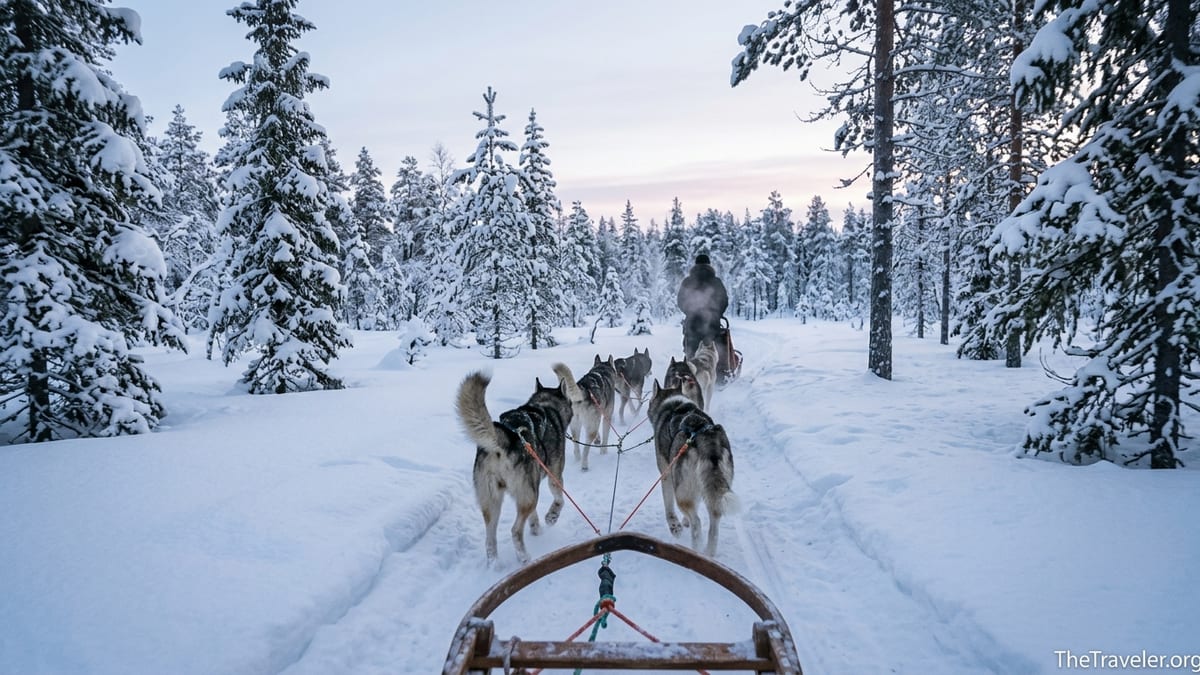
In most Nordic destinations, a husky safari means traveling by sled pulled by a team of highly trained sled dogs, usually Alaskan or Siberian huskies, along a groomed winter trail. In Finnish Lapland around Rovaniemi, for example, the standard tour lasts 2 to 3 hours door to door, with 30 to 60 minutes of actual sledding and the rest devoted to transfers, clothing, safety briefings and time with the dogs at the kennel.
Instead of passively sitting like on a horse-drawn carriage, most guests drive their own sled. Operators typically pair two guests per sled: one stands on the runners and controls the brake while the other sits in the sled, with a chance to swap halfway. Companies around Rovaniemi and Levi commonly use teams of 4 to 6 dogs for a 5 to 10 kilometer route through boreal forest and frozen marshland, which delivers the classic “Arctic trail” feeling many travelers imagine from photos.
There are also very short “taster” rides that last only 8 to 15 minutes. At Rovaniemi’s Santa Claus Village, for instance, you can pay for a 2 to 2.5 kilometer loop where a professional musher drives and you sit as a passenger. These mini rides are convenient and cheaper per person, but they are not the same as a full husky safari at a kennel deep in the forest, and they often take place in a busy, touristy setting rather than true wilderness.
Beyond Lapland, husky safaris are offered in northern Norway around Tromsø and Alta, in Swedish Lapland near Kiruna and Abisko, and in parts of Iceland and Greenland. The core elements are similar: meeting the dogs at the kennel, learning the basics of mushing, then heading out across frozen lakes or forest trails before returning to warm up with hot drinks and local snacks by the fire.
How Much Does a Husky Safari Cost and What Do You Get?
Current prices vary by country, length and operator, but a proper self-drive safari is a premium experience almost everywhere. Around Rovaniemi in Finnish Lapland, recent season rates for a 5 to 10 kilometer self-drive safari typically run from about 145 to 200 euros per adult for a 2.5 to 3 hour program that includes hotel pickup, thermal clothing and hot drinks. A 10 kilometer tour with a specialist operator such as Wild About Lapland is commonly advertised around 190 to 200 euros per adult for the 2025–2026 high season.
Longer runs cost more but give significantly more time on the sled. Full 10 kilometer rides where you mush for roughly an hour, like various “forest escape” or “snowy trails” programs sold in the Rovaniemi area, usually fall around 190 to 230 euros for adults during Christmas and New Year weeks. Full-day or 15 to 20 kilometer safaris in Finnish and Swedish Lapland can climb to 250 to 300 euros per adult, especially when they include lunch at a wilderness cabin and photo stops on frozen lakes.
Shorter tourist-park rides cost less overall but more per minute of sled time. At Santa Claus Village, a typical 2 to 2.5 kilometer passenger ride is currently listed around 70 to 90 euros per adult for roughly 8 to 12 minutes on the sled plus a warm drink. In northern Norway, kennels around Tromsø and Alta often price evening husky experiences with dinner and a chance at seeing the northern lights from around 195 to 250 euros per adult, though only part of the night is spent actually sledding.
Most reputable operators bundle transfers from town, insulated overalls, snow boots, mittens, wool socks, a safety briefing, guided time in the kennel and hot berry juice or coffee. What you rarely get included is professional photography or video. If you want good images without freezing your hands, it is worth designating one person in your sled as “photographer” for a few minutes while the other drives or asking the guide when there will be safe stops for photos.
What Travelers Love About Husky Safaris
For many travelers, the emotional core of a husky safari is the moment when the dogs fall silent and run. At the start, most kennels are a chaos of barking and excited howls as teams are harnessed. Once the guide gives the signal and you release the brake, the noise vanishes and you are gliding over snow with only the sound of runners on ice and the dogs’ breathing. Repeat visitors consistently describe this first minute as the most memorable part of their Lapland trip.
Meeting the dogs before and after the run ranks almost as highly as the sledding itself. Well-run kennels typically allow guests to greet the huskies in their yards, ask about individual dogs’ personalities and learn how they are trained. At smaller family operations around Rovaniemi or in Swedish Lapland, it is common to hear detailed stories about each lead dog and to watch the mushers calmly untangle overexcited teammates, which gives a sense of how much skill the work requires.
Another big draw is the scenery. Even on short 5 kilometer routes, you can travel through silent spruce forest, across marshes buried under deep snow and sometimes out over frozen lakes. In northern Norway’s fjord country near Tromsø, some routes climb gently above the tree line and look out over distant mountains, while in Swedish Lapland around Kiruna the trails often weave between frozen rivers and low fells. When the weather cooperates with fresh snow, pastel midday light and temperatures around minus 10 degrees Celsius, the experience feels as close to a winter postcard as most travelers will ever get.
Finally, many travelers appreciate that a husky safari feels active rather than purely touristic. You have to help push the sled uphill, pay attention to distance from the sled in front and react quickly when the guide signals. For people who spend most of their holidays on city breaks or beach trips, the combination of mild physical effort, cold air and concentrated focus can feel invigorating and memorable.
Common Surprises and Drawbacks: What You Might Not Expect
At the same time, husky safaris are not universally loved. One of the most common surprises is how short the actual sledding can feel on entry-level tours. Many “2.5 hour” products in Lapland include 30 to 45 minutes of sled time and the rest in transfers and briefing. Travelers who pick the cheapest or shortest option sometimes come away feeling that the day was more about waiting around in the cold than driving, especially if they booked an 8 to 10 minute mini ride while expecting the immersive scenes they saw in advertising.
The physical side can also catch people off guard. Standing on the runners is not technically difficult, but you must balance, bend your knees over bumps and actively brake on downhills. Guides often remind guests that they are responsible for using body weight to help the dogs on uphill sections. For older travelers with knee or back issues, or for those unused to icy surfaces, that effort can be tiring. In Ruka and Levi, for example, some operators note that guests should be comfortable standing for up to an hour in cold conditions, which not everyone considers when booking.
Weather is another wildcard. In early and late season, warm spells can make trails icy and bumpy, which is harder on both guests and dogs. Deep winter temperatures can sink below minus 25 degrees Celsius in parts of Finnish or Swedish Lapland, and even with high-quality overalls, a one-hour ride can feel brutally cold on exposed fingers, toes and faces. It is not uncommon for guides to shorten routes or adjust speed when windchill becomes dangerous, which can disappoint visitors who expected the full distance.
Finally, not everyone is comfortable with the idea of dogs working for tourism. Even when the animals appear healthy and enthusiastic, some guests report mixed feelings about watching them pull heavy sleds. A few leave with lingering doubts about whether the experience aligns with their values, especially after seeing both excellent and questionable kennels during the same trip.
Ethical Concerns: How to Choose a Responsible Husky Operator
Choosing a responsible kennel is arguably the most important factor in whether a husky safari feels worth it. In Lapland and northern Norway, there is a wide spectrum from large, commercial outfits that handle hundreds of guests per day to small family farms with fewer than 50 dogs. Reputable operators are transparent about how many dogs they have, how often each team runs, what happens to retired animals and how they manage rest days and veterinary care.
Before booking, examine recent traveler reviews that mention dog welfare in detail rather than relying solely on star ratings. Look for comments noting that the dogs look lean but not underweight, that kennels are clean and that animals have access to straw bedding, shelter and fresh water. Reports from Rovaniemi and Ylläs in the 2024–2025 seasons highlight several small-scale kennels where guests praised the mushers for knowing each dog by name and clearly explaining their training and rest schedules.
Ethical operators are also upfront about weight limits, age restrictions and any situations where they will refuse to run, such as dangerous trail conditions or extreme cold. In Rovaniemi and Levi, it is increasingly common to see clear policies such as a maximum combined weight per sled or a minimum age of 17 or 18 to drive, specifically framed as safety and welfare measures rather than customer inconvenience. If a company seems willing to promise anything to secure a booking, that can be a red flag.
If you remain unsure, consider booking with organizations that focus on longer tours and smaller group sizes instead of high-volume, assembly-line rides. Extended 10 to 20 kilometer safaris out of town often limit departures to a few sleds per guide and include time to discuss how the dogs are bred, trained and rotated. While these products cost more, many travelers who prioritize ethics feel better contributing to a business model built around fewer, more in-depth experiences.
Where and When a Husky Safari Feels Most Worth It
Not all husky safaris are created equal, and the setting matters enormously. In places like Rovaniemi’s Santa Claus Village or certain roadside parks, the experience is closer to a fairground ride: short, crowded and surrounded by shops and queues. For many travelers, these quick loops are a fun add-on if they are already visiting Santa, but they rarely justify a special trip in their own right.
By contrast, tours that operate from kennels 20 to 40 minutes outside town, whether in Finnish Lapland, Tromsø’s surrounding valleys or the forests near Kiruna, generally deliver a calmer and more immersive experience. A 10 kilometer “forest escape” in Rovaniemi or a 2-hour safari from a family-run farm in Swedish Lapland, for example, can involve gliding across wide open marshland under low Arctic sun, with no signs of development apart from the track you are following.
Timing also shapes value. In deep winter from late December to early February, you have only a few hours of blue daylight in much of Lapland, so mid-morning and early afternoon safaris tend to be most scenic. In March and early April, longer days and slightly warmer temperatures can make longer routes more comfortable, and the light for photography is often excellent. Evening husky safaris that include dinner and a chance to watch for the aurora can feel very special when skies are clear, but you should treat any northern lights component as an atmospheric bonus rather than the main reason to book.
For many travelers, the sweet spot in terms of value is a self-drive safari of 10 to 20 kilometers with a small group, outside the most crowded holiday weeks, with a kennel known for strong welfare standards. That combination offers enough time to feel you have really learned the basics of mushing, without committing to a multi-day expedition or paying premium Christmas week prices.
How to Decide if a Husky Safari Is Right for You
Before booking, it helps to match the reality of husky safaris with your own expectations, budget and physical comfort. If you have dreamed for years of driving your own sled through Arctic forest and can comfortably afford 180 to 250 euros per person, a longer self-drive tour is likely to feel worth the investment, provided you choose a reputable kennel. Many travelers describe these experiences as the highlight of their entire winter trip and something they would happily repeat.
If your budget is tight or you are unsure about the ethics of dog-powered tourism, you might find more value in other winter activities. Independent northern lights hunts by car or on a guided minibus, cross-country skiing, snowshoeing and even simple winter hikes can deliver powerful Arctic memories at lower cost. Some visitors to Tromsø and Rovaniemi in recent seasons have reported that their most meaningful nights were spent watching the aurora from a quiet lakeshore or cabin veranda rather than from a flying sled.
Physical ability and risk tolerance matter too. If you are nervous about icy surfaces, have balance issues or are traveling with very young children, reindeer sleigh rides or snowmobile tours where you can sit as a passenger may feel safer and more relaxed. Most husky operators provide the option to ride in the guide’s sled rather than drive, but in that case you lose part of what makes mushing unique.
Ultimately, a husky safari is most worth it when you want an active, hands-on encounter with winter, are prepared for intense cold, are willing to research kennel ethics and see the cost as payment for caring, year-round dog management rather than just for an hour of entertainment. If that description fits you, the odds of walking away thrilled rather than conflicted are high.
The Takeaway
A husky safari can be a magical, once-in-a-lifetime experience: the rush of acceleration as excited dogs leap forward, the sudden quiet on the trail, and the feeling of steering your own team through real Arctic or sub-Arctic wilderness. For many travelers in Lapland and northern Norway, it becomes the defining memory of their winter journey and often the moment when the landscape finally feels real rather than like a backdrop for postcards.
At the same time, the experience is expensive, relatively short on pure sled time and dependent on responsible animal care. Quick loops in busy tourist centers rarely deliver the dreamy wilderness scenes seen in marketing, and even the best tours demand that you tolerate deep cold, bumpy trails and a degree of ethical ambiguity. It is not a necessary component of every Arctic trip, nor will it suit every traveler’s body, values or budget.
If you choose carefully, prioritizing small, welfare-focused kennels and tours that offer at least an hour on the sled, a husky safari in 2025 or 2026 is still very much worth doing for those who truly want it. If you decide it is not for you, there are many other ways to encounter the northern winter: skiing under pale March sun, chasing aurora by car or simply listening to the snow creak under your boots on a frozen lake at night. The Arctic will be no less extraordinary for meeting it on your own terms.
FAQ
Q1. Are husky safaris cruel to the dogs?
When run by responsible operators, husky safaris are generally not considered cruel; sled dogs are bred to enjoy pulling and thrive on regular exercise. The key is choosing kennels with good welfare standards, where dogs look lean but healthy, have clean kennels and rest days, and where mushers are transparent about veterinary care and retirement plans.
Q2. How long does a typical husky safari last?
A standard self-drive husky safari in Lapland usually lasts 2 to 3 hours door to door, with 30 to 60 minutes actually spent on the sled. Short taster rides can be as little as 8 to 15 minutes of sledding, while extended or full-day expeditions can involve several hours on the trail with breaks for meals and photos.
Q3. How much does a husky safari cost in 2025–2026?
In popular areas like Finnish Lapland and Tromsø, expect to pay roughly 145 to 200 euros per adult for a basic 5 to 10 kilometer self-drive safari, and 190 to 300 euros for longer or more exclusive tours. Mini rides at tourist centers may cost from about 70 to 100 euros for less than 15 minutes on the sled, while full-day expeditions can exceed 300 euros per person.
Q4. Do I need any experience to drive a husky sled?
No previous mushing experience is required for standard tours. Guides provide a safety briefing and basic driving lesson before departure, and stay ahead of the group to set pace and manage any issues. You should be comfortable standing, balancing and using your body weight on uphill sections, but technical skills are learned quickly on the trail.
Q5. How cold will it be on a husky safari?
Temperatures on husky safaris in Lapland and northern Norway commonly range from about minus 5 to minus 20 degrees Celsius in midwinter, and can drop lower during cold snaps. Operators usually supply insulated overalls, boots and mittens, but you should still wear thermal base layers, warm socks, a hat and face protection like a buff or balaclava.
Q6. Is a short husky ride at a place like Santa Claus Village worth it?
Short rides at tourist centers are convenient if you have limited time or are traveling with very young children, but they do not offer the same wilderness feeling as kennel-based safaris. Many travelers find them pricey for the few minutes of sledding, so they are best treated as a quick taste rather than a full bucket-list experience.
Q7. Can children join a husky safari?
Yes, children are generally welcome on husky safaris, but age and height limits vary by operator and tour type. Young children usually ride as passengers in the guide’s sled or in a parent-driven sled, while driving is often restricted to teenagers 16 or 17 and older. Families should confirm age policies and route difficulty when booking.
Q8. What if I am nervous about driving the sled?
If you are unsure about driving, you can often ride as a passenger in a sled driven by a guide or more confident travel partner. Some operators also offer slower, beginner-friendly routes with extra staff on hand. Communicate your concerns before departure so the guide can adapt seating and pacing to keep you comfortable.
Q9. Will I see the northern lights on a husky safari?
Some evening husky safaris are timed to coincide with prime northern lights hours, but there is never a guarantee that the aurora will appear. If you book a night tour, consider the sledding and atmosphere by the fire as the main experience, and treat any northern lights as a bonus rather than the core reason for going.
Q10. How far in advance should I book a husky safari?
In peak periods such as Christmas and New Year in Lapland, husky safaris often sell out weeks or even months in advance, especially longer self-drive tours with small group sizes. For visits in December and early January, it is wise to reserve as soon as you know your travel dates; for March and early April, booking a few weeks ahead is usually sufficient.