


For many travelers, seeing the northern lights is the entire reason to fly to places like Tromsø, Reykjavik, Abisko or Fairbanks in the dark of winter. But once you start planning, a practical question appears: are organized northern lights tours actually worth the money, or can you just walk outside and look up? Recent seasons have generated thousands of first‑hand reviews, and together they paint a surprisingly consistent picture of what these tours deliver, where they fall short, and who benefits most from booking one.
Get the latest updates straight to your inbox!
What Travelers Actually Experience On Aurora Tours
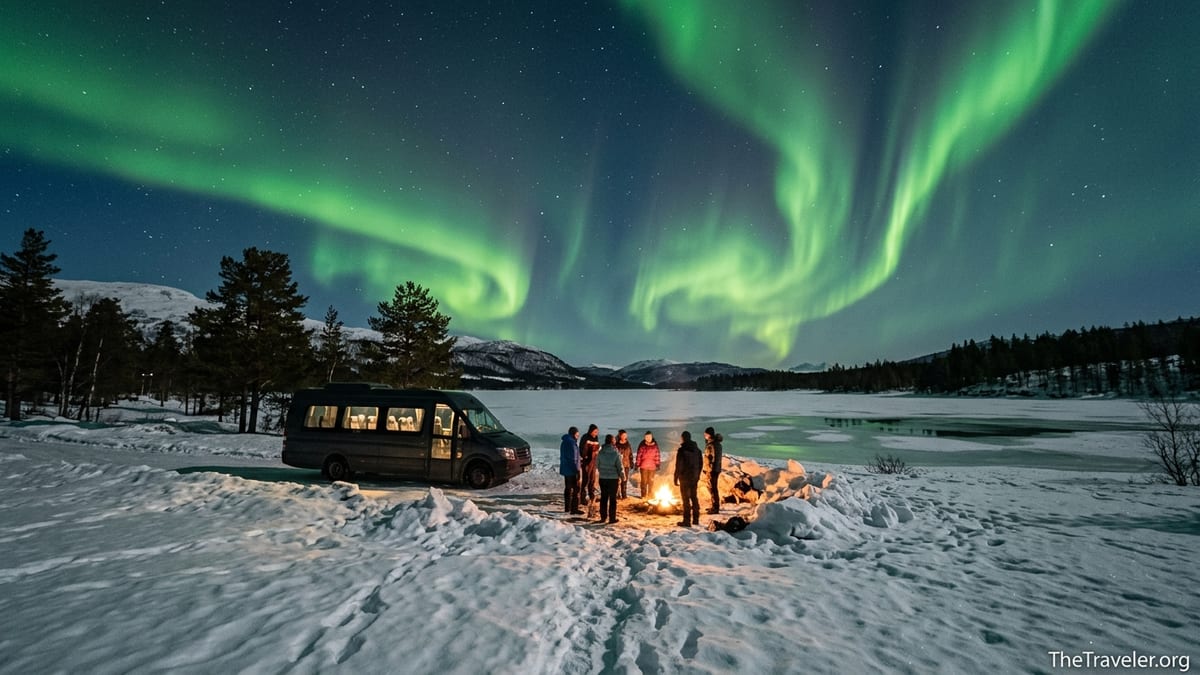
Across recent winters, traveler reviews from Norway, Iceland, Swedish Lapland and Alaska describe northern lights tours as either “the absolute highlight” of the trip or “a cold, expensive bus ride into the dark.” What separates those two outcomes is rarely luck alone. In Tromsø, for example, many visitors rave about small‑group “chase” tours in minibuses that drive two to three hours away from the city to escape cloud cover, sometimes crossing into Finland if that is where the clear skies are. One couple who joined a minibus chase from Tromsø with a specialist operator reported that their guide studied satellite cloud maps all afternoon, then drove them to a frozen lake where the sky suddenly cleared and the lights erupted into bright green and pink bands overhead. They described it as a long, tiring night but also the single best travel experience they had ever paid for.
Similar stories come from Iceland. Travelers who booked small‑group aurora hunts from Reykjavik often emphasize the guide’s role in constantly adjusting the route, checking live aurora apps and cloud forecasts, and patiently waiting with guests around a campfire or in a sheltered parking area until the sky finally delivers. When the display is strong, guests talk about the way the guides help set up camera gear, lend tripods, and take professional photos of each group under the glowing sky. That combination of expert navigation, local weather knowledge and hands‑on photography support is what many reviewers say justified spending a significant share of their travel budget on a single night tour.
On the other hand, some travelers come away disappointed when they book the cheapest large‑bus excursion that simply drives 30 to 60 minutes outside the city, stops at one or two pre‑planned locations, and does not actively “chase” patches of clear sky. Reviews from Rovaniemi, Reykjavik and Tromsø mention long stretches spent in parking lots or viewpoints under unbroken cloud, with no lights and little communication. Those guests tend to say the tour felt generic, as if the company would have run the same route regardless of the forecast. Their conclusion is often that a bare‑bones bus tour is not much better than renting a car or taking a taxi to a dark beach or lake.
Put simply, travelers who choose dedicated aurora‑chasing companies with strong recent reviews usually describe the night as absolutely worth the cost, whether or not the lights reach Instagram‑perfect levels. Those who opt for the lowest‑priced, least flexible coaches are more likely to feel they paid to be passengers in a weather gamble that the operator was not fully committed to winning.
What Northern Lights Tours Really Cost in 2025–2026
Prices vary widely by destination and style, but recent winter seasons show a few clear patterns. In Tromsø, data compiled by local operators for the 2025–2026 season indicates that large‑bus northern lights chases carrying 40 to 55 passengers typically cost about 110 to 145 US dollars per person. These tours are usually the cheapest guided option that still involve active chasing of clear skies, and local statistics suggest success rates around 75 to 80 percent for at least a partial sighting over a multi‑hour evening.
Smaller groups cost more but generally come with better odds and more personalized attention. In northern Norway and Iceland, minibus tours that limit groups to around 12 to 16 guests commonly range between roughly 160 and 220 dollars per person in high season. That price often includes warm overalls, hot drinks, snacks, and professional photos. Some Tromsø operators advertise success rates well above 90 percent across a full season because they cancel on hopelessly cloudy nights, drive much farther to find breaks in the overcast, and keep groups out until very late if conditions look promising. In Swedish Lapland, an evening at a dedicated aurora sky station above Abisko, reached by chairlift, may be in a similar price band once transport and dinner are included.
In contrast, self‑driving can look cheaper on paper but adds up quickly. Renting a car in Tromsø or Reykjavik in winter often runs from 80 to 120 dollars per day for a compact vehicle, plus winter insurance and fuel. Add in the cost of snow boots, extra layers, and possibly tire chains or studded tires if they are not included, and the nightly expense can approach or exceed the price of a low‑end group tour, especially if you only need a car to chase the lights. Public buses to dark locations near cities can be much cheaper, sometimes 15 to 30 dollars round‑trip, but they do not move once you arrive. If clouds roll in, you simply go home empty‑handed.
Multi‑day aurora tour packages bundle these costs into a single up‑front price. For instance, several operators currently offer three‑day “Northern Lights in Tromsø” or “Iceland Northern Lights and Golden Circle” itineraries that include two or three guided chases, daytime sightseeing, hotels and some meals. Those tend to start around 1,800 to 2,500 dollars per person for a week in Iceland and slightly less for long weekends in northern Norway, depending on room type and departure date. Guests on these trips often say the premium is worthwhile when they prefer having someone else arrange all logistics, but budget‑focused travelers frequently decide that a single well‑chosen night tour plus independent days offers better value.
Success Rates, Guarantees and the Reality of No‑Show Nights
One reason travelers struggle to judge whether aurora tours are worth it is the unavoidable uncertainty. Operators increasingly publish seasonal success rates and guarantee policies to reassure guests, but the fine print matters. A Tromsø‑based small‑group company recently reported a success rate above 90 percent across the 2025–2026 season for guests who were able to join at least one chase night. They attribute that figure to strict weather‑based go or no‑go decisions and the willingness to drive hundreds of kilometers into inland valleys or across borders when coastal skies are cloudy.
Guarantee policies also shape traveler impressions. Some Alaska‑based aurora outfits state clearly that they cannot control nature and therefore do not promise sightings on any given night, but they do offer full refunds or free rescheduling if they cancel before departure due to solid overcast or unsafe roads. A few Nordic operators market more aggressive perks, such as unlimited free retry tours within a two‑year window if your first paid tour goes ahead but produces no naked‑eye aurora at all. Others, especially larger bus companies, may offer only a discounted second tour or no compensation if you simply have bad luck under otherwise safe conditions.
From the traveler side, reviews show that guests are generally forgiving when they feel the company tried everything: checking multiple forecasts, explaining the odds bluntly before departure, moving locations several times, and staying out late if breaks in the clouds looked likely. Trip reports from Tromsø, Abisko and Rovaniemi frequently note that even guests who did not see strong aurora appreciated campfires, local stories, starry skies and a sense of Arctic wilderness that they would not have found so easily on their own. Those travelers tend to say the tour was “worth it for the effort and experience, even though nature did not cooperate.”
Frustration instead spikes when expectations are mismanaged. Threads on travel forums from the last two winters are full of visitors who booked northern lights tours as the central reason for visiting Iceland or northern Norway, only to face several consecutive nights of poor weather. Locals and guides consistently warn that you should never travel solely for the aurora: even in prime months like February and March, multi‑day cloud cover is common. Travelers who go north planning to enjoy winter landscapes, dog sledding, fjord cruises, or saunas and restaurants regardless of the lights tend to feel that the tour cost was acceptable risk. Those who arrive with a single‑minded goal of “checking off” the northern lights are more likely to feel shortchanged if they leave with only faint green smudges on long‑exposure photos.
Tours vs DIY: What Frequent Aurora Hunters Advise
One of the clearest patterns in recent online discussions is that even independent travelers who usually avoid tours often recommend guided aurora trips, at least for the first night. People comfortable renting cars for summer road trips in Iceland or Norway frequently say that winter driving at night, on icy rural roads with sudden snow squalls, is a very different proposition. Locals on forums from Reykjavik to Tromsø emphasize that the challenge is not just snow but rapidly changing conditions, long distances between services, and the fatigue of staying alert until two or three in the morning.
Several repeat visitors describe a practical compromise. They book a professionally guided chase on their first or second night in town to orient themselves, learn how to read cloud maps and aurora apps, and get a feel for safe locations outside the city. During that tour, they pay attention to where the guide stops, how they choose viewing spots with an open northern horizon, and what backup plans they discuss if the sky clouds over. Armed with that knowledge, some guests then rent a car for a second or third night of DIY chasing, using smartphone apps and weather websites to aim for the same valleys and coastlines the guides favored.
For travelers on a tight budget, locals often point out that you can improve your chances considerably without paying for a tour by combining basic tools. In Iceland, visitors report success simply by checking a cloud cover map and the national aurora forecast, then driving 30 to 60 minutes from Reykjavik to dark viewpoints on the Reykjanes Peninsula or Thingvellir on clear nights. In Finnish Lapland and Swedish Lapland, guests staying at remote cabins or glass igloo resorts sometimes step outside their accommodation to excellent displays because the sky is already dark and free of nearby light pollution.
However, the same experienced travelers almost always issue a caution: if you only have one or two nights available, or if you are uncomfortable with winter driving and nighttime navigation, a good tour is likely your best value. Several people who tried to chase independently for multiple nights in Tromsø, failing to escape local clouds, eventually booked a professional chase out of frustration and saw the lights that same evening after being driven more than 150 kilometers inland. Their hindsight verdict is that tours are not strictly necessary in a technical sense, but highly worthwhile as an efficient way to turn limited time into the highest practical chance of success.
What Makes Some Aurora Tours Feel Truly Worth the Money
Reading through hundreds of recent reviews, certain features come up repeatedly in stories where travelers say the tour exceeded expectations. The first is active, transparent decision‑making around weather. Guests praise companies whose guides call or message in the afternoon to explain that conditions are marginal and offer the choice to postpone, go anyway with lowered expectations, or cancel with a refund. In Tromsø and Fairbanks, for example, some outfits openly cancel when cloud cover is forecast to be near 100 percent across their entire driving radius, even though they could collect revenue by running the tour regardless.
Another value‑adding factor is comfort and safety. Tours that provide insulated overalls, quality boots, hot soup or sausages by a campfire, and access to heated shelters or vehicles between viewing sessions are much more likely to receive glowing write‑ups from guests who are not used to standing outside at minus 15 degrees Celsius. Minibus tours that limit group size and prioritize quiet, uncrowded locations also score high, as travelers contrast that intimacy with big buses where 40 or more people compete for tripod space in the snow.
Photography support is the third major differentiator. Many operators now include professional photos in the ticket price, emailing guests a gallery of shots within a day or two. Travelers who struggle to adjust camera settings in the dark are often relieved to come home with a few sharp images of themselves under the aurora, even if their own phones produced mostly blurred streaks. In reviews of companies in Tromsø and Abisko, guests frequently name individual guides who spent the first half hour of the tour helping each person configure a camera or phone, then moved through the group checking results and making adjustments.
Finally, authenticity matters. Travelers often single out guides who clearly enjoy chasing the lights as a passion project rather than a routine job. In one popular Tromsø review thread, multiple guests recommend the same guide who stayed out hours longer than scheduled because he knew a gap in the clouds was coming. Others praise Lapland operators who weave in stories about Sami culture, local geology and Arctic wildlife, turning long drives into informal classes rather than quiet bus transfers. When those personal touches are present, people rarely complain about the ticket price, even if the aurora itself only reaches a modest level.
Common Complaints and How to Avoid Them
Of course, not every tour earns five stars. The most frequent complaints fall into a few predictable categories, and being aware of them can help you choose more wisely. First, there is overpromising in marketing. Some operators advertise phrases like “99 percent success” without clearly explaining the definition of success or the timeframe. Season‑long success rates can be honest when based on guests who are able to book multiple nights, but they do not guarantee that any single evening will produce strong lights. Travelers feel misled when they interpret these numbers as near‑certainty for their one precious night and then see only faint grayish bands on the horizon.
Second, many negative reviews stem from crowding. Large‑bus tours exist for a reason: they keep prices low, and for some visitors they deliver a perfectly adequate experience. However, guests who expected a quiet night under the stars often react badly to finding ten buses parked in the same lay‑by, headlights flashing and people talking loudly. In some locations near Reykjavik and Tromsø, locals complain that mass tourism has turned certain viewpoints into informal parking lots on clear nights, which can spoil the sense of wilderness. If solitude matters to you, paying more for a small group that explicitly promises off‑the‑beaten‑path spots is usually money well spent.
A third frustration point is rigid policies around minor issues. A few travelers report losing the right to a free retry because they arrived ten minutes late to the meeting point, or being denied a partial refund when buses clearly drove into obviously hopeless weather. While companies must protect themselves against no‑shows and repeated rescheduling, the patterns in reviews suggest that the most respected operators balance clear rules with reasonable flexibility. Many guests mention guides who stopped for bathroom breaks even when not strictly scheduled, or who let the group decide whether to keep chasing or call it a night after an initial viewing.
To minimize your chances of disappointment, experienced travelers recommend reading detailed, recent reviews rather than relying on overall star ratings alone. Look for comments about how often tours were canceled due to poor weather, whether guides seemed motivated to chase for the best conditions rather than the shortest drive, and how the company handled nights with weak or no aurora. These narratives, more than glossy marketing copy, reveal whether a tour is likely to feel worth its cost to you.
The Takeaway
For many people, a well‑run northern lights tour is absolutely worth the money, but not because it can guarantee nature will cooperate. The true value lies in borrowing local expertise, safe transport and hard‑won knowledge about weather patterns, so that your limited time in the auroral zone has the highest reasonable chance of success. When you choose an operator that actively chases clear skies, communicates honestly about conditions, and invests in guest comfort and photography, the ticket price usually feels justified, even on nights when the aurora is modest rather than spectacular.
At the same time, tours are not mandatory. If you are confident driving in winter darkness, have several nights to spare, and enjoy trip‑planning, you can design your own aurora hunts using weather maps, aurora forecasts and local advice. In remote destinations with naturally dark skies, simply stepping outside your cabin at the right moment may deliver a better show than any bus tour could. The key is to treat the northern lights as a beautiful bonus to an already rewarding winter trip, not as a guaranteed product.
Ultimately, the decision comes down to your risk tolerance, budget and priorities. Travelers who value efficiency, safety and expert guidance, or who have only one or two shots at a clear night, tend to rate aurora tours as money well spent. Those who prefer full control and are comfortable accepting a higher chance of going home empty‑handed may choose to hunt on their own. In either case, going north with realistic expectations and a flexible mindset will do more to shape your experience than any marketing promise. If the sky does erupt in waves of green and violet above you, the memory will likely outshine whatever you paid to be there.
FAQ
Q1. Are northern lights tours really necessary to see the aurora?
They are not strictly necessary, but they are often very helpful. In cities like Tromsø, Reykjavik and Fairbanks, light pollution and coastal cloud cover mean you may need to drive one to three hours to find dark, clear skies. If you are not comfortable with winter night driving or have limited time, a reputable tour significantly improves your practical chances of success.
Q2. How much should I expect to pay for a good northern lights tour?
As of the 2025–2026 season, large‑bus chases in northern Norway or Iceland often cost about 110 to 145 US dollars per person, while small‑group minibus tours with photography support and warm gear commonly range from roughly 160 to 220 dollars. Premium private experiences and multi‑day packages cost more, but these figures cover most well‑reviewed shared tours.
Q3. Can a tour company guarantee that I will see the northern lights?
No operator can truly guarantee a sighting because the aurora depends on solar activity and local weather. Some companies advertise high seasonal success rates and offer free retries or discounts if you see nothing, but even the best guides sometimes face nights of cloud or low activity. Treat guarantees as risk‑mitigation, not certainty.
Q4. Is it better to book a tour at the start or end of my trip?
Most experienced travelers recommend booking a tour early in your stay. That way, if the weather is poor, you have extra nights to rebook or try on your own. Leaving your only tour for the final night means you have no flexibility if clouds move in or the company needs to cancel for safety reasons.
Q5. Are cheap big‑bus tours a bad idea?
Not necessarily, but they come with trade‑offs. Large‑bus tours are usually the most affordable way to join a guided chase and can work well when conditions are favorable. However, they are more likely to feel crowded and may be less flexible about driving long distances to escape clouds. Travelers who want a quieter, more responsive experience often prefer to pay more for a small‑group operator.
Q6. What should I look for when choosing a northern lights tour?
Focus on recent, detailed reviews that mention how guides handle cloud forecasts, how far they are willing to drive, and whether they cancel on hopeless nights. Look for companies that provide warm clothing, hot drinks and basic photography help. Clear policies on refunds, rescheduling and “no lights” nights are also important signs of a professional operator.
Q7. Can I see the northern lights from my hotel without a tour?
Sometimes, especially if your hotel is in a rural, dark‑sky location in places like Finnish Lapland, Abisko or the countryside outside Fairbanks. Urban hotels in Reykjavik or Tromsø are less ideal because of light pollution and frequent cloud cover. Many travelers still book at least one tour even when staying at aurora‑focused hotels, as mobile guides can drive to clearer areas if clouds linger overhead.
Q8. Are northern lights tours suitable for children or older travelers?
They can be, but it depends on the format. Some minibus chases involve long periods outdoors in very cold temperatures and late nights that can be challenging for young children or anyone with mobility issues. If you are traveling with family or older relatives, consider shorter tours that include warm shelters, or choose hotels with good on‑site viewing so people can step indoors easily between displays.
Q9. How many nights should I plan for northern lights hunting?
If seeing the aurora is a high priority, aim for at least three or four nights in the auroral zone during peak season, which gives you a buffer against cloudy periods. Many travelers book one or two guided tours within that window and leave the remaining nights flexible for DIY attempts or other evening activities.
Q10. Are summer northern lights tours in the Arctic worth booking?
In most of the high Arctic, the midnight sun makes summer skies too bright to see the aurora, even when it is active. A few tours operate on the edges of the season when nights are still short, but the core viewing period is typically late September through late March. For the best value, plan your trip within those months rather than paying for “off‑season” aurora experiences with very limited darkness.