


Dog teams racing across frozen lakes, reindeer bells chiming through a blue Arctic twilight, hot berry juice by a campfire under the northern lights. When people picture Lapland in winter, they usually imagine one of two classic experiences: a husky safari or a reindeer safari. Both are unforgettable, but they feel very different in pace, price and personality. Understanding those differences before you book can help you spend your time and money on the experience that really fits you.
Get the latest updates straight to your inbox!
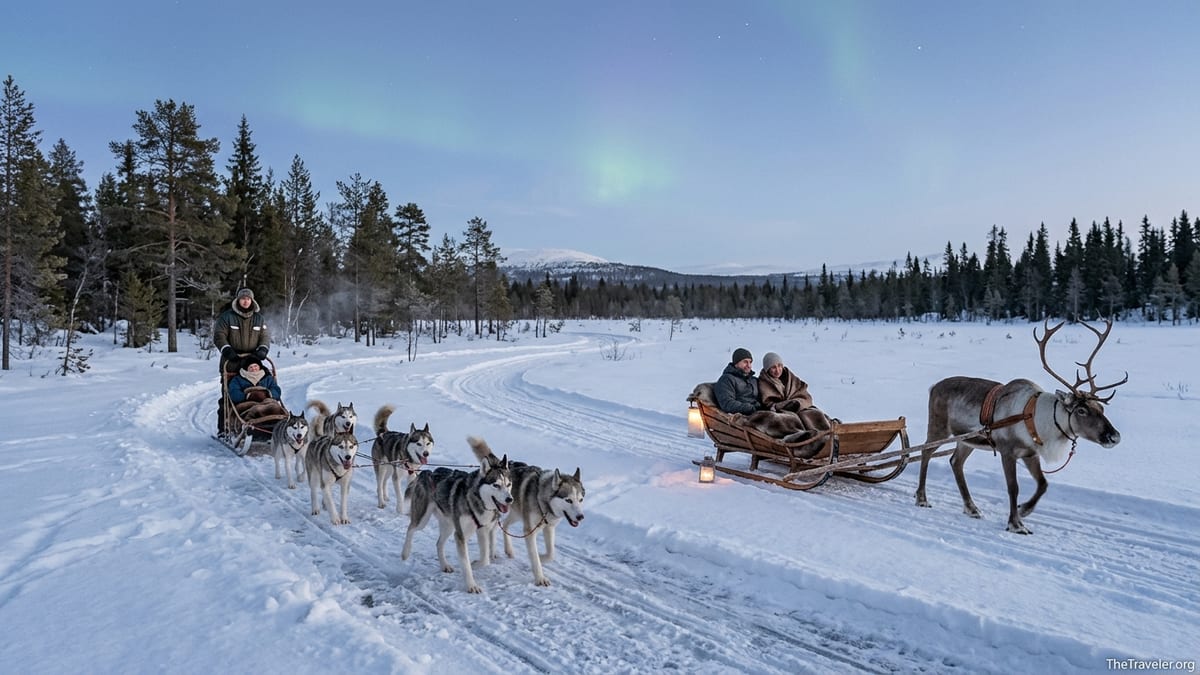
What Each Safari Actually Feels Like
On a typical husky safari in Finnish Lapland, the word that comes up most often is "energy." After a short safety briefing outside a kennel near Rovaniemi or Levi, you walk between lines of barking Alaskan and Siberian huskies straining against their harnesses. Once you release the brake, the dogs surge forward and the noise drops away into near silence, just the hiss of runners and the dogs’ breathing as you skim through forest or over a frozen marsh. Operators like Safartica in Rovaniemi or smaller family kennels near Saariselkä commonly run 10 to 20 kilometer tours where two guests share a sled and swap between driving and sitting halfway through the route.
A reindeer safari by contrast feels slow and almost meditative. At reindeer farms such as Porovaara Hill outside Rovaniemi or traditional Sámi-owned farms around Inari, you usually begin with a quiet introduction to the animals and herding culture, often inside a kota hut warmed by an open fire. Then you settle into a wooden sleigh lined with reindeer skins while a single reindeer pulls you at walking speed through snowy forest. A common product in Levi, for example, is a 3 kilometer “Super Reindeer Safari” that combines a gentle sleigh ride with feeding lichen to the herd and listening to herding stories over hot drinks.
For many travelers, the difference is simple: husky safaris feel like an active sport where you participate, steer and balance, while reindeer safaris feel like a cultural experience and gentle sightseeing tour. Your choice starts with the kind of energy you want from your day in the snow.
Costs, Durations and What You Get for Your Money
Husky safaris tend to be priced by distance and how much actual sledding time is included. Recent winter 2025 to 2026 price lists from Lapland operators show short 5 to 8 kilometer taster rides of about one hour total starting around 90 to 130 euros per adult, including transfers and warm clothing. Two-hour programs that cover roughly 12 to 20 kilometers and include a coffee break in a wilderness shelter commonly range from about 110 to 190 euros per adult. Half-day tours of 25 to 40 kilometers, often with a hot lunch by the fire, typically cost somewhere between 150 and 250 euros.
Full-day or multi-day husky expeditions, which run 50 kilometers or more and may include overnight stays in basic wilderness cabins, climb into the 280 to 400 euro range for a day and 600 euros or more for multi-day adventures. These longer trips are usually capped at very small groups and appeal to confident, outdoors-oriented travelers who want to spend most of the day on the runners rather than just posing for photos at the kennel.
Reindeer safaris are usually shorter in distance but similar in overall package price once you add transfers and guiding. In Levi, for instance, a 2 hour reindeer excursion with farm visit, 1 kilometer sleigh ride and coffee break is typically priced around 140 euros for adults and about 105 euros for children, with family packages sometimes advertised from just over 100 US dollars for a shorter farm visit. In Rovaniemi, 3 kilometer reindeer rides paired with a farm tour and storytelling often sit in the 120 to 170 euro range for adults depending on group size and whether an evening northern lights element is included.
If you are on a tighter budget and simply want to “tick the box,” a short reindeer ride will normally cost slightly less than an equivalent-length husky tour. If you want the most movement and scenery per euro spent, mid-length husky safaris usually provide more active time on the trail. Families often end up combining a short reindeer visit with a longer husky outing so everyone gets both the gentle sleigh ride and the thrill of driving a team of dogs.
Best Places in Lapland for Each Experience
Most visitors base themselves in a few key hubs that are well connected by flights and buses and have dozens of safari companies to choose from. Rovaniemi, the main city of Finnish Lapland and home to Santa Claus Village, is the biggest year-round base and one of the easiest places to arrange both husky and reindeer safaris. From the city center it is a 20 to 30 minute transfer to kennels and reindeer farms such as those around Porovaara Hill, where tours focus on quiet forest landscapes away from the floodlit resort area.
Levi and Ylläs, served via Kittilä Airport, appeal to travelers who want to combine downhill skiing with animal activities. In Levi it is common to spend the morning on the slopes and take an afternoon reindeer safari from a nearby farm, or book a package that includes a short husky safari, reindeer ride and snowmobile tour all in one day. Smaller operators in nearby villages may offer slightly lower prices and less crowded trails than the biggest Levi-based companies, which is worth considering if you value a more intimate feel.
Farther north, Saariselkä and Inari are ideal if you want a wilder feeling and more Sámi cultural context. Around Inari you can find reindeer safaris operated by Sámi families whose livelihood still centers on traditional herding, so the focus is often as much on explaining land use, migration routes and modern herding challenges as it is on the sleigh ride itself. Husky safaris from Saariselkä, including those run by resorts that specialize in aurora-focused stays, frequently head out into more sparsely populated fells where you may not see another group for most of the tour.
Wherever you go, look carefully at how far the farm or kennel is from your accommodation. Some Rovaniemi tours, for example, advertise “3 hour” safaris that include 60 to 90 minutes of bus transfers and waiting time. If you only have a couple of days in Lapland, choosing operators located closer to town or within resort areas like Levi can reduce time spent in transit and maximize your actual sledding or sleigh-riding time.
Season, Weather and Northern Lights Potential
Both husky and reindeer safaris in Finnish Lapland depend on reliable snow cover and suitable temperatures. Operators generally run their main winter programs from late November through early April, with the prime months from December to March. Husky specialists highlight mid-December to March as the most consistent combination of deep snow, stable trails and temperatures that are cold enough for the dogs to work comfortably yet manageable for visitors with proper clothing.
Within that window, the character of your safari can change dramatically. In December and early January, particularly around Levi and Rovaniemi, you experience the kaamos period when the sun barely rises and the snow reflects a blue twilight. Many evening reindeer rides are timed to catch this blue hour, with lanterns on the sleigh casting a soft glow on the forest. By March the sun sits higher, the days are noticeably longer and midday temperatures tend to be milder, which many families and first-time snow travelers find easier.
If seeing the northern lights is a priority, consider an evening tour that combines aurora hunting with either a husky or reindeer safari. In practice, most northern lights husky tours in areas such as Rovaniemi or Saariselkä keep the actual sledding segments fairly short for safety, then shift to watching the sky from a sheltered camp with hot drinks. Reindeer aurora tours, by contrast, lean into the slow pace, letting you ride quietly across open marshland or frozen lakes where you have a broad view of the sky. As always with the aurora, there are no guarantees; booking a safari mainly for the lights can lead to disappointment, but treating them as a possible bonus makes for a happier experience.
Do keep in mind that very cold snaps below about minus 25 degrees Celsius, strong winds or heavy snowfall can shorten routes, change itineraries or even cancel tours at short notice. Reputable operators will prioritize safety and animal welfare over completing the full advertised distance. Flexible scheduling and travel insurance that covers weather-related cancellations are sensible precaution for winter 2025 to 2026 trips.
Accessibility, Activity Level and Who Each Safari Suits Best
A husky safari is more physically demanding. Even on beginner-friendly routes, the person driving must stand on the back runners, use body weight to lean into corners and operate the brake by stepping down firmly with one foot. On gentle uphill stretches you are expected to hop off and push or jog alongside the sled to help the dogs. For guests with back or knee problems, very young children or anyone who prefers to remain seated, many companies can arrange for a guide to drive while all guests sit, but this turns the experience into more of a ride than an active adventure.
Age rules vary slightly by operator, but it is common in Lapland for children under about 12 to sit in the sled rather than drive, and for a minimum age or size to apply to self-driving. Some winter holiday package providers that include husky trips out of Rovaniemi mention that only adults with a valid driving license may drive the sled in their programs, a rule designed to simplify insurance and avoid disputes in busy peak weeks. If your dream is to drive your own team, check these details carefully when booking.
Reindeer safaris, by contrast, are among the most accessible winter activities in Lapland. You sit or lie in the sleigh under thick blankets, and the reindeer sets the walking pace. Most tours are suitable for small children, older travelers and people who are not comfortable on skis or snowshoes. Safety briefings usually focus more on staying seated and not startling the animal than on any physical technique. Guests with reduced mobility can often be assisted into the sleigh directly from a vehicle or from a low platform at the farm.
Because of this difference, many mixed-age groups choose a reindeer safari as their shared family experience, then let the most active members of the group book a longer husky or snowmobile excursion separately. If you only have time for one and you are unsure about balance or cold tolerance, a reindeer safari is the safer choice. If everyone is relatively fit, curious and ready for a bit of effort, a mid-length husky safari will likely deliver the stronger sense of adventure.
Ethical and Animal Welfare Considerations
Animal-based tourism is a major part of Lapland’s winter economy, and it has attracted more scrutiny in recent years. A Finnish regional study on animal-based tourism providers in Lapland noted that many companies now operate multiple types of safaris and must balance commercial demand with animal welfare in both husky kennels and reindeer herds. Reputable operators invest heavily in training, veterinary care and rest schedules, and they limit how many hours per day any given team or reindeer works.
For huskies, key welfare questions include how much time they spend running versus chained or kenneled, whether they are allowed off-duty play and socialization and how they are treated at the end of their working life. When you visit, you can ask straightforward questions: how many dogs are in the kennel, how often each team runs, whether retired dogs are rehomed and how the kennel keeps them cool in the brief but sometimes warm Lapland spring. Kennels that are proud of their standards are usually happy to explain and show their set-up.
Reindeer welfare centers more on herd size, grazing access and how the animals fit into traditional Sámi and local livelihoods. Many reindeer in Lapland are semi-wild and only some individuals are trained to pull sleighs. On farm-based safaris you may see large herds moving freely in fenced forest sections, with just a handful of working reindeer harnessed for tourist rides. Questions worth asking include how long each reindeer works per day, how many rest days they receive in peak season and whether the same animals are involved in meat production or other herding activities.
If ethical travel is a priority for you, both husky and reindeer experiences can be compatible with your values, provided you choose operators who are transparent about their practices. Look for small group sizes, clear pre-tour briefings about how to behave around the animals and itineraries that build in rest periods rather than pushing for maximum distance. You can also consider combining an animal experience with non-animal activities such as snowshoeing, cross-country skiing or visiting cultural centers to spread your tourism impact more widely.
How to Decide: Matching the Safari to Your Personality
Thinking about your own travel style is often the quickest way to choose between a husky or reindeer safari. If you enjoy activities like mountain biking or kayaking, do not mind a bit of physical effort in the cold and want to feel actively engaged with the landscape, a husky safari is likely to be the better fit. A half-day trip from Rovaniemi or Saariselkä where you drive your own sled for 20 to 30 kilometers, stop for lunch in a wilderness hut and maybe see only one or two other groups on the trail can easily become the highlight of a week in Lapland.
If instead your priorities are atmosphere, storytelling and a gentler pace, and especially if you are traveling with grandparents or very young children, a reindeer safari may offer more of what you are looking for. A classic example would be a family staying in Levi over Christmas, booking a late-afternoon reindeer ride through the forest, followed by marshmallows over the fire in a kota hut while a local guide tells Sámi legends. For many, that scene captures the “storybook Lapland” feeling better than anything else.
The truth for most first-time visitors is that, when budget allows, doing both is ideal. You might schedule a short, 2 hour reindeer excursion on your first day to ease into the climate and hear about local culture, then book a longer husky safari for a later day once you have your winter layering figured out. If you must choose only one, write down your top three priorities, such as “adrenaline, scenery, culture” or “comfort, kids’ enjoyment, photos,” and see which activity clearly checks more boxes.
Also consider when during your trip you schedule the safari. Husky tours run at higher speeds and can feel significantly colder because of windchill, so placing them in the middle of your stay when you are already acclimatized, rather than on your first dark, jet-lagged evening in Rovaniemi, can make a real difference. Reindeer rides are more forgiving and can work well on a short stopover even if you are not fully adjusted to Arctic conditions.
The Takeaway
Choosing between a husky and a reindeer safari in Lapland is less about which experience is “better” and more about which one matches your energy level, interests and companions. Husky safaris deliver motion, participation and the thrill of handling your own team of enthusiastic dogs across real Arctic terrain. Reindeer safaris provide calm, story-rich journeys that connect you to centuries of northern herding culture at a pace almost anyone can enjoy.
In practical terms, husky tours generally involve longer distances, higher prices and greater physical effort, while reindeer excursions tend to be shorter, calmer and easier for multi-generational groups. Both are highly seasonal, weather-dependent and shaped by the specific operator and location you choose, whether that is a busy hub like Rovaniemi or a quieter northern village near Inari.
With demand for winter 2025 to 2026 Lapland trips remaining strong, the best strategy is to think honestly about what you want out of your time in the snow, research operators with clear welfare standards and small group sizes, and book key activities well in advance. Whether you end up gripping the runners behind a team of huskies or listening to the soft jingle of reindeer bells under a shifting aurora, the right choice for you will leave you with the feeling that you have experienced the Arctic on its own terms.
FAQ
Q1. Are husky safaris or reindeer safaris better for young children?
Reindeer safaris are usually better for very young children because you sit securely in a low sleigh at walking speed, with thick blankets and minimal movement. Many operators welcome infants on reindeer rides, while husky safaris often require children to be older to join safely, especially if parents want to drive the sled themselves.
Q2. How cold does it really feel on a husky safari compared with a reindeer safari?
On a husky safari, windchill from the higher speed can make temperatures feel noticeably colder, especially on your face and hands. On reindeer safaris, the slow pace and use of blankets make the cold feel less intense, although you still need proper winter clothing for sitting still in sub-zero conditions.
Q3. Can I drive the husky sled myself, or will a guide always drive?
On many Lapland husky tours, especially around Rovaniemi, Levi and Saariselkä, two guests share a sled and take turns driving, following a guide who leads the group. Some package holidays, however, only allow guides to drive for safety and insurance reasons, so you should check the tour description and confirm before booking if self-driving is important to you.
Q4. Do reindeer safaris feel too short compared with husky trips?
Reindeer rides are usually shorter in distance, often 1 to 3 kilometers, but they are nearly always combined with a farm visit, feeding, storytelling and a campfire break. Most guests find the full experience fills 1.5 to 3 hours, which feels sufficient at winter temperatures, especially for families or those not used to the Arctic cold.
Q5. Is one type of safari more ethical than the other?
Neither activity is automatically more ethical; it depends on the individual operator. Well-run husky kennels and reindeer farms limit daily working hours, provide veterinary care and respect rest days. Travelers can support good practice by choosing small-group tours, asking questions about welfare and avoiding operators that seem focused only on volume and speed.
Q6. Which safari offers a better chance to see the northern lights?
Both can be combined with aurora watching, but reindeer safaris often lend themselves naturally to slow evening rides across open terrain where you can comfortably gaze at the sky. Husky northern lights tours may include shorter sledding segments followed by time at a campfire specifically to watch for aurora activity.
Q7. How far in advance should I book a husky or reindeer safari in peak season?
For travel during Christmas and New Year or school holiday weeks between late December and early March, it is wise to book key husky and reindeer activities several months in advance. Smaller operators and prime evening time slots can sell out quickly, especially in popular bases like Rovaniemi and Levi.
Q8. What should I wear for each type of safari?
Dress for both as you would for extended time outdoors in a sub-zero Arctic environment: thermal base layers, insulating mid-layers, windproof outerwear, warm hat, scarf or buff, and insulated boots. Most operators provide additional overalls, boots and mittens, but bringing your own thin gloves and face protection is especially important for husky safaris where windchill is stronger.
Q9. Can I do both a husky and a reindeer safari in a single day?
Yes, many visitors combine a short reindeer experience with a husky safari in the same day, particularly in hubs like Levi and Rovaniemi where farms and kennels are close together. If you try this, schedule the more active husky tour first and the gentler reindeer ride second, so you end the day in a more relaxed way.
Q10. Is snow guaranteed for safaris in November or April?
Snow conditions in early November and late April can be variable, especially in southern parts of Lapland. Some resorts and farms near Rovaniemi open activities in mid to late November when snow allows, while higher or more northerly areas like Saariselkä usually have a longer, more reliable season. If snow is marginal, operators may shorten routes or move tours to higher terrain, or in some cases cancel for safety.