


Few winter experiences feel more quintessentially Arctic than the soft hiss of sled runners over snow, the excited yips of huskies at the start line and the vast stillness of a polar landscape stretching out ahead. Husky safaris now range from half-hour kiddie-friendly loops to serious multi-day expeditions where you camp on the tundra and drive your own team. For travelers planning a cold-weather escape in the 2025–2026 seasons, here is how to choose the right husky safari and some of the best, concrete tours to book for families, couples and full-on Arctic adventure seekers.
Get the latest updates straight to your inbox!
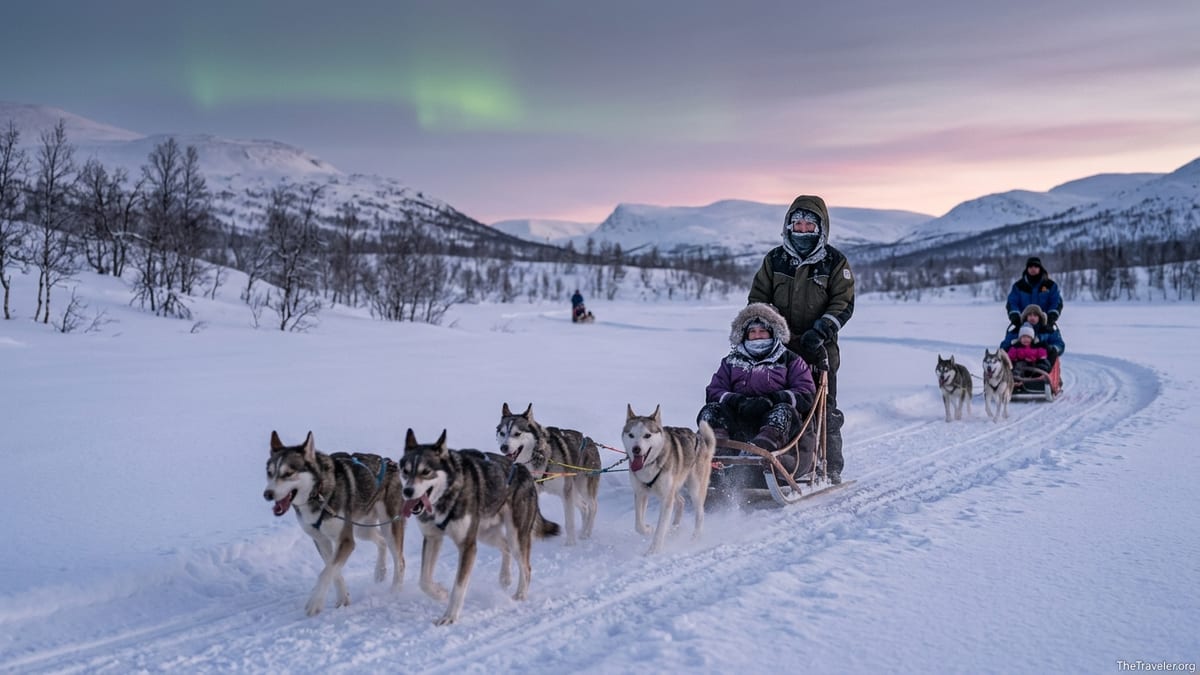
What To Know Before You Book a Husky Safari
Husky safaris are offered across the Arctic, from Finnish, Swedish and Norwegian Lapland to Svalbard and Greenland. Most travelers base themselves in hubs like Rovaniemi and Levi in Finland, Tromsø and Alta in Norway or Kiruna in Sweden and then book day tours with local kennels. Typical winter seasons run from late November to late March, although higher-latitude destinations such as Svalbard can operate into April when snow conditions allow.
Day-trip tours are usually sold by distance or time, for example 5 to 10 kilometers on the sled or 1 to 3 hours of activity door-to-door. Prices vary by country and length, but in Finnish Lapland you can expect to pay roughly 120 to 180 euros per adult for a short 5 to 10 kilometer ride with kennel visit, and 190 to 260 euros for a longer 15 to 20 kilometer safari with hot drinks and transfers included. In northern Norway, full dog sledding experiences from Tromsø typically start around 2,800 to 3,000 Norwegian kroner per adult for half-day tours that include warm outerwear and transport from the city.
Most husky trips follow a “two people per sled” model where one guest sits in the sled and one stands at the back to drive, swapping roles halfway. Children too young to steer usually sit in the sled with an adult while a guide leads the team. Operators will specify minimum age, weight and fitness requirements for each tour; it is common for self-drive safaris to require that participants are at least 15 to 16 years old and physically capable of balancing and braking in deep snow. Families with toddlers are better off choosing very short family circuits or kennel visits that involve husky petting and gentle sleigh rides.
Winter husky tours are physically demanding but operators provide heavy-duty outerwear. In Rovaniemi and Tromsø, for example, you will typically receive insulated overalls, winter boots and mittens as part of the package. Travelers should still bring their own base layers, wool socks and balaclavas, as temperatures on the sled can feel significantly colder due to wind chill, particularly on faster or longer-distance safaris.
Best Family-Friendly Husky Safaris
For families, the priorities are usually safety, shorter distances, clear age limits and opportunities for kids to meet the dogs without being on a sled for hours. Around Rovaniemi, Finnish Lapland’s main gateway, family-focused kennels such as Bearhill Husky and Pure Lapland offer short 5 kilometer safaris designed with children in mind. At Bearhill Husky, for instance, winter programs are clearly labeled as “kids-friendly fun” and combine a brief sled ride with plenty of time for husky meet-and-greets back at the kennel, which keeps younger children engaged without overexposing them to Arctic temperatures.
Many Finnish operators specify that their full-length safaris are only suitable from about age 8 and up, and some restrict self-drive experiences to teens and adults. Separate “husky farm visit and sleigh” products are often the only option for children under 8, particularly in the Rovaniemi and Ylläs regions where local regulations and company policies err on the side of caution. Typical pricing for these shorter family experiences falls between 70 and 120 euros per child, depending on inclusions and transfers from the main resort areas.
In Swedish Lapland, around Kiruna and the Torne River valley, husky companies offer similar formats. A common option is a 10 kilometer family tour that lasts around 50 minutes on the sled, followed by hot juice and cookies in a warm hut. Travelers who have done these rides often report that 10 kilometers feels like plenty with kids when temperatures hover below minus 15 degrees Celsius, making them a practical compromise between adventure and comfort.
Families heading to Norway can look to Tromsø-region kennels that keep group sizes small and focus on interaction with the dogs. Smaller outfits around Kvaløya and Ramfjordbotn near Tromsø offer private or semi-private tours where families are the only guests with a single guide and a small team of dogs. These experiences tend to cost more per person than larger bus-based safaris, but the extra flexibility can be invaluable when you are traveling with children who may get cold quickly or need more frequent breaks.
Romantic Husky Safaris for Couples
Couples often want a quieter, more intimate experience that feels a bit special, whether that is a twilight run under a pastel Arctic sunset or a private day out with their own dog team. Around Rovaniemi and Levi in Finland, many kennels offer private husky safaris where one couple has exclusive use of their sled and guide. These typically span 10 to 20 kilometers and can be combined with extras like a campfire lunch or a visit to a remote kota hut, which creates space to warm up, share a hot berry drink and enjoy the silence of the forest.
Norway’s Tromsø area is particularly strong for couples who want a combination of husky sledding and northern lights viewing. Some local operators schedule evening departures timed for the polar night, picking up guests from downtown Tromsø and driving them 30 to 90 minutes into darker valleys such as Tamokdalen. A common package structure includes a 60 to 90 minute husky ride followed by a hot meal in a lavvu tent, with time spent outside watching for aurora if conditions cooperate. Prices for these evening experiences usually fall around 3,000 to 3,500 Norwegian kroner per person, including transfers and thermal clothing.
Beyond the main cities, couples can seek out husky tours linked to boutique lodges or glass-roofed cabins. In Finnish Lapland, for instance, some villa complexes near Muonio and Ylläs arrange private 10 to 15 kilometer sled rides directly from the property, with prices typically around 195 euros for a single sled shared by two adults and around 120 euros for a child sharing the same sled. Combining a morning husky safari with an afternoon in an outdoor hot tub or a private sauna session at your lodge can turn a basic tour into an indulgent winter escape without adding complex logistics.
For a slightly different romantic angle, consider summer and autumn husky experiences. Some kennels in Lapland and coastal Norway run dry-land safaris using wheeled carts or offer husky hikes under the midnight sun. These outings can be more affordable and less physically intense than winter sledding while still giving couples time to interact with the dogs and explore remote forest trails or fjordside paths together.
Bucket-List Arctic Expeditions for Adventurous Travelers
Travelers looking beyond day trips have several options for authentic expedition-style husky safaris. Finnish and Swedish Lapland host multi-day dog sled journeys that run for two to five days, often covering 20 to 40 kilometers of terrain per day and overnighting in wilderness cabins with minimal amenities. Participants typically drive their own sleds, manage their own dog teams under guide supervision and assist with chores such as feeding the huskies and collecting water from frozen lakes.
These Lapland expeditions tend to appeal to experienced winter travelers who want to learn expedition skills but do not necessarily need extreme conditions. On a typical three-day trip in Swedish Lapland, for example, you might set out from a husky farm near Kiruna, follow forest and river trails to a remote hut, and spend evenings without running water or mains power, warming up by the wood stove and looking for aurora outside. Prices for such multi-day programs vary widely but can easily run between 1,500 and 2,500 euros per person including accommodation, guiding, meals and use of specialist clothing.
For truly remote Arctic experiences, Svalbard stands out. A number of outfitters based in Longyearbyen run dog sled tours that start just 10 kilometers or so outside town, at rustic trapper-style stations that act as gateways to the surrounding wilderness. Short day safaris cross frozen valleys near the Isfjorden, while longer trips venture across sea ice or up onto glaciers, sometimes camping in expedition tents or staying in isolated cabins. Because Svalbard lies well north of mainland Norway, conditions are harsher and most multi-day dog sled programs here are marketed to guests with good fitness and some previous winter travel experience.
Beyond Svalbard, some polar expedition cruise companies include dog sledding as an optional shore activity when their itineraries call at places like Greenland or the Canadian High Arctic. These experiences usually involve local Greenlandic mushers and their traditional sleds and provide a brief, culturally focused ride rather than an intensive physical challenge. They tend to be more weather dependent and more expensive per minute of sled time than land-based tours, but they offer the rare opportunity to combine ship-based exploration with a taste of dogsledding in truly off-grid locations.
Where and When to Go for the Best Conditions
Choosing the right destination for your husky safari often comes down to timing and what else you want to include on your trip. Finnish Lapland, with hubs such as Rovaniemi, Levi, Ylläs and Muonio, has one of the most reliable winter seasons, typically from early December through late March. Snow cover is usually deep and temperatures consistently below freezing, which means well-groomed trails through taiga forests and over frozen lakes. The region is also well set up for families thanks to extensive accommodation options, wildlife parks, Santa-themed attractions and easy connections from Helsinki.
Norway offers dramatic scenery and the chance to pair husky sledding with coastal experiences. Tromsø is the main hub, with kennels scattered around nearby islands and fjords such as Kvaløya and the Tamok valley. The dog sledding season here generally runs from late November or early December through the end of March, with midwinter bringing polar night conditions ideal for aurora hunting. Some operators around Tromsø now advertise overnight dog sled programs and combination tours that include huskies, ice domes or ice hotels and snowmobiling, allowing visitors to pack multiple Arctic activities into a three to five day stay.
In Sweden, Kiruna and the Abisko region offer a quieter alternative with wide-open landscapes and more modest tourism volumes than Rovaniemi or Tromsø. The husky season here is similar, typically December to March, though higher-altitude routes can remain usable into early April. Swedish Lapland is a strong choice for travelers looking to add cross-country skiing or northern lights photography workshops to their itinerary alongside dogsledding.
For shoulder-season or even summer husky encounters, look to kennels that advertise year-round operations. Some in Finnish Lapland, Swedish Lapland and coastal Norway now run husky hikes, kennel visits, puppy socialization sessions and wheeled-cart rides from late spring into autumn. In southern Norway, for example, a couple of operators host summer husky camps on glaciers, where guests can try dog sledding on snow in July while staying in simple mountain accommodations nearby.
Ethical and Practical Considerations When Choosing a Tour
With the rise in demand for husky safaris, travelers are increasingly concerned with how dogs are treated behind the scenes. When researching tours, look for small-group or family-run kennels that describe their approach to animal welfare in detail, including how many tours per day each dog runs, how rest days are scheduled and what happens to retired dogs. In Lapland, a number of kennels highlight that they limit the number of safaris per day, avoid overscheduling teams and encourage dog interaction only when the animals come to guests willingly.
Signs of a responsible operator include kennels that allow time for guests to see where the dogs live, guides who can explain feeding and training routines, and clear policies about maximum loads and speed. Many of the more reputable companies in Rovaniemi, Ylläs, Tromsø and Kiruna operate in groups of no more than six to eight sleds at a time, which helps reduce stress on the huskies and preserves a sense of wilderness for guests. Some also emphasize that they breed and train Alaskan huskies specifically for long-distance running and that the dogs live as social, working animals year-round rather than as seasonal props.
From a practical standpoint, travelers should pay close attention to what is included in the tour price. Quality husky safaris generally include transfers from the nearest town, thermal outerwear, boots, mittens, guiding, safety briefings and hot drinks or snacks. Cheaper tours that omit clothing rental or transportation can end up costing more once you factor in taxi fares or gear rentals, particularly in remote areas where there is no public transport to kennels. It is also wise to check cancellation policies and minimum participant numbers, as some small kennels reserve the right to reschedule tours if weather conditions or trail safety are compromised.
Lastly, consider your own skill level and comfort. If you have no winter driving experience and are nervous about controlling a sled, opt first for a tour where a professional musher pilots the sled while you sit and watch. Once you are comfortable with the sensation, you can graduate to self-drive tours on a later trip. Guides in places like Tromsø and Rovaniemi are accustomed to working with first-timers, but they do expect guests to follow instructions carefully when it comes to braking, leaning into corners and maintaining distance between sleds for everyone’s safety.
Planning and Budgeting Your Husky Safari Trip
Because husky safaris are weather-dependent and peak-season spots sell out early, it is sensible to book at least the core part of your trip several months in advance. For Christmas and New Year departures to Lapland, many kennels report that prime morning slots on their most popular tours can be fully booked by late summer. Outside the holiday period, you may find more last-minute availability in January and March, but northern lights enthusiasts should still plan ahead for weekends around new moon dates when demand tends to spike.
Budgeting starts with the cost of the tour itself. As a rough guide, a family of four visiting Rovaniemi and booking a short family husky ride plus kennel visit might spend between 400 and 600 euros on that single activity, including transfers. A couple opting for a longer, semi-private safari in Tromsø with evening northern lights focus could expect to pay 6,000 to 7,000 Norwegian kroner in total for two people. Multi-day expeditions in Swedish Lapland or Svalbard are major investments, with per-person prices often comparable to or higher than a week-long package holiday in southern Europe.
Travelers should also factor in the cost of winter clothing if not supplied. While most reputable operators include outer layers and boots, personal gear such as thermal underwear, mid-layer fleece, gloves thin enough to operate camera buttons, hand warmers and balaclavas are up to the guest. Buying quality winter gear before departure can add several hundred euros or dollars to the overall trip cost, but it is a one-time investment that pays off in comfort both on the sled and during other outdoor activities like snowshoeing or aurora watching.
To make the most of your husky safari, consider pairing it with other Arctic staples. Many visitors to Lapland bundle dog sledding with reindeer sleigh rides, snowmobiling or visits to wildlife parks and ice hotels. In Tromsø, common combinations include whale watching in early winter, fjord cruises and cable car trips up Mount Storsteinen. If your budget is limited, it is usually better to choose one or two high-quality, well-reviewed experiences than to spread yourself thin across many lower-cost tours that may feel rushed or crowded.
FAQ
Q1. When is the best time of year to book a husky safari?
The most reliable months for snow-based husky safaris are generally from early December to late March, with January and February offering the deepest snow and coldest temperatures. In high Arctic destinations like Svalbard the season can extend into April, while some kennels also offer dry-land husky hikes and cart rides in autumn.
Q2. How old do children need to be to join a husky tour?
Age limits vary by operator, but many Lapland kennels allow children from about 4 to 5 years old on very short family rides where an adult and guide control the sled. Full-length self-drive safaris commonly require participants to be at least 15 or 16 years old to stand and steer, and some companies only accept children over 8 on longer tours because of the cold and duration.
Q3. Is husky sledding physically difficult?
Sitting in the sled is relatively easy, but driving a husky team can be physically demanding. You will need to balance on runners, use the brake, jog up small hills and lean into corners, often in deep, cold snow. Operators normally ask guests to have a moderate level of fitness and a willingness to follow instructions closely.
Q4. What should I wear on a husky safari?
Dress in layers, starting with a moisture-wicking base layer, followed by a warm mid-layer and a windproof, insulated outer layer. Most quality operators supply heavy overalls, boots and mittens, but you should bring your own wool socks, hat or balaclava, glove liners and a neck gaiter to protect exposed skin from the wind.
Q5. Are husky safaris ethical for the dogs?
When run responsibly, husky safaris can be positive for the dogs, who are bred and trained for endurance work and generally enjoy running. Look for kennels that are transparent about dog welfare, limit the number of daily tours, provide rest days, retire older dogs to comfortable homes and keep group sizes small. If in doubt, ask direct questions before booking.
Q6. Can I see the northern lights during a husky tour?
It is possible but never guaranteed. Many operators in northern Norway, Sweden and Finland offer evening or night husky safaris scheduled during the dark hours, which increases your chances if the sky is clear and auroral activity is strong. However, clouds, moonlight and solar conditions all play a role, so consider the aurora a bonus rather than the main justification for booking.
Q7. How far in advance should I reserve a husky safari?
For peak dates around Christmas, New Year and school holidays it is wise to reserve several months ahead, especially for morning tours and small-group or private experiences. Outside those periods, booking a few weeks in advance is often enough, though popular kennels in places like Rovaniemi and Tromsø can still fill prime slots quickly during aurora season.
Q8. What happens if the weather is too bad for the tour?
Reputable operators monitor trail and weather conditions closely and may cancel or shorten tours if it becomes unsafe due to storms, extreme cold or poor visibility. In such cases they typically offer a refund, rescheduling or an alternative activity, according to their published terms. It is sensible to check cancellation policies and consider travel insurance that covers weather-related disruptions.
Q9. Can I drive my own sled as a complete beginner?
Yes, many tours are designed for beginners and start with a safety briefing and practical lesson. Guides ride ahead and keep an eye on each sled, stopping regularly to check on guests. If you are unsure, you can often choose a tour that starts with the guide driving and then allows you to take over once you feel comfortable.
Q10. Are there husky safaris outside the Arctic?
Classic husky sledding requires cold temperatures and reliable snow, so most authentic safaris are in Arctic regions such as Lapland, northern Norway, Svalbard and parts of Greenland and Canada. However, some kennels in milder climates offer dry-land husky experiences using wheeled carts or canicross-style running and hiking, which can be a good introduction if you are not planning a full winter trip.