


In Istanbul, breakfast is not a quick bite but a ritual, and nowhere is that more obvious than in Beşiktaş. Around Çelebi Oğlu and Şair Veysi streets, a tight cluster of cafés known locally as Kahvaltıcılar Sokağı, or Breakfast Street, dishes up overflowing spreads, sizzling pans of menemen and endless glasses of Turkish tea from early morning until late afternoon. For hungry travelers, this area is one of the most accessible, good-value places in the city to experience a proper Turkish breakfast, provided you know how to navigate the menus, the crowds and the occasional tourist trap.
Get the latest updates straight to your inbox!
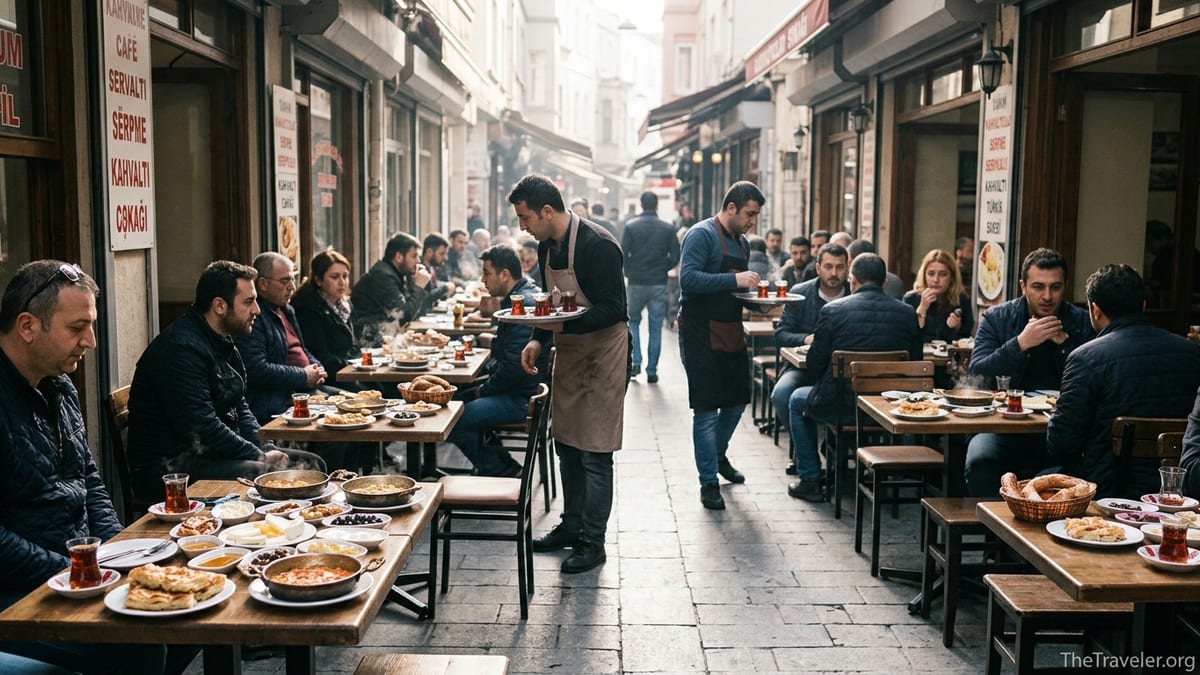
What And Where Is Beşiktaş Breakfast Street?
Beşiktaş Breakfast Street refers to a small grid of pedestrian-friendly lanes in Beşiktaş Çarşı, centered on Çelebi Oğlu Sokak and Şair Veysi Sokak. For several blocks, nearly every storefront is a breakfast-focused café offering serpme kahvaltı, the famous “spread” style Turkish breakfast. You will hear locals simply say “kahvaltıcılar sokağı” and taxi drivers in central Istanbul usually know exactly where that means. It is within a short walk uphill from the Beşiktaş ferry piers, making it very easy to combine with a Bosphorus crossing or a visit to Dolmabahçe Palace.
The atmosphere here is dense and lively. Tables spill onto the narrow sidewalks, staff call out to passersby and trays of steaming simit and baskets of bread shuttle between kitchens and outdoor seating. It is not a refined, white-tablecloth experience. Instead, Breakfast Street is a casual, fairly student-oriented scene, with affordable prices by Istanbul standards and a constant background hum of conversation. On weekend mornings, especially in good weather, it can feel like half the city has decided to meet here for breakfast.
Most cafés on Breakfast Street work on similar lines. They offer a choice between mixed spreads for two or more people, individual breakfast plates and a selection of hot egg dishes and pastries. A few places have developed their own following, such as long-running spots often recommended by locals for reliable quality and fast service, while newer cafés try to stand out with specialty coffees or modern twists on traditional items. As a visitor, you do not need to chase the “perfect” address. More important is understanding what to order and how to time your visit.
Understanding Turkish Breakfast, Menemen And Börek
Traditional Turkish breakfast, or kahvaltı, is built around variety rather than a single main dish. A typical spread on Beşiktaş Breakfast Street will include several cheeses (often beyaz peynir, kaşar and sometimes tulum), green and black olives, sliced tomatoes and cucumbers, a couple of jams, tahini with grape molasses, butter and honey, plus a basket of fresh bread and simit. Many places add sigara böreği, small cigar-shaped pastries filled with cheese, and sucuklu yumurta, eggs cooked with spicy sausage, as part of their standard sets.
Menemen is the key cooked dish you should try at least once. It is a soft scramble of eggs, tomatoes, green peppers and often onions, brought to the table still bubbling in a small metal pan. Some cafés offer variations with sucuk or kasar cheese melted inside. Prices as of mid 2026 on Breakfast Street commonly sit in the range of about 180 to 260 Turkish lira for a plain menemen, with versions including sausage or cheese a little higher. Portions are usually enough for one hungry person or to share between two if you also have the wider breakfast spread.
Börek is another essential part of the breakfast landscape. Classic trays of su böreği, layered pastry with white cheese, or kıymalı börek, filled with minced meat, are sometimes baked in-house but quite often come from specialized börek shops nearby. In Beşiktaş Çarşı you will find stand-alone börekçi counters selling portions by weight, where a generous slice to go can cost less than ordering it plated at a café. A practical strategy for budget travelers is to eat a full sit-down breakfast on Breakfast Street one day, then another morning simply grab börek and tea from a nearby börekçi for a quicker and cheaper start.
Turkish tea, or çay, ties the whole ritual together. On Breakfast Street it is almost always served in small tulip-shaped glasses, with constant top-ups. Expect to pay roughly 25 to 40 lira per glass in 2026 at typical cafés in this area, sometimes less if tea is bundled into a set price for a shared breakfast. Unlimited tea offers are less common than in the past, so check whether refills are included or charged separately before you settle in for a long, leisurely meal.
Navigating Breakfast Menus, Portions And Prices
Most Beşiktaş breakfast cafés prominently advertise serpme kahvaltı, the full spread served in many small dishes and intended to be shared by at least two people. In 2026, prices for these mixed breakfasts in this area generally fall somewhere around 450 to 700 lira per person, depending on the location and what is included. A typical signboard might list a mixed breakfast for two people for 900 to 1200 lira, tea sometimes extra. For Istanbul, these prices are still competitive, especially compared to waterfront hotels or Bosphorus-view restaurants that can charge substantially more for a similar spread.
If you are traveling solo or not a big breakfast eater, it usually makes more sense to order à la carte. Many menus include single-person breakfast plates around 300 to 450 lira, with a smaller but still filling selection of cheese, olives, tomatoes, bread and perhaps an egg. You can then add a separate menemen or a few slices of börek to share. This approach gives you more control over cost and waste, and often ends up being cheaper than paying the per-person price for a huge serpme kahvaltı you cannot finish.
Some cafés feature “student menus” or weekday specials that include a basic breakfast plate and a glass of tea for a lower fixed price. Because Beşiktaş is close to several universities and language schools, places try to remain attractive to local students. If you are visiting Monday to Friday before 11 am, it is worth asking if any such offer is available. Staff will usually point out the best-value option if you ask in simple English or with a few Turkish words like “en uygun,” meaning the most suitable or best value.
Payment is straightforward, almost always at the table. Card payments are widely accepted, but it is wise to carry some cash for smaller börek shops or tea gardens just off the main street. Tipping around 10 percent is appreciated but not mandatory. For instance, if your shared breakfast for two comes to 1000 lira and service has been friendly and attentive, leaving an extra 100 lira on the tray is a reasonable gesture. There is no need to tip separately for every round of tea if you are paying in one bill at the end.
Best Time To Go And How To Beat The Weekend Crowds
Breakfast Street operates throughout the week, but the atmosphere shifts noticeably between quiet weekday mornings and packed weekend brunch. On Saturdays and Sundays, many Istanbul locals treat breakfast here as a social event that can stretch for hours. Lines often form outside popular cafés between about 10 am and 1 pm, particularly on sunny spring and autumn weekends. If you arrive in that window, expect to wait 15 to 30 minutes for a table at the busiest spots, or to be seated more quickly if you accept an indoor table rather than a sidewalk one.
To avoid the heaviest crowds, aim to arrive early. Most cafés open around 8 or 9 am, and by coming before 9:30 am on weekends you can usually find a table without a wait. The street feels different at this hour: more locals grabbing a practical breakfast, fewer groups posing for photos and slightly calmer service. Weekdays are much quieter overall. Late mornings from Monday to Thursday can be ideal for travelers who want to linger without pressure to free the table. You will still see a mix of students, neighborhood regulars and a few tourists, but the pace is more relaxed.
Another strategy is to time your visit after the main brunch rush. By 2:30 or 3 pm many of the morning crowds have dispersed, though some cafés continue serving breakfast menus until late afternoon. If you are planning a packed sightseeing day, you might choose an early lunch-style breakfast here at around 2 pm after visiting Dolmabahçe or crossing back from the Asian side by ferry. You will sacrifice a bit of the buzz but gain less waiting and quieter surroundings.
Weather also influences the experience. In summer, outdoor tables fill quickly, and shade can be scarce at midday, making earlier visits more comfortable. In winter, covered and heated terraces keep the street lively but a little more cramped, with condensation on windows and steaming tea glasses giving the whole area a cozy feel. Whatever the season, arriving slightly off-peak is the single most effective way to experience Breakfast Street without feeling overwhelmed.
Local Cafés, Hidden Corners And Where To Find Börek
Within Beşiktaş Çarşı, the core breakfast streets are quite compact, and you will notice several names repeated in guidebooks and online reviews. Some cafés have become fixtures by offering consistent serpme kahvaltı, good menemen and fast service even at the busiest times. Others try to draw attention with colorful décor and large photo displays of their spreads. As you walk along Çelebi Oğlu Sokak and its side lanes, you will also see older, simpler places with more modest signage that attract neighborhood regulars more than passing visitors.
One useful rule of thumb is to look at the mix of customers. If most of the tables are filled with Turkish-speaking groups, couples or families, that is usually a good sign for both flavor and value. If a café seems to be almost exclusively tourists, with menus heavily focused on English slogans and oversized photos but fewer locals, prices may be a little higher and portions sometimes lighter. That does not mean you should avoid these spots entirely, but it is worth checking the fine print on the menu about what exactly is included in a “mixed breakfast for two” before you sit down.
For börek lovers, some of the best options lie just beyond the central stretch of Breakfast Street. In the surrounding blocks of Beşiktaş Çarşı, several small börekçi shops open very early, selling trays of su böreği, kıymalı börek and potato-filled pastries by the kilo or by the slice. Many locals will buy börek from these specialists and then take it to a nearby tea garden or home, turning it into an informal breakfast. If you are on a tight budget, picking up a generous portion of su böreği and a couple of glasses of tea at a nearby café can cost noticeably less than ordering a full serpme kahvaltı at a single restaurant.
Do not overlook the independent cafés and coffee bars tucked into side alleys and upstairs terraces around Beşiktaş Çarşı. Some of these places serve a more minimal breakfast alongside strong espresso, filter coffee or Turkish coffee, and they can be a welcome break from the intensity of the main street. For example, you might start with a classic Turkish breakfast set on Breakfast Street, then move to a quieter specialty café a few blocks away for a second round of coffee and people-watching before continuing your day.
Tourist Traps, Hawkers And How To Order Smart
Breakfast Street is busy and highly competitive, and that brings certain behaviors that can feel pushy if you are not prepared. On busy days, staff from different cafés sometimes call out to passersby, hold menus in front of you or walk alongside you for a few steps, urging you to choose their place. Occasionally someone may even lightly tap your arm to get your attention. This can be disorienting if you just want to look around first. The best approach is to keep walking at a steady pace, smile and simply say “teşekkürler,” meaning thank you, without stopping. Once you have seen a few menus and found somewhere that looks right, you can return on your own terms.
Tourist traps in this context tend to be less about outright scams and more about subtle upselling. Examples include offering a “special breakfast for two” without clearly stating that tea is extra, or bringing additional dishes that were described vaguely as “included,” then adding them as separate items on the bill. To avoid surprises, take a moment to read the printed menu or the signboard before you sit. Confirm whether the price is per person or for the whole table and ask if tea is included. It is perfectly acceptable to clarify this in English; most staff are used to international visitors.
Another point to watch is portion size. The photos on menus often show a table completely covered with small plates, which makes for great social media images but is more food than many people can realistically eat. If you are a couple or two friends, you rarely need both a full serpme kahvaltı and several extra dishes. Instead, consider ordering the mixed breakfast for two and then adding just one extra highlight, such as a pan of menemen or a portion of sigara böreği, if you are particularly hungry. This reduces waste and keeps the bill under control.
Finally, check the bill calmly before paying. In a busy environment, honest mistakes happen: an extra tea might be counted or a dish might be entered incorrectly. If something looks off, point to the line and ask for clarification. A simple “Bu nedir?” (“What is this?”) usually prompts the server to explain or correct the item. The vast majority of cafés will adjust the bill without argument if there has been a genuine error, especially if you raise it politely.
Tea Culture, Local Rhythm And How Long To Linger
Sitting for a long time over breakfast is entirely normal in Beşiktaş. On weekends you will see groups occupying the same table for two hours or more, chatting while waiters keep topping up tea glasses. As a visitor, you should not feel pressured to eat quickly and leave, particularly if the café still has free tables. Ordering a second round of tea or an extra dish is a respectful way to justify a longer stay, but it is not compulsory.
Tea service is constant and informal. Waiters weave between tables carrying metal trays loaded with glasses, collecting empties and adding new ones. In some places, especially during peak times, they might leave a small metal teapot on your table alongside a jug of hot water, allowing you to adjust the strength of your tea. Do not hesitate to ask for more hot water if the tea becomes too strong; this is entirely customary. Sugar cubes are almost always available, but milk with tea is not typical and often not offered unless specifically requested.
Beyond tea, many cafés now serve Turkish coffee, filter coffee and espresso-based drinks. Prices for a basic Turkish coffee in this area might sit around 70 to 120 lira in 2026, while cappuccinos and lattes are usually a bit higher. If you care about coffee quality, you might enjoy breakfast at a traditional kahvaltı place and then move to a nearby specialty coffee shop afterward instead of expecting both in one venue. That way you experience both classic tea culture and the newer wave of Istanbul coffee without compromising on either.
As breakfast winds down and lunch approaches, the neighborhood rhythm changes. Some Breakfast Street cafés switch to offering sandwiches, gözleme or basic lunch dishes, while others keep serving breakfast all day. If you want photos of the iconic overflowing breakfast table without many strangers in the background, a weekday morning between 9 and 10:30 am offers the best combination of natural light, active service and manageable crowds.
The Takeaway
Beşiktaş Breakfast Street offers one of the most accessible, affordable ways for visitors to experience the Turkish breakfast ritual in a concentrated, walkable area. With dozens of cafés clustered together, it is less about finding a single, “best” place and more about understanding how the street works: when it gets busy, how serpme kahvaltı is priced and what to watch for with upselling and portion sizes. If you arrive early on a weekday or before the main weekend rush, choose a café where locals are clearly at home and order a shared spread with a side of menemen, you are very likely to leave satisfied.
Approach the street with realistic expectations. This is a lively, student-friendly part of Istanbul, not a quiet boutique quarter. Staff may call out for your attention, tables are close together and it can be loud. In exchange, you get a deep dive into everyday Istanbul breakfast culture, from trays of steaming simit to the sound of clinking tea glasses and the sight of families sharing a long, slow meal. Used wisely, Breakfast Street can anchor one of your most memorable mornings in the city.
On a practical level, remember three essentials. First, decide in advance whether you want the full serpme kahvaltı experience or a lighter, cheaper breakfast of börek and tea. Second, time your visit strategically to either enjoy or avoid the weekend rush. Third, skim the menu before you sit down and clarify what is included so the final bill matches your expectations. With those basics covered, Beşiktaş Breakfast Street becomes less of a chaotic maze and more of a welcoming, flavorful introduction to Istanbul mornings.
FAQ
Q1. Where exactly is Beşiktaş Breakfast Street?
It is in Beşiktaş Çarşı, mainly around Çelebi Oğlu Sokak and Şair Veysi Sokak, a short uphill walk from the Beşiktaş ferry piers on the European side.
Q2. How much does a typical Turkish breakfast cost there in 2026?
As of 2026, shared serpme kahvaltı breakfasts often range around 450 to 700 lira per person, while simpler individual plates start roughly in the 300 to 450 lira range.
Q3. Is Beşiktaş Breakfast Street open every day?
Yes. Most cafés open daily, usually from around 8 or 9 am until mid or late afternoon, though exact hours vary by venue and season.
Q4. What time should I go to avoid long waits?
On weekends aim to arrive before 9:30 am, or after about 2:30 pm, to avoid the main brunch rush. Weekday mornings are generally much quieter throughout.
Q5. Can solo travelers eat on Breakfast Street without over-ordering?
Yes. Many cafés offer single-person breakfast plates and allow you to order individual dishes like menemen or börek instead of a large shared spread.
Q6. Are there vegetarian options available?
Most standard Turkish breakfast spreads are naturally vegetarian, featuring cheese, olives, vegetables, jams, bread and eggs. You can skip sucuk or meat börek if you prefer.
Q7. Is it better to order a full serpme kahvaltı or à la carte?
If you are two or more people and very hungry, serpme kahvaltı gives a generous variety and good value. For lighter appetites or solo visits, ordering à la carte is usually more economical.
Q8. How can I avoid tourist traps on Breakfast Street?
Check printed menus before sitting, confirm if prices are per person and whether tea is included, and favor cafés with a visible mix of local customers rather than only tourists.
Q9. Is card payment widely accepted?
Yes, most Breakfast Street cafés accept major cards, but carrying some cash is useful for small börek shops and nearby tea gardens that may be cash-focused.
Q10. Can I linger at the table after finishing my meal?
Within reason, yes. It is normal to sit and chat over extra tea, especially if you visit off-peak hours. During very busy times, consider ordering another drink if you stay longer.